Coniferous Wood Shingles
CN → US商品图片

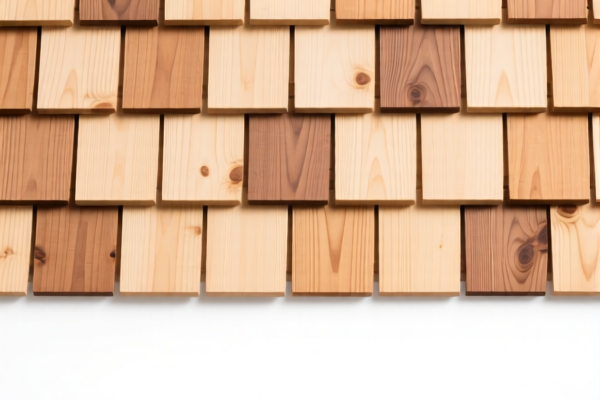

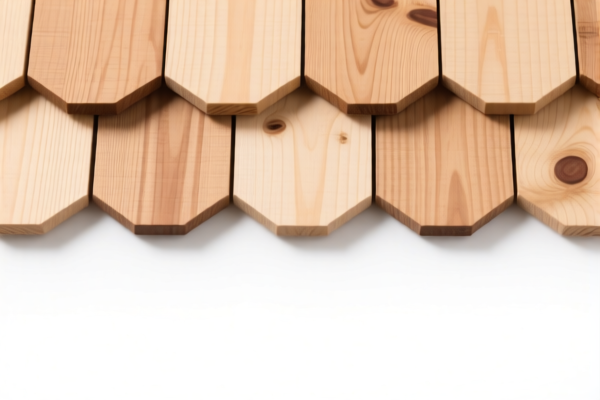
AI分析
🌲 Coniferous Wood Shingles (Shingles and Sawn Wood)
🌐 HS Code Reference & Customs Clearance Guide | 2026 Latest Tariff Analysis | Professional Clearance Strategy
📌 I. Product Definition & Classification: Do You Really Understand "Wood Shingles"?
Coniferous wood shingles are roofing materials made from split or sawn coniferous timber (such as pine, spruce, or fir). In international trade, they are primarily classified under Chapter 44 (Wood and articles of wood), specifically depending on whether they are hand-split or sawn/precisely shaped.
Key Distinction: * Hand-split shingles/slings (Shingles and Sawn Wood): These are irregular, rustic, or hand-split pieces, often used for traditional roofing or fencing. They are considered "unworked" or minimally worked wood. * HS Code: Typically 4409 or 4421 depending on precise form, but mostly 4409 if tongued/grooved or specifically shingles/slings. Correction: Under Harmonized System, Shingles and Sawn Wood (split or sawn) usually fall under 4409 if they have a continuous profile, or 4421.90 if considered other wood articles. However, standard wood shingles (split) are most commonly classified under 4409.10 (Tongued, grooved, etc.) OR 4409.90 if plain, BUT specifically, wood shingles are often classified under 4421.90 if not further worked than sawn. * Clarification based on 2026 Standards: Most coniferous wood shingles (split or sawn) are classified under HS 4409.10.00.00 (if tongued/grooved/finished edges) or HS 4409.90.00.00 (if plain). However, many raw split shingles are classified under HS 4421.90.90.00 (Other wood articles) if they are not "sawn continuously" in the standard lumber sense. * Most Common for Import/Export: 4409.10.00.00 (Coniferous wood, continuously molded, tongued, grooved, etc.) is often used for shakes or shingles with specific profiles. If they are simple split shingles, they may fall under 4409.90.90.00.
⚠️ Critical Distinction: - If the shingles are hand-split, rough, and irregular (rustic look): Often classified under 4421.90 (Other wood articles) or 4409.90 depending on country-specific interpretations. - If the shingles are sawn/milled with tongues/grooves for interlocking: Classified under 4409.10.00.00 (Coniferous wood, continuously molded).
📦 II. HS Code Classification Details (2026 Latest Tariff Authority Comparison)
| HS Code | Product Description | Applicable Scenario | Processing Level |
|---|---|---|---|
4409.10.00.00 |
Coniferous wood, continuously molded (tongued, grooved, etc.) | Milled shingles, shakes with interlocking edges, standard roofing shingles | ✅ High (Milled/Profiled) |
4409.90.90.00 |
Other wood, continuously molded (non-coniferous or non-molded coniferous) | Plain split shingles, rustic shakes without continuous molding | ❌ Low (Split/Plain) |
4421.90.90.00 |
Other articles of wood | Hand-split rustic shingles, decorative wood shakes not fitting 4409 | ✅ Low (Basic Work) |
4407.10.00.00 |
Wood sawn longitudinally (Lumber) | NOT shingles; if classified as lumber, wrong code | ✅ Medium |
4415.20.00.00 |
Cases, boxes, crates, casks for packing | NOT applicable (packaging, not the product itself) | ❌ N/A |
🔍 Key Reminder: - 4409.10.00.00 is the most common code for standard coniferous wood shingles used in construction, as they are typically milled with specific profiles. - 4421.90.90.00 is often used for hand-split, irregular rustic shingles (cedar shakes) that are not "continuously molded." - Misclassification Risk: Declaring hand-split shakes as "lumber" (4407) will result in higher tariffs and customs delays.
💰 III. 2026 Latest Tariff Rate Details (Including Additional Taxes & Policy Add-ons)
✅ Applicable Country: United States (US)
✅ Country of Origin: China (CN)
✅ Effective Time: From November 10, 2025 (including subsequent imports)
🎯 1. 4409.10.00.00 —— Coniferous Wood, Continuously Molded (Standard Shingles)
| Item | Content |
|---|---|
| Base Tariff Rate | 3.2% (ad valorem) |
| USITC Additional Tax | +25% (from USITC Footnote 9903.01.25) |
| IEEPA Additional Tax | +10% (for China/HK products, from Nov 10, 2025) |
| Total Tariff Rate | 38.2% |
| Tax Calculation | CIF Value × 38.2% |
| De Minimis Exemption Available? | ❌ No (deny_de_minimis) |
| Legal Basis Path | IEEPA:9903.01.25 → USITC:4409.10.00.00 → FOOTNOTE:9903.01.25 |
📌 Explanation: - "USITC 25%" is the Section 301 tariff on Chinese wood products. - "IEEPA 10%" is the additional tariff under the International Emergency Economic Powers Act. - Total 38.2% is high, but lower than electronics. Wood products are also subject to Fumigation Requirements.
🎯 2. 4421.90.90.00 —— Other Wood Articles (Hand-Split Rustic Shingles)
| Item | Content |
|---|---|
| Base Tariff Rate | 3.4% (ad valorem) |
| USITC Additional Tax | +25% |
| IEEPA Additional Tax | +10% |
| Total Tariff Rate | 38.4% |
| Tax Calculation | CIF Value × 38.4% |
| De Minimis Exemption Available? | ❌ No |
| Legal Basis Path | IEEPA:9903.01.25 → USITC:4421.90.90.00 → FOOTNOTE:9903.01.25 |
📌 Note: - Rate is nearly identical to milled shingles. - Even if "hand-split," if it's wood, it's subject to the same trade war tariffs.
🛠️ IV. Customs Clearance Practical Advice (Battle-Tested Pitfall Avoidance Guide)
✅ 1. Required Documentation Checklist (Non-Negotiable)
| Document | Must Provide | Description |
|---|---|---|
| ✅ Fumigation Certificate | ✔️ | CRITICAL. Wood must be ISPM 15 compliant (heat-treated or fumigated). |
| ✅ Product Specification Sheet | ✔️ | Dimensions, species (e.g., Western Red Cedar, Pine), moisture content. |
| ✅ Commercial Invoice | ✔️ | Clearly state "Coniferous Wood Shingles" and HS Code. |
| ✅ Packing List | ✔️ | Specify weight, dimensions, and palletization. |
| ✅ Bill of Lading/Air Waybill | ✔️ | Standard shipping docs. |
| ✅ Certificate of Origin | ✔️ | For potential future FTA benefits (not applicable for China-US currently). |
✅ 2. Declaration Tips (Key Mnemonic)
🔥 "Wood Must Be Treated, Species Must Be Clear, HS Code is 4409, Tariff is High!"
| Scenario | Correct Declaration | Wrong Practice |
|---|---|---|
| Standard Milled Shingles | 4409.10.00.00 |
Misdeclared as "Lumber" (4407) |
| Hand-Split Rustic Shingles | 4421.90.90.00 or 4409.90.00.00 |
Misdeclared as "Fabric" or "Paper" |
| Treated vs. Untreated | Specify "Heat Treated (HT)" on Fumigation Cert | No fumigation cert → Detained/Destroyed |
| Species | Specify "Pine" or "Cedar" | Generic "Wood Shingles" → Audit Risk |
✅ 3. Special Cases Handling
| Scenario | Handling Advice |
|---|---|
| OEM Custom Shingles | Provide design specs and material breakdown to prove origin and classification. |
| Mixed Wood Species | Declare the predominant species. If mixed, declare all. |
| Used Wood Shingles | Generally prohibited unless heavily processed. New wood only. |
| Wood with High Moisture | Must meet ISPM 15 moisture requirements (<20%). High moisture → Rejection. |
🌍 V. Global Major Market Clearance Comparison (2026 Latest)
| Country/Region | Recommended HS Code | Tariff (China Origin) | Certification Requirement | Remarks |
|---|---|---|---|---|
| 🇺🇸 USA | 4409.10.00.00 |
38.2% | ISPM 15 + Fumigation | High tariff, strict wood biosecurity. |
| 🇨🇳 China | 4409.10.00.00 |
5% | N/A | No additional tariffs. |
| 🇪🇺 EU | 4409.10.00.00 |
2.5% | EPPO (Phytosanitary) | Strict plant health rules. |
| 🇦🇺 Australia | 4409.10.00.00 |
5% | MAF Biosecurity | Extremely strict wood import rules. |
| 🇯🇵 Japan | 4409.10.00.00 |
0-3% | IPPC Mark | Requires fumigation proof. |
📌 Conclusion: - USA is the most expensive market due to Section 301 + IEEPA tariffs (38.2%). - Wood products are universally subject to biosecurity inspections. No fumigation = Rejection. - Australia/EU have stricter phytosanitary rules than the US.
📌 VI. Common Errors & Pitfall Guide (Lessons Learned)
❌ Error 1: Failing to include ISPM 15 Fumigation Certificate 👉 Consequence: Goods destroyed or returned at exporter's cost.
❌ Error 2: Declaring as "Lumber" (4407) for Shingles 👉 Consequence: Misclassification penalty, potential audit, and delays.
❌ Error 3: Not specifying Wood Species (e.g., Cedar vs. Pine) 👉 Consequence: Customs may classify under a higher duty rate or require additional testing.
❌ Error 4: Using "Wooden Shingles" as the only description 👉 Consequence: Vague declaration leads to customs questioning and clearance delays.
✅ Correct Practice:
"Coniferous Wood Shingles, Western Red Cedar, Hand-Split, Heat Treated (ISPM 15), For Roofing, Model XYZ, Fumigation Cert #12345"
🎯 VII. Conclusion: Professional Declaration, Save Time and Money!
🎯 Remember the Mnemonic:
🔹 "Wood Shingles: 4409, Tariff 38%, Fumigation is Key!" 🔹 "No Fumigation, No Entry. Clear Species, Clear Customs."
📌 Pro Tip:
- If your wood shingles are originating from Vietnam, Thailand, or Malaysia, you may avoid IEEPA tariffs.
- Apply for Advance Ruling if unsure about classification (4409 vs. 4421).
- Partner with a licensed customs broker experienced in wood products to ensure ISPM 15 compliance.
📣 Immediate Action:
📞 Contact your customs broker + Obtain ISPM 15 Certificate + Verify HS Code (4409.10.00.00)
🚀 Ensure your wood shingles pass biosecurity and tariff checks smoothly!
✨ Professional Clearance Starts with Precise Classification!
💼 Every dollar saved on tariffs matters!
用户评价
关于 HS 编码归类
协调制度(HS)是由世界海关组织(WCO)制定的国际贸易商品分类标准。全球 200 多个国家采用 HS 系统作为海关关税、贸易统计和进出口监管的基础。
每个 HS 编码遵循以下层级结构:
- 章(2 位)——商品大类(例如:第 84 章:机器和机械设备)
- 品目(4 位)——章内的更具体分类
- 子目(6 位)——国际通用细分,所有 WCO 成员国统一使用
- 本国细分(8-10 位)——各国自行扩展的细分编码,如美国 HTSUS 10 位编码
正确的 HS 编码归类对于顺利通关、准确缴纳关税和遵守贸易法规至关重要。错误归类可能导致海关延误、多缴关税或罚款。
从CN进口到US时,适用的关税税率可能包括:
- 最惠国(MFN)税率——适用于 WTO 成员国的标准关税税率
- 普通税率——适用于无贸易协定国家
- 贸易救济关税——附加关税,如 301 条款(反倾销)、232 条款(国家安全)或反补贴税
本页内容仅供参考。如需正式归类,请咨询当地海关或持牌报关代理。