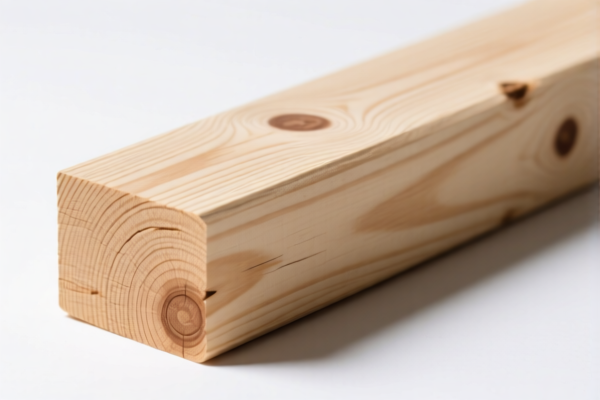
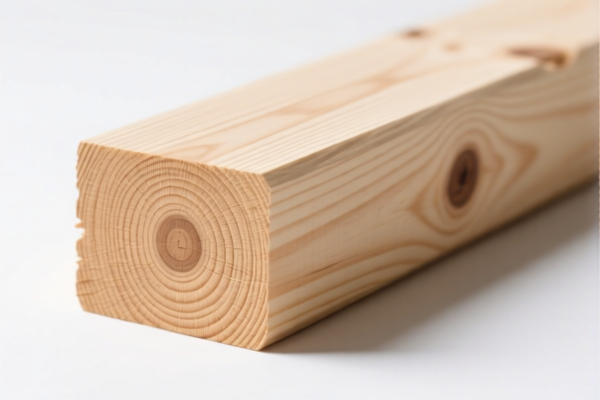
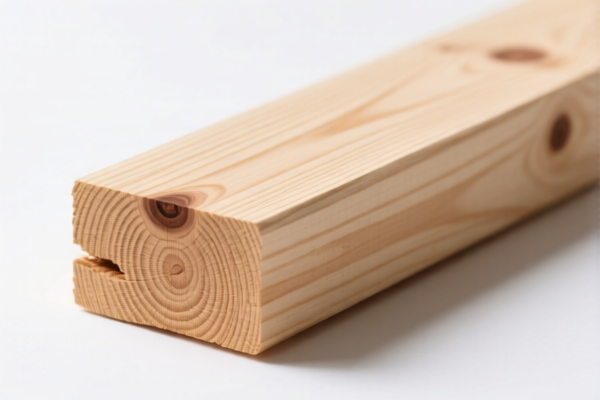
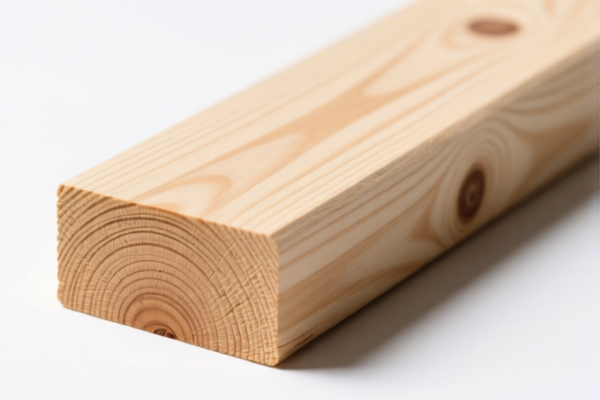
Construction Grade Pine Rough Timber 15cm+
CN → US| HS编码 | 关税税率 | 原产国 | 目的国 | 文档 |
|---|---|---|---|---|
| 4407110044 | 35.0% | CN | US | 官方文档 |
| 4407110042 | 35.0% | CN | US | 官方文档 |
| 4407110042 | 35.0% | CN | US | 官方文档 |
| 4407110044 | 35.0% | CN | US | 官方文档 |
商品图片
AI分析
🌲 Construction Grade Pine Rough Timber 15cm+
🌐 HS Code Reference & Customs Clearance Guide | 2026 Latest Tariff Analysis | Professional-Level Customs Strategy
📌 I. Product Definition and Classification: Do You Really Understand "Pine Timber"?
Construction Grade Pine Rough Timber (15cm+) refers to coniferous wood that has been sawn or chipped lengthwise, sliced, or peeled, with a thickness exceeding 6 mm. Specifically, this refers to Unprocessed (Rough) Pine Timber from specific Pinus species, commonly used in structural construction, framing, and general building projects.
In international trade, pine timber is strictly categorized by Species and Processing Level. Since the input specifies "Rough" and "Construction Grade", it excludes planed, sanded, or treated wood. The critical distinction lies in the specific Pinus species, as US Customs (CBP) applies different tariff rates based on the botanical origin.
⚠️ Key Distinction: - If the pine is Eastern White Pine (Pinus strobus) or Red Pine (Pinus resinosa): It falls under a specific subheading with higher tariffs due to trade restrictions. - If the pine is Lodgepole Pine (Pinus contorta): It falls under a different subheading with zero additional tariffs. - "Rough" means it has not been planed, sanded, or end-jointed to a finished dimension.
📦 II. HS Code Classification Details (2026 Latest Tariff Authority Comparison)
Based on the input <DATA>, there are two possible HS Codes depending on the specific pine species. You must identify the exact species to choose the correct code.
| HS Code | Product Description | Applicable Species | Processing Status | Tax Rate (Total) |
|---|---|---|---|---|
4407.11.00.42 |
Pine Timber, Rough, of Eastern White Pine (Pinus strobus) and Red Pine (Pinus resinosa) | Eastern White Pine / Red Pine | Rough (Not treated, not planed) | 25.0% |
4407.11.00.44 |
Pine Timber, Rough, of Lodgepole Pine (Pinus contorta) | Lodgepole Pine | Rough (Not treated, not planed) | 0.0% |
🔍 Critical Note: - Both codes fall under Chapter 44: Wood and Articles of Wood. - The base tariff is 0.0% for both. - The difference comes entirely from Section 301/Additional Tariffs applied to Chinese-origin goods. - Species Identification is Mandatory: Misdeclaring Lodgepole Pine as Eastern White Pine (or vice versa) will result in customs delays, audits, and potential penalties.
💰 III. 2026 Latest Tariff Rate Detailed Explanation (Including Additional Taxes)
✅ Applicable Country: United States (US)
✅ Origin: China (CN) (Implied by the presence of "Additional Tariff" in data)
✅ Effective Time: Current Section 301 Tariffs
🎯 1. 4407.11.00.42 —— Eastern White Pine / Red Pine (Rough)
| Item | Content |
|---|---|
| Base Tariff | 0.0% |
| Additional Tariff (Section 301) | +25.0% |
| Total Tax Rate | 25.0% |
| Tax Calculation | CIF Value × 25% |
| De Minimis Exemption | ❌ No (This category is subject to full duty collection) |
| Legal Basis | HTSUS 4407.11.00.42 under USITC Tariff Schedule |
📌 Explanation: - Eastern White Pine and Red Pine are historically significant timber species in the US market. - The 25% additional tariff is applied under US Trade Law (Section 301) targeting specific Chinese imports. - This is a high-cost category for importers. Cost analysis must include this 25% overhead.
🎯 2. 4407.11.00.44 —— Lodgepole Pine (Rough)
| Item | Content |
|---|---|
| Base Tariff | 0.0% |
| Additional Tariff (Section 301) | 0.0% |
| Total Tax Rate | 0.0% |
| Tax Calculation | CIF Value × 0% |
| De Minimis Exemption | N/A (Duty is already 0%) |
| Legal Basis | HTSUS 4407.11.00.44 under USITC Tariff Schedule |
📌 Explanation: - Lodgepole Pine (Pinus contorta) is classified differently from Eastern White/Red Pine for tariff purposes. - Currently, there is NO additional tariff for this specific subheading. - Cost Advantage: If your supply chain can source Lodgepole Pine, you save a significant 25% in duties compared to White/Red Pine.
🛠️ IV. Customs Clearance Practical Advice (Avoiding Pitfalls)
✅ 1. Preparation Checklist (Non-Negotiable)
| Document | Required? | Description |
|---|---|---|
| ✅ Commercial Invoice | ✔️ | Must explicitly state: "Rough Pine Timber", Species Name (Pinus contorta or Pinus strobus), and Dimensions (e.g., "15cm+ thickness"). |
| ✅ Packing List | ✔️ | Detail the number of bundles, weight, and dimensions. |
| ✅ Phytosanitary Certificate | ✔️ | Crucial for Wood: Issued by the country of export to prove the wood is free of pests and diseases. Without this, cargo will be rejected or fumigated at US ports. |
| ✅ Fumigation Certificate | ✔️ | Often required alongside Phytosanitary Certificate for raw timber. |
| ✅ Species Declaration Letter | ✔️ | A signed letter from the supplier confirming the exact Pinus species. CBP may test wood samples to verify. |
| ✅ Bill of Lading (B/L) | ✔️ | Standard shipping document. |
✅ 2. Classification Tips (Key Mantra)
🔥 "Specify the Species, Declare Rough, Avoid Planed!"
| Situation | Correct Classification | Incorrect Approach | Consequence |
|---|---|---|---|
| Rough Timber, Lodgepole Pine | 4407.11.00.44 |
Misclassifying as White Pine | Unnecessary 25% tax payment (if overpaid, refund process is hard). |
| Rough Timber, White Pine | 4407.11.00.42 |
Declaring as "General Pine" | Customs will re-classify, assess 25% tax + interest. |
| Planed/Sanded Timber | Different HS Code | Declaring as "Rough" | Severe penalty for misdeclaration. Planed wood has different HTS codes and potentially different tax treatments. |
| Treated Wood | Different HS Code | Declaring as "Not Treated" | Chemicals change the classification. Requires additional safety data sheets. |
✅ 3. Special Handling for "15cm+" Thickness
- Dimension Verification: Ensure the "15cm+" refers to the thickness (as per HS definition >6mm). If 15cm refers to width or length, ensure the thickness is still >6mm to qualify under Chapter 44.
- Bundle Packaging: Rough timber is usually bundled. Ensure bundles are palletized or secured to prevent damage during transit, which could lead to disputes over value.
🌍 V. Global Market Comparison (2026 Latest)
| Country/Region | Recommended HS Code | Tariff Rate (China Origin) | Key Requirements |
|---|---|---|---|
| 🇺🇸 USA | 4407.11.00.42 (White/Red) or 4407.11.00.44 (Lodgepole) |
25% or 0% | Phytosanitary Certificate is MANDATORY. |
| 🇨🇳 China | 4407.11.00.42 / 4407.11.00.44 |
5-10% (Import Duty) | No Section 301 tax for imports into China. |
| 🇪🇺 EU | 4407.10 (General Pine) |
Varies (0-8%) | ISPM 15 Wood Packaging Material requirements apply. |
| 🇬🇧 UK | 4407.10 |
Varies (0-8%) | Similar to EU post-Brexit rules. |
📌 Conclusion: - The US market is the most tariff-sensitive for Chinese pine timber. - Lodgepole Pine (
4407.11.00.44) offers a significant cost advantage (0% tariff) compared to Eastern White/Red Pine (25% tariff). - Phytosanitary compliance is equally important as tariff compliance to avoid cargo seizure.
📌 VI. Common Errors & Pitfall Guide (Lessons Learned)
❌ Error 1: Declaring "Pine Timber" without specifying the species. 👉 Consequence: CBP will assign the highest applicable tariff (25%) or hold the cargo for species verification.
❌ Error 2: Providing only a commercial invoice without a Phytosanitary Certificate. 👉 Consequence: Cargo Rejected/Returned. US Customs and Border Protection (CBP) and Animal and Plant Health Inspection Service (APHIS) strictly enforce wood import rules.
❌ Error 3: Misdeclaring "Planed" timber as "Rough" to avoid different HS codes. 👉 Consequence: Customs inspection reveals planing marks, leading to fraud allegations and heavy fines.
❌ Error 4: Ignoring the "15cm+" dimension in description. 👉 Consequence: Ambiguity in valuation. Ensure the invoice clearly states dimensions to support the declared value.
✅ Correct Practice:
"Rough Pine Timber, Species: Pinus contorta (Lodgepole Pine), Thickness: 15cm+, Unplaned, Untreated. Phytosanitary Certificate Attached."
🎯 VII. Conclusion: Precision in Classification Saves Money!
🎯 Remember the Mantra:
🔹 "Species Matters: Lodgepole = 0%, White/Red = 25%." 🔹 "No Phytosanitary Certificate = No Entry." 🔹 "Rough is Key: Don't claim planed if it's rough, and vice versa."
📌 Pro Tip: If your supplier can source Lodgepole Pine (Pinus contorta) from China, you can save 25% in tariffs compared to Eastern White Pine. Always confirm the botanical name on the supplier's invoice and phytosanitary certificate. Consider applying for an Advance Ruling from CBP if you are unsure about the species classification for large shipments.
📣 Immediate Action:
📞 Contact your freight forwarder to verify APHIS requirements. 📝 Request the Phytosanitary Certificate from the supplier before shipment. 📊 Analyze the species mix in your supply chain to optimize for the 0% vs 25% tariff bracket.
✨ Professional customs clearance starts with accurate classification! 💼 Every percentage point of duty affects your bottom line!
用户评价
关于 HS 编码归类
协调制度(HS)是由世界海关组织(WCO)制定的国际贸易商品分类标准。全球 200 多个国家采用 HS 系统作为海关关税、贸易统计和进出口监管的基础。
每个 HS 编码遵循以下层级结构:
- 章(2 位)——商品大类(例如:第 84 章:机器和机械设备)
- 品目(4 位)——章内的更具体分类
- 子目(6 位)——国际通用细分,所有 WCO 成员国统一使用
- 本国细分(8-10 位)——各国自行扩展的细分编码,如美国 HTSUS 10 位编码
正确的 HS 编码归类对于顺利通关、准确缴纳关税和遵守贸易法规至关重要。错误归类可能导致海关延误、多缴关税或罚款。
从CN进口到US时,适用的关税税率可能包括:
- 最惠国(MFN)税率——适用于 WTO 成员国的标准关税税率
- 普通税率——适用于无贸易协定国家
- 贸易救济关税——附加关税,如 301 条款(反倾销)、232 条款(国家安全)或反补贴税
本页内容仅供参考。如需正式归类,请咨询当地海关或持牌报关代理。