Cork Washers for Wine Bottles
CN → US商品图片

AI分析
🍷 Cork Washers for Wine Bottles (Bottle Finishers/Seal Rings)
🌐 HS Code Reference & Customs Clearance Guide | 2026 Latest Tariff Breakdown | Professional Clearance Strategy
📌 I. Product Definition & Classification: Do You Know What "Cork Washers" Really Are?
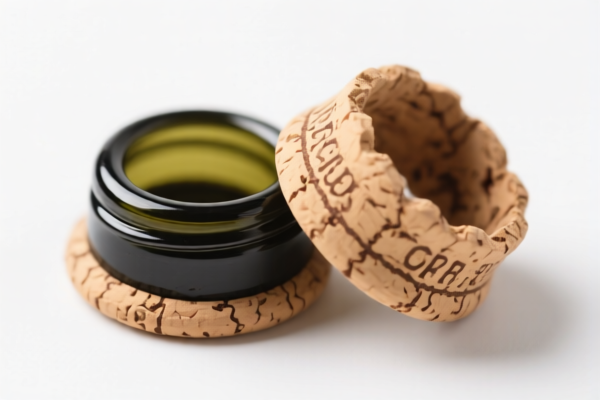
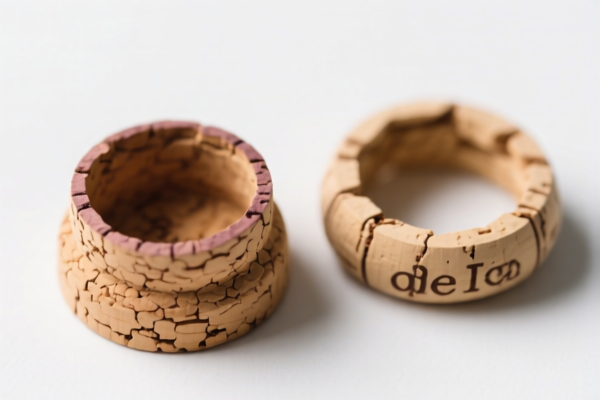
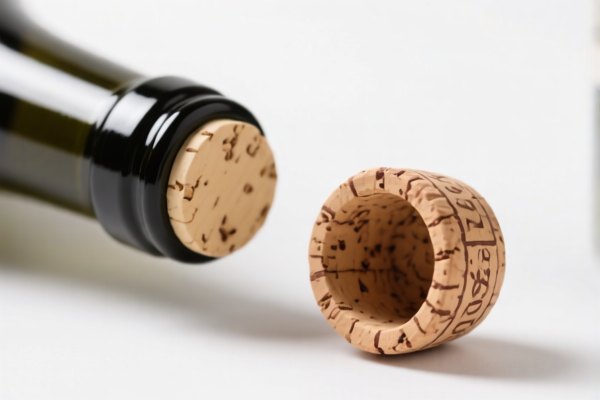
Cork Washers, often referred to as Bottle Finishers, Seal Rings, or Neck Rings, are critical components in wine packaging. They are not the main cork itself, but the outer ring that covers the seam between the main cork and the bottle neck, ensuring a tight seal, aesthetic finish, and protection against oxidation.
In international trade, they are categorized based on their material composition and function:
- Plastic/Natural Cork Composite: Most common. A thin ring made of compressed natural cork or synthetic material, often with a plastic liner.
- Pure Plastic/PET Rings: Used for premium or specific sealing needs.
- Functional Role: They are considered "Packaging Accessories" or "Parts of Bottles", depending on customs interpretation, but primarily fall under Chapter 39 (Plastics) or Chapter 46/47 (Cork/Vegetable Products).
⚠️ Key Distinction Point:
- If the product is primarily plastic (e.g., PET shrink rings, plastic liners) → Chapter 39
- If the product is primarily natural cork (compressed cork dust ring) → Chapter 46
- Do NOT classify them as "Corks" (natural wine stoppers), which are HS 4601.99 or 4703.19. These are different articles.
📦 II. HS Code Classification Details (2026 Latest Tariff Authority Match)
| HS Code | Product Description | Application Scenario | Primary Material |
|---|---|---|---|
3926.90.99.00 |
Other articles of plastic, not elsewhere specified | Plastic neck rings, synthetic sealers, PET finishers | ✅ Plastic |
4601.99.00.00 |
Woven mats, mats & plaiting materials; other articles of vegetable plaiting materials | Compressed natural cork rings (finishers) | ✅ Natural Cork |
4602.19.00.00 |
Woven articles of plaiting materials; other made up articles | Finished cork rings shaped into specific forms | ✅ Natural Cork |
3923.29.90.00 |
Sacks and bags, incl. cones, of plastics | If sold as part of a bulk plastic packaging set | ✅ Plastic |
8205.59.00.00 |
Hand tools (if bundled with bottling tools) | Rarely applicable unless part of a tool kit | ❌ N/A |
9603.90.80.00 |
Brooms & brushes | ❌ Incorrect classification | ❌ No |
🔍 Critical Reminder:
- Most commercial "Cork Washers" are plastic-based or composite. If the ring is made of compressed cork (dust), it may fall under 4601/4602.
- If it is a shrink sleeve or plastic cap liner, it is 3926.90.99.00.
- Do not use HS 4601.99 (which is for plaiting materials) unless it is specifically a woven vegetable product. For cork articles, 4602.19 is often more accurate for finished goods.
- Consensus: For plastic-coated or synthetic cork washers, 3926.90.99.00 is the safest and most common classification. For pure natural cork rings, 4602.19.00.00.
💰 III. 2026 Latest Tariff Rate Breakdown (Including Surcharges & Policy Adjustments)
✅ Applicable Country: United States (US)
✅ Country of Origin: China (CN)
✅ Effective Date: From November 10, 2025 (including subsequent imports)
🎯 1. 3926.90.99.00 —— Other Articles of Plastic (Most Common for Synthetic/Composite Washers)
| Item | Content |
|---|---|
| Basic Tariff | 3.5% (ad valorem) |
| USITC Surcharge | +25% (Under USITC Footnote 9903.88.01, Section 301) |
| IEEPA Surcharge | +10% (Against Chinese/HK products, from Nov 10, 2025) |
| Total Tariff | 38.5% |
| Tax Calculation | CIF Value × 38.5% |
| De Minimis Exemption | ❌ Not Eligible (deny_de_minimis) |
| Legal Path | IEEPA:9903.01.25 → IEEPA:9903.01.24 → USITC:3926.90.99.00 → FOOTNOTE:9903.88.01 |
📌 Explanation:
- The 25% USITC surcharge is part of the ongoing "Section 301" trade war measures.
- The 10% IEEPA surcharge is the new 2025 adjustment on Chinese plastics and rubber articles.
- Total 38.5% is a high tariff burden. Cost planning must account for this.
🎯 2. 4602.19.00.00 —— Woven/Made-up Articles of Vegetable Plaiting Materials (For Pure Natural Cork Rings)
| Item | Content |
|---|---|
| Basic Tariff | 3.4% (ad valorem) |
| USITC Surcharge | +25% (If classified under general vegetable articles subject to 301) |
| IEEPA Surcharge | +10% (If deemed "cork products" under IEEPA scope) |
| Total Tariff | 38.4% |
| Tax Calculation | CIF Value × 38.4% |
| De Minimis Exemption | ❌ Not Eligible (deny_de_minimis) |
| Legal Path | IEEPA:9901.25 → IEEPA:9903.01.24 → USITC:4602.19.00.00 → FOOTNOTE:9903.88.01 |
📌 Note:
- Natural cork products are also heavily impacted by US-China trade tensions.
- Even if the material is natural, if it is processed into a finished article (like a washer), it falls under Chapter 46/47 and is subject to the same surcharges.
🛠️ IV. Customs Clearance Operational Advice (Practical Pitfall Avoidance)
✅ 1. Required Documentation Checklist (Non-negotiable)
| Document | Mandatory | Explanation |
|---|---|---|
| ✅ Product Specification Sheet | ✔️ | Must specify material (e.g., "90% Natural Cork, 10% Plastic Liner") |
| ✅ Material Composition Declaration | ✔️ | Crucial for HS Code differentiation (Plastic vs. Cork) |
| ✅ Product Photos (Clear Label) | ✔️ | Show the ring, diameter, thickness, and any logos |
| ✅ Commercial Invoice | ✔️ | Must state "Cork Washer / Bottle Finisher" – NOT just "Cork" |
| ✅ Packing List | ✔️ | Include net/gross weight, quantity per carton |
| ✅ FDA/FSMA Compliance (If food-contact) | ✔️ | Wine bottles are food-contact items; ensure no toxic dyes |
| ✅ Certificate of Origin (CO) | ✔️ | If claiming preferential rates from non-China origins |
✅ 2. Declaration Strategy (Key Mantra)
🔥 "Material Defines Code, Finisher Not Cork, Specify Composition, Avoid 38.5% Shock!"
| Scenario | Correct Declaration | Wrong Practice |
|---|---|---|
| Plastic/Synthetic Washer | 3926.90.99.00 |
Mislabel as "Cork" → 38.4% but wrong code |
| Natural Cork Ring | 4602.19.00.00 |
Mislabel as "Plastic" → 38.5% but wrong code |
| Mixed Composite | 3926.90.99.00 (If plastic is primary) |
Split shipment → Risk of penalty |
| Sample for Testing | Declare as "Sample" with low value | No declaration → Seized |
✅ 3. Special Cases Handling
| Situation | Handling Advice |
|---|---|
| OEM Custom Printed Rings | Provide print design approval to avoid IP issues |
| Food-Contact Safety | Ensure compliance with FDA 21 CFR for direct wine contact |
| Small Quantity Samples | Use "Sample" declaration if value < $800 (but note: de minimis may not apply to surcharge items) |
| Bulk Raw Cork Sheets | Different HS Code (4601.99) – lower tariff but not finished washers |
🌍 V. Global Market Comparison (2026 Latest)
| Country/Region | Recommended HS Code | Tariff (China Origin) | Certification Required | Notes |
|---|---|---|---|---|
| 🇺🇸 USA | 3926.90.99.00 |
38.5% | FDA + RoHS | High tariff; plan costs |
| 🇪🇺 EU | 3926.90.97 |
4.5% | REACH + LFGB | No 301 surcharge |
| 🇬🇧 UK | 3926.90.99 |
4.5% | UKCA | Post-Brexit alignment |
| 🇨🇳 China | 3926.90.99 |
5% | CCC (if applicable) | Low export tariff |
| 🇯🇵 Japan | 3926.90.90 |
3.2% | PSE (if electrical, not here) | No surcharge |
| 🇦🇺 Australia | 3926.90.90 |
5% | RCM | No surcharge |
📌 Conclusion:
- USA is the highest cost market due to 301 & IEEPA surcharges.
- EU/Asia have stable, lower tariffs (~3.5-4.5%).
- If exporting to the US, consider supplier diversification (e.g., Vietnam, India) for tariff exemption.
📌 VI. Common Mistakes & Pitfall Guide (Lessons Learned)
❌ Mistake 1: Labeling as "Wine Cork" (HS 4601.99)
👉 Consequence: Incorrect HS Code → Customs audit → Delay + 38.5% tax reassessment
❌ Mistake 2: Ignoring "Plastic Liner" Component
👉 Consequence: If plastic >50%, it should be Chapter 39. Misclassification leads to penalties.
❌ Mistake 3: Not Declaring Food-Contact Status
👉 Consequence: FDA hold → Destruction of goods → Loss of entire shipment
❌ Mistake 4: Using "Packaging" as General Description
👉 Consequence: Vague description → Customs request for further info → 2-4 week delay
✅ Correct Practice:
"Cork Finisher Ring, 22mm Diameter, Compressed Natural Cork with Plastic Base, for Wine Bottle Sealing, FDA Compliant"
🎯 VII. Conclusion: Precise Classification Saves Money
🎯 Remember the Mantra:
🔹 "Plastic Washer? 3926.90.99.00 → 38.5%"
🔹 "Cork Ring? 4602.19.00.00 → 38.4%"
🔹 "Don't call it a Cork! Call it a Finisher!"
🔹 "USA Tariff is High; Plan Ahead or Diversify!"
📌 Pro Tip:
If your washers are sourced from Vietnam, India, or Thailand, you can avoid IEEPA 301/IEEPA surcharges, reducing the tariff to ~4-5%.
Recommend Advance Ruling from US CBP if unsure about material composition.
📣 Immediate Action:
📞 Contact a licensed customs broker
📄 Provide material composition report
🚀 Optimize your supply chain for 2026!
✨ Professional clearance starts with accurate classification!
💼 Every percentage point matters in global trade!
用户评价
关于 HS 编码归类
协调制度(HS)是由世界海关组织(WCO)制定的国际贸易商品分类标准。全球 200 多个国家采用 HS 系统作为海关关税、贸易统计和进出口监管的基础。
每个 HS 编码遵循以下层级结构:
- 章(2 位)——商品大类(例如:第 84 章:机器和机械设备)
- 品目(4 位)——章内的更具体分类
- 子目(6 位)——国际通用细分,所有 WCO 成员国统一使用
- 本国细分(8-10 位)——各国自行扩展的细分编码,如美国 HTSUS 10 位编码
正确的 HS 编码归类对于顺利通关、准确缴纳关税和遵守贸易法规至关重要。错误归类可能导致海关延误、多缴关税或罚款。
从CN进口到US时,适用的关税税率可能包括:
- 最惠国(MFN)税率——适用于 WTO 成员国的标准关税税率
- 普通税率——适用于无贸易协定国家
- 贸易救济关税——附加关税,如 301 条款(反倾销)、232 条款(国家安全)或反补贴税
本页内容仅供参考。如需正式归类,请咨询当地海关或持牌报关代理。