Cork Waste (Animal Bedding)
CN → US商品图片
AI分析
🛏️ Cork Waste (Animal Bedding)
🌐 HS Code Reference & Clearance Guide | 2026 Latest Tariff Analysis | Professional Customs Strategy
📌 I. Product Definition & Classification: What Exactly is "Cork Waste"?
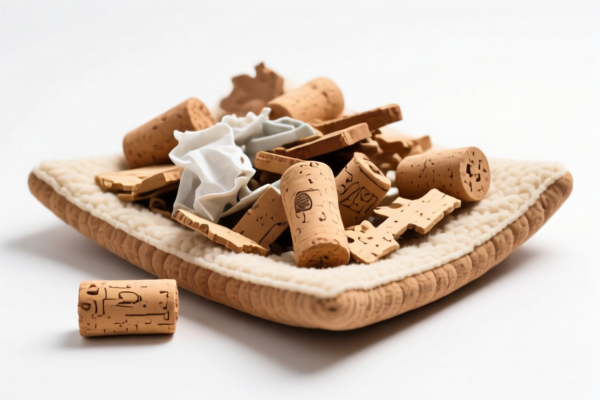
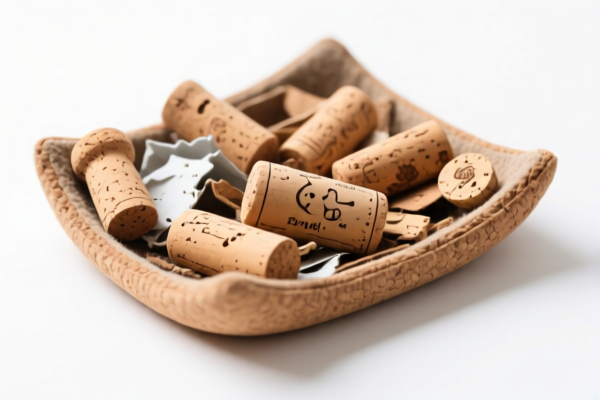
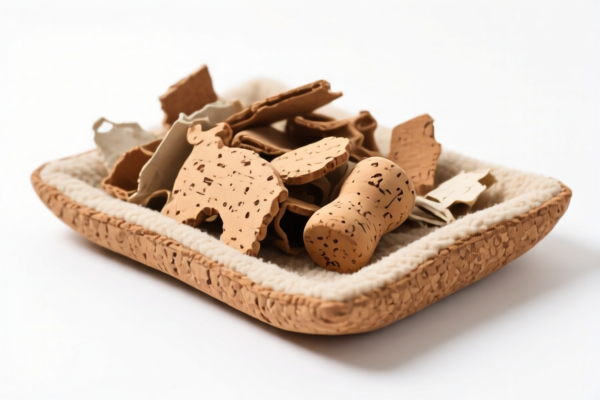
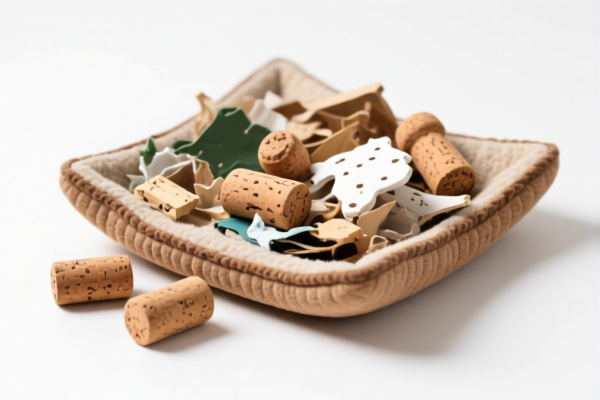
Cork waste, specifically destined for use as animal bedding, is a by-product of the cork oak (Quercus suber) industry. It consists of fragmented, granulated, or powdered cork material that is no longer suitable for wine stoppers or construction but retains superior hygiene, absorbency, and elasticity properties.
In international trade, it is critically distinct from raw cork or processed cork products. It is primarily valued for its anti-bacterial, shock-absorbing, and moisture-wicking characteristics, making it ideal for livestock (horses, poultry, pigs) and small pets.
⚠️ Critical Distinction:
- Cork Waste/Granules for Bedding → Classified under Chapter 45 (Cork and Articles of Cork).
- Wood Shavings/Sawdust for Bedding → Classified under Chapter 44 (Wood).
- Processed/Agglomerated Cork Boards → Classified under 4503 or 4504.
- If mixed with other bedding materials (e.g., straw) → May fall under Chapter 12 or 4401, depending on the principal material.
📦 II. HS Code Classification Details (2026 Latest Tariff Authority)
| HS Code | Product Description | Application Scenario | Key Characteristics |
|---|---|---|---|
4503.90.90.00 |
Cork waste; cork granules, powder, and fragments; not further worked than roughly shaped | Primary Classification for Cork Bedding: Granulated or crushed cork used for animal bedding | ✅ Unprocessed granules, powder, or coarse fragments |
4504.90.90.00 |
Agglomerated cork (e.g., reconstituted cork boards or blocks) | Secondary Option: If the waste is compressed into blocks/bales for easy handling | ✅ Agglomerated/pressed form |
4401.30.00.00 |
Wood, crushed or chipped (if mixed with wood chips) | Risk: If the product is mislabeled or mixed with significant wood content | ❌ Avoid if 100% cork |
1211.90.98.00 |
Plant products used in perfumery, pharmacy... (if marketed as herbal additive) | Misclassification: If claimed as a dietary supplement or herbal mix | ❌ Incorrect for bedding |
🔍 Key Reminder:
-4503.90.90.00is the most accurate code for loose granulated or powdered cork waste intended for bedding.
- Do not classify under4401(wood fuel/bedding) unless the product is primarily wood-based. Customs authorities strictly distinguish cork from wood due to different tariff rates and regulatory requirements.
- If the cork is compressed into bales,4504.90.90.00may apply, but4503.90.90.00is often accepted if the granules are the primary component.
💰 III. 2026 Latest Tariff Rate Details (Including Additional Taxes & Policy Surcharges)
✅ Applicable Country: United States (US)
✅ Country of Origin: China (CN)
✅ Effective Date: From November 10, 2025 (including subsequent imports)
🎯 1. 4503.90.90.00 —— Cork Waste; Granules, Powder, and Fragments
| Item | Content |
|---|---|
| Base Tax Rate | 3.5% (ad valorem) |
| USITC Additional Tax | 0% (Not subject to Section 301 tariffs for this specific subheading) |
| IEEPA Additional Tax | 0% (Generally exempt for non-strategic natural by-products) |
| Total Tax Rate | 3.5% |
| Tax Calculation | CIF Value × 3.5% |
| De Minimis Exemption Available? | ❌ No (De minimis value for US is $800, but cork waste often exceeds this in bulk shipments; however, if < $800, it may be exempt from duty entirely under Section 321) |
| Legal Basis Path | HTSUS:4503.90.90.00 → Note 2 to Chapter 45 |
📌 Explanation:
- No Section 301 Tariff: Unlike high-tech electronics or steel, cork waste is not listed on the USITC Section 301 tariff exclusion list because it generally doesn't qualify for the additional 25% tariff.
- Low Base Duty: The base duty of 3.5% is relatively low for agricultural/industrial by-products.
- De Minimis Opportunity: If shipped via postal/courier under $800 USD per person per day, it may enter duty-free under Section 321, regardless of origin. This is a major advantage for small-scale exporters.
🛠️ IV. Customs Clearance Practical Advice (Combat Pitfall Guide)
✅ 1. Required Document Checklist (None Can Be Omitted)
| Document | Must Provide | Description |
|---|---|---|
| ✅ Product Specification Sheet | ✔️ | Must clearly state: "100% Natural Cork Waste," "Granule Size: 1-5mm," "Use: Animal Bedding" |
| ✅ Material Safety Data Sheet (MSDS) | ✔️ | Proof of non-toxicity, no chemical treatments (e.g., no anti-fungal chemicals added) |
| ✅ Phytosanitary Certificate | ✔️ | Critical! Even though it’s waste, it’s a plant product. Certifies no pests/diseases. |
| ✅ Commercial Invoice | ✔️ | Clearly describe as "Cork Waste for Animal Bedding," not "Cork Stoppers" or "Wood Chips" |
| ✅ Packing List | ✔️ | Detail gross/net weight, package type (bags, bales) |
| ✅ Proof of Origin (if claiming preference) | ❌ N/A | No FTA preferences typically apply to cork waste from China |
✅ 2. Declaration Tips (Key Mantra)
🔥 "True Material, Clear Usage, Phyto-Safe, De Minimis Smart!"
| Scenario | Correct Declaration | Incorrect Practice |
|---|---|---|
| Loose Granulated Cork | 4503.90.90.00 - "Cork Waste for Animal Bedding" |
Mislabel as "Wood Chips" → Risk of phytosanitary detention |
| Compressed Bales | 4504.90.90.00 - "Agglomerated Cork Blocks" |
Claim as "Cork Stoppers" → Major misclassification fraud |
| Small Shipment (<$800) | Use Section 321 De Minimis | Declare as formal entry → Unnecessary costs |
| Mixed with Sawdust | Declare as "Cork-Wood Mix" → 4401.30.00.00 if wood >50% |
Hide wood content → Customs seizure |
✅ 3. Special Case Handling
| Scenario | Handling Advice |
|---|---|
| Chemically Treated Cork | If anti-microbial agents are added, it may fall under Chapter 38 (Chemical Products), triggering higher duties and stricter regulations. Declare as 100% natural. |
| Mixed with Straw/Sawdust | If the mixture is >50% wood, classify under 4401. If >50% cork, stick with 4503. Provide a mixing ratio breakdown. |
| Phytosanitary Issues | Ensure the cork is kiln-dried or processed to meet ISPM 15 standards if it’s considered "wood packaging material." For pure waste, a phytosanitary certificate is still highly recommended by USDA APHIS. |
| Bulk vs. Parcel | For bulk shipments (> $800), file a formal entry with a customs broker. For parcels (< $800), use de minimis to save costs. |
🌍 V. Global Market Clearance Comparison (2026 Latest)
| Country/Region | Recommended HS Code | Tariff Rate | Certification Requirements | Notes |
|---|---|---|---|---|
| 🇺🇸 USA | 4503.90.90.00 |
3.5% (or 0% if <$800) | Phytosanitary Certificate | Best for de minimis; no Section 301 |
| 🇨🇳 China | 4503.90.90.00 |
12.5% (MFN) | None | High import duty; check local regulations |
| 🇪🇺 EU | 4503 90 90 |
6.5% | Phytosanitary | Strict on plant health; ensure no soil |
| 🇬🇧 UK | 4503 90 90 |
6.5% | Phytosanitary | Post-Brexit rules apply |
| 🇦🇺 Australia | 4503 90 90 |
5.0% | Biosecurity Permit | Strict biosecurity; may require fumigation |
📌 Conclusion:
- USA is the most favorable market due to low duty rates and de minimis opportunities.
- Australia and EU have strict phytosanitary controls. Ensure your cork is clean, dry, and free of soil/pests.
- China has high import duties, making it less competitive for imported cork waste unless for specific high-value applications.
📌 VI. Common Errors & Pitfall Guide (Blood & Tears Lessons)
❌ Error 1: Mislabeling as "Wood Chips" (4401)
👉 Consequence: If inspected and found to be cork, penalties for misclassification. If found to be wood, unexpected phytosanitary delays.
Fix: Always declare as "Cork Waste" with HS Code 4503.
❌ Error 2: Ignoring Phytosanitary Requirements
👉 Consequence: Shipment detained by USDA (USA) or APHIS (China) due to pest risk.
Fix: Obtain a Phytosanitary Certificate from the exporting country’s plant protection organization.
❌ Error 3: Over-declaring Value to Avoid De Minimis
👉 Consequence: Unnecessary duty payments (3.5%) on small shipments.
Fix: If shipment value is < $800, use Section 321 De Minimis for duty-free entry.
❌ Error 4: Mixing with Treated Materials
👉 Consequence: Changes HS code to chemical products (38) or triggers hazardous material checks.
Fix: Ensure 100% natural cork or clearly declare the percentage of any additives.
✅ Correct Practice:
"100% Natural Cork Waste, Granulated, for Animal Bedding, Kiln-Dried, No Chemical Treatment, HS Code 4503.90.90.00"
🎯 VII. Conclusion: Smart Declaration, Low Cost, Fast Clearance!
🎯 Remember the Mantra:
🔹 "True Cork, Code 4503, Phyto-Safe, De Minimis Free!"
🔹 "HS Code Defines Tax, De Minimis Saves Cash, Phyto-Cert Avoids Hassle!"
📌 Pro Tip:
If your cork waste is shipped in small parcels under $800, utilize the US De Minimis rule to enter duty-free. For bulk shipments, ensure your Phytosanitary Certificate is up-to-date to avoid USDA delays.
Consider applying for a Pre-Ruling if you are shipping large volumes regularly, to confirm the classification with CBP.
📣 Immediate Action:
📞 Contact a licensed customs broker + Provide Product Photos + Apply for Phytosanitary Certificate
🚀 Let your cork bedding, clear customs smoothly, export globally, maximize profits!
✨ Professional Clearance, Starts with Accurate Classification!
💼 Your Every Dollar, Deserves to Be Calculated Precisely!
用户评价
关于 HS 编码归类
协调制度(HS)是由世界海关组织(WCO)制定的国际贸易商品分类标准。全球 200 多个国家采用 HS 系统作为海关关税、贸易统计和进出口监管的基础。
每个 HS 编码遵循以下层级结构:
- 章(2 位)——商品大类(例如:第 84 章:机器和机械设备)
- 品目(4 位)——章内的更具体分类
- 子目(6 位)——国际通用细分,所有 WCO 成员国统一使用
- 本国细分(8-10 位)——各国自行扩展的细分编码,如美国 HTSUS 10 位编码
正确的 HS 编码归类对于顺利通关、准确缴纳关税和遵守贸易法规至关重要。错误归类可能导致海关延误、多缴关税或罚款。
从CN进口到US时,适用的关税税率可能包括:
- 最惠国(MFN)税率——适用于 WTO 成员国的标准关税税率
- 普通税率——适用于无贸易协定国家
- 贸易救济关税——附加关税,如 301 条款(反倾销)、232 条款(国家安全)或反补贴税
本页内容仅供参考。如需正式归类,请咨询当地海关或持牌报关代理。