Corrosion Resistant Casting Resin
CN → US| HS编码 | 关税税率 | 原产国 | 目的国 | 文档 |
|---|---|---|---|---|
| 3907300000 | 41.1% | CN | US | 官方文档 |
| 3907912000 | 35.0% | CN | US | 官方文档 |
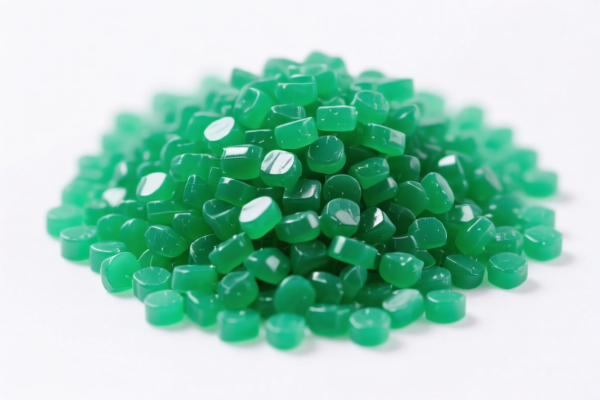
商品图片


AI分析
🏭 Corrosion Resistant Casting Resin (Industrial Polymers)
🌐 HS Code Classification & Customs Clearance Guide | 2026 Harmonized System Update | Professional Import Strategy
📌 I. Product Definition & Technical Distinction: What Exactly Is It?
"Corrosion Resistant Casting Resin" is a broad industrial term that typically refers to two distinct types of polymer materials used in manufacturing, maintenance, and coating applications. The key to correct HS Code classification lies in chemical structure and physical form (primary forms vs. mixtures/preparations).
In international trade, these resins usually fall into two categories: 1. Epoxide Resins (Epoxy): High-performance polymers known for exceptional chemical resistance, strong adhesion, and low shrinkage. Often used for lining tanks, bonding composite materials, or as protective coatings. 2. Unsaturated Polyester Resins: Often mixed with styrene and additives. While "resistant" grades exist, standard polyesters are less chemically inert than epoxies. However, specific unsaturated variants are classified under Chapter 39.
⚠️ Critical Distinction for Classification: - If the product is a pure resin or uncompounded polymer (primary form) → It belongs to Chapter 39 (Plastics). - If the product is a kit, paint, or pre-mixed preparation containing solvents, catalysts, or fillers beyond standard compounding → It may fall under Chapter 32 (Paints/Varnishes) or Chapter 35 (Preparations), which have different duties. - The data provided below assumes the product is a primary form polymer as per the specific HS codes referenced.
📦 II. HS Code Classification Matrix (2026 Latest Tariff Schedule)
Based on the specific data provided, the product falls into one of two primary subheadings depending on its chemical composition.
| HS Code | Product Description | Key Characteristics | Typical Application |
|---|---|---|---|
3907.30.00.00 |
Epoxide Resins | Phenolic epoxy, bifunctional, or multifunctional epoxies. Uncured or partially cured. | Tank linings, circuit board substrates, high-strength adhesives, corrosion-resistant flooring. |
3907.91.20.00 |
Allyl Resins (a subset of Other Polyesters) | Unsaturated polyesters, specifically allyl resins, uncompounded. | Specialized casting, electrical insulation, decorative laminates. |
🔍 Why these codes? -
3907.30.00.00: The description explicitly matches "Epoxide resins" within the broader category of "Polyacetals, other polyethers and epoxide resins, in primary forms." -3907.91.20.00: The description explicitly matches "Allyl resins, uncompounded" under "Other polyesters: Unsaturated: Allyl resins."
💰 III. 2026 Tariff Rate Breakdown (China Origin to USA)
✅ Applicable Country: United States (US)
✅ Origin: China (CN)
✅ Effective Date: Rates include Section 301 Additional Duties.
🎯 1. 3907.30.00.00 – Epoxide Resins
| Item | Detail |
|---|---|
| Base Duty Rate | 6.1% |
| Section 301 Additional Duty | 25.0% |
| Total Tariff Rate | 31.1% |
| Calculation Basis | Ad Valorem (on CIF Value) |
| De Minimis Exemption | ❌ Not Eligible (Section 301 duties generally do not apply to de minimis shipments under $800, but for commercial imports, this is fully applicable). |
| Legal Reference | HTSUS 3907.30.00 → USITC Footnote 301 (25%) |
📌 Analysis:
Epoxide resins are critical industrial inputs. The 31.1% total duty makes them a high-cost import.
- The 6.1% is the standard Most Favored Nation (MFN) rate.
- The 25.0% is the punitive tariff added under U.S. Trade Representative (USTR) Section 301 actions against China.
- Cost Impact: For a $100,000 shipment, duties amount to $31,100.
🎯 2. 3907.91.20.00 – Allyl Resins (Other Polyesters)
| Item | Detail |
|---|---|
| Base Duty Rate | 0.0% |
| Section 301 Additional Duty | 25.0% |
| Total Tariff Rate | 25.0% |
| Calculation Basis | Ad Valorem (on CIF Value) |
| De Minimis Exemption | ❌ Not Eligible for commercial imports. |
| Legal Reference | HTSUS 3907.91.20 → USITC Footnote 301 (25%) |
📌 Analysis:
Allyl resins benefit from a 0% base rate, which is lower than epoxies. However, the 25% Section 301 duty remains the same.
- Savings: Compared to epoxies (31.1%), this saves 6.1%.
- Strategic Note: If your "corrosion-resistant resin" can technically be formulated or classified as an allyl resin (rather than epoxy), this classification offers a 6.1% duty advantage. However, misclassification carries severe penalties.
🛠️ IV. Customs Clearance Operational Advice (Best Practices)
✅ 1. Documentation Requirements (Mandatory)
| Document | Purpose | Notes |
|---|---|---|
| Commercial Invoice | Declare Value & HS Code | Must clearly state "Epoxide Resin" or "Allyl Resin," NOT generic "Corrosion Resistant Casting Resin" to avoid ambiguity. |
| Certificate of Origin (CO) | Prove Origin | Required to apply Section 301 duties correctly. If not China-made, 301 duties may not apply. |
| Technical Data Sheet (TDS) | Chemical Composition | Critical for proving the resin type (Epoxy vs. Allyl vs. Polyester). Include CAS numbers if possible. |
| MSDS / SDS | Safety Compliance | Required for hazmat clearance. Epoxies may be classified as dangerous goods depending on components. |
| Form E (If applicable) | Free Trade Agreement | If sourced from countries with US FTAs (e.g., Australia, Chile, Colombia), duty may be reduced. Note: China is not covered by FTA preferences for these codes. |
✅ 2. Classification Strategy & Risk Mitigation
| Scenario | Correct Action | Risk of Error |
|---|---|---|
| Product is Epoxy | Use 3907.30.00.00 (31.1% Duty) |
Misclassifying as Allyl (3907.91.20.00) to save 6.1% is fraud if chemically inaccurate. |
| Product is Allyl | Use 3907.91.20.00 (25.0% Duty) |
Misclassifying as Epoxy leads to overpayment (minor risk) or rejection if EPA/ASTM tests don't match. |
| Product is Mixed/Paint | Re-evaluate Chapter 32 (3208.xxxx) |
If it contains >10% solvents or pigments, it may not be a "primary form." Chapter 32 rates vary and may be lower or higher. |
| Kit Form (Resin + Hardener) | Declare as Single Commodity | If sold as a kit for casting, it is often classified by the principal material (the resin). Ensure hardener is included in the same shipment. |
📌 Pro Tip:
- "Casting Resin" is a functional term, not a chemical one. Customs looks at chemical nature.
- If the resin is uncured liquid or solid, it is "primary form."
- If it is pre-colored or pre-mixed with fillers that change its fundamental character, it may no longer be "primary form."
- Always provide the CAS number (Chemical Abstracts Service) on the invoice to eliminate guesswork.
✅ 3. Special Considerations for "Corrosion Resistant"
- Hazmat Classification: Many epoxide resins contain volatile organic compounds (VOCs) or sensitizers. Ensure proper IMDG/IATA labeling if shipping by sea/air.
- Environmental Compliance: EPA TSCA (Toxic Substances Control Act) declarations may be required for chemical imports.
- Pre-Ruling: Given the 25% additional duty, consider applying for a Customs Ruling from U.S. Customs and Border Protection (CBP) before bulk shipments. This legally binds the agency to your classification.
🌍 V. Global Market Comparison (2026)
| Market | HS Code | Base Duty | Additional Duties | Total Est. Duty | Notes |
|---|---|---|---|---|---|
| 🇺🇸 USA | 3907.30.00.00 |
6.1% | +25% (301) | 31.1% | High barrier for Chinese epoxy. |
| 🇨🇳 China | 3907.30.00.00 |
~6-7% | 0% | ~6-7% | Importing into China is cheaper. |
| 🇪🇺 EU | 3907.30 |
0% | 0% | 0% | Generally duty-free for epoxies. |
| 🇮🇳 India | 3907.30 |
7.5% | 0% | 7.5% | No retaliatory tariffs. |
📌 Conclusion:
The USA is the most expensive market for Chinese-made corrosion-resistant resins due to the叠加 (stacking) of MFN and Section 301 duties.
- EU and India offer significantly lower duties.
- If exporting to the US is mandatory, cost absorption or supply chain diversification (e.g., assembling in Vietnam/Mexico) may be necessary to mitigate the 31.1% or 25% duty burden.
📌 VI. Common Mistakes & Pitfalls
❌ Mistake 1: Using generic terms like "Resin" or "Plastic Material" on the invoice.
👉 Result: CBP may assign a generic code with higher duties or demand a ruling, causing delays.
👉 Fix: Use precise chemical names (e.g., "Bisphenol-A Epoxy Resin").
❌ Mistake 2: Ignoring the "Primary Form" requirement.
👉 Result: If the resin is part of a finished coating kit, it might be classified as a paint (3208.20), which has different duties and EPA requirements.
👉 Fix: Confirm if the product is a raw polymer or a finished preparation.
❌ Mistake 3: Assuming all "Resins" have the same duty.
👉 Result: Epoxies (31.1%) vs. Allyls (25%) vs. Other Polyesters (varies).
👉 Fix: Verify chemical composition with the supplier.
🎯 VII. Conclusion: Strategic Sourcing & Clearance
🎯 Key Takeaway:
"Chemical Identity Drives Duty."
- Epoxies face 31.1% total duty.
- Allyl Resins face 25.0% total duty.
- Both are subject to Section 301 penalties if of Chinese origin.
✅ Action Plan:
1. Verify Composition: Obtain the TDS and CAS numbers from your supplier.
2. Choose Correct HS Code: Match the chemical structure to 3907.30 (Epoxy) or 3907.91 (Allyl).
3. Prepare Documentation: Include SDS, CO, and precise chemical descriptions.
4. Consider Pre-Ruling: For large volumes, get a CBP Ruling to lock in the duty rate.
5. Evaluate Alternatives: If costs are prohibitive, explore non-Chinese suppliers or alternative markets.
📣 Immediate Next Step:
📄 Review your Supplier's Certificate of Analysis (COA) against the HS Code descriptions.
📞 Consult a Licensed Customs Broker to validate the "Primary Form" status.
💡 Optimize: If your product is technically an Allyl resin, claim the 6.1% duty savings legally!
✨ Precision in Classification Saves Money!
💼 Don't let generic terms cost you 31.1% in duties!
用户评价
关于 HS 编码归类
协调制度(HS)是由世界海关组织(WCO)制定的国际贸易商品分类标准。全球 200 多个国家采用 HS 系统作为海关关税、贸易统计和进出口监管的基础。
每个 HS 编码遵循以下层级结构:
- 章(2 位)——商品大类(例如:第 84 章:机器和机械设备)
- 品目(4 位)——章内的更具体分类
- 子目(6 位)——国际通用细分,所有 WCO 成员国统一使用
- 本国细分(8-10 位)——各国自行扩展的细分编码,如美国 HTSUS 10 位编码
正确的 HS 编码归类对于顺利通关、准确缴纳关税和遵守贸易法规至关重要。错误归类可能导致海关延误、多缴关税或罚款。
从CN进口到US时,适用的关税税率可能包括:
- 最惠国(MFN)税率——适用于 WTO 成员国的标准关税税率
- 普通税率——适用于无贸易协定国家
- 贸易救济关税——附加关税,如 301 条款(反倾销)、232 条款(国家安全)或反补贴税
本页内容仅供参考。如需正式归类,请咨询当地海关或持牌报关代理。