Cotton Glued Socks
CN → US| HS编码 | 关税税率 | 原产国 | 目的国 | 文档 |
|---|---|---|---|---|
| 6115959000 | 31.0% | CN | US | 官方文档 |
| 6115103000 | 31.0% | CN | US | 官方文档 |
| 6117809510 | 32.1% | CN | US | 官方文档 |
| 6117909080 | 32.1% | CN | US | 官方文档 |
| 6115959000 | 31.0% | CN | US | 官方文档 |
商品图片

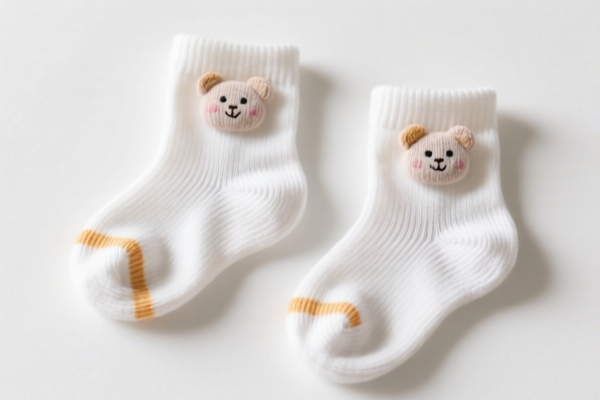


AI分析
🧦 Cotton Glued Socks: Global Trade Classification & Customs Clearance Guide (2026 Edition)
🌐 HS Code Reference & Customs Strategy | 2026 Tax Breakdown | Professional Entry Tactics
📌 I. Product Definition & Classification: What Exactly are "Cotton Glued Socks"?
"Cotton Glued Socks" are a specialized type of knitted hosiery where cotton fibers are bonded or adhered (often using heat-activated adhesives, resin, or specialized stitching techniques to reinforce the heel/toe) to enhance durability, shape retention, or for decorative purposes. In international trade, despite the "glued" aspect, the primary material (cotton) and form (socks) dictate their classification under Chapter 61 (Knitted or Crocheted Articles).
Critical Distinction: * Pure Knitted Socks: Standard cotton socks → 6115.95.90.00 * Graduated Compression Socks: Medical/athletic specific → 6115.10.30.00 * Socks as Accessories: If the "glued" part implies a non-standard form factor acting as an appendage → 6117.80.95.10 / 6117.90.90.80
⚠️ Key Classification Point:
- If the item is a functional sock (worn on the foot) → 6115 series (Hosiery).
- If the "glued" feature makes it a part of another garment (e.g., a glued-on patch acting as a decorative accessory) → 6117 series (Clothing Accessories).
📦 II. HS Code Classification Details (2026 Tax Schedule)
Based on the provided data, here is the precise mapping for Cotton Glued Socks:
| HS Code | Product Description | Scenario | Total Tax Rate |
|---|---|---|---|
| 6115.95.90.00 | Cotton Socks (Standard) | General cotton socks, including those with glued reinforcement, falls under "Other Men's/Girls' Socks". | 31.0% |
| 6115.10.30.00 | Graduated Compression Socks | "Cotton Glued Socks" designed specifically for medical compression or athletic performance with specific pressure gradients. | 31.0% |
| 6117.80.95.10 | Socks as Clothing Accessories | If the glued element makes the item classified as a generic "other knitted accessory" rather than a standard sock (e.g., decorative glued bands). | 32.1% |
| 6117.90.90.80 | Other Knitted Accessories | Socks with unusual "glued" construction that do not fit the standard hosiery definition, treated as "other accessories". | 32.1% |
🔍 Critical Insight:
- 6115.95.90.00 is the most common classification for standard cotton socks, even if they have glued toes or heels.
- 6117 Series (6117.80/6117.90) usually applies if the item is not a traditional sock but an accessory worn like a sock or part of a uniform.
- Tax Discrepancy: The 6117 series items carry a 1.1% higher tax rate (32.1% vs 31.0%) due to a higher base duty (14.6% vs 13.5%).
💰 III. 2026 Tariff Rate Deep Dive (Including Add-ons)
✅ Applicable Market: United States (US)
✅ Origin: China (CN)
✅ Effective Date: Current trade regime (Section 301, Section 122, etc.)
🎯 1. 6115.95.90.00 (Standard Cotton Socks)
| Component | Rate | Legal Basis |
|---|---|---|
| Base Duty | 13.5% | General MFN (Most Favored Nation) Rate |
| Section 301 (Added Tariff) | 7.5% | Retaliatory/Targeted Tariff on Textiles |
| Section 122 Tariff | 10.0% | Specific 122 Program Tariff (Trade Adjustment) |
| Total Tax | 31.0% | 13.5 + 7.5 + 10.0 |
| Calculation | CIF × 31% | |
| De Minimis Exemption? | ❌ NO | Textiles are generally excluded from $800 de minimis relief in this context. |
📌 Explanation:
- Base Duty (13.5%): Standard US import duty for cotton hosiery.
- Section 301 (7.5%): "Additional Duties on Chinese Imports" targeting specific textile categories.
- Section 122 (10%): A specific 122 clause tariff (often related to trade adjustment or specific country-level duties).
- Total = 31.0%. This is a heavy tax burden for low-margin goods like socks.
🎯 2. 6115.10.30.00 (Graduated Compression Socks)
- Total Tax: 31.0%
- Breakdown: Same as above (13.5% Base + 7.5% Added + 10% Section 122).
- Note: Medical compression socks do not receive tariff relief in this dataset.
🎯 3. 6117.80.95.10 & 6117.90.90.80 (Accessories)
| Component | Rate | Note |
|---|---|---|
| Base Duty | 14.6% | Higher base rate for "Clothing Accessories". |
| Section 301 (Added Tariff) | 7.5% | Same as socks. |
| Section 122 Tariff | 10.0% | Same as socks. |
| Total Tax | 32.1% | 14.6 + 7.5 + 10.0 |
| Difference | +1.1% | Higher cost than standard socks. |
📌 Why the difference?
The "Base Duty" for accessories (14.6%) is slightly higher than for hosiery (13.5%), leading to a higher total tax.
🛠️ IV. Customs Clearance Practical Advice (Avoiding Pitfalls)
✅ 1. Documentation Checklist (Mandatory)
| Document | Requirement | Why it Matters |
|---|---|---|
| Commercial Invoice | Must specify "Cotton Glued Socks" and material content (100% Cotton or blend %). | Prevents misclassification as "Synthetic" or "Mixed Material". |
| Product Photos | Clear images showing the "Glued" areas (toe/heel). | Customs needs to verify if the glue changes the nature of the product to an "Accessory". |
| Bill of Materials (BOM) | List of adhesive type (heat-seal, resin, etc.). | Determines if the item is still "Knitted" (6115) or "Made-up" (6117). |
| Packing List | Detailed weight/volume. | Essential for calculating duty on CIF value. |
| Country of Origin Cert | China (CN) required. | Confirms applicability of 301/122 Section Tariffs. |
✅ 2. Declaration Strategy (The "Glue" Question)
🔥 Golden Rule:
"If it looks like a sock and wears like a sock, it is a sock (6115), not an accessory (6117)."
| Scenario | Correct HS Code | Risk of Misclassification |
|---|---|---|
| Glued Toe Reinforcement (Standard sock) | 6115.95.90.00 | ✅ Safe. Low tax (31%). |
| Glued Decorative Patch (Makes it an accessory) | 6117.80.95.10 | ⚠️ Risk: Tax jumps to 32.1%. |
| Medical Compression with Glue | 6115.10.30.00 | ✅ Safe. Tax 31%. |
| Glued Socks declared as "Clothing Parts" | 6117.90.90.80 | ❌ High Risk: Overpayment or Audit. |
✅ 3. Special Handling for "Glued" Socks
- Material Composition: Ensure the invoice clearly states "100% Cotton". If the glue contains synthetic fibers >5%, the classification might shift to 6115.96 (Synthetic), which could have different tax rates (check current schedule).
- Adhesive Type: If the adhesive is significant enough to be considered the "main binding agent" rather than a reinforcement, Customs may challenge the "Knitted" nature. Provide a technical data sheet proving the sock structure remains knitted.
- Cost Allocation: Ensure the "Glue" cost is included in the CIF value. If the adhesive is sold separately, it might be assessed as a separate item (higher risk).
🌍 V. Market Comparison & Strategic Outlook
| Market | Recommended HS Code | Total Tax | Notes |
|---|---|---|---|
| 🇺🇸 USA | 6115.95.90.00 | 31.0% | High Section 301 & 122 tariffs. Must declare accurately. |
| 🇪🇺 EU | 6115.95.90 | ~8-10% | No Section 301/122, but VAT applies. |
| 🇨🇦 Canada | 6115.95.90 | ~5-8% | Lower base duties, no Section 122. |
📌 Strategic Conclusion:
The US market is the most expensive for Cotton Glued Socks due to the cumulative 31.0% tax. - Optimization: If the "glued" feature is minor, strictly declare as 6115.95.90.00 to avoid the 1.1% penalty of the 6117 series. - Supply Chain: Consider sourcing to Vietnam/Mexico to avoid Section 122 and Section 301 tariffs (if applicable), though 13.5% base duty usually remains.
📌 VI. Common Errors & "Red Flags"
❌ Error 1: Declaring as "General Clothing" (6117)
👉 Consequence: Higher tax (32.1% vs 31%) + Audit risk if the item is clearly a sock.
❌ Error 2: Ignoring the "Section 122" Tariff
👉 Consequence: Underpaying by 10% → Fines + Back Taxes. This is a mandatory 10% on Chinese-origin textiles.
❌ Error 3: Vague Material Description
👉 Consequence: If the invoice just says "Textile Socks", Customs may classify based on worst-case scenario (highest duty). Always specify "Cotton".
❌ Error 4: Missing "Glued" Documentation
👉 Consequence: Customs may classify as "Non-Knitted" or reject the entry if the construction isn't clear.
✅ Correct Declaration Example:
"Men's Cotton Socks with Reinforced Toe (Glued), 100% Cotton, HS Code: 6115.95.90.00, Origin: China. Total Duty Applicable: 31% (13.5% Base + 7.5% 301 + 10% 122)."
🎯 VII. Final Verdict: Action Plan
🎯 For Exporters:
1. Verify Construction: Ensure the "glue" is an accessory, not the main structure.
2. Declare Accurately: Use 6115.95.90.00 for standard socks.
3. Price in Duty: Factor the 31.0% total tax into your FOB/CIF pricing.
4. Prepare Docs: Have the Adhesive Technical Sheet ready for Customs inspection.
💡 Pro Tip:
If the volume is high, apply for CBP (Customs Border Protection) Binding Ruling in advance to confirm the "Glued Sock" stays in the 6115 category and avoids the 6117 penalty.
📣 Immediate Action:
📞 Contact Customs Broker with the technical datasheet.
🚀 Calculate Landed Cost including the 31% tax before shipping.
✨ Precision in classification = Savings in your bottom line!
✨ Professional Customs Compliance Starts with the Right HS Code!
💼 Don't let "Glue" cost you your profit margin!
用户评价
关于 HS 编码归类
协调制度(HS)是由世界海关组织(WCO)制定的国际贸易商品分类标准。全球 200 多个国家采用 HS 系统作为海关关税、贸易统计和进出口监管的基础。
每个 HS 编码遵循以下层级结构:
- 章(2 位)——商品大类(例如:第 84 章:机器和机械设备)
- 品目(4 位)——章内的更具体分类
- 子目(6 位)——国际通用细分,所有 WCO 成员国统一使用
- 本国细分(8-10 位)——各国自行扩展的细分编码,如美国 HTSUS 10 位编码
正确的 HS 编码归类对于顺利通关、准确缴纳关税和遵守贸易法规至关重要。错误归类可能导致海关延误、多缴关税或罚款。
从CN进口到US时,适用的关税税率可能包括:
- 最惠国(MFN)税率——适用于 WTO 成员国的标准关税税率
- 普通税率——适用于无贸易协定国家
- 贸易救济关税——附加关税,如 301 条款(反倾销)、232 条款(国家安全)或反补贴税
本页内容仅供参考。如需正式归类,请咨询当地海关或持牌报关代理。