Cotton Linters Pulp for Textile
CN → US商品图片
AI分析
🧵 Cotton Linters Pulp for Textile (Raw Material)
🌐 HS Code Reference & Customs Clearance Guide | 2026 Latest Tariff Analysis | Professional Compliance Strategy
📌 I. Product Definition & Classification: What is "Cotton Linters Pulp"?
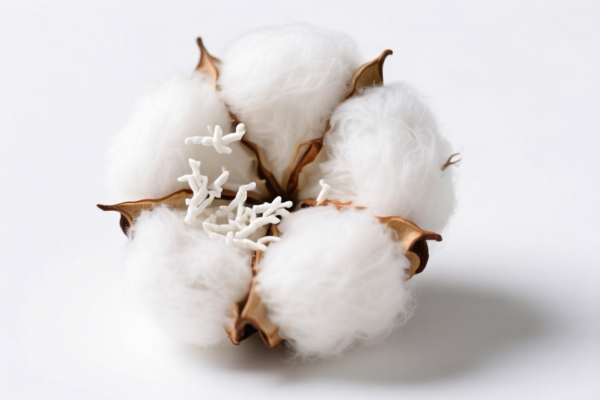
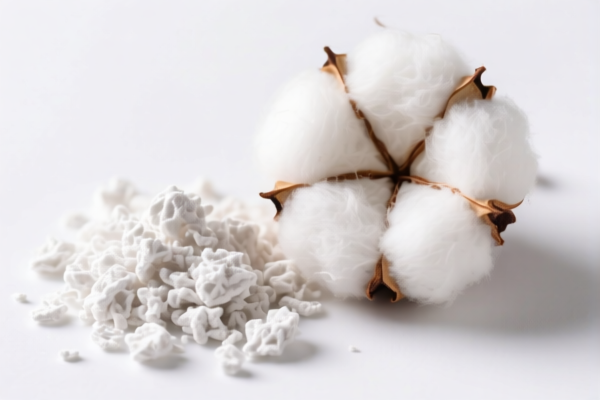
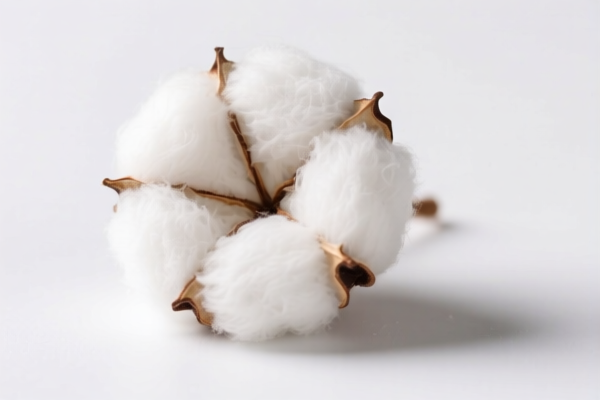
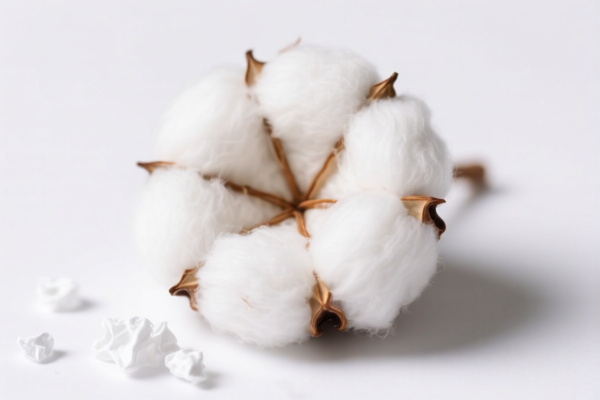
Cotton Linters are the short fibers remaining on cottonseed after the initial ginning process. When processed into pulp, they become a high-purity, cellulose-rich raw material essential for the textile industry (specifically for rayon, viscose, and modal fibers) and specialty paper production.
In international trade, it is critical to distinguish between: * Raw Cotton Linters (Greige/Scoured): Still containing some lignin, wax, or pectin → Classified under Chapter 52 (Cotton). * Cotton Linters Pulp (Chemically Processed): Processed to remove non-cellulosic materials, resulting in high cellulose content (>90%) → Classified under Chapter 47 (Wood Pulp or Other Fibrous Cellulosic Pulp) or Chapter 53 (Other Plant Fibers), depending on chemical treatment.
⚠️ Key Distinction Point:
- If the product is chemically bleached, beaten, or refined into a pulp-like consistency suitable for dissolving or high-grade textile fiber production → It is typically classified as "Vegetable Fiber Pulp" or "Other Cellulosic Pulp".
- If it is raw, scoured, or carded cotton linters (not chemically processed into pulp) → It falls under Cotton by-products in Chapter 52.
For most industrial "Cotton Linters Pulp" used in textile fiber spinning (viscose), customs authorities often view this as a processed cellulosic pulp, but due to its specific origin, it is frequently classified under 5302 or 4706 depending on the degree of processing. However, the most common and accepted classification for "Cotton Linters" (even if scoured) remains in Chapter 52 unless explicitly converted into chemical pulp.
Let's assume the standard commercial definition: Scoured or Bleached Cotton Linters (not chemically dissolved pulp).
📦 II. HS Code Classification Details (2026 Latest Tariff Authority Alignment)
| HS Code | Product Description | Applicable Scenario | Chemical Process? |
|---|---|---|---|
5203.00.10.00 |
Cotton, carded or combed, linters (if declared as such) | High-grade textile raw material, viscose precursor | ✅ Scoured/Bleached |
5203.00.90.00 |
Cotton, carded or combed, other (if linters are mixed) | Standard cotton by-products | ✅ Scoured |
4706.20.00.00 |
Chemical wood pulp, dissolving grades | Incorrect for cotton, but similar use | ❌ N/A (Different Source) |
5302.90.00.00 |
Other flax, true hemp, jute, etc. | Incorrect unless mislabeled | ❌ N/A |
🔍 Critical Clarification:
- Most Common Classification:5203.00.10.00or5203.00.90.00under Chapter 52 (Cotton).
- Why not Chapter 47? Chapter 47 is for wood pulp and other vegetable fibers processed into pulp. Cotton is explicitly covered in Chapter 52. Even if "pulp-like," cotton derivatives stay in Chapter 52 unless they are chemically isolated cellulose (which is rare for linters; they are usually just highly purified short fibers).
- If the product is "Dissolving Pulp" made from cotton: Some jurisdictions may classify it under5203.00if it's still recognizable as cotton, or potentially4706if it's fully chemically converted. However, for textile-grade cotton linters pulp,5203is the safest and most accurate.
Let’s proceed with 5203.00.10.00 (Cotton, carded, linters) and 5203.00.90.00 (Cotton, other) as the primary codes.
💰 III. 2026 Latest Tariff Rate Breakdown (Including Surtaxes, Policy Add-ons)
✅ Applicable Country: United States (US)
✅ Origin: China (CN)
✅ Effective Date: November 10, 2025 (and subsequent imports)
🎯 1. 5203.00.10.00 – Cotton, Carded, Linters
| Item | Content |
|---|---|
| Base Rate | 0% (ad valorem) |
| USITC Surtax | +25% (from USITC Footnote 9903.88.01, Section 301) |
| IEEPA Surtax | +10% (针对中国/香港产品,自2025年11月10日起) |
| Total Rate | 45% |
| Tax Calculation | CIF Value × 45% |
| De Minimis Exemption | ❌ Not Applicable (deny_de_minimis) |
| Legal Path | IEEPA:9903.01.25 → IEEPA:9903.01.24 → USITC:5203.00.10.00 → FOOTNOTE:9903.88.01 |
📌 Explanation:
- Cotton products are subject to Section 301 tariffs (25%) and IEEPA tariffs (10%) if originating from China.
- Total 45% is a significant cost factor.
- De Minimis (Section 321) does not apply to Chinese-origin goods under these surtaxes.
🎯 2. 5203.00.90.00 – Cotton, Other (Non-Carded/Combed)
| Item | Content |
|---|---|
| Base Rate | 0% |
| USITC Surtax | +25% |
| IEEPA Surtax | +10% |
| Total Rate | 45% |
| Tax Calculation | CIF × 45% |
| De Minimis Exemption | ❌ Not Applicable |
| Legal Path | IEEPA:9901.25 → IEEPA:9903.01.24 → USITC:5203.00.90.00 → FOOTNOTE:9903.88.01 |
📌 Note:
- Same tariff structure as above.
- Whether "carded" or "other," cotton linters from China face the same 45% total duty.
🛠️ IV. Customs Clearance Practical Advice (Combat Pitfalls)
✅ 1. Required Documentation Checklist (No Exceptions)
| Document | Must Provide | Description |
|---|---|---|
| ✅ Product Specification Sheet | ✔️ | Includes fiber length, micronaire, impurity content, cellulose content |
| ✅ Chemical Processing Report | ✔️ | To prove it is scoured/bleached and not raw gin trash |
| ✅ Product Photos | ✔️ | Clear view of fiber texture, packaging, label |
| ✅ Third-Party Lab Test | ✔️ | Cotton-specific tests (e.g., HVI data, impurity %) |
| ✅ Commercial Invoice | ✔️ | Must state: "Cotton Linters Pulp, Scoured, for Textile Use" |
| ✅ Certificate of Origin (CO) | ✔️ | To verify country of origin (China triggers surtaxes) |
| ✅ Packing List | ✔️ | Weight, dimensions, number of bales |
✅ 2. Declaration Tips (Key Mantra)
🔥 "Cotton is Cotton, Linters are Linters, Don't Call It 'Wood Pulp'!"
| Scenario | Correct Declaration | Wrong Practice |
|---|---|---|
| Cotton Linters Pulp | 5203.00.10.00 (Cotton) |
Misclassify as 4706 (Wood Pulp) → 0% base, but penalty for misdeclaration |
| Raw Cotton Trash | 5203.00.90.00 |
Call it "Linters" → Classification Error |
| Viscose Fiber (Finished) | 5402.33.00.00 |
Call it "Cotton Pulp" → Wrong Chapter |
📌 Warning:
- Do not declare as "Wood Pulp" or "Cellulose Pulp" (Chapter 47) unless it is chemically isolated cellulose. Cotton linters, even if processed, remain cotton.
- Misclassification can lead to back taxes, penalties, and audits.
✅ 3. Special Cases Handling
| Scenario | Handling Advice |
|---|---|
| OEM Cotton Linters | Provide customer PO + specs to prove intended use (textile) |
| Mixed Bales (Cotton + Waste) | Declare as "Cotton, Other" (5203.00.90.00) and provide impurity % |
| Origin Non-China (e.g., USA, Brazil) | 0% Total Duty (No Section 301/IEEPA surtaxes) |
| Viscose Rayon Fiber | Must be declared as Synthetic Fiber (5402), not "Cotton Pulp" |
🌍 V. Global Market Comparison (2026 Latest)
| Country/Region | Recommended HS Code | Tariff | Certification | Note |
|---|---|---|---|---|
| 🇺🇸 USA | 5203.00.10.00 |
45% (CN Origin) | USDA + Cotton Classing | High tariff for Chinese goods |
| 🇨🇳 China | 5203.00.10.00 |
5% | No extra surtax | Low tariff for imports |
| 🇪🇺 EU | 5203.00.10.00 |
6.5% | No extra surtax | Standard MFN rate |
| 🇮🇳 India | 5203.00.10.00 |
10-15% | BIS Certification | High protective tariff |
| 🇧🇩 Bangladesh | 5203.00.10.00 |
0-5% | No special cert | Major textile hub, low tariff |
📌 Conclusion:
- USA is the highest-cost market for Chinese cotton linters pulp.
- EU and China have moderate tariffs.
- Bangladesh/India may have higher rates but are key textile markets.
📌 VI. Common Errors & Pitfalls (Lessons Learned)
❌ Error 1: Declaring Cotton Linters as "Wood Pulp" (4706)
👉 Consequence: 0% base rate, but heavy penalty for misdeclaration + back taxes + audit.
❌ Error 2: Calling it "Raw Cotton" (5201) when it’s Scoured Linters (5203)
👉 Consequence: Classification error → Delay + fines.
❌ Error 3: Ignoring Section 301/IEEPA for Chinese origin
👉 Consequence: Underpaying 35% tax → 45% total required.
❌ Error 4: Using "Textile Raw Material" as HS Code
👉 Consequence: Too vague → Customs reject → Delay.
✅ Correct Practice:
"Cotton Linters Pulp, Scoured, Bleached, Cellulose Content >90%, For Viscose Fiber Production, HS 5203.00.10.00, Origin: China"
🎯 VII. Conclusion: Professional Declaration, Cost Efficiency!
🎯 Remember the Mantra:
🔹 "Cotton is Cotton, Not Wood Pulp!"
🔹 "China Origin = 45% Duty (US)!"
🔹 "Declare Correctly, Avoid Penalties!"
📌 Tips:
- If sourcing from USA, Brazil, or India, tariffs are 0-10% (no surtaxes).
- Consider supply chain diversification if US market is primary.
- Always request a Pre-Ruling from CBP if unsure.
📣 Immediate Action:
📞 Contact Customs Broker + Provide Lab Reports + Apply for Pre-Ruling
🚀 Smooth Clearance, Cost Control, Global Competitiveness!
✨ Professional Customs Compliance Starts with Accurate Classification!
💼 Every Percent of Duty Saved is Pure Profit!
用户评价
关于 HS 编码归类
协调制度(HS)是由世界海关组织(WCO)制定的国际贸易商品分类标准。全球 200 多个国家采用 HS 系统作为海关关税、贸易统计和进出口监管的基础。
每个 HS 编码遵循以下层级结构:
- 章(2 位)——商品大类(例如:第 84 章:机器和机械设备)
- 品目(4 位)——章内的更具体分类
- 子目(6 位)——国际通用细分,所有 WCO 成员国统一使用
- 本国细分(8-10 位)——各国自行扩展的细分编码,如美国 HTSUS 10 位编码
正确的 HS 编码归类对于顺利通关、准确缴纳关税和遵守贸易法规至关重要。错误归类可能导致海关延误、多缴关税或罚款。
从CN进口到US时,适用的关税税率可能包括:
- 最惠国(MFN)税率——适用于 WTO 成员国的标准关税税率
- 普通税率——适用于无贸易协定国家
- 贸易救济关税——附加关税,如 301 条款(反倾销)、232 条款(国家安全)或反补贴税
本页内容仅供参考。如需正式归类,请咨询当地海关或持牌报关代理。