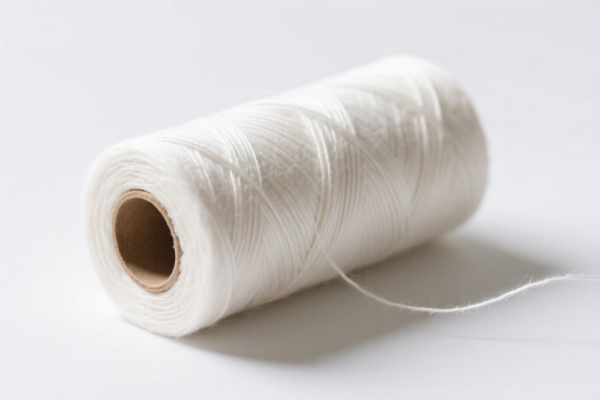
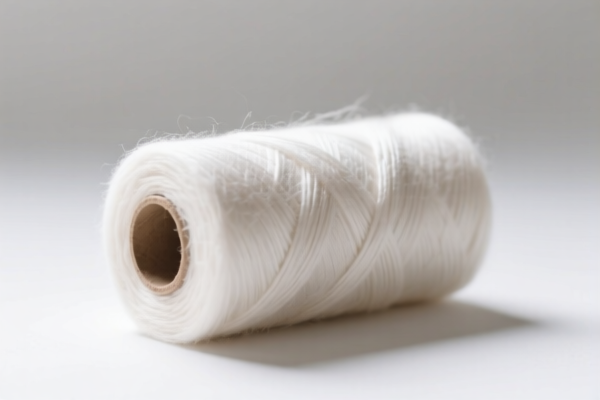
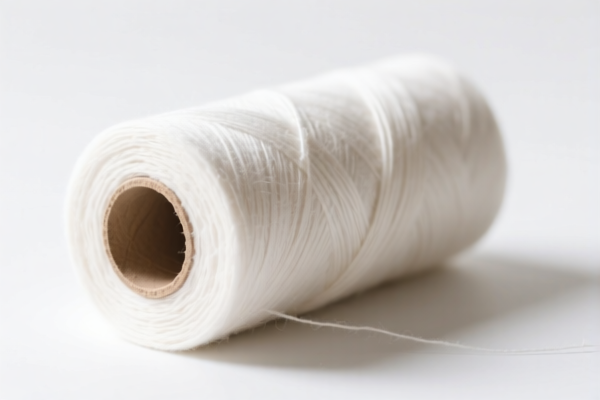
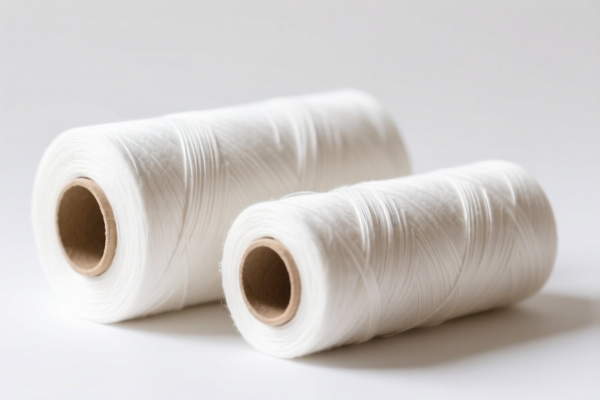
Cotton Paper Roll
CN → US| HS编码 | 关税税率 | 原产国 | 目的国 | 文档 |
|---|---|---|---|---|
| 4811909010 | 35.0% | CN | US | 官方文档 |
| 4811904090 | 35.0% | CN | US | 官方文档 |
| 4911911500 | 17.5% | CN | US | 官方文档 |
| 4823908680 | 35.0% | CN | US | 官方文档 |
| 4802204020 | 35.0% | CN | US | 官方文档 |
商品图片
AI分析
📜 Cotton Paper Rolls: The Ultimate Guide to US HS Code Classification & Tariff Strategy (2026 Edition)
🌐 HS Code Reference & Customs Clearance Guide | 2026 Latest Tariff Analysis | Professional Level Clearance Strategy
📌 1. Product Definition & Classification: Do You Really Understand "Cotton Paper Rolls"?
Cotton paper rolls are premium, high-durability paper products made primarily from cellulose fibers (cotton/linen). In international trade, they are not a single entity but are classified based on their physical state, material composition, and specific intended use. Misclassification can lead to severe penalties, as the duty rates vary significantly between general paper goods and specific printed articles.
⚠️ Key Distinction Point:
- If it is a blank roll used for professional drafting (blueprints) or general printing/coating → It falls under Chapter 48 (Paper & Paperboard).
- If it is a printed article specifically for design/engineering blueprints → It may fall under Chapter 49 (Printed Books/Newspapers/Other Printed Matter).
- If it is used for certificates or official documents → It is often classified under specific certification paper codes.
📦 2. HS Code Classification Details (2026 Latest Tariff Authority Comparison)
Based on the provided data, here are the exact HS Codes, their summaries, and corresponding tax structures. Note that for Chinese-origin goods entering the US, Section 301 Tariffs and IEEPA Section 122 Tariffs apply, resulting in high combined duties.
| HS Code | Product Description & Summary | Application Scenario | Material/Form | Total Tax Rate |
|---|---|---|---|---|
4811.90.90.10 |
Blueprint Cotton Paper Roll: Material is cotton paper, form is rolled, usage fits "other" paper category. | General industrial blueprinting, technical drawings (non-specific printed format). | Rolled Cotton Paper | 35.0% |
4811.90.40.90 |
Blueprint Cotton Paper Roll: Material fits cellulose cotton/paper characteristics, form is rolled, usage for printing/coating paper products. | Coated/printed blueprints, technical printing substrates. | Rolled Cellulose/Cotton Paper | 35.0% |
4911.91.15.00 |
Blueprint Cotton Paper Roll: Form is rolled, material is cotton paper, usage is design-related printed articles. | Pre-printed design blueprints, architectural plans. | Rolled Printed Design Article | 17.5% |
4823.90.86.80 |
Certificate Cotton Paper Roll: Material is cotton paper, fits cellulose fiber network/paper requirements, form is paper product. | Blank rolls for printing certificates, diplomas, or official docs. | Rolled Certificate Paper | 35.0% |
4802.20.40.20 |
Certificate Cotton Paper Roll: Material contains cotton, form is uncoated paper roll, usage is certificate paper. | Uncoated, blank certificate paper rolls. | Uncoated Cotton Paper Roll | 35.0% |
🔍 Critical Insight:
- Chapter 48 vs. Chapter 49: The biggest risk is misclassifying a printed blueprint as general paper (Chapter 48) or vice versa.
-4911.91.15.00(17.5%) is significantly cheaper than the Chapter 48 codes (35.0%).
- However,4911.91.15.00requires the item to be a printed article specifically for design/engineering. If it is blank, you MUST use Chapter 48 (4811or4802), which incurs the higher 35% rate.
- Section 122 Tariffs: All codes listed include a 10% IEEPA Tariff (122 Clause) and 25% Section 301 Tariff (for most) or 7.5% Section 301 Tariff (for 4911), on top of 0% MFN base duty.
💰 3. 2026 Latest Tariff Rate Breakdown (Including Surtaxes, Policy Surcharges)
✅ Applicable Country: United States (US)
✅ Origin: China (CN)
✅ Effective Date: Post-2025 Tariff Regime (Includes subsequent imports)
🎯 1. 4811.90.90.10 & 4811.90.40.90 & 4823.90.86.80 & 4802.20.40.20 — General/Uncoated Cotton Paper Rolls
| Item | Detail |
|---|---|
| Base MFN Rate | 0% (Ad Valorem) |
| Section 301 Surtax | +25% (USITC Footnote 9903.88.01 / General Rule) |
| IEEPA Section 122 Tax | +10% (Targeting China/Hong Kong products) |
| Total Tax Rate | 35.0% |
| Tax Calculation | CIF Value × 35% |
| De Minimis Exemption | ❌ Not Eligible (Section 301 and Section 122 tariffs generally deny de minimis exemption for high-value or specific industrial goods) |
| Legal Basis Path | IEEPA:122 → USITC:Section 301 → HS Code:4811/4823/4802 |
📌 Explanation:
- These codes fall under "Paper, Paperboard, Cellulose Wadding and Webs of Cellulose Fibers" (Chapter 48).
- The 25% Section 301 tariff is standard for many paper products from China.
- The 10% IEEPA 122 tariff applies to a wide range of Chinese imports.
- Total Liability: 35%. This is a high-cost item for importers.
🎯 2. 4911.91.15.00 — Design-Related Printed Blueprints
| Item | Detail |
|---|---|
| Base MFN Rate | 0% (Ad Valorem) |
| Section 301 Surtax | +7.5% (Specific lower rate for certain printed articles under Section 301) |
| IEEPA Section 122 Tax | +10% (Targeting China/Hong Kong products) |
| Total Tax Rate | 17.5% |
| Tax Calculation | CIF Value × 17.5% |
| De Minimis Exemption | ❌ Not Eligible |
| Legal Basis Path | IEEPA:122 → USITC:4911.91.15.00 (with reduced 301 rate) |
📌 Strategic Advantage:
- If your product is already printed with design/engineering layouts, classify it here to save 17.5% in duties compared to blank rolls.
- Warning: You must prove it is a "printed article" and not just a roll of blank paper that will be printed later.
🛠️ 4. Customs Clearance Practical Advice (Battle-Tested Pitfall Guide)
✅ 1. Documentation Checklist (Missing items will cause delays)
| Document | Required | Description |
|---|---|---|
| ✅ Product Specification Sheet | ✔️ | Must specify: Fiber content (100% Cotton? Blend?), Weight (GSM), Width, Length, Core Size. |
| ✅ Usage Declaration | ✔️ | Explicitly state: "Blank paper for certificate printing" vs. "Pre-printed engineering blueprint." |
| ✅ Commercial Invoice | ✔️ | Clear description: "Cotton Paper Roll, Uncoated, for Certificate Use" OR "Printed Blueprint Rolls." |
| ✅ Packing List | ✔️ | Detail net/gross weight, number of rolls, cardboard core material. |
| ✅ Certificate of Origin | ✔️ | Required to verify Chinese origin for 122/301 tariff application. |
| ✅ Technical Data Sheet | ✔️ | Helps customs distinguish between "coated" and "uncoated" (Critical for 4802 vs 4811). |
✅ 2. Declaration Tips (Key Mantra)
🔥 “Blank is 35%, Printed is 17.5% – Know the Difference!”
| Scenario | Correct HS Code | Incorrect Declaration | Consequence |
|---|---|---|---|
| Blank Roll for Certificates | 4802.20.40.20 or 4823.90.86.80 |
"Printed Documents" | Audited, penalties for misclassification. |
| Blank Roll for Blueprints | 4811.90.90.10 or 4811.90.40.90 |
"Printed Art" | Audited, 17.5% vs 35% risk. |
| Pre-Printed Design Blueprint | 4911.91.15.00 |
"Paper Roll" | Missed savings, but lower risk. |
| Coated Paper | 4811.90.40.90 |
"Uncoated Paper" | Customs may reassess based on gloss test. |
✅ 3. Special Cases Handling
| Situation | Handling Advice |
|---|---|
| OEM Custom Printing | If the buyer provides the design, but you print it in China, declare as 4911.91.15.00 only if the printing is substantial and integral to the product. If it's just blank stock shipped for local printing, declare as 48xx. |
| Mixed Shipments | Do not mix 4811 and 4911 on the same line item. Declare separately. |
| "Cotton" Content | Ensure the "cotton" content is verified. If it’s mixed with wood pulp, the description must reflect "Cellulose Fiber" (fits 4811/4823) rather than pure "Cotton Paper" if the latter implies 100% rag content. |
| Section 122 Impact | Remember, the 10% IEEPA tax applies to ALL these codes. There is no exemption for cotton paper under Section 122. |
🌍 5. Global Market Comparison (2026 Latest)
| Country/Region | Recommended HS Code | Base Tariff | Section 301/122 Impact | Notes |
|---|---|---|---|---|
| 🇺🇸 USA | 4811.90.90.10 / 4911.91.15.00 |
0% | +25%/+7.5% S301 + 10% S122 | High Duty Environment. Use 4911 if possible to cut costs by half. |
| 🇨🇳 China (Export) | Same HS Codes | 0%~5% | N/A | Standard export clearance. |
| 🇪🇺 EU | 4811 / 4911 | 6.5%~12% | N/A (No Section 301) | Lower overall duty than US, but VAT applies. |
| 🇬🇧 UK | 4811 / 4911 | 6.5%~12% | N/A | Post-Brexit rules apply. |
📌 Conclusion:
- The US market is the most expensive for Chinese cotton paper rolls due to the dual-layer surtaxes (301 + 122).
- Strategic Move: If you are exporting printed blueprints, aggressively pursue classification under4911.91.15.00to reduce the total tax burden from 35% to 17.5%.
📌 6. Common Errors & Pitfall Guide (Blood & Tears Lessons)
❌ Error 1: Declaring blank blueprint paper as "Printed Blueprints" (4911)
👉 Consequence: Customs will seize or demand re-classification. Penalty for fraud if intent is proven.
👉 Fix: Only use 4911 if the ink/printing is permanent and the product is sold as a finished printed item.
❌ Error 2: Ignoring the "Coated" vs. "Uncoated" distinction
👉 Consequence: 4802 (Uncoated) and 4811 (Coated/Processed) have different subheadings. Mislabeling 4802 items as 4811 can lead to audits.
👉 Fix: Provide a physical sample or technical spec showing surface texture/gloss.
❌ Error 3: Assuming "Cotton Paper" gets preferential treatment
👉 Consequence: No. Section 301 and 122 tariffs apply regardless of fiber content if the origin is China.
👉 Fix: Plan for the full 35% (or 17.5%) duty cost in your pricing model.
🎯 7. Conclusion: Professional Declaration Saves Money!
🎯 Remember the Mantra:
🔹 "Blank is 35%, Printed is 17.5%!"
🔹 "Chapter 48 is General, Chapter 49 is Specific!"
🔹 "Don't forget the 122 Tax – It applies to EVERYTHING!"
📌 Pro Tip:
If your cotton paper rolls are not from China (e.g., sourced from Vietnam, India, or EU), the 301 Tariff (25% or 7.5%) may not apply.
However, the IEEPA Section 122 Tax (10%) often still applies depending on current executive orders.
Action: Always verify the Country of Origin before finalizing the HS Code.
📣 Immediate Action:
📞 Contact a Licensed Customs Broker: Provide product samples and print specs.
🚀 Apply for an Advance Ruling (Ruling Letter) from CBP for your specific batch. This legally binds CBP to your classification, protecting you from future audits.
✨ Professional Clearance Starts with Precise Classification!
💼 Every Percentage Point Saved is Pure Profit!
用户评价
关于 HS 编码归类
协调制度(HS)是由世界海关组织(WCO)制定的国际贸易商品分类标准。全球 200 多个国家采用 HS 系统作为海关关税、贸易统计和进出口监管的基础。
每个 HS 编码遵循以下层级结构:
- 章(2 位)——商品大类(例如:第 84 章:机器和机械设备)
- 品目(4 位)——章内的更具体分类
- 子目(6 位)——国际通用细分,所有 WCO 成员国统一使用
- 本国细分(8-10 位)——各国自行扩展的细分编码,如美国 HTSUS 10 位编码
正确的 HS 编码归类对于顺利通关、准确缴纳关税和遵守贸易法规至关重要。错误归类可能导致海关延误、多缴关税或罚款。
从CN进口到US时,适用的关税税率可能包括:
- 最惠国(MFN)税率——适用于 WTO 成员国的标准关税税率
- 普通税率——适用于无贸易协定国家
- 贸易救济关税——附加关税,如 301 条款(反倾销)、232 条款(国家安全)或反补贴税
本页内容仅供参考。如需正式归类,请咨询当地海关或持牌报关代理。