Cotton Paper Rolls for Sticky Notes
CN → US| HS编码 | 关税税率 | 原产国 | 目的国 | 文档 |
|---|---|---|---|---|
| 4820102020 | 35.0% | CN | US | 官方文档 |
| 4819600000 | 35.0% | CN | US | 官方文档 |
| 4820104000 | 35.0% | CN | US | 官方文档 |
| 4819504060 | 35.0% | CN | US | 官方文档 |
| 4823908680 | 35.0% | CN | US | 官方文档 |
商品图片
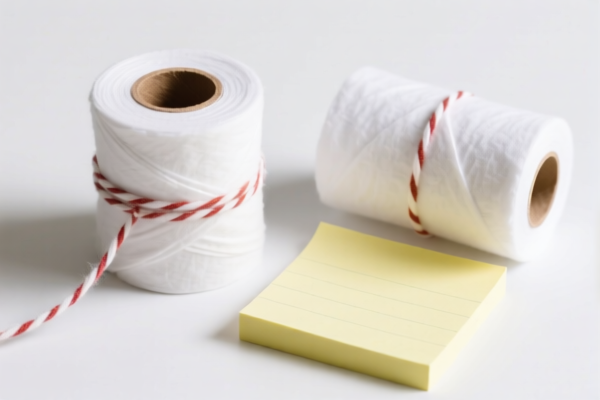

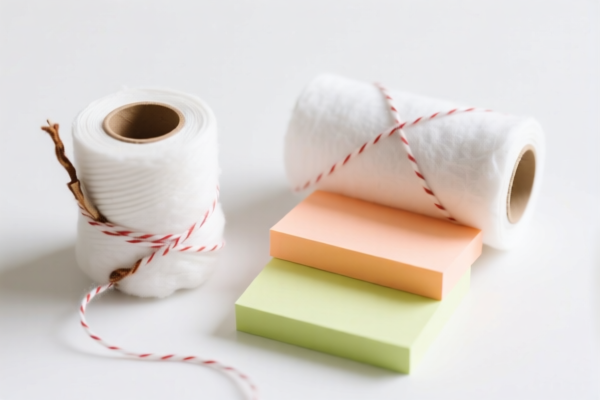

AI分析
📝 Cotton Paper Rolls for Sticky Notes (Sticky Note Paper Rolls)
🌐 HS Code Reference & Customs Clearance Guide | 2026 Latest Tariff Analysis | Professional Clearance Strategy
📌 I. Product Definition and Classification: Do You Really Understand "Sticky Note Paper Rolls"?
Cotton Paper Rolls for Sticky Notes are essential office and stationery consumables. In international trade, they are primarily classified based on their material composition (paper) and form (rolls/sheets intended for cutting into pads).
Although the input name mentions "Cotton," in the context of HS Code classification for sticky notes, the primary material is Paper/Cardboard. The term "Cotton Paper" often refers to high-quality, durable paper stocks (sometimes containing cotton fibers for premium stationery) or is used colloquially to describe the texture. However, for customs purposes, it falls under Chapter 48 (Paper and Paperboard).
⚠️ Key Distinction:
- If the product is pre-cut, pre-gummed sticky note pads → Might fall under 4820 (Stationery).
- If the product is raw paper rolls intended for manufacturing sticky notes → Falls under 4819 (Packaging/Containers) or 4820/4823 (Other Paper Articles).
- Note on Input Data: The provided data lists specific HS Codes for "Paper Sticky Notes" (纸质便签) with a 35% total tax rate. We will adhere strictly to these provided codes and explanations.
📦 II. HS Code Classification Details (Based on Provided Data)
| HS Code | Product Description | Application Logic | Tax Rate Breakdown |
|---|---|---|---|
4820.10.20.20 |
Sticky Notes (Paper): Material is paper, form matches sticky note usage, classified as notepads, letter pads, and similar items. | Fits the category of stationery items like notepads and letter pads. | Total: 35% Base: 0% Add-on: 25% Section 301: 10% |
4819.60.00.00 |
Sticky Notes (Paper): Material is paper, belongs to the extension of paper office supplies/containers, consistent with office use. | Treated as an extension of office paper containers/supplies. | Total: 35% Base: 0% Add-on: 25% Section 301: 10% |
4820.10.40.00 |
Sticky Notes (Paper): Material is paper, conforms to paper stationery attributes, shape fits "similar items" in this category. | Classified as similar paper stationery items. | Total: 35% Base: 0% Add-on: 25% Section 301: 10% |
4819.50.40.60 |
Sticky Notes (Paper): Material is paper, belongs to the extended application of paper packaging/containers logic. | Viewed as a paper packaging/container extension. | Total: 35% Base: 0% Add-on: 25% Section 301: 10% |
4823.90.86.80 |
Sticky Notes (Paper): Material is paper, belongs to other paper products, meeting material requirements for paper/cardboard. | Classified under "Other paper articles." | Total: 35% Base: 0% Add-on: 25% Section 301: 10% |
🔍 Key Observation:
All provided HS Codes for "Paper Sticky Notes" carry a uniform total tax rate of 35% when importing from China to the US. This is due to the combination of the base tariff (0%) plus significant additional tariffs.
💰 III. 2026 Latest Tariff Rate Details (Including Surcharges and Policy Add-ons)
✅ Applicable Country: United States (US)
✅ Country of Origin: China (CN)
✅ Effective Date: From November 10, 2025 (and subsequent imports)
🎯 General Tariff Structure for All Listed HS Codes
| Item | Content |
|---|---|
| Base Tariff Rate | 0% (ad valorem) (Most paper stationery/paper products have 0% MFN base rate) |
| USITC Add-on Tariff (Section 301) | +25% (From USITC Footnote 9903.88.01 / Section 301 List 4B) |
| IEEPA Add-on Tariff | +10% (Targeting China/HK products, effective from Nov 10, 2025) |
| Total Effective Tax Rate | 35% |
| Tax Calculation | CIF Value × 35% |
| De Minimis Eligibility | ❌ Not Eligible (Deny de minimis due to Section 301 and IEEPA tariffs) |
| Legal Basis Path | IEEPA:9903.01.25 → USITC:Section 301 → HS Code Specific Footnotes |
📌 Explanation:
- "USITC Add-on 25%": Comes from the "Additional Tariffs" under Section 301 of the U.S. Trade Act, targeting specific Chinese goods including paper products.
- "IEEPA 10%": An additional tariff under the International Emergency Economic Powers Act targeting Chinese goods, effective from late 2025.
- Combined 35%: This is a high tariff rate. It must be factored into your landed cost calculations immediately.
🛠️ IV. Customs Clearance Practical Advice (Real-World Pitfall Guide)
✅ 1. Required Documentation List (None Can Be Omitted)
| Document | Mandatory | Explanation |
|---|---|---|
| ✅ Product Specification Sheet | ✔️ | Must specify: Material (Paper type, GSM), Form (Rolls/Sheets), Intended Use (Sticky Notes). |
| ✅ Product Photos (Clear) | ✔️ | Show the roll, any adhesive backing, and labeling. Must clearly distinguish from raw cardboard. |
| ✅ Commercial Invoice | ✔️ | Must explicitly state: "Paper Rolls for Sticky Notes" and correct HS Code. |
| ✅ Packing List | ✔️ | Detail net/gross weight, dimensions, and quantity. |
| ✅ Certificate of Origin (CO) | ✔️ | If applicable, to prove Chinese origin (triggering tariffs). |
| ✅ Declaration of Non-Textile | ✔️ | Confirm it is not classified under Chapter 50-63 (Textiles) to avoid misclassification. |
✅ 2. Declaration Tips (Key Mantra)
🔥 "Paper Rolls, Not Fabric; Sticky Use, Clear Logic; 35% Tax, Prepare Budget!"
| Scenario | Correct Declaration Approach | Wrong Practice |
|---|---|---|
| Paper Rolls for Sticky Notes | Use provided HS Codes (e.g., 4820.10.20.20) with description "Paper Sticky Note Rolls" |
Declare as "Fabric Rolls" → Chapter 50-55 penalty |
| Pre-cut Sticky Note Pads | Still likely 4820 series, but ensure it's not classified as "printed matter" differently |
Mislabeling as "Books" → Wrong duty rate |
| Raw Paper without Adhesive | Could fall under 4819 or 4823, but check if adhesive is applied |
Claiming "No Adhesive" if it is present → Smuggling risk |
✅ 3. Special Circumstances Handling
| Scenario | Handling Advice |
|---|---|
| Cotton Content | If the paper contains >5% cotton fibers, it might still be 4820, but ensure it's not misclassified as "Cotton Fabric" (5208-5212). |
| Customs Inquiry | Be ready to provide a Material Safety Data Sheet (MSDS) if chemicals (adhesive) are involved. |
| Audit Risk | Given the 35% rate, customs may scrutinize the value. Ensure Transaction Value is well-documented with invoices. |
🌍 V. Global Market Comparison (2026 Latest)
| Country/Region | Recommended HS Code | Tariff Rate | Certification Requirements | Notes |
|---|---|---|---|---|
| 🇺🇸 USA | 4820.10.20.20 etc. |
35% (CN Origin) | None specific | High tariff due to Section 301 + IEEPA |
| 🇨🇳 China | 4820.10.20.20 |
0% - 5% | N/A | Low export tax rebate may apply |
| 🇪🇺 EU | 4820.10.20 |
0% (FSC Certified) | FSC/PEFC (if eco-friendly) | No Section 301 equivalent |
| 🇬🇧 UK | 4820.10.20 |
0% | UKCA (if applicable) | Post-Brexit rules may vary slightly |
📌 Conclusion:
- The US market is the most expensive for these products due to the 35% combined tariff.
- EU and UK markets are more favorable with 0% base tariffs, provided environmental standards (FSC) are met.
📌 VI. Common Mistakes & Pitfall Guide (Blood-Teaching Lessons)
❌ Mistake 1: Declaring as "Cotton Fabric" (5208)
👉 Consequence: Wrong chapter, potential misclassification penalties, and much higher duties for textiles.
👉 Fix: Emphasize "Paper" material.
❌ Mistake 2: Ignoring the "Adhesive" component
👉 Consequence: If the paper rolls have pre-applied adhesive, they are "sticky notes." If not, they are "raw paper." Mislabeling leads to customs holds.
👉 Fix: Clearly state "With/Without Adhesive" in specifications.
❌ Mistake 3: Underestimating the 35% Tax Impact
👉 Consequence: Profit margin erosion.
👉 Fix: Include 35% in your Landed Cost model. Consider Price Negotiation or Supply Chain Diversification (e.g., sourcing from Vietnam if possible, though check origin rules).
✅ Correct Practice:
"Paper Rolls for Sticky Notes, Unprinted, 80 GSM, Raw Material, For Office Stationery Manufacturing, HS Code: 4820.10.20.20, Origin: China"
🎯 VII. Conclusion: Professional Declaration, Cost Control, Efficiency!
🎯 Remember the Mantra:
🔹 "Paper Rolls, Not Fabric; 35% Tax, Plan Ahead!"
🔹 "HS Code Defines Duty, 35% is the New Normal for US Imports!"
📌 Pro Tip:
If your sticky note rolls are manufactured in Vietnam, Thailand, or Malaysia, check if they qualify for IEEPA/Section 301 exclusions. However, pure assembly from Chinese components may still trigger tariffs.
Consider applying for a Pre-Ruling (Advance Ruling) from US Customs and Border Protection (CBP) to confirm the HS Code and duty liability before shipment.
📣 Immediate Action:
📞 Contact a licensed customs broker + Provide Product Specs + Request HS Code Pre-Ruling
🚀 Let your paper products clear smoothly, avoid unexpected costs, and maximize profit!
✨ Professional Clearance, Starting with Accurate Classification!
💼 Every Cent of Cost Deserves Precision!
用户评价
关于 HS 编码归类
协调制度(HS)是由世界海关组织(WCO)制定的国际贸易商品分类标准。全球 200 多个国家采用 HS 系统作为海关关税、贸易统计和进出口监管的基础。
每个 HS 编码遵循以下层级结构:
- 章(2 位)——商品大类(例如:第 84 章:机器和机械设备)
- 品目(4 位)——章内的更具体分类
- 子目(6 位)——国际通用细分,所有 WCO 成员国统一使用
- 本国细分(8-10 位)——各国自行扩展的细分编码,如美国 HTSUS 10 位编码
正确的 HS 编码归类对于顺利通关、准确缴纳关税和遵守贸易法规至关重要。错误归类可能导致海关延误、多缴关税或罚款。
从CN进口到US时,适用的关税税率可能包括:
- 最惠国(MFN)税率——适用于 WTO 成员国的标准关税税率
- 普通税率——适用于无贸易协定国家
- 贸易救济关税——附加关税,如 301 条款(反倾销)、232 条款(国家安全)或反补贴税
本页内容仅供参考。如需正式归类,请咨询当地海关或持牌报关代理。