Cotton Pocket
CN → US| HS编码 | 关税税率 | 原产国 | 目的国 | 文档 |
|---|---|---|---|---|
| 6305390000 | 25.9% | CN | US | 官方文档 |
| 4202329300 | 52.6% | CN | US | 官方文档 |
| 6307909891 | 24.5% | CN | US | 官方文档 |
| 6305900000 | 23.7% | CN | US | 官方文档 |
| 6307903020 | 25.4% | CN | US | 官方文档 |
商品图片
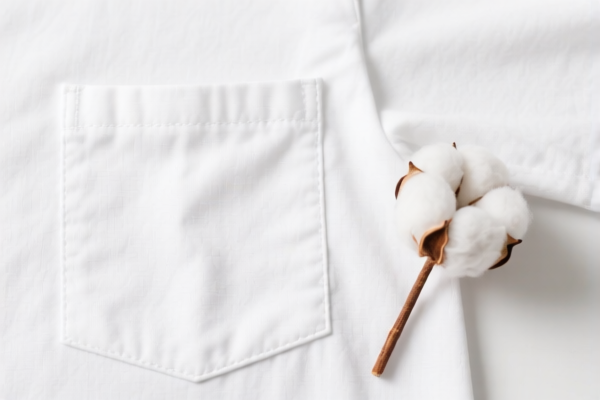
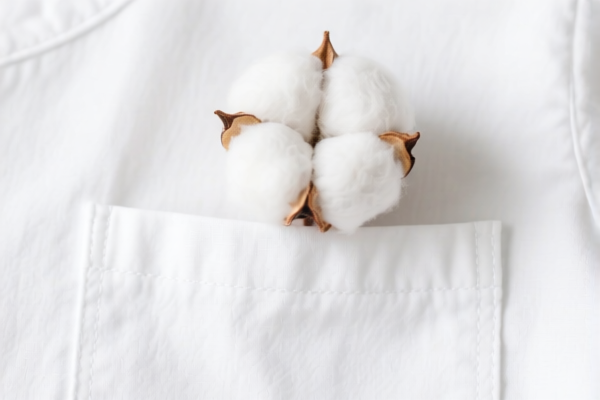


AI分析
🧵 Cotton Pouches & Fabric Pockets (Textile Containers)
🌐 HS Code Reference & Customs Clearance Guide | 2026 Latest Tariff Breakdown | Professional Customs Strategy
📌 I. Product Definition & Classification: Do You Really Know What a "Cotton Pocket" Is?
In international trade, "Cotton Pockets" are ambiguous. They can range from raw fabric components (sewing supplies) to finished retail packaging (gift bags). The classification depends entirely on function and final use.
⚠️ Key Distinction Point:
- If it is a sewing component (flat fabric piece to be sewn into clothes/goods) → Heading 6307 (Other made-up articles).
- If it is a stand-alone container/pouch (for carrying items, gifting, storage) → Heading 4202 (Articles of bedding/travel goods) or 6305 (Sacks/Pouches for packaging).
📦 II. HS Code Classification Details (2026 Latest Tariff Authority Comparison)
| HS Code | Product Description | Application Scenario | Tax Rate (Total) |
|---|---|---|---|
6307.90.98.91 |
Other Made-up Textile Articles (Non-categorized) | Generic fabric pouches, DIY kits, loose fabric items without specific container function. | 24.5% |
6305.90.00.00 |
Sacks & Pouches (Other textile materials) | Packaging pouches for bulk goods, industrial textile bags. | 23.7% |
6305.39.00.00 |
Sacks & Pouches (Of synthetic fibers) | Note: Often misclassified for cotton; if material is mixed/synthetic dominant. | 25.9% |
6307.90.30.20 |
Other Made-up Articles (Specific textile label/pocket type) | Labeled textile parts, non-container specific fabric goods. | 25.4% |
4202.32.93.00 |
Articles of Bedding/Travel Goods (Outer surface: Textile) | Finished retail pouches, cosmetic bags, travel organizers. | 52.6% |
4202.32.99.00 |
Articles of Bedding/Travel Goods (Other textile surfaces) | High-end cosmetic cases, luxury fabric pouches. | 52.6% |
🔍 Crucial Warning:
- Do not classify a finished cosmetic bag or gift pouch as "Fabric Part" (6307) to save tax. If it has structure, handles, or is designed for carrying/holding items, CBP often demands4202, which carries double the tax.
- If it is truly just a "pocket piece" for garment manufacturing,6307is safer.
💰 III. 2026 Latest Tariff Rate Breakdown (Detailed Policy Additions)
✅ Applicable Country: United States (US)
✅ Country of Origin: China (CN)
✅ Effective Time: 2025/2026 (Current Policy)
🎯 1. 6307.90.98.91 —— Other Made-up Textile Articles (Lowest Tax Option)
| Item | Content |
|---|---|
| Base Tariff | 7.0% |
| Section 301 (Additional) | +7.5% |
| Section 122 Tariff | +10.0% |
| Total Tax Rate | 24.5% |
| Tax Calculation | CIF Value × 24.5% |
| De Minimis Eligibility | ❌ No (Value > $800 triggers full duty; small parcels may still be scrutinized if commercial). |
| Legal Basis Path | HTSUS:6307.90.98.91 → Section 301: Footnote 9903.88.04 → Section 122: IEEPA |
📌 Explanation:
- This is the most favorable classification for generic "fabric items" that are not strictly "bags."
- Section 122 adds a flat 10% on certain textile imports from China, on top of Section 301.
- Total 24.5% is manageable compared to the 52.6% alternative.
🎯 2. 6305.90.00.00 —— Sacks & Pouches (Packaging Focus)
| Item | Content |
|---|---|
| Base Tariff | 6.2% |
| Section 301 (Additional) | +7.5% |
| Section 122 Tariff | +10.0% |
| Total Tax Rate | 23.7% |
| Tax Calculation | CIF Value × 23.7% |
| De Minimis Eligibility | ❌ No |
| Legal Basis Path | HTSUS:6305.90.00.00 → Section 301 → Section 122 |
📌 Note:
- Only applicable if the item is clearly a packaging sack/pouch for other goods, not a retail product.
- Slightly lower base tariff (6.2% vs 7.0%) but same additional taxes.
🎯 3. 4202.32.93.00 / 4202.32.99.00 —— Finished Containers (High Tax Risk)
| Item | Content |
|---|---|
| Base Tariff | 17.6% |
| Section 301 (Additional) | +25.0% |
| Section 122 Tariff | +10.0% |
| Total Tax Rate | 52.6% |
| Tax Calculation | CIF Value × 52.6% |
| De Minimis Eligibility | ❌ No |
| Legal Basis Path | HTSUS:4202.32 → Section 301: 25% → Section 122 |
📌 Critical Warning:
- This is a TRAP for importers. If you ship "Cotton Cosmetic Bags" and declare them under6307, CBP will likely reclassify them as4202.
- The difference between 24.5% and 52.6% is massive.
- Base tariff for4202is nearly 3x higher than6307.
🛠️ IV. Customs Clearance Practical Advice (Avoid Pitfalls)
✅ 1. Preparation Checklist (Must-Haves)
| Document | Required | Description |
|---|---|---|
| ✅ Product Photos | ✔️ | Show internal structure, handles, zippers, or lack thereof. |
| ✅ Functional Description | ✔️ | Clearly state: "For sewing components" vs. "For carrying cosmetics." |
| ✅ Commercial Invoice | ✔️ | Do NOT write "Cotton Pocket" only. Use "Textile Pouch for Packaging" or "Fabric Sewing Kit." |
| ✅ Material Composition | ✔️ | Confirm % of Cotton vs. Polyester. If mixed, synthetic rules may apply (6305.39). |
| ✅ Origin Certificate | ✔️ | Essential for claiming any potential exemptions (though unlikely for China-CN-US trade). |
✅ 2. Declaration Strategy (Key Mnemonics)
🔥 “Function Defines Code: Bag vs. Part”
| Scenario | Recommended HS Code | Why? |
|---|---|---|
| Plain fabric pieces for garment factories | 6307.90.98.91 |
Classified as "Other made-up textile articles." |
| Bulk packaging sacks for industrial goods | 6305.90.00.00 |
Classified as "Sacks/Pouches" for packaging. |
| Finished retail pouches (with lining, zippers, handles) | 4202.32.93.00 |
Classified as "Articles of Travel/Cosmetic Goods." |
| Mixed Material Pouches (Synthetic dominant) | 6305.39.00.00 |
If >50% synthetic fiber, 6305.39 may apply (Check specific blend). |
⚠️ Common Error:
Declaring a finished cosmetic bag as6307to pay 24.5%.
👉 Result: CBP audit, reclassification to4202, back taxes (~28% difference) + penalties.
✅ 3. Special Case Handling
| Situation | Advice |
|---|---|
| Cotton + Polyester Blend | If polyester >50%, consider 6305.39 (Synthetic) instead of 6305.90 (Other). Check fiber content carefully. |
| Gift Sets | If the cotton pocket is part of a gift set (e.g., with soap), declare the main commodity or the set value under the primary item’s code. |
| Low Value (<$800) | While de minimis may apply, large volumes of textile goods are frequently flagged for Section 122 and 301 scrutiny even at low values. |
🌍 V. Global Market Comparison (2026)
| Country/Region | Recommended HS Code | Est. Tariff (China Origin) | Notes |
|---|---|---|---|
| 🇺🇸 USA | 6307.90.98.91 |
24.5% | Aggressive on 4202 reclassification. |
| 🇨🇳 China | 6307.90.98.00 |
~7-10% | Import duty into China is lower, but export from China is the concern here. |
| 🇪🇺 EU | 6307.90 |
0-4% | No Section 301/122 equivalents. VAT applies separately. |
| 🇬🇧 UK | 6307.90 |
0-4% | Similar to EU post-Brexit rules. |
📌 Conclusion:
- The US is the most challenging market due to Section 122 and 301 tariffs.
- Accurate classification between6307(Part) and4202(Finished Good) is the #1 cost-saving lever.
📌 VI. Common Mistakes & Pitfalls (Lessons Learned)
❌ Mistake 1: Calling all fabric items "Pockets" (6307) regardless of structure.
👉 Consequence: If it’s a cosmetic bag, you pay 52.6% instead of 24.5%. Loss: ~28% of value.
❌ Mistake 2: Ignoring Section 122.
👉 Consequence: Forgetting the 10% additional tariff leads to underpayment and penalties.
❌ Mistake 3: Mislabeling material content.
👉 Consequence: If you say "Cotton" but it’s 60% Polyester, and you use 6305.90 (Other), CBP may shift you to 6305.39 (Synthetic), changing the base rate slightly, but more importantly, it shows misrepresentation.
✅ Correct Approach:
"Textile Pouch, Synthetic Fiber, For Industrial Packaging, Unfinished" →
6305.39.00.00
"Cotton Cosmetic Bag, Finished, with Zipper, Retail Ready" →4202.32.93.00
🎯 VII. Conclusion: Precision Saves Money
🎯 Remember the Golden Rule:
🔹 "Structure Matters: Finished Bag = 4202 (52.6%), Part/Sack = 6307/6305 (24-25%)."
🔹 "Never Assume: If it has a zipper or handle, CBP sees it as4202."
📌 Pro Tip:
If your product is borderline (e.g., a simple cotton pouch with no zipper), consider adding stitching details that suggest it is a component rather than a finished container. However, be honest in documentation. If in doubt, Apply for a Binding Ruling from CBP before shipping large volumes.
📣 Immediate Action:
📞 Review your product specs. Is it a tool or a finished good?
📦 Adjust your invoice description to match the functional reality.
🚀 Avoid the 52.6% Tax Trap by choosing the correct6307or6305code where applicable.
✨ Professional Clearance, Starting with Precise Classification!
💼 Every 1% Tax Saving Counts!
用户评价
关于 HS 编码归类
协调制度(HS)是由世界海关组织(WCO)制定的国际贸易商品分类标准。全球 200 多个国家采用 HS 系统作为海关关税、贸易统计和进出口监管的基础。
每个 HS 编码遵循以下层级结构:
- 章(2 位)——商品大类(例如:第 84 章:机器和机械设备)
- 品目(4 位)——章内的更具体分类
- 子目(6 位)——国际通用细分,所有 WCO 成员国统一使用
- 本国细分(8-10 位)——各国自行扩展的细分编码,如美国 HTSUS 10 位编码
正确的 HS 编码归类对于顺利通关、准确缴纳关税和遵守贸易法规至关重要。错误归类可能导致海关延误、多缴关税或罚款。
从CN进口到US时,适用的关税税率可能包括:
- 最惠国(MFN)税率——适用于 WTO 成员国的标准关税税率
- 普通税率——适用于无贸易协定国家
- 贸易救济关税——附加关税,如 301 条款(反倾销)、232 条款(国家安全)或反补贴税
本页内容仅供参考。如需正式归类,请咨询当地海关或持牌报关代理。