Cowhide Shoe Upper Leather (for Bags)
CN → US| HS编码 | 关税税率 | 原产国 | 目的国 | 文档 |
|---|---|---|---|---|
| 4113906000 | 36.6% | CN | US | 官方文档 |
| 4113903000 | 38.3% | CN | US | 官方文档 |
| 4107196010 | 15.0% | CN | US | 官方文档 |
| 4107116010 | 13.3% | CN | US | 官方文档 |
| 4107196010 | 15.0% | CN | US | 官方文档 |
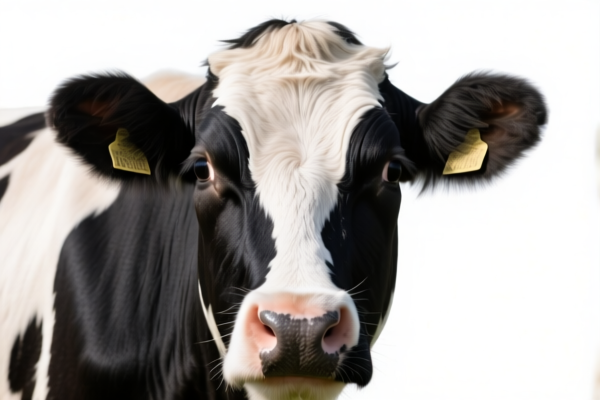
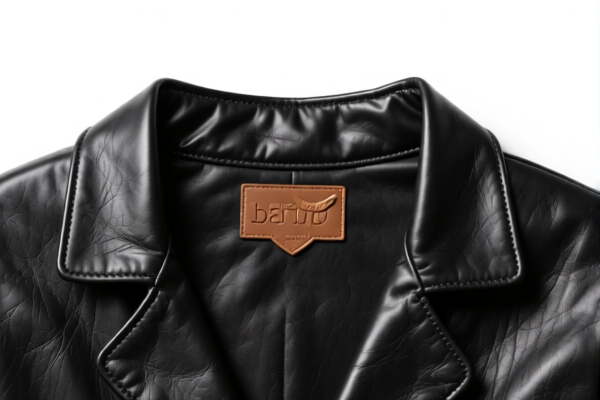
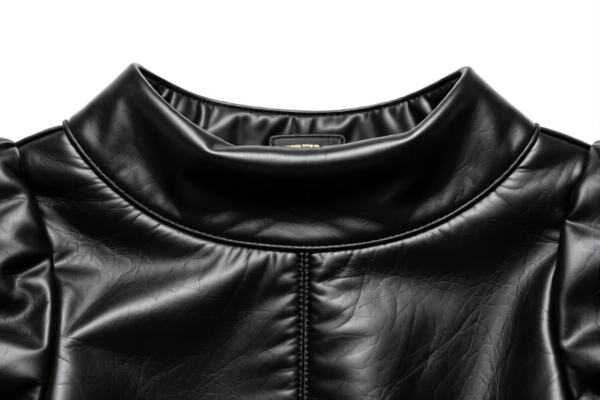
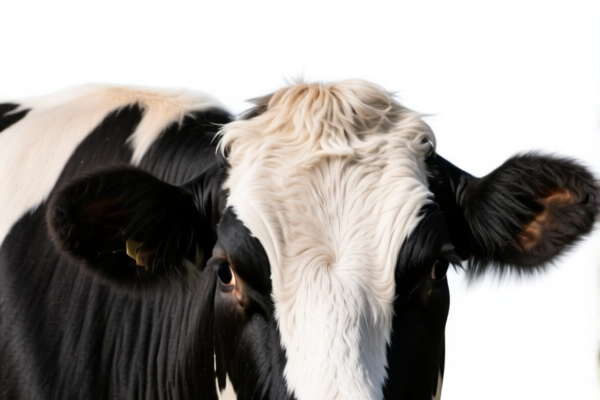
商品图片
AI分析
👞 Cowhide Shoe Upper Leather (for Bags)
🌐 HS Code Reference & Customs Clearance Guide | 2026 Latest Tariff Analysis | Professional Clearance Strategy
📌 I. Product Definition & Classification: Do You Really Understand "Cowhide Leather"?
Cowhide leather is one of the most widely used materials in the global leather goods industry. In international trade, "Cowhide Shoe Upper Leather" refers to leather specifically prepared for making shoe uppers, but it is currently being used for bags. This creates a classification nuance: Does the intended use (bags) change the HS code, or does the physical characteristic (shoe upper leather) dictate it?
According to the Harmonized System (HS), the classification is primarily based on the state of preparation and the animal source, not necessarily the final consumer product (unless specified otherwise, e.g., "leather of heading 4114").
The leather in question is: 1. Animal Source: Other animals (Cowhide falls under "other animals" if not explicitly listed as bovine in a specific heading that excludes it, but Heading 4113 covers "Leather further prepared... of other animals"). Correction: Actually, Heading 4113 explicitly covers "Leather further prepared after tanning or crusting... of other animals... other than leather of heading 4114". Heading 4114 covers "Chamois prepared leather, patent leather and patent lamb-leather and milled leather". Cowhide, when tanned and further prepared (like shoe upper leather), typically falls under 4113 unless it is chamois/patent/milled. 2. Preparation: Further prepared after tanning or crusting (Shoe upper leather is "further prepared" for stitching/water resistance). 3. Type: Without wool or hair on. 4. Specific Classification: It is split into "Fancy" and "Other".
⚠️ Key Distinction Point:
- "Fancy" Leather: Leather with specific decorative finishes, embossings, or patterns that add value/aesthetic appeal beyond basic tanning (e.g., embossed crocodile, pearl finish, specific colors for fashion bags).
- "Other" Leather: Standard, unembossed, or minimally finished leather used for utilitarian purposes or standard bags.
📦 II. HS Code Classification Details (2026 Latest Tariff Authority Comparison)
| HS Code | Product Description | Applicable Scenario | Is it "Fancy"? |
|---|---|---|---|
4113.90.30.00 |
Leather further prepared... of other animals... Other: Not fancy | Standard cowhide shoe upper leather used for bags; no special embossing/patterns. | ❌ No |
4113.90.60.00 |
Leather further prepared... of other animals... Other: Fancy | Cowhide shoe upper leather with decorative finishes, embossing, or special treatments suitable for fashion bags. | ✅ Yes |
🔍 Important Note:
- The description "Shoe Upper Leather" indicates the original intended use or processing standard for shoes. However, when imported for bag manufacturing, the HS code is determined by the physical characteristics of the leather (preparation, finish, split status) under Heading 4113. - "Fancy" vs. "Not Fancy" is the critical differentiator for tax rates. If the leather has any decorative embossing, special coloring, or finishes typical of high-end fashion bags, it may be classified as "Fancy".
💰 III. 2026 Latest Tariff Rate Details (Including Additional Taxes & Policy Additions)
✅ Applicable Country: United States (US)
✅ Origin: China (CN)
✅ Effective Date: From November 10, 2025 (including subsequent imports)
🎯 1. 4113.90.30.00 —— Leather, Other, Not Fancy
| Item | Content |
|---|---|
| Base Tariff Rate | 3.3% (ad valorem) |
| Additional Tariff (Section 301) | +25.0% |
| Total Tariff Rate | 28.3% |
| Tax Calculation | CIF Value × 28.3% |
| De Minimis Exemption Applicable? | ❌ No (deny_de_minimis) |
| Legal Basis Path | Section 301: 9903.01.01 → USITC: 4113.90.30.00 |
📌 Explanation:
- The "Base Tariff of 3.3%" is the standard Most Favored Nation (MFN) rate for non-fancy prepared leather of other animals. - The "Additional Tariff of 25.0%" is applied under Section 301 of the Trade Act of 1974, targeting specific Chinese goods. - Total Effective Rate: 28.3%. This is a high tariff category, requiring careful cost planning.
🎯 2. 4113.90.60.00 —— Leather, Other, Fancy
| Item | Content |
|---|---|
| Base Tariff Rate | 1.6% (ad valorem) |
| Additional Tariff (Section 301) | +25.0% |
| Total Tariff Rate | 26.6% |
| Tax Calculation | CIF Value × 26.6% |
| De Minimis Exemption Applicable? | ❌ No (deny_de_minimis) |
| Legal Basis Path | Section 301: 9903.01.01 → USITC: 4113.90.60.00 |
📌 Note:
- Although "Fancy" leather has a lower base tariff (1.6%) compared to "Not Fancy" (3.3%), the additional Section 301 tariff (25%) remains the same. - Total Effective Rate: 26.6%.
- Strategic Insight: If your leather can be classified as "Fancy" (e.g., through specific embossing or finishing processes common in bag manufacturing), you can save 1.7% on the base tariff. However, ensure the classification aligns with actual product characteristics to avoid customs disputes.
🛠️ IV. Customs Clearance Practical Advice (Battle-Tested Pitfall Avoidance Guide)
✅ 1. Required Documentation Checklist (All Are Mandatory)
| Document | Required? | Description |
|---|---|---|
| ✅ Commercial Invoice | ✔️ | Must clearly state: "Cowhide Leather, Further Prepared, for Bag Making", specify split/non-split, and finish type (Fancy/Not Fancy). |
| ✅ Packing List | ✔️ | Detail rolls/bales, weight, dimensions. |
| ✅ Product Specifications | ✔️ | Include tanning process, finish type, thickness, and proof of "Fancy" or "Not Fancy" status (e.g., photos of embossing/patterns). |
| ✅ Bill of Lading/Air Waybill | ✔️ | Standard shipping documents. |
| ✅ Certificate of Origin (CO) | ✔️ | Essential for determining applicability of Section 301 tariffs. |
| ✅ Customs Declaration Form | ✔️ | Accurately declare HS Code 4113.90.30.00 or 4113.90.60.00. |
✅ 2. Declaration Tips (Key Mantra)
🔥 "Finish Defines Fancy, Not Fancy is Standard, Base Rate Varies, 301 Tax is Fixed!"
| Scenario | Correct Declaration | Incorrect Practice |
|---|---|---|
| Standard Cowhide, No Embossing | 4113.90.30.00 (Not Fancy) |
Misclassifying as "Fancy" → Risk of penalty if audited. |
| Embossed/Patterned Cowhide | 4113.90.60.00 (Fancy) |
Misclassifying as "Not Fancy" → Underpayment of base tariff (though 301 is same, base rate difference exists). |
| Shoe Upper Leather for Bags | Declare as Leather (4113), not Footwear | Do NOT declare under footwear headings (e.g., 6406) just because it's "shoe leather". |
| Split vs. Full Grain | Specify in description | HS 4113 covers both split and non-split "other animals" leather, so no code change, but description must be clear. |
✅ 3. Special Cases Handling
| Situation | Handling Advice |
|---|---|
| Mixed Shipments (Fancy & Not Fancy) | Must separate or declare with accurate proportions. Misdeclaration can lead to penalties for both items. |
| Leather for Bags vs. Shoes | The intended end-use (bags) does not change the HS code from 4113. The code is based on the leather's preparation. Ensure description reflects the product state, not just the end product. |
| OEM Custom Leather | Provide design proofs or supplier specifications to prove "Fancy" status if claiming 4113.90.60.00. |
| High-Value Embossed Leather | If the embossing is significant, it strengthens the case for "Fancy" classification. |
🌍 V. Global Market Comparison (2026 Latest)
| Country/Region | Recommended HS Code | Tariff (China Origin) | Certification Requirements | Notes |
|---|---|---|---|---|
| 🇺🇸 United States | 4113.90.30.00 / 4113.90.60.00 |
28.3% / 26.6% | None specific for leather | High tariffs due to Section 301. |
| 🇨🇳 China | 4113.90.30.00 / 4113.90.60.00 |
5% - 10% (approx.) | None | Lower entry barrier. |
| 🇪🇺 European Union | 4113.90 |
6.5% | REACH Compliance | No Section 301 equivalent. |
| 🇬🇧 United Kingdom | 4113.90 |
6.5% | UKCA/REACH | Post-Brexit rules apply. |
| 🇯🇵 Japan | 4113.90 |
5% - 7% | None | Stable market. |
📌 Conclusion:
- The US is the only major market imposing the 25% Section 301 additional tariff on this category.
- Cost Impact: For a $100,000 shipment, the US duty could be $28,300 (Not Fancy) vs. $26,600 (Fancy).
- Strategy: If your leather can be technically classified as "Fancy" (e.g., through decorative finishing), the 1.7% saving on the base tariff is a valid optimization, but do not force a "Fancy" classification if it is not warranted.
📌 VI. Common Errors & Pitfall Avoidance (Lessons Learned)
❌ Error 1: Declaring "Shoe Leather" under Footwear HS Codes (e.g., 6406.90.90)
👉 Consequence: Customs will reject and reclassify to 4113, causing delays and potential penalties.
👉 Fix: Always classify based on the material state, not the end product, unless a specific heading overrides it.
❌ Error 2: Misclassifying "Fancy" leather as "Not Fancy" to simplify declaration
👉 Consequence: If audited, you may be charged the higher base rate (3.3% vs 1.6%) plus penalties.
👉 Fix: Accurately document finish types. If embossed/embossed/patterned, classify as "Fancy".
❌ Error 3: Ignoring Section 301 Impact on Costing
👉 Consequence: Profit margins evaporate due to unanticipated 25% tariff.
👉 Fix: Include 28.3%/26.6% total duty in your FOB/CIF pricing strategy.
❌ Error 4: Not Providing Sufficient Details on "Fancy" Attributes
👉 Consequence: Customs may default to "Not Fancy" (3.3%) if "Fancy" cannot be proven, leading to higher tax.
👉 Fix: Provide clear photos, specs, and supplier declarations of decorative features.
✅ Correct Approach:
"Cowhide Leather, Further Prepared, Tanned, Split/Non-Split, Embossed Pattern (Fancy), For Bag Manufacturing, Origin: China"
🎯 VII. Conclusion: Professional Declaration, Time-Saving, Cost-Effective!
🎯 Remember the Mantra:
🔹 "Finish Makes Fancy, Not Fancy is Plain, Base Rate 1.6% vs 3.3%, 301 Tax 25% Stays the Same!"
🔹 "HS Code 4113 is Key, Don't Mix with Footwear, Declare Accurately, Avoid Penalties!"
📌 Pro Tip:
- If your leather is sourced from Vietnam, Indonesia, or Thailand, you may avoid the Section 301 25% tariff, reducing the total duty to just the base rate (1.6% or 3.3%).
- Consider Supply Chain Diversification: If US market is primary, sourcing leather from non-China origins can save ~25% in duties.
- Apply for Advance Ruling: For large volumes, submit an Advance Ruling Request to US Customs to confirm "Fancy" vs "Not Fancy" status before shipment.
📣 Immediate Action:
📞 Contact Your Customs Broker + Provide Product Specs + Confirm "Fancy" Status
🚀 Clear Customs Smoothly, Save Costs, Boost Profits!
✨ Professional Clearance Starts with Accurate Classification!
💼 Every Percentage Point of Duty Matters!
用户评价
关于 HS 编码归类
协调制度(HS)是由世界海关组织(WCO)制定的国际贸易商品分类标准。全球 200 多个国家采用 HS 系统作为海关关税、贸易统计和进出口监管的基础。
每个 HS 编码遵循以下层级结构:
- 章(2 位)——商品大类(例如:第 84 章:机器和机械设备)
- 品目(4 位)——章内的更具体分类
- 子目(6 位)——国际通用细分,所有 WCO 成员国统一使用
- 本国细分(8-10 位)——各国自行扩展的细分编码,如美国 HTSUS 10 位编码
正确的 HS 编码归类对于顺利通关、准确缴纳关税和遵守贸易法规至关重要。错误归类可能导致海关延误、多缴关税或罚款。
从CN进口到US时,适用的关税税率可能包括:
- 最惠国(MFN)税率——适用于 WTO 成员国的标准关税税率
- 普通税率——适用于无贸易协定国家
- 贸易救济关税——附加关税,如 301 条款(反倾销)、232 条款(国家安全)或反补贴税
本页内容仅供参考。如需正式归类,请咨询当地海关或持牌报关代理。