Crocodile Leather Card Holders
CN → US商品图片
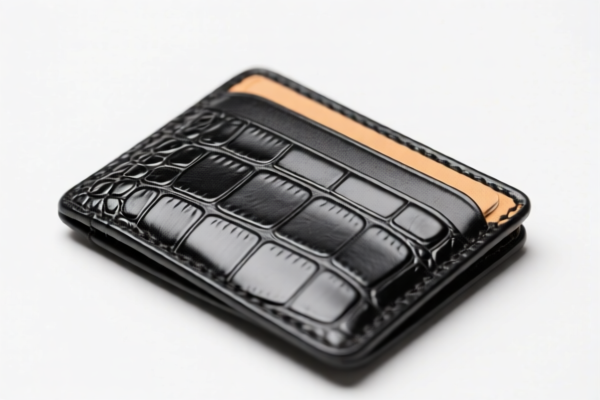
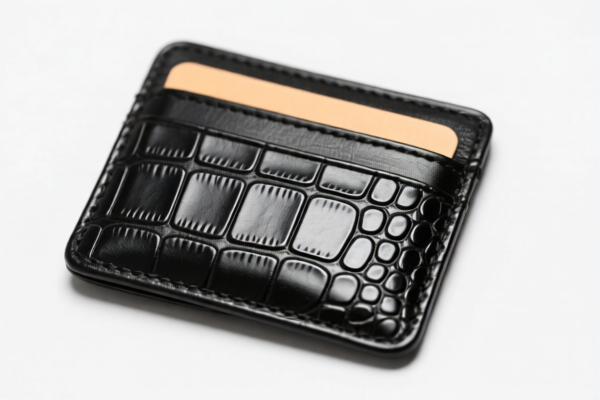
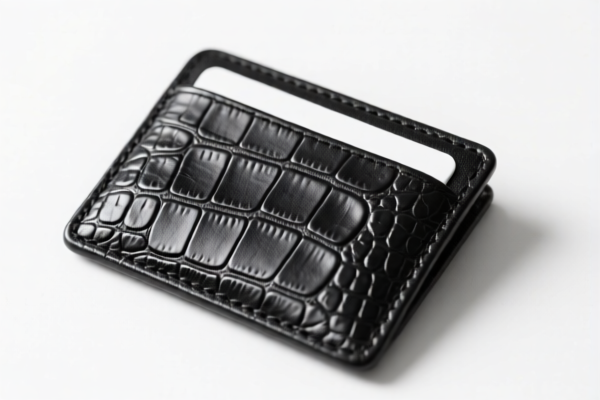
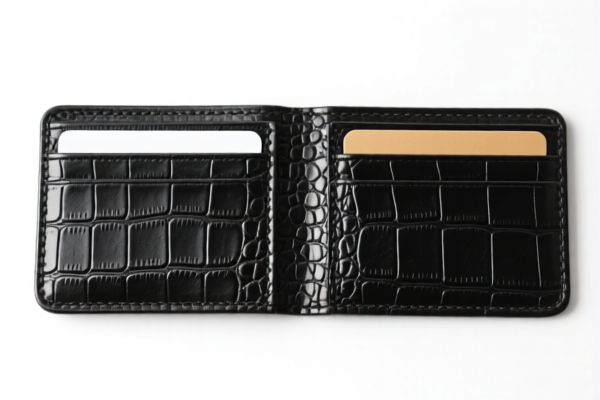
AI分析
👜 Crocodile Leather Card Holders (Luxury Accessories)
🌐 HS Code Reference & Clearance Guide | 2026 Latest Tariff Analysis | Premium Goods Strategy
📌 I. Product Definition & Classification: Do You Truly Understand "Crocodile Leather"?
Crocodile leather card holders are high-end accessories made from the skins of crocodilians (Crocodylidae, Alligatoridae, or Caimanidae). In international trade, the classification hinges critically on two factors: 1. The Type of Skin: Is it genuine crocodile/alligator skin? (Chapter 41 vs. Chapter 96). 2. The Form: Is it a "worked" leather good or a simple raw skin? (Chapter 42).
Key Distinction: * Genuine Crocodile/Alligator Leather: Classified under Chapter 42 (Articles of leather). * Imitation/Vegetable-Tanned "Croc-Effect" (Non-Crocodile): If it is not crocodile skin (e.g., bovine leather with embossing, PU, PVC), it falls under Chapter 42 but is taxed differently (often lower duties) and may not trigger CITES restrictions.
⚠️ Critical Compliance Point:
- If the product contains genuine crocodile/alligator skin, it is subject to CITES (Convention on International Trade in Endangered Species) regulations.
- Importers must provide CITES permits or proof of exemption (e.g., manufactured goods exemption, re-export certificate) depending on the destination country.
- Misdeclaring crocodile leather as "cow leather" can lead to severe fines, confiscation, and criminal charges.
📦 II. HS Code Classification Details (2026 Authoritative Reference)
| HS Code | Product Description | Applicable Scenario | CITES Restricted? |
|---|---|---|---|
4202.91.00.00 |
Travel goods, handbags, and similar containers: With outer surface of leather or composition leather | Most Common for Card Holders (if considered "other articles of leather") | ✅ Yes (if crocodile) |
4202.31.00.00 |
Articles of a kind commonly carried in the pocket or in the purse: With outer surface of leather or composition leather | Specifically for Wallets/Card Holders/Purses | ✅ Yes (if crocodile) |
4202.32.00.00 |
Same as above, but outer surface of plastic sheeting/textile material | For imitation crocodile (PU/PVC/Canvas) | ❌ No |
4202.92.00.00 |
Other articles of leather, with outer surface of plastic sheeting/textile material | Lined leather goods with textile exterior | ✅ Yes (if crocodile component) |
4107.92.00.00 |
Other leather, fully dressed or crusted, finished in a specific way (Raw Material) | Raw skins (not finished goods) | ✅ Yes |
9608.10.00.00 |
Pen refills | Wrong! Confusion with "holding" items | ❌ No |
🔍 Key Note:
-4202.31.00.00is the most accurate HS code for card holders, wallets, and coin purses made of genuine leather (including crocodile).
-4202.91.00.00is used for "other" leather goods (e.g., belts, gloves, decorative items).
- Do NOT classify under4203.40(Gloves/Mittens) or6307.90(Other made-up articles).
💰 III. 2026 Latest Tariff Rate Details (Including Surcharges & Policies)
✅ Applicable Country: United States (US)
✅ Country of Origin: China (CN) / Thailand / Italy (Common sources)
✅ Effective Date: 2025–2026
🎯 1. 4202.31.00.00 —— Wallets/Card Holders (Crocodile Leather)
| Item | Content |
|---|---|
| Base Tariff Rate | 0% (Most Favored Nation - MFN) |
| USITC Additional Tariff (Section 301) | +7.5% (List 4A) |
| IEEPA Additional Tariff | +10% (Effective Nov 10, 2025, for China origin) |
| Total Tariff Rate | 17.5% |
| Tax Calculation | CIF Value × 17.5% |
| De Minimis Exemption | ❌ Not Eligible (Value > $800 or non-qualified goods) |
| Legal Basis Path | IEEPA:9903.01.25 → USITC:4202.31.00.00 → FOOTNOTE:9903.88.01 |
📌 Explanation:
- Leather goods are not exempt from Section 301 tariffs.
- The 10% IEEPA surcharge applies to Chinese-origin luxury leather goods.
- Total: 17.5%. This is significantly lower than electronics (25%+), but still substantial for high-value items.
🎯 2. 4202.32.00.00 —— Imitation Crocodile (PU/PVC)
| Item | Content |
|---|---|
| Base Tariff Rate | 0% |
| USITC Additional Tariff | 7.5% |
| IEEPA Additional Tariff | 10% |
| Total Tariff Rate | 17.5% |
| CITES Permit | ❌ Not Required (Must prove non-crocodile material) |
📌 Note:
- If you declare as "Plastic Leather" but it is tested as "Genuine Crocodile," you face fraud penalties.
- If declared as "Plastic" but is actual crocodile, you risk CITES violation.
🛠️ IV. Clearance Practical Advice (Battle-Tested Tips)
✅ 1. Documentation Checklist (Non-Negotiable)
| Document | Required? | Description |
|---|---|---|
| ✅ Commercial Invoice | ✔️ | Must clearly state: "Genuine Crocodile Leather Card Holder" or "Imitation Crocodile (PU)" |
| ✅ CITES Permit / Exemption | ✔️ | If genuine crocodile: Provide CITES Re-export Permit (origin) and Import Permit (destination). |
| ✅ Material Certificate | ✔️ | Supplier declaration: "100% Crocodile Cauda (Tail) Leather" or "Synthetic PU Leather" |
| ✅ Product Photos | ✔️ | High-res images showing grain pattern, stitching, and interior lining |
| ✅ Packing List | ✔️ | Weight, dimensions, number of pieces |
| ✅ Brand Authorization | ✔️ | If branded (e.g., Hermès, Louis Vuitton), provide IP authorization to avoid seizure |
✅ 2. Declaration Tips (Key Mantra)
🔥 "Genuine or Faux? Declare Clearly! CITES Permit is Key!"
| Scenario | Correct Declaration | Wrong Practice |
|---|---|---|
| Genuine Crocodile | 4202.31.00.00 + "Genuine Crocodile Leather" + CITES Permit |
Declare as "Leather" without specifying species → Audit Risk |
| Imitation Crocodile | 4202.32.00.00 + "Polyurethane (PU) Leather with Crocodile Embossing" |
Declare as "Crocodile" → CITES Violation |
| Mixed Materials | Specify % of leather vs. lining | Vague "Luxury Accessory" → HS Code Dispute |
| Used/Vintage | Declare as "Used" + Age proof | Declare as "New" → Valuation Dispute |
✅ 3. Special Cases
| Scenario | Handling Advice |
|---|---|
| CITES Exemption (Manufactured Goods) | Some countries exempt finished leather goods from CITES if processed to a certain standard. Check local rules (e.g., US has some exemptions, but strict documentation needed). |
| Alligator vs. Crocodile | Both are CITES Appendix II. Declaration must specify species if required. |
| High-Value Items (>$10k) | May trigger anti-dumping or luxury tax scrutiny. Ensure valuation is accurate. |
| Brand Name (Louis Vuitton, etc.) | Must provide Letter of Authorization. Otherwise, customs may seize as counterfeit. |
🌍 V. Global Market Clearance Comparison (2026 Latest)
| Country/Region | Recommended HS Code | Tariff | CITES Requirement | Notes |
|---|---|---|---|---|
| 🇺🇸 USA | 4202.31.00.00 |
17.5% (CN) | ✅ Strict | CITES permit mandatory for genuine croc |
| 🇨🇳 China | 4202.31.00.00 |
5–10% | ✅ Strict | CITES permit required for import |
| 🇪🇺 EU | 4202.31.00.00 |
4% | ✅ Very Strict | EU CITES Regulation 338/97. Permits mandatory |
| 🇬🇧 UK | 4202.31.00.00 |
12% | ✅ Strict | Post-Brexit CITES rules apply |
| 🇦🇺 Australia | 4202.31.00.00 |
5% | ✅ Strict | CITES permit required |
📌 Conclusion:
- All major markets require CITES permits for genuine crocodile leather.
- Tariffs are moderate (0–12%), but compliance costs (permits) are high.
- USA and EU are the most stringent in enforcement.
📌 VI. Common Mistakes & Pitfalls (Lessons Learned)
❌ Mistake 1: Declaring "Crocodile Leather" without CITES permit
👉 Consequence: Goods held at customs for weeks, fined, or destroyed.
❌ Mistake 2: Using "Leather" as generic description
👉 Consequence: Customs requests clarification, delays clearance, may assign higher duty rate.
❌ Mistake 3: Mixing genuine and imitation items in one shipment
👉 Consequence: Entire shipment may be inspected. If one item lacks permit, whole batch delayed.
❌ Mistake 4: Undervaluing to avoid tax
👉 Consequence: Seizure, blacklisting, criminal charges for fraud.
✅ Correct Practice:
"CROCODILE LEATHER CARD HOLDER, MODEL XYZ, GENUINE CROCODILE CAUDA LEATHER, CITES PERMIT NO: XXXXX, MADE IN THAILAND"
🎯 VII. Conclusion: Compliance is Luxury
🎯 Remember:
🔹 "CITES is King for Crocodile. No Permit, No Entry."
🔹 "Genuine or Imitation? Declare Correctly. Penalties are Severe."
📌 Pro Tip:
If you are importing large volumes, apply for CITES Pre-Approval or work with a specialized customs broker who handles wildlife products.
For imitation crocodile, ensure materials are clearly documented as PU/Leather to avoid CITES scrutiny.
📣 Immediate Action:
📞 Verify CITES Status + Request Permits + Clear Declaration
🚀 Smooth Clearance, High Profit, Zero Risk!
✨ Professional Clearance Starts with Accurate Classification!
💼 Every Detail Matters in Luxury Trade!
用户评价
关于 HS 编码归类
协调制度(HS)是由世界海关组织(WCO)制定的国际贸易商品分类标准。全球 200 多个国家采用 HS 系统作为海关关税、贸易统计和进出口监管的基础。
每个 HS 编码遵循以下层级结构:
- 章(2 位)——商品大类(例如:第 84 章:机器和机械设备)
- 品目(4 位)——章内的更具体分类
- 子目(6 位)——国际通用细分,所有 WCO 成员国统一使用
- 本国细分(8-10 位)——各国自行扩展的细分编码,如美国 HTSUS 10 位编码
正确的 HS 编码归类对于顺利通关、准确缴纳关税和遵守贸易法规至关重要。错误归类可能导致海关延误、多缴关税或罚款。
从CN进口到US时,适用的关税税率可能包括:
- 最惠国(MFN)税率——适用于 WTO 成员国的标准关税税率
- 普通税率——适用于无贸易协定国家
- 贸易救济关税——附加关税,如 301 条款(反倾销)、232 条款(国家安全)或反补贴税
本页内容仅供参考。如需正式归类,请咨询当地海关或持牌报关代理。