Cross linked PVC Resin
CN → US| HS编码 | 关税税率 | 原产国 | 目的国 | 文档 |
|---|---|---|---|---|
| 3904210000 | 41.5% | CN | US | 官方文档 |
| 3904901000 | 35.0% | CN | US | 官方文档 |
商品图片



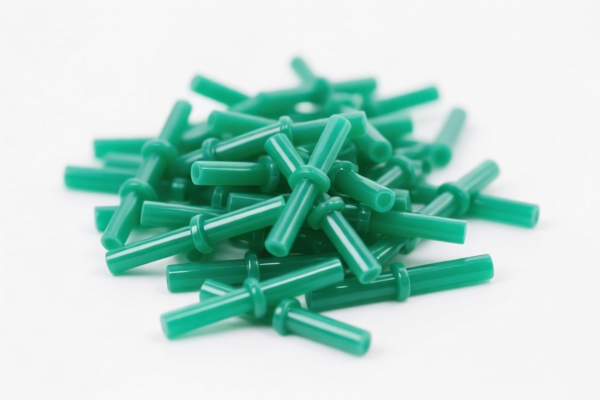
AI分析
🧪 Cross Linked PVC Resin (Polyvinyl Chloride)
🌐 HS Code Reference & Customs Clearance Guide | 2026 Latest Tariff Analysis | Professional Clearance Strategy
📌 I. Product Definition & Classification: What Exactly Is "Cross Linked PVC"?
Cross-linked PVC resin refers to polyvinyl chloride polymers that have undergone a chemical or physical process to form bonds between polymer chains, enhancing thermal stability, mechanical strength, and chemical resistance. In international trade, these are classified under Chapter 39 (Plastics and Articles Thereof).
The key distinction lies in whether the material is non-plasticized (rigid) or elastomeric (flexible/rubber-like).
⚠️ Key Classification Criteria:
- If the PVC is non-plasticized and in primary forms (powders, granules, etc.) for rigid applications →归入 3904.21.00.00
- If the PVC is elastomeric (rubber-like properties, flexible) →归入 3904.90.10.00
📦 II. HS Code Classification Details (2026 Latest Tariff Authority)
| HS Code | Product Description | Application Scenario | Tax Rate (China Origin → US) |
|---|---|---|---|
3904.21.00.00 |
Polymers of vinyl chloride: Other poly(vinyl chloride): Nonplasticized | Rigid pipes, fittings, window profiles, rigid packaging, non-plasticized cross-linked PVC pellets | 0.0% |
3904.90.10.00 |
Polymers of vinyl chloride: Other: Elastomeric | Flexible hoses, wire insulation, rubber-like PVC components, elastomeric cross-linked PVC compounds | 25.0% |
🔍 Critical Note:
- Cross-linking itself does not change the HS Code category unless it alters the fundamental nature from "non-plasticized rigid" to "elastomeric."
- Nonplasticized (3904.21): Generally rigid, high strength, used in construction and industrial piping.
- Elastomeric (3904.90): Flexible, rubber-like, used in seals, cables, and flexible tubes.
💰 III. 2026 Latest Tariff Rate Breakdown (Including Additional Duties)
✅ Applicable Country: United States (US)
✅ Origin: China (CN)
✅ Effective Time: 2025-11-10 onwards (including subsequent imports)
🎯 1. 3904.21.00.00 —— Non-Plasticized PVC Resin (Rigid/Cross-linked)
| Item | Content |
|---|---|
| Base Tariff | 0.0% (ad valorem) |
| Section 301 Additional Tariff | 0.0% |
| IEEPA Additional Tariff | 0.0% |
| Total Tariff Rate | 0.0% |
| Tax Calculation | CIF Value × 0.0% = $0 |
| De Minimis Eligibility | ❌ Not Applicable (Standard import procedure) |
| Legal Basis Path | USITC:3904.21.00.00 |
📌 Explanation:
- Non-plasticized PVC resins, even if cross-linked, are generally exempt from additional tariffs under current US trade policy for this specific subheading.
- This makes it a highly competitive product for rigid applications.
🎯 2. 3904.90.10.00 —— Elastomeric PVC Resin (Flexible/Cross-linked)
| Item | Content |
|---|---|
| Base Tariff | 0.0% |
| Section 301 Additional Tariff | +25.0% |
| IEEPA Additional Tariff | 0.0% |
| Total Tariff Rate | 25.0% |
| Tax Calculation | CIF Value × 25.0% |
| De Minimis Eligibility | ❌ Not Applicable |
| Legal Basis Path | USITC:3904.90.10.00 |
📌 Explanation:
- Elastomeric PVC resins are subject to a 25% additional tariff under Section 301.
- This significantly increases the landed cost for flexible or rubber-like PVC products.
🛠️ IV. Practical Customs Clearance Advice (Pitfall Avoidance Guide)
✅ 1. Required Documentation Checklist
| Document | Mandatory | Explanation |
|---|---|---|
| ✅ Product Specification Sheet | ✔️ | Must specify "Cross-linked," "Non-plasticized," or "Elastomeric" clearly |
| ✅ Technical Data Sheet (TDS) | ✔️ | Shows properties (rigid vs. flexible), molecular weight, cross-linking percentage |
| ✅ Product Photos | ✔️ | Show physical form (powder, granules, pellets) |
| ✅ Commercial Invoice | ✔️ | Must explicitly state HS Code and product description |
| ✅ Packing List | ✔️ | Detail weight, dimensions, and packaging type |
| ✅ Certificate of Origin | ✔️ | If claimed for preferential treatment (if any applicable) |
✅ 2. Declaration Tips (Key Mnemonics)
🔥 "Cross-linking doesn't change the game, Rigid is Free, Flexible Pays the Same!"
| Scenario | Correct Declaration | Incorrect Declaration |
|---|---|---|
| Rigid, non-plasticized cross-linked PVC | 3904.21.00.00 → 0% Tax |
Misdeclare as 3904.90.10.00 → 25% Tax Overpayment |
| Flexible, elastomeric cross-linked PVC | 3904.90.10.00 → 25% Tax |
Misdeclare as 3904.21.00.00 → Underpayment & Penalty |
| Mixed shipment (Rigid + Flexible) | Split Declaration | Combined declaration → Customs Rejection |
✅ 3. Special Handling
| Scenario | Handling Advice |
|---|---|
| Cross-linked vs. Standard PVC | Provide technical data proving cross-linking; do not assume it changes HS Code unless it becomes elastomeric |
| OEM Custom Resin | Provide customer specifications and design documents to prove intended use |
| Sample Shipments | Even samples must be declared correctly; de minimis may not apply for commercial-grade resins |
| Mixed Containers | Clearly separate rigid and flexible PVC in packing list; declare each HS Code separately |
🌍 V. Global Market Clearance Comparison (2026 Latest)
| Country/Region | Recommended HS Code | Tariff (China Origin) | Certification Requirements | Notes |
|---|---|---|---|---|
| 🇺🇸 USA | 3904.21.00.00 (Rigid) |
0% | No special certs required | 3904.90.10.00 (Flexible) → 25% |
| 🇪🇺 EU | 3904.21.00.00 |
0% | REACH Compliance | Both rigid and flexible generally 0% |
| 🇨🇳 China | 3904.21.00.00 |
0% | No special certs required | Domestic use, no export tax |
| 🇬🇧 UK | 3904.21.00.00 |
0% | UKCA Marking (if applicable) | Post-Brexit alignment with EU |
| 🇯🇵 Japan | 3904.21.00.00 |
0% | JIS Standards | Both rigid and flexible generally 0% |
📌 Conclusion:
- USA is the only major market with significant tariff differential between rigid (0%) and elastomeric (25%) PVC.
- EU, Japan, and UK generally apply 0% tariff to both categories, making them more cost-effective for elastomeric PVC.
📌 VI. Common Errors & Pitfall Guide (Lessons Learned)
❌ Error 1: Misclassifying Elastomeric PVC as Non-plasticized Rigid PVC
👉 Consequence: Underpayment of 25% tariff → Customs penalty, back taxes, and potential seizure.
❌ Error 2: Failing to specify "Cross-linked" in documentation
👉 Consequence: Customs may reject declaration for lack of clarity → Delay in clearance.
❌ Error 3: Declaring Mixed Rigid and Flexible PVC under one HS Code
👉 Consequence: Customs rejection → Reshipment or destruction of goods.
❌ Error 4: Assuming Cross-linking automatically changes HS Code
👉 Consequence: Wrong tariff application → Overpayment (if rigid) or underpayment (if flexible).
✅ Correct Practice:
"Cross-linked PVC Resin, Non-plasticized, Granules, Rigid Type, HS Code: 3904.21.00.00"
OR
"Cross-linked PVC Resin, Elastomeric, Flexible, Granules, HS Code: 3904.90.10.00"
🎯 VII. Conclusion: Professional Declaration, Save Time, Reduce Cost!
🎯 Remember the Mnemonic:
🔹 "Rigid PVC: 0% Tax, Flexible PVC: 25% Tax, Cross-linking Doesn't Change the Rate, It's About Rigid vs. Flexible!"
🔹 "HS Code Determines the Cost, Declaration Accuracy Saves Thousands!"
📌 Pro Tip:
If your elastomeric PVC can be technically proven to meet non-plasticized rigid criteria under specific testing standards, consult a customs broker for Advance Ruling to potentially reduce tariff liability.
📣 Immediate Action:
📞 Contact a licensed customs broker + Provide Technical Data Sheets + Apply for HS Code Advance Ruling (if uncertain)
🚀 Ensure Smooth Clearance, Cost Efficiency, and Compliance!
✨ Professional Clearance Starts with Accurate Classification!
💼 Every Cent of Tax Cost Should Be Precisely Calculated!
用户评价
关于 HS 编码归类
协调制度(HS)是由世界海关组织(WCO)制定的国际贸易商品分类标准。全球 200 多个国家采用 HS 系统作为海关关税、贸易统计和进出口监管的基础。
每个 HS 编码遵循以下层级结构:
- 章(2 位)——商品大类(例如:第 84 章:机器和机械设备)
- 品目(4 位)——章内的更具体分类
- 子目(6 位)——国际通用细分,所有 WCO 成员国统一使用
- 本国细分(8-10 位)——各国自行扩展的细分编码,如美国 HTSUS 10 位编码
正确的 HS 编码归类对于顺利通关、准确缴纳关税和遵守贸易法规至关重要。错误归类可能导致海关延误、多缴关税或罚款。
从CN进口到US时,适用的关税税率可能包括:
- 最惠国(MFN)税率——适用于 WTO 成员国的标准关税税率
- 普通税率——适用于无贸易协定国家
- 贸易救济关税——附加关税,如 301 条款(反倾销)、232 条款(国家安全)或反补贴税
本页内容仅供参考。如需正式归类,请咨询当地海关或持牌报关代理。