Custom Handbag
CN → US| HS编码 | 关税税率 | 原产国 | 目的国 | 文档 |
|---|---|---|---|---|
| 4602192920 | 40.3% | CN | US | 官方文档 |
| 4602112100 | 41.2% | CN | US | 官方文档 |
| 4202224020 | 42.4% | CN | US | 官方文档 |
| 4202228980 | 52.6% | CN | US | 官方文档 |
商品图片
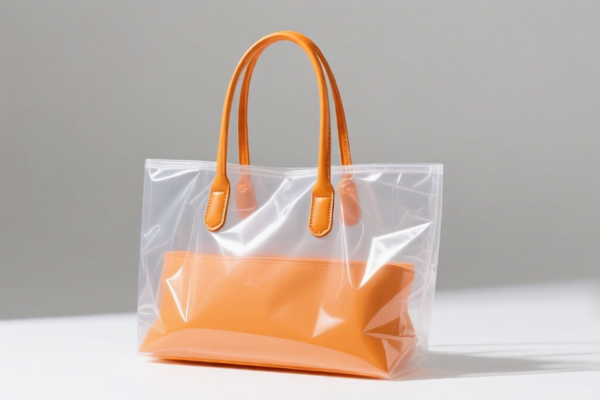
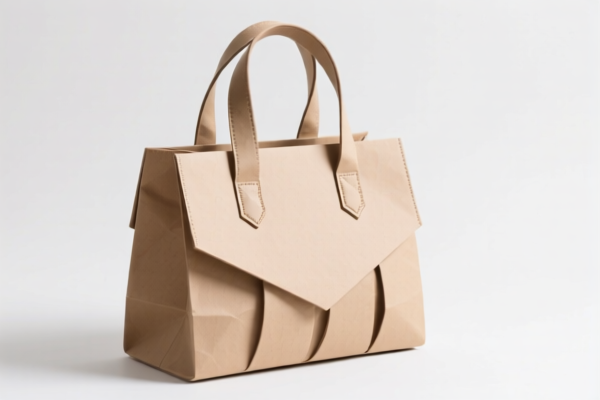

AI分析
👜 Custom Handbag: The Ultimate Guide to HS Codes, Tariffs & Customs Strategy (2026 Edition)
🌐 Global Trade Compliance | HS Code Deep Dive | Strategic Tariff Optimization
📌 One-Stop Resource for "Custom Handbags" Exporting to the US
Welcome to the definitive guide for importing Custom Handbags. Whether they are woven from bamboo, crafted from plant fibers, or constructed from various textile weaves, the classification (HS Code) and tariff exposure vary drastically. A misstep can cost you 10% to 42% in duties alone.
⚠️ The Big Picture:
Handbags are not a single category! They are split between Chapter 42 (Leather/Textile Goods) and Chapter 46 (Woven Plant Materials). * Misclassification Risk: Labeling a woven plant basket as a "textile handbag" could save you money, but claiming a textile bag is "woven plant" will result in severe penalties. * The "US Tariff Trap": Most of these items attract 25% Section 301 + 10% IEEPA surcharges, pushing effective tariffs to 40%+.
📦 1. HS Code Classification Matrix: Decoding Your Product
Based on the 2026 US Harmonized Tariff Schedule, here is the exact breakdown for "Custom Handbags" based on Material Composition.
🧵 A. Woven Plant Materials (Bamboo, Rattan, Reeds)
If your handbag is woven from bamboo, rattan, or other plant materials.
| HS Code | Product Description | Material Specifics | Key Feature |
|---|---|---|---|
| 4602.19.29.20 | Woven Handbag | Plant materials (general woven) | Non-specific plant weave |
| 4602.11.21.00 | Woven Handbag | Bamboo, Rattan, etc. (Specific plant) | Hard-core plant fiber |
🧐 Classification Logic:
- 4602.11.21.00: Use this if the bag is explicitly made of Bamboo, Rattan, or specific "hard" plant stems.
- 4602.19.29.20: Use this for other plant materials woven into a handbag (e.g., straw, seagrass, cane) that don't fit the specific "Bamboo/Rattan" subheading.
🧺 B. Woven Textile Materials (Fabric, Synthetic, Other)
If your handbag is made from woven cloth, fabric, or non-plant textile materials.
| HS Code | Product Description | Material Specifics | Key Feature |
|---|---|---|---|
| 4202.22.40.20 | Woven Handbag | Woven materials (general textile) | Standard textile weave |
| 4202.22.89.80 | Woven Handbag | Other textile materials | Non-specified/Complex fabrics |
🧐 Classification Logic:
- 4202.22.40.20: Use for standard woven textiles (e.g., canvas, woven polyester, nylon).
- 4202.22.89.80: Use for "Other" textile materials (e.g., complex blends, non-woven fabrics, or materials not covered by the "woven" definition in 40.20).
💰 2. 2026 Tariff Breakdown: The 3-Tier Penalty Structure
All items listed below are subject to 3 Layers of Taxation when imported into the United States from China.
📉 The "Tax Stack" Formula
Total Tax = Base Tariff + Section 301 (25%) + IEEPA (10%)
🎯 Scenario 1: Bamboo/Rattan Handbags (Plant Materials)
| HS Code | Base Tariff | Section 301 (US) | IEEPA (US) | Total Effective Tax |
|---|---|---|---|---|
| 4602.11.21.00 | 6.2% | +25.0% | +10.0% | 41.2% |
| 4602.19.29.20 | 5.3% | +25.0% | +10.0% | 40.3% |
💡 Insight:
- 4602.11.21.00 (Bamboo/Rattan) is slightly more expensive due to a higher base tariff (6.2%).
- 4602.19.29.20 (Other Plant) is the cheapest option for plant-based bags (Total 40.3%).
🎯 Scenario 2: Textile Handbags (Fabric Materials)
| HS Code | Base Tariff | Section 301 (US) | IEEPA (US) | Total Effective Tax |
|---|---|---|---|---|
| 4202.22.40.20 | 7.4% | +25.0% | +10.0% | 42.4% |
| 4202.22.89.80 | 17.6% | +25.0% | +10.0% | 52.6% |
💡 Insight:
- 4202.22.89.80 is the dynamite of this list. A 17.6% Base Tariff + 35% surcharge = 52.6%.
- Strategy: If your bag is made of a standard woven fabric (Canvas/Nylon), DO NOT classify as "Other" (89.80). Ensure it fits 40.20 to save 10.2% on total duties.
🛠️ 3. Customs Clearance Strategy: How to Beat the Tariffs
✅ Step 1: Material Proof is King
Customs officers (CBP) will ask for Material Certificates.
- For Plant Materials: Provide a supplier declaration stating "100% Bamboo/Rattan" vs. "Straw/Woven Plant".
- Tip: If you can prove it's "Bamboo," you might look at 4602.11.21.00 (41.2%). If it's generic "plant," 4602.19.29.20 (40.3%) is better.
- For Textiles: Be precise. Is it "Woven" or "Other"?
- Critical: If the fabric is woven, force the classification to 4202.22.40.20 (42.4%).
- Avoid: 4202.22.89.80 (52.6%) unless the material is truly exotic or non-standard.
✅ Step 2: The "Section 122" Warning
The data indicates a "122-Clause Tariff" of 10% (likely referring to specific Section 301 sub-lists or IEEPA actions). - Action: Verify your "122-Clause" status. If your product is on the "Exclusion List," you might waive this 10%. - Check: Is your product on the Exclusion List #122? If yes, your total tax drops from 41-52% to 31-42%.
✅ Step 3: Packaging & Declaration
- DO NOT ship "Handbag + Bamboo Frame + Canvas Lining" as three separate items.
- Rule: "Custom Handbags" must be declared as a Single Unit.
- Description Format:
"Custom Woven Handbag, Made of [Bamboo/Textile], with Zipper Closure. HS Code: [Correct Code]. Origin: China."
🚨 4. Common Pitfalls & How to Avoid Them
| ❌ The Mistake | ⚠️ The Consequence | ✅ The Fix |
|---|---|---|
| Lumping all bags under one code | Overpaying 10.2% on textile bags | Split "Plant" (Ch 46) vs. "Textile" (Ch 42) |
| Calling "Canvas" "Other Textile" | Triggering 52.6% tax instead of 42.4% | Prove it is "Woven" to get 4202.22.40.20 |
| Ignoring the "122 Clause" | Paying extra 10% unnecessarily | Check USITC Exclusion Lists for your specific code |
| Mixing Bamboo & Leather | Confusion between Ch 42 & Ch 46 | Declare as the primary material (usually outer surface) |
🌍 5. Quick Reference: The "Tax Cheat Sheet"
| Material Type | HS Code | Base Tax | Total Tax (US/CN) | Savings Tip |
|---|---|---|---|---|
| Bamboo / Rattan | 4602.11.21.00 |
6.2% | 41.2% | Check for Exclusion List |
| Other Plant Weave | 4602.19.29.20 |
5.3% | 40.3% | Lowest plant tax |
| Standard Textile | 4202.22.40.20 |
7.4% | 42.4% | Avoid "Other" code |
| Complex/Other Textile | 4202.22.89.80 |
17.6% | 52.6% | Avoid unless necessary |
📢 Final Verdict: Ship Smarter, Not Harder
- Identify Material First: Bamboo = Ch 46. Fabric = Ch 42.
- Aim for the Lowest Base:
4602.19.29.20(40.3%) and4202.22.40.20(42.4%) are your targets. - Verify Exclusions: Check if your specific HS Code has a Section 301 Exclusion to knock off that extra 10%.
- Documentation: Ensure your invoices clearly state the material composition to justify your HS Code choice.
🚀 Pro Tip: If your product is made of 100% Bamboo, try to claim 4602.11.21.00 (even though it's 0.9% higher tax than
29.20) if it qualifies for a specific material exemption not available to generic plant weaves.
Ready to ship?
✅ Get a Proforma Invoice with exact HS Codes. ✅ Request a Pre-Ruling from CBP. ✅ Double-Check your Exclusion List!
✨ Custom Handbags are more than just accessories; they are a tax puzzle. Solve it right, and your profit margin stays intact! 🧠💼
用户评价
关于 HS 编码归类
协调制度(HS)是由世界海关组织(WCO)制定的国际贸易商品分类标准。全球 200 多个国家采用 HS 系统作为海关关税、贸易统计和进出口监管的基础。
每个 HS 编码遵循以下层级结构:
- 章(2 位)——商品大类(例如:第 84 章:机器和机械设备)
- 品目(4 位)——章内的更具体分类
- 子目(6 位)——国际通用细分,所有 WCO 成员国统一使用
- 本国细分(8-10 位)——各国自行扩展的细分编码,如美国 HTSUS 10 位编码
正确的 HS 编码归类对于顺利通关、准确缴纳关税和遵守贸易法规至关重要。错误归类可能导致海关延误、多缴关税或罚款。
从CN进口到US时,适用的关税税率可能包括:
- 最惠国(MFN)税率——适用于 WTO 成员国的标准关税税率
- 普通税率——适用于无贸易协定国家
- 贸易救济关税——附加关税,如 301 条款(反倾销)、232 条款(国家安全)或反补贴税
本页内容仅供参考。如需正式归类,请咨询当地海关或持牌报关代理。