Custom Paper Gasket
CN → US| HS编码 | 关税税率 | 原产国 | 目的国 | 文档 |
|---|---|---|---|---|
| 4823908000 | 35.0% | CN | US | 官方文档 |
| 4823906000 | 35.0% | CN | US | 官方文档 |
| 8484900000 | 37.5% | CN | US | 官方文档 |
| 4823908000 | 35.0% | CN | US | 官方文档 |
| 4823906000 | 35.0% | CN | US | 官方文档 |
商品图片
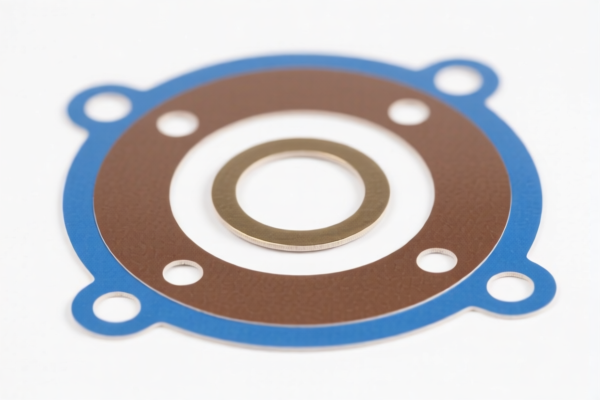
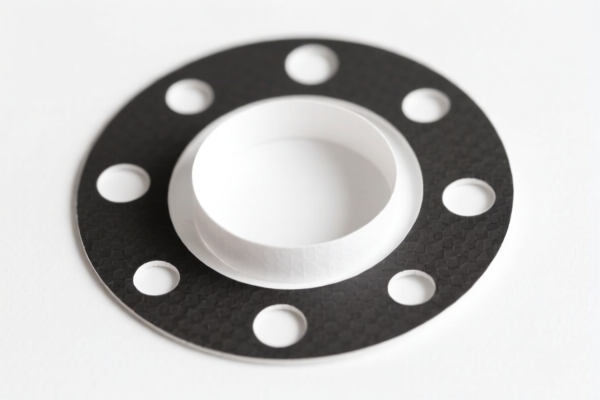
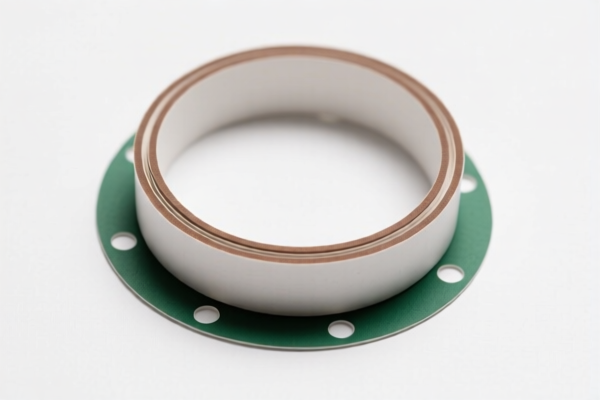
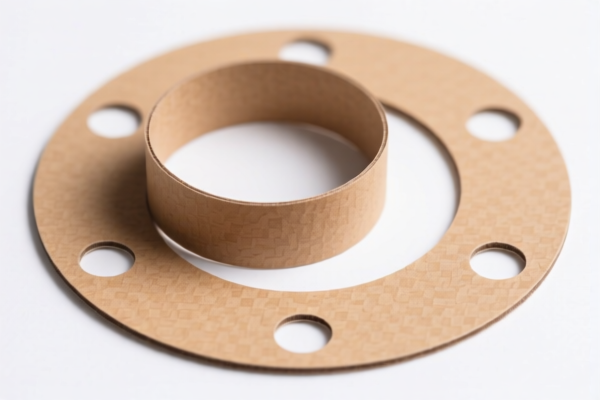
AI分析
🛡️ Custom Paper Gaskets: HS Code Classification & US Import Tax Guide (2026)
🌐 HS Code Reference & Customs Clearance Guide | 2026 Latest Tariff Analysis | Professional Entry Strategy
📌 I. Product Definition & Classification: Do You Truly Understand "Paper Gaskets"?
Paper gaskets are critical sealing components used in automotive, industrial machinery, HVAC, and plumbing systems. In international trade, their classification depends heavily on material composition, physical form, and specific use. While seemingly simple, misclassification can lead to severe penalties or cargo delays.
⚠️ Key Classification Distinction:
- Paper-based materials (Cellulose, fiber, composite paper) generally fall under Chapter 48 (Paper and Paperboard).
- Mechanical sealing parts (if viewed purely as machine components regardless of material) may fall under Chapter 84 (Machinery).
- The Determining Factor: If the primary identity is defined by the paper material rather than its function as a machine part, Chapter 48 is often preferred. However, if it’s a specialized industrial sealing gasket (even if paper), customs may push for Chapter 84.
📦 II. HS Code Classification Details (2026 Latest Tariff Authority Comparison)
Based on the provided data, here are the potential HS Codes and their justifications:
| HS Code | Product Description | Justification / Summary | Total Tax Rate |
|---|---|---|---|
4823.90.80.00 |
Paper Gaskets (General) | Material is paper; form is gasket. Fits definition under "Other paper articles." | 35.0% |
4823.90.60.00 |
Paper Gaskets (Usage-Based) | Material is paper; usage is gasket. Fits classification requirements for paper articles. | 35.0% |
8484.90.00.00 |
Paper Gaskets (Mechanical Part) | Recognized as a "joint or similar fitting" (gasket). Non-metallic material doesn't conflict with machinery parts. | 37.5% |
4823.90.80.00 |
Paper Gaskets (Roll/Pack) | Explicitly includes paper material and gasket form, meeting definition criteria. | 35.0% |
4823.90.60.00 |
Paper Gaskets (Roll/Pack - Usage) | Paper material matches gasket usage, fitting category definition. | 35.0% |
🔍 Critical Insight:
- Chapter 48 Codes (4823.90...) apply when the gasket is primarily valued for its paper composition. The tax rate is 35%.
- Chapter 84 Code (8484.90.00.00) applies when customs views the item strictly as a mechanical part. The tax rate is slightly higher at 37.5%.
- Recommendation: Verify with the manufacturer whether the gasket is marketed as a "paper product" or an "industrial machine part." If it’s a standard paper gasket (e.g., for flanges), 4823 is often safer and cheaper, but 8484 is common for industrial applications.
💰 III. 2026 Latest Tariff Rate Breakdown (Including Additional Taxes & Policy Surcharges)
✅ Applicable Country: United States (US)
✅ Country of Origin: China (CN)
✅ Effective Date: November 10, 2025 (and subsequent imports)
🎯 1. 4823.90.80.00 & 4823.90.60.00 —— Paper Gaskets (Chapter 48)
| Item | Content |
|---|---|
| Base Rate | 0% (ad valorem) |
| USITC Surcharge | +25% (Under USITC Footnote 9903.88.01 / Section 301) |
| IEEPA Surcharge | +10% (Targeting Chinese/HK products, effective Nov 10, 2025) |
| Total Tax Rate | 35.0% |
| Tax Calculation | CIF Value × 35% |
| De Minimis Eligible? | ❌ No (deny_de_minimis) |
| Legal Basis Path | IEEPA:9903.01.25 → IEEPA:9903.01.24 → USITC:4823.90.80.00 → FOOTNOTE:9903.88.01 |
📌 Explanation:
- The 25% USITC surcharge is a result of Section 301 investigations against Chinese imports.
- The 10% IEEPA surcharge is an additional national security-related tariff on Chinese goods.
- Combined 35% is a significant cost driver. Do not attempt to use the $800 de minimis rule (Section 321), as these goods are explicitly excluded.
🎯 2. 8484.90.00.00 —— Paper Gaskets as Mechanical Parts (Chapter 84)
| Item | Content |
|---|---|
| Base Rate | 2.5% (ad valorem) |
| USITC Surcharge | +25% (Section 301) |
| IEEPA Surcharge | +10% (Targeting Chinese/HK products) |
| Total Tax Rate | 37.5% |
| Tax Calculation | CIF Value × 37.5% |
| De Minimis Eligible? | ❌ No (deny_de_minimis) |
| Legal Basis Path | IEEPA:9903.01.25 → IEEPA:9903.01.24 → USITC:8484.90.00.00 → FOOTNOTE:9903.88.01 |
📌 Explanation:
- Unlike Chapter 48, this code has a base tariff of 2.5%, but the total ends up higher (37.5%) due to the same surcharges.
- Why? Because the base rate is not 0%.
- Strategic Choice: If you can legitimately classify under 4823, you save 2.5% on the base value. However, customs may challenge this if the gasket is clearly a specialized industrial component.
🛠️ IV. Customs Clearance Practical Advice (Avoid Pitfalls)
✅ 1. Document Checklist (Essential)
| Document | Required? | Notes |
|---|---|---|
| ✅ Product Specification Sheet | ✔️ | Must specify: Material (Paper Type), Thickness, Diameter, Pressure Rating |
| ✅ Commercial Invoice | ✔️ | Must clearly state: "Paper Gaskets" or "Gaskets made of Paper" |
| ✅ Packing List | ✔️ | List items clearly; avoid vague terms like "Accessories" |
| ✅ Certificate of Origin | ✔️ | Required for origin verification; China origin triggers surcharges |
| ✅ Photos of Product | ✔️ | Show packaging and product details to confirm material |
| ✅ Customs Ruling (Optional) | ✔️ | Consider applying for a pre-classification ruling to lock in HS Code |
✅ 2. Declaration Tips (Key Mnemonics)
🔥 “Material First, Form Second, Avoid Ambiguity!”
| Scenario | Correct Declaration | Wrong Approach |
|---|---|---|
| Standard paper gaskets for plumbing | 4823.90.80.00 – "Paper Gaskets" |
Declaring as "Machine Parts" → 37.5% tax |
| High-pressure industrial paper gaskets | 8484.90.00.00 – "Gaskets for Machinery" |
Declaring as "Paper Artifacts" → Risk of rejection |
| Mixed shipments (Paper + Rubber Gaskets) | Split Declaration | Combining into one HS Code → Misclassification penalty |
| Low-value samples (<$800) | Not Eligible | Attempting de minimis entry → Confiscation/Fine |
✅ 3. Special Situations
| Situation | Handling Advice |
|---|---|
| Custom Cut Gaskets | Provide CAD files or cut diagrams to prove they are made-to-spec paper gaskets, not generic paper sheets. |
| Paper + Rubber Composite | If >50% rubber by weight, may fall under Chapter 40 (Rubber). If paper is structural, Chapter 48 may apply. Clarify material dominance. |
| OEM Gaskets | Provide OEM contracts to prove they are custom-made for specific machinery, supporting 8484 if needed. |
| Non-Chinese Origin | If sourced from Vietnam/Thailand, IEEPA 10% may not apply. Verify country of origin! |
🌍 V. Global Market Comparison (2026 Latest)
| Country/Region | Recommended HS Code | Tariff (China Origin) | Certification | Notes |
|---|---|---|---|---|
| 🇺🇸 USA | 4823.90.80.00 |
35% | N/A | High tariff due to 301 + IEEPA |
| 🇨🇳 China | 4823.90.80.00 |
5% | N/A | No surcharges for import into China |
| 🇪🇺 EU | 4823.90.80.00 |
~2-4% | REACH | No Section 301 equivalent |
| 🇲🇽 Mexico | 4823.90.80.00 |
~5% | N/A | USMCA benefits may apply if originating |
| 🇬🇧 UK | 4823.90.80.00 |
~3-5% | UKCA | Post-Brexit tariffs |
📌 Conclusion:
- USA remains the most expensive market due to 35% total tariffs.
- Consider nearshoring (Mexico/Vietnam) to avoid IEEPA surcharges if possible.
- For China-origin goods, budget accordingly for the 35-37.5% tax burden.
📌 VI. Common Errors & Pitfalls (Lessons Learned)
❌ Error 1: Declaring "Paper Gaskets" as "Paper Sheets"
👉 Consequence: Customs may reclassify as raw material, leading to different regulatory checks or penalties.
❌ Error 2: Using de minimis ($800) for bulk shipments
👉 Consequence: 35% tax not paid, cargo detained, fines applied. De minimis is denied for these HS codes.
❌ Error 3: Ignoring the "Composite Material" aspect
👉 Consequence: If gaskets have rubber coatings, declaring as pure paper may lead to disputes. Be transparent about materials.
❌ Error 4: Incorrect Invoice Description
👉 Consequence: Vague terms like "Gaskets" without material specification can cause delays. Specify "Paper Gaskets".
✅ Correct Practice:
"Custom Cut Paper Gaskets, Material: Cellulose Paper, Thickness: 2mm, Used for Flange Sealing, HS Code 4823.90.80.00"
🎯 VII. Conclusion: Professional Classification, Cost Savings, Smooth Clearance!
🎯 Remember These Tips:
🔹 "Material Defines Chapter 48, Function Defines Chapter 84."
🔹 "35% Tax is Real: Plan Your Margin!"
🔹 "No De Minimis: Pay Your Dues Early!"
📌 Pro Tip:
If your gaskets are originating from Vietnam, Mexico, or Thailand, you may qualify for lower tariffs (avoiding IEEPA 10%).
Consider applying for a Pre-Ruling with CBP to lock in your HS Code and avoid post-clearance audits.
📣 Take Action Now:
📞 Contact a licensed customs broker + Provide product specs + Apply for HS Code Pre-Ruling
🚀 Ensure your Paper Gaskets enter smoothly, cost-effectively, and compliantly!
✨ Professional clearance starts with accurate classification!
💼 Every dollar saved on misclassification is pure profit!
用户评价
关于 HS 编码归类
协调制度(HS)是由世界海关组织(WCO)制定的国际贸易商品分类标准。全球 200 多个国家采用 HS 系统作为海关关税、贸易统计和进出口监管的基础。
每个 HS 编码遵循以下层级结构:
- 章(2 位)——商品大类(例如:第 84 章:机器和机械设备)
- 品目(4 位)——章内的更具体分类
- 子目(6 位)——国际通用细分,所有 WCO 成员国统一使用
- 本国细分(8-10 位)——各国自行扩展的细分编码,如美国 HTSUS 10 位编码
正确的 HS 编码归类对于顺利通关、准确缴纳关税和遵守贸易法规至关重要。错误归类可能导致海关延误、多缴关税或罚款。
从CN进口到US时,适用的关税税率可能包括:
- 最惠国(MFN)税率——适用于 WTO 成员国的标准关税税率
- 普通税率——适用于无贸易协定国家
- 贸易救济关税——附加关税,如 301 条款(反倾销)、232 条款(国家安全)或反补贴税
本页内容仅供参考。如需正式归类,请咨询当地海关或持牌报关代理。