Customized Notebook
CN → US| HS编码 | 关税税率 | 原产国 | 目的国 | 文档 |
|---|---|---|---|---|
| 4820102010 | 35.0% | CN | US | 官方文档 |
| 4820102060 | 35.0% | CN | US | 官方文档 |
| 3926100000 | 15.3% | CN | US | 官方文档 |
| 4911998000 | 17.5% | CN | US | 官方文档 |
| 4911996000 | 17.5% | CN | US | 官方文档 |
商品图片
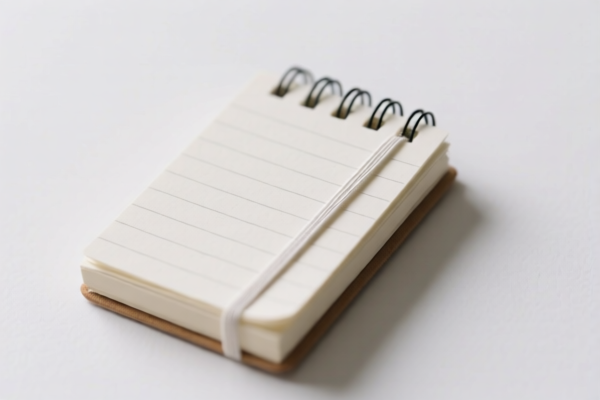


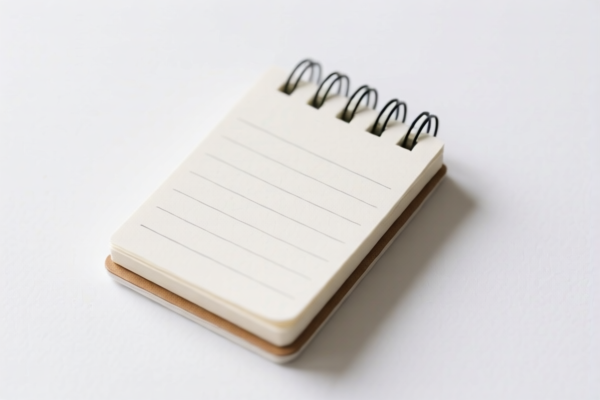
AI分析
📓 Customized Notebook (Memoirs, Padfolios, & Notebooks)
🌐 HS Code Reference & Customs Clearance Guide | 2026 Latest Tariff Analysis | Professional Compliance Strategy
📌 I. Product Definition & Classification: Do You Really Understand a "Customized Notebook"?
A "Customized Notebook" is a versatile stationery item. In international trade, its classification depends heavily on its primary material, form factor, and intended use. Because "customized" can imply various finishes (embossed, printed, plastic covers, leather binding), the HS Code varies significantly.
The data provided indicates five potential classifications. The core distinction lies in: 1. Digital vs. Paper: Is it an electronic device or a paper-based item? 2. Primary Material: Is it primarily paper, plastic, or printed material? 3. Function: Is it for office/school use, or general printing?
⚠️ Critical Distinction:
- Electronic (e.g., tablets with keyboard cases marketed as "notebooks") → 4820.10.20.10
- Paper-Based (Standard paper with cover) → 4820.10.20.60
- Plastic/Office Supply (Non-paper materials) → 3926.10.00.00
- Printed Material (Text-heavy, paper-based but categorized under printing) → 4911.99.80.00 / 4911.99.60.00
📦 II. HS Code Classification Details (2026 Latest Tariff Authority Comparison)
| HS Code | Product Description | Key Characteristics | Material/State |
|---|---|---|---|
4820.10.20.10 |
Digital/Smart Notebooks | Electronic devices formatted as notebooks; no material conflict with definition. | Electronic/Digital |
4820.10.20.60 |
Paper Notebooks | Standard memo pads, notepads, or books with paper pages and covers. | Paper-Based |
3926.10.00.00 |
Other Office/School Supplies (Plastic) | Items with plastic covers or made of plastic; office/school utility. | Plastic/Composite |
4911.99.80.00 |
Other Printed Materials | Printed items (notebooks/journals) where paper is the main attribute. | Printed Paper |
4911.99.60.00 |
Other Printed Materials (Platelitho) | Specifically printed (e.g., offset/litho) paper products; general printed category. | Printed Paper |
🔍 Key Insight:
-4820Series: Specifically targets "Ledgers, Account Books, Order Books, Receipt Books, Memo Pads, and Similar Articles." -4911Series: Targets "Other Printed Matter." If the notebook is essentially a blank book with minimal printing,4820is often more precise. If it contains significant text/graphics,4911may apply. -3926Series: Used if the item is primarily plastic (e.g., a plastic diary case with no paper insert, or a plastic-covered stationery set).
💰 III. 2026 Latest Tariff Rate Breakdown (Including Add-on Taxes, Policy Surcharges)
✅ Applicable Country: United States (US)
✅ Origin: China (CN)
✅ Effective Date: 2025-11-10 onwards (for subsequent imports)
🎯 1. 4820.10.20.10 & 4820.10.20.60 —— Notebooks (Paper & Electronic)
| Item | Content |
|---|---|
| Base Tariff | 0% (ad valorem) |
| Section 301 Additional Tariff | +25% (USITC Footnote 9903.03.01) |
| IEEPA Additional Tariff | +10% (针对中国/香港产品,自2025年11月10日起) |
| Total Tariff Rate | 35.0% |
| Tax Calculation | CIF Value × 35% |
| De Minimis Exemption Available? | ❌ No (deny_de_minimis) |
| Legal Basis Path | IEEPA:9903.01.25 → IEEPA:9903.01.24 → USITC:4820.10.20.xx → FOOTNOTE:9903.03.01 |
📌 Explanation:
- These items fall under Section 301 list, subject to a 25% surcharge. - Additionally, the IEEPA 10% surcharge applies to Chinese-origin goods. - Total Duty: 35%. This is a high-cost category. Do not rely on the $800 de minimis exemption if the shipment is flagged as Chinese origin.
🎯 2. 3926.10.00.00 —— Other Articles of Plastic (Office/School Supplies)
| Item | Content |
|---|---|
| Base Tariff | 5.3% |
| Section 301 Additional Tariff | 0% (Not in the high-tariff list for this specific subheading) |
| IEEPA Additional Tariff | +10% (针对中国/香港产品,自2025年11月10日起) |
| Total Tariff Rate | 15.3% |
| Tax Calculation | CIF Value × 15.3% |
| De Minimis Exemption Available? | ❌ No (deny_de_minimis) |
| Legal Basis Path | IEEPA:9903.01.24 → USITC:3926.10.00.00 → FOOTNOTE:9903.01.24 |
📌 Strategy:
- If your "Customized Notebook" has a plastic cover and minimal paper, or is primarily a plastic stationery item, this code offers a lower effective rate (15.3%) compared to the 35% for paper notebooks. - Warning: Misclassification is risky. Must prove plastic is the essential character.
🎯 3. 4911.99.80.00 & 4911.99.60.00 —— Other Printed Materials
| Item | Content |
|---|---|
| Base Tariff | 0% |
| Section 301 Additional Tariff | +7.5% (USITC Footnote 9903.03.01) |
| IEEPA Additional Tariff | +10% (针对中国/香港产品,自2025年11月10日起) |
| Total Tariff Rate | 17.5% |
| Tax Calculation | CIF Value × 17.5% |
| De Minimis Exemption Available? | ❌ No (deny_de_minimis) |
| Legal Basis Path | IEEPA:9903.01.25 → IEEPA:9903.01.24 → USITC:4911.99.xx → FOOTNOTE:9903.03.01 |
📌 Strategy:
- If the notebook is heavily printed (e.g., illustrated journals, text-heavy diaries), it may be classified as "Printed Matter." - This results in a lower tariff (17.5%) compared to standard paper notebooks (35%). - Key: Must demonstrate significant printing content beyond simple branding.
🛠️ IV. Customs Clearance Practical Advice (Avoid Pitfalls Guide)
✅ 1. Documentation Checklist (Essential)
| Document | Required | Notes |
|---|---|---|
| ✅ Product Specification Sheet | ✔️ | Clearly state: Material composition (e.g., "Paper pages, Plastic cover"), Dimensions, Quantity. |
| ✅ Product Photos | ✔️ | Show the item open/closed. Highlight any digital components (for 4820.10.20.10) or plastic features (for 3926.10.00.00). |
| ✅ Commercial Invoice | ✔️ | Description must be precise: "Paper Notebook," "Plastic Diary," or "Printed Journal." Avoid vague "Customized Item." |
| ✅ Packing List | ✔️ | Detail contents per box. If mixed (paper + plastic parts), declare separately if possible. |
| ✅ Origin Certificate (CO) | ✔️ | Crucial for determining IEEPA applicability. |
| ✅ Third-Party Test Report | ✔️ | If claiming plastic, show material safety reports. |
✅ 2. Declaration Tactics (Key Mantras)
🔥 "Material Matters, Print Defines, Electronics Exclude!"
| Scenario | Correct HS Code | Error to Avoid |
|---|---|---|
| Standard Paper Notebook | 4820.10.20.60 (35%) |
Claiming it's "Printed Matter" (4911) to save tax → Audit Risk |
| Plastic-Covered Diary | 3926.10.00.00 (15.3%) |
Declaring as paper → Overpaying |
| Highly Printed Journal | 4911.99.80.00 (17.5%) |
Declaring as plain paper notebook → Overpaying |
| E-Notebook/Tablet | 4820.10.20.10 (35%) |
Declaring as paper → Misclassification |
✅ 3. Special Cases
| Situation | Handling Advice |
|---|---|
| OEM Custom Branding | Provide design files. Ensure the description reflects the final product, not just the blank template. |
| Mixed Materials | If the notebook has a paper insert AND a plastic cover, determine the "Essential Character." If paper dominates, use 4820. If plastic dominates, use 3926. |
| Small Quantity Samples | Even small quantities are subject to the 35%/17.5%/15.3% rates. De minimis ($800) exemption is denied for Chinese-origin goods in these categories. |
| Gift Sets | If a notebook is part of a gift set, the entire set may be classified by the principal item. Ensure the principal item's code is accurate. |
🌍 V. Global Market Clearance Comparison (2026 Latest)
| Country/Region | Recommended HS Code | Tariff (China Origin) | Certification Required | Notes |
|---|---|---|---|---|
| 🇺🇸 USA | 4820.10.20.60 |
35% (Total) | None Specific | High tariff due to Section 301 + IEEPA. |
| 🇨🇳 China | 4820.10.20.60 |
5% - 10% | None | Standard import duty. |
| 🇪🇺 EU | 4820.10.90 |
0% - 6% | CE (if plastic/electronic) | Lower tariffs, but strict labeling laws. |
| 🇬🇧 UK | 4820.10.90 |
0% - 6% | UKCA (if plastic/electronic) | Post-Brexit rules apply. |
| 🇦🇺 Australia | 4820.10.90 |
5% | GMECS (if electronic) | Free Trade Agreement (ChAFTA) may apply. |
📌 Conclusion:
- The US is the most challenging market for paper/plastic notebooks due to cumulative tariffs (Section 301 + IEEPA). - Tariff Optimization: Analyze if your product can be legitimately classified as Plastic (3926, 15.3%) or Printed Matter (4911, 17.5%) to save significant costs compared to the standard 35% for paper notebooks.
📌 VI. Common Errors & Pitfalls (Lessons Learned)
❌ Error 1: Declaring a Paper Notebook as Plastic Office Supply (3926)
👉 Consequence: Customs inspection reveals paper pages. Penalty + Back Taxes + Audit.
❌ Error 2: Declaring a Printed Journal as Plain Paper Notebook (4820, 35%)
👉 Consequence: Overpayment. You could have paid only 17.5% if proven to be "Printed Matter."
❌ Error 3: Ignoring IEEPA Surcharges
👉 Consequence: Underestimating landed cost. The 10% IEEPA tax is mandatory for Chinese-origin goods in these categories.
❌ Error 4: Vague Description "Customized Item"
👉 Consequence: Customs officer will assign the highest possible duty rate based on worst-case scenario (often electronics or highest tariff paper code).
✅ Correct Action:
"Memo Pad, 8.5x11 inch, 100 Sheets, Recycled Paper, Recycled Cardboard Cover, Blank Pages, Model XYZ"
OR
"Journal, 5x7 inch, Glossy Plastic Cover, 200 Pages, Offset Printed Interior, Brand Logo Embossed"
🎯 VII. Conclusion: Professional Declaration, Save Money, Avoid Delays!
🎯 Remember:
🔹 "Paper 35, Plastic 15, Printed 17.5"
🔹 "Material Defines Code, Code Defines Cost"
🔹 "Vague Description = Highest Duty"📌 Tip:
If your product is primarily plastic or heavily printed, consider restructuring your declaration to qualify for3926.10.00.00(15.3%) or4911.99.80.00(17.5%) instead of the standard4820(35%).
📣 Immediate Action:
📞 Consult a professional customs broker.
📸 Provide clear photos of the product.
📝 Request an Advance Ruling for your specific "Customized Notebook" design to secure the most favorable HS Code and tariff rate.
🚀 Clearance Efficiency, Cost Control, Global Success!
✨ Professional Customs Clearance Starts with Accurate Classification!
💼 Every Percent of Duty Saved is Pure Profit!
用户评价
关于 HS 编码归类
协调制度(HS)是由世界海关组织(WCO)制定的国际贸易商品分类标准。全球 200 多个国家采用 HS 系统作为海关关税、贸易统计和进出口监管的基础。
每个 HS 编码遵循以下层级结构:
- 章(2 位)——商品大类(例如:第 84 章:机器和机械设备)
- 品目(4 位)——章内的更具体分类
- 子目(6 位)——国际通用细分,所有 WCO 成员国统一使用
- 本国细分(8-10 位)——各国自行扩展的细分编码,如美国 HTSUS 10 位编码
正确的 HS 编码归类对于顺利通关、准确缴纳关税和遵守贸易法规至关重要。错误归类可能导致海关延误、多缴关税或罚款。
从CN进口到US时,适用的关税税率可能包括:
- 最惠国(MFN)税率——适用于 WTO 成员国的标准关税税率
- 普通税率——适用于无贸易协定国家
- 贸易救济关税——附加关税,如 301 条款(反倾销)、232 条款(国家安全)或反补贴税
本页内容仅供参考。如需正式归类,请咨询当地海关或持牌报关代理。