Debarked Walnut Wood
CN → US| HS编码 | 关税税率 | 原产国 | 目的国 | 文档 |
|---|---|---|---|---|
| 4407190093 | 35.0% | CN | US | 官方文档 |
| 4401490090 | 35.0% | CN | US | 官方文档 |
| 4401394290 | 35.0% | CN | US | 官方文档 |
| 4407290296 | 35.0% | CN | US | 官方文档 |
| 4403980095 | 35.0% | CN | US | 官方文档 |
商品图片
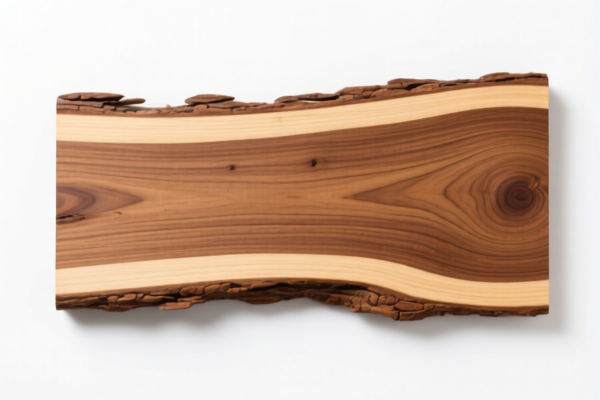
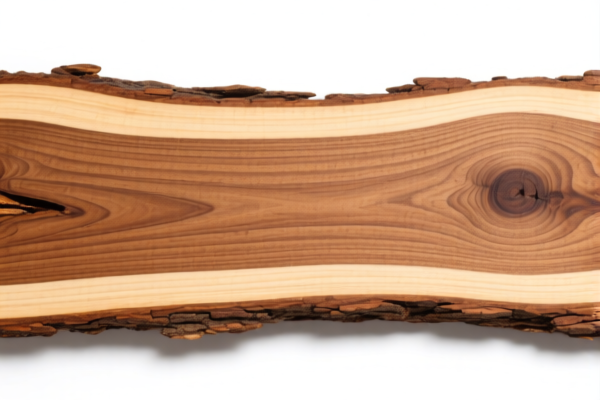
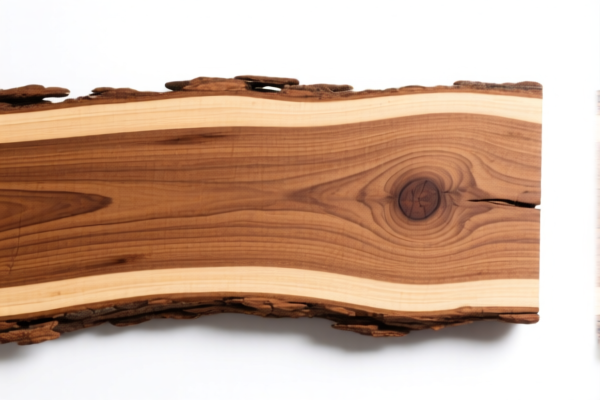
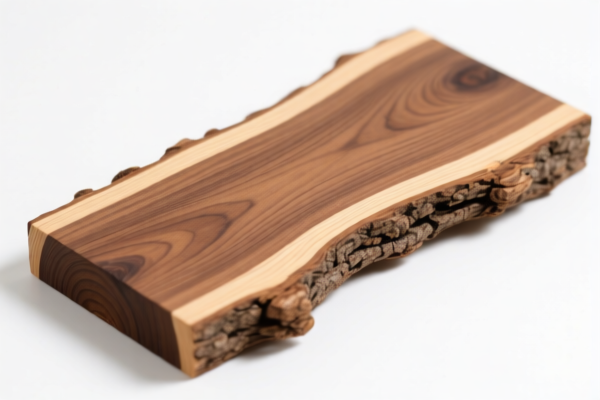
AI分析
🌳 Debarked Walnut Wood (Black Walnut / Juglans spp.)
🌐 HS Code Reference & Customs Clearance Guide | 2026 Latest Tariff Rules | Professional Clearance Strategy
📌 I. Product Definition & Classification: What is "Debarked Walnut Wood"?
Debarked Walnut Wood refers to timber from the Juglans genus (primarily Juglans nigra or Juglans regia) where the outer bark has been mechanically or manually removed. It is a high-value hardwood used for furniture, veneer, flooring, and gunstocks.
In international trade, the classification depends strictly on the physical state of the wood (sawn, fuel, waste, or semi-processed).
⚠️ Key Distinction Points:
- Raw Logs/Sawn Timber: If processed into lumber (>6mm thick) → 4407 or 4403.
- Fuel/Woodchips: If processed for burning or pelletizing → 4401.
- Waste/Scrap: If left over from machining → 4401 or 4403 depending on form.
- Split/Peeling: If mechanically split or peeled for veneer → 4407 or specialized sub-categories.
📦 II. HS Code Classification Details (2026 Latest Tariff Authority Cross-Reference)
Based on the provided data, here are the 5 specific classifications for Debarked Walnut Wood:
| HS Code | Product Description | Application Scenario | Processing State |
|---|---|---|---|
4407.19.00.93 |
Sawn Walnut Wood (Non-Coniferous), >6mm, Untreated | Lumber for construction, furniture frames, veneer logs | Sawn/Treated? No (Untreated) |
4401.49.00.90 |
Walnut Wood as Fuel (Other) | Wood pellets, chips, or bulk wood for energy generation | Fuel Grade |
4401.39.42.90 |
Walnut Wood Waste/Chips | Sawdust, shavings, or scrap from milling processes | Waste/Scrap |
4407.29.02.96 |
Split/Riven Walnut Wood | Wood split by mechanical riving (not sawing) for barrels or rustic items | Split/Riven |
4403.98.00.95 |
Roughly Squared/Coarsely Sawn Walnut | Primary processing stage, rough logs squared before fine sawing | Rough/Coarse |
🔍 Critical Reminder:
- Value vs. Form: Even though Walnut is high-value, if it is declared as fuel or waste, it falls under 4401, which may trigger different inspection protocols (e.g., pest control for fuel wood).
- Thickness Threshold: For 4407, the wood must be >6mm thick. If thinner (e.g., veneer sheets), it may fall under 4408.
- "Debarked" Status: All codes above assume bark is removed. If bark is present, classifications may shift to 4403 (preserved/uncut) depending on treatment.
💰 III. 2026 Latest Tariff Rate Breakdown (Including Supplementary Taxes & Policies)
✅ Applicable Country: United States (US)
✅ Origin: China (CN) (Note: If origin is US/EU, rates may differ; this assumes China-origin imports into US as per typical tariff structures)
✅ Effective Date: Post-2025 Trade Policies
🎯 1. 4407.19.00.93 —— Sawn Walnut Wood (Untreated, >6mm)
| Item | Content |
|---|---|
| Base Tariff | 0% (ad valorem) |
| Section 301 Supplementary Tariff | +25% |
| Section 122 Tariff (China-Specific) | +10% |
| Total Tariff Rate | 35.0% |
| Tax Calculation | CIF Value × 35% |
| De Minimis Eligibility | ❌ Not Eligible (High value, specific wood category) |
| Legal Basis Path | USITC:4407.19.00.93 → Section 301: Footnote 9903.88.01 → Section 122: IEEPA Authority |
📌 Explanation:
- Section 301 (25%): Standard US tariff on Chinese-origin hardwoods.
- Section 122 (10%): Additional duty often applied to specific timber products under national security or unfair trade practice provisions.
- Total 35%: This is a high-cost import. Profit margins for walnut lumber into the US are significantly impacted.
🎯 2. 4401.49.00.90 —— Walnut Wood as Fuel (Other)
| Item | Content |
|---|---|
| Base Tariff | 0% |
| Section 301 Supplementary Tariff | +25% |
| Section 122 Tariff (China-Specific) | +10% |
| Total Tariff Rate | 35.0% |
| Tax Calculation | CIF Value × 35% |
| De Minimis Eligibility | ❌ Not Eligible |
| Legal Basis Path | USITC:4401.49.00.90 → Section 301 → Section 122 |
📌 Note:
- Even if used for fuel, Chinese-origin walnut wood incurs the same high tariffs.
- Risk: Importing high-value walnut as "fuel" is a major red flag for customs. CBP (Customs and Border Protection) will inspect to ensure it is not diverted high-value lumber being misclassified to avoid scrutiny (though tax rate is same, inspection frequency is higher for fuel).
🎯 3. 4401.39.42.90 —— Walnut Wood Waste/Chips
| Item | Content |
|---|---|
| Base Tariff | 0% |
| Section 301 Supplementary Tariff | +25% |
| Section 122 Tariff (China-Specific) | +10% |
| Total Tariff Rate | 35.0% |
| Tax Calculation | CIF Value × 35% |
| De Minimis Eligibility | ❌ Not Eligible |
| Legal Basis Path | USITC:4401.39.42.90 → Section 301 → Section 122 |
📌 Note:
- Applies to sawdust, chips, and scraps.
- Pest Control: Must have ISPM 15 compliant heat treatment or fumigation certificate to prevent insect infestation.
🎯 4. 4407.29.02.96 —— Split/Riven Walnut Wood
| Item | Content |
|---|---|
| Base Tariff | 0% |
| Section 301 Supplementary Tariff | +25% |
| Section 122 Tariff (China-Specific) | +10% |
| Total Tariff Rate | 35.0% |
| Tax Calculation | CIF Value × 35% |
| De Minimis Eligibility | ❌ Not Eligible |
| Legal Basis Path | USITC:4407.29.02.96 → Section 301 → Section 122 |
📌 Note:
- "Split" means mechanically rived, not sawn.
- This is a niche classification for rustic furniture or barrel staves. Ensure documentation clearly states "Riven/Split" not "Sawn".
🎯 5. 4403.98.00.95 —— Roughly Squared/Coarsely Sawn Walnut
| Item | Content |
|---|---|
| Base Tariff | 0% |
| Section 301 Supplementary Tariff | +25% |
| Section 122 Tariff (China-Specific) | +10% |
| Total Tariff Rate | 35.0% |
| Tax Calculation | CIF Value × 35% |
| De Minimis Eligibility | ❌ Not Eligible |
| Legal Basis Path | USITC:4403.98.00.95 → Section 301 → Section 122 |
📌 Note:
- Applies to logs that are debarked and roughly squared but not yet milled into standard lumber.
- Often considered an "intermediate" stage. Ensure it is not mistaken for raw logs (which might have different phytosanitary requirements).
🛠️ IV. Customs Clearance Practical Advice (Battle-Tested Pitfall Guide)
✅ 1. Required Documentation Checklist (Non-Negotiable)
| Document | Mandatory? | Explanation |
|---|---|---|
| ✅ Phytosanitary Certificate | ✔️ | CRITICAL. Must confirm no insects/bacteria. Issued by NPPO of export country. |
| ✅ ISPM 15 Marking | ✔️ | If wood is in pallets/containers, packaging must be heat-treated/stamped. |
| ✅ Commercial Invoice | ✔️ | Must specify: "Debarked Walnut Wood," Species (Juglans nigra), Form (Sawn/Fuel/Waste), and Volume (CBM/Board Feet). |
| ✅ Packing List | ✔️ | Detailed breakdown of weight, dimensions, and number of pallets/bundles. |
| ✅ Fumigation Certificate | ✔️ | If ISPM 15 heat treatment is not used, chemical fumigation proof is required. |
| ✅ Bill of Lading/Air Waybill | ✔️ | Must match invoice details exactly. |
✅ 2. Declaration Tips (Key Mantras)
🔥 "Species Specific, Form Clear, Phytosanitary Solid, Tariff 35% is Real!"
| Scenario | Correct Declaration | Wrong Action |
|---|---|---|
| Sawn Lumber | 4407.19.00.93 - "Sawn Walnut, >6mm, Debarked" |
Declaring as "Generic Wood" → Delays & Fines |
| Fuel Chips | 4401.49.00.90 - "Walnut Wood Chips for Fuel" |
Declaring as "Lumber" → Overpayment of inspection costs |
| Waste/Sawdust | 4401.39.42.90 - "Walnut Wood Waste" |
Not separating waste from product → Confusion at port |
| Split Wood | 4407.29.02.96 - "Riven Walnut" |
Using "Sawn" terminology → Misclassification |
| Rough Logs | 4403.98.00.95 - "Rough Squared Walnut" |
Declaring as "Raw Logs" → Different HS code, different tax |
✅ 3. Special Situation Handling
| Situation | Handling Advice |
|---|---|
| OEM Custom Sizes | Provide drawings/specs. Ensure thickness is >6mm for 4407. If <6mm, reclassify to 4408 (Veneer Sheets). |
| Mixed Species | If Walnut is mixed with other woods, declare the primary species or split the shipment. Mislabeling high-value Walnut as low-value Pine can lead to fraud penalties. |
| Packaging Issues | Ensure all wooden pallets are ISPM 15 compliant. Non-compliant pallets will be rejected/destroyed at US ports. |
| Valuation Disputes | Walnut prices fluctuate. Provide original purchase invoices to justify CIF value. CBP often audits high-value hardwoods. |
🌍 V. Global Market Clearance Comparison (2026 Latest)
| Country/Region | Recommended HS Code | Tariff (China Origin) | Certification Required | Notes |
|---|---|---|---|---|
| 🇺🇸 United States | 4407.19.00.93 (Sawn) |
35% (25% Sec 301 + 10% Sec 122) | Phytosanitary, ISPM 15 | High Tariff. Strict phytosanitary checks. |
| 🇪🇺 European Union | 4407.19.00 |
0% - 3% (General) | FLEGT License (if EU Timber Regulation applies) | No US-style Section 301 tariffs. |
| 🇨🇳 China | 4407.19.00 |
0% - 5% | None (Import) | If exporting from China, this data is for export clearance. |
| 🇨🇦 Canada | 4407.19.00 |
0% (CUSMA) | Phytosanitary | No US-style penalties. |
| 🇯🇵 Japan | 4407.19.00 |
0% - 1.9% | Phytosanitary | Low tariffs, strict quality inspection. |
📌 Conclusion:
- The US is the most expensive market for Chinese-origin Walnut Wood due to 35% total duties.
- EU, Canada, and Japan are much more tariff-friendly, but require strict phytosanitary compliance.
- Strategic Advice: If targeting the US, consider pre-processing in a non-China third country (e.g., Vietnam, Malaysia) if possible, to avoid Section 301/122 tariffs (check Rules of Origin carefully).
📌 VI. Common Mistakes & Pitfall Guide (Lessons from Tears)
❌ Mistake 1: Declaring Walnut as "Other Hardwood" to avoid species-specific scrutiny
👉 Consequence: Customs audits will flag the discrepancy. Fines + Retroactive Tariffs + Seizure.
❌ Mistake 2: Ignoring ISPM 15 for Pallets
👉 Consequence: Entire shipment rejected at port. Cost of re-export or destruction exceeds goods value.
❌ Mistake 3: Confusing "Sawn" (4407) with "Rough Squared" (4403)
👉 Consequence: While tariff rate is similar, the legal definition differs. Incorrect code can lead to documentation discrepancies and delays.
❌ Mistake 4: Not declaring "Debarked"
👉 Consequence: If bark is present, it may be classified as Raw Logs, which have stricter phytosanitary rules and different HS codes. Misdeclaration = Fraud.
✅ Correct Practice:
"Black Walnut (Juglans nigra), Debarked, Sawn, >6mm Thick, Untreated, ISPM 15 Packaging, Phytosanitary Certificate Attached"
🎯 VII. Conclusion: Professional Declaration, Save Time & Money!
🎯 Remember the Mantra:
🔹 "Species Specific, Form Clear, Phytosanitary Solid."
🔹 "US Tariff is 35%, Don't Guess, Use Pre-Ruling."
🔹 "ISPM 15 Pallets or Else, Rejected at Port!"
📌 Pro Tip:
If your Walnut Wood is high-value veneer (<6mm), reclassify to 4408. While the tariff structure may vary, it is a different product class.
For US imports, apply for an Advance Ruling from CBP if you are unsure between 4407 (Sawn) and 4403 (Rough). This provides legal certainty and prevents future penalties.
📣 Immediate Action:
📞 Contact a Licensed Customs Broker + Provide Species Certificate + Apply for ISPM 15 Compliance
🚀 Let your Walnut Wood Pass Customs Smoothly, Avoid 35% Surprises, and Maximize Profit!
✨ Professional Clearance Starts with Accurate Classification!
💼 Your every dollar of cost is worth precise calculation!
用户评价
关于 HS 编码归类
协调制度(HS)是由世界海关组织(WCO)制定的国际贸易商品分类标准。全球 200 多个国家采用 HS 系统作为海关关税、贸易统计和进出口监管的基础。
每个 HS 编码遵循以下层级结构:
- 章(2 位)——商品大类(例如:第 84 章:机器和机械设备)
- 品目(4 位)——章内的更具体分类
- 子目(6 位)——国际通用细分,所有 WCO 成员国统一使用
- 本国细分(8-10 位)——各国自行扩展的细分编码,如美国 HTSUS 10 位编码
正确的 HS 编码归类对于顺利通关、准确缴纳关税和遵守贸易法规至关重要。错误归类可能导致海关延误、多缴关税或罚款。
从CN进口到US时,适用的关税税率可能包括:
- 最惠国(MFN)税率——适用于 WTO 成员国的标准关税税率
- 普通税率——适用于无贸易协定国家
- 贸易救济关税——附加关税,如 301 条款(反倾销)、232 条款(国家安全)或反补贴税
本页内容仅供参考。如需正式归类,请咨询当地海关或持牌报关代理。