Dent Repair Tool
CN → US| HS编码 | 关税税率 | 原产国 | 目的国 | 文档 |
|---|---|---|---|---|
| 8467891000 | 17.5% | CN | US | 官方文档 |
| 8467191000 | 22.0% | CN | US | 官方文档 |
| 8205598000 | 38.7% | CN | US | 官方文档 |
| 8205595560 | 40.3% | CN | US | 官方文档 |
商品图片
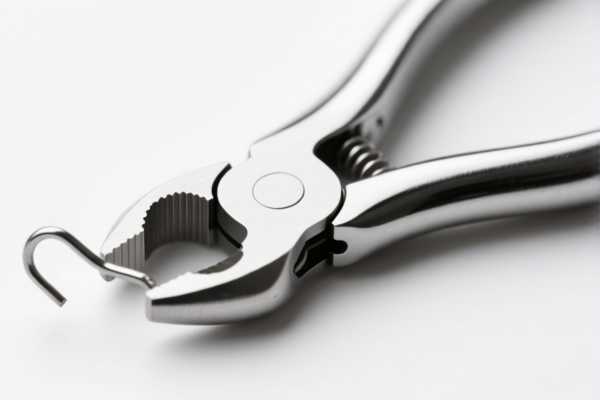
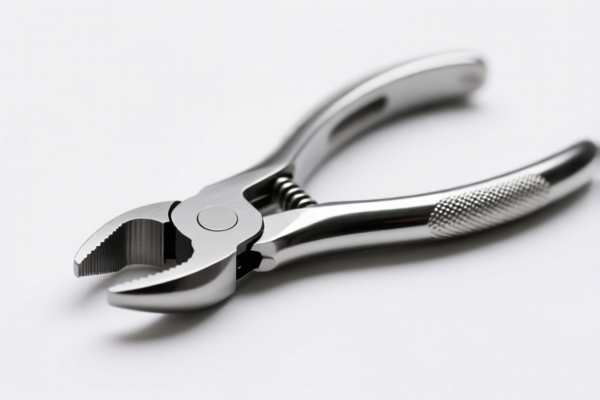
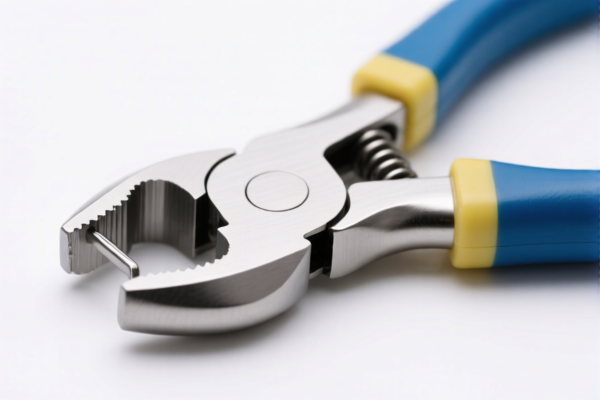
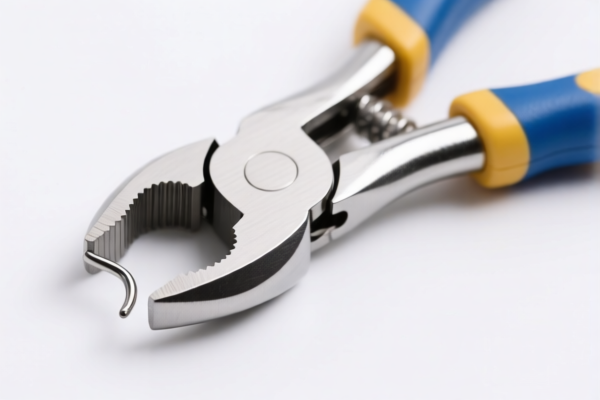
AI分析
🔨 Dent Repair Tool (Auto Body Repair Tools)
🌐 HS Code Reference & Customs Clearance Guide | 2026 Latest Tariff Analysis | Professional Level Strategy 📌 I. Product Definition & Classification: Do You Really Understand "Dent Repair Tools"?
Dent repair tools, commonly known as "paintless dent removal (PDR) tools," "sliders," "glue pullers," or "metal straightening tools," are essential equipment in the auto body repair industry. In international trade, these tools are not a single unified category. Their classification depends strictly on their power source and operation method.
Power-Driven Tools (Pneumatic/Electric): Tools that rely on external air pressure or internal electric motors to generate force for metal shaping. These fall under power tool categories. Hand Tools (Manual): Tools that rely entirely on human physical force (leveraging, pulling, or tapping) without any external power source. These fall under general hand tool categories.
⚠️ Key Distinction Point: - If the tool has an air hose connection, electric cord, or battery, it is considered a Power Tool →归入 8467.xxxx.xxxx.xxxx - If the tool is a simple metal rod, hook, or lever operated by hand, it is considered a Hand Tool →归入 8205.xxxx.xxxx.xxxx
📦 II. HS Code Classification Details (2026 Latest Tariff Authority Comparison)
Based on the provided data, here are the four most likely HS Codes for Dent Repair Tools, ranging from low to high tariff impact:
| HS Code | Product Description | Applicable Scenario | Power Source | Estimated Total Tax Rate |
|---|---|---|---|---|
8467.89.10.00 |
Other power tools for working metal (Pneumatic) | Pneumatic dent pullers, air-powered dent hammers | ✅ Pneumatic | 17.5% |
8467.19.10.00 |
Other electric power tools for working metal | Electric dent repair hammers, cordless dent pullers | ✅ Electric | 22.0% |
8205.59.80.00 |
Other hand tools for working metal (Manual) | Manual dent pulling tabs, simple metal rods | ❌ Manual (Human Power) | 38.7% |
8205.59.55.60 |
Other hand tools for working metal (Metal-made) | Heavy-duty manual levers, specific metal straightening kits | ❌ Manual (Human Power) | 40.3% |
🔍 Important Reminder: - Power Tools (8467): If your dent repair tool connects to an air compressor or has a motor, it MUST be classified under HS Code 8467. Do not misclassify power tools as hand tools to avoid penalties. - Hand Tools (8205): Simple PDR rods, hooks, and levers that require no electricity or air are classified under HS Code 8205. - Misclassification Risk: Declaring a pneumatic tool as a manual tool will result in severe customs penalties for undervaluation and incorrect classification.
💰 III. 2026 Latest Tariff Rate Details (Including Surcharges & Policy Add-ons)
✅ Applicable Country: United States (US) ✅ Country of Origin: China (CN) ✅ Effective Time: From Nov 10, 2025 (including subsequent imports)
🎯 1. 8467.89.10.00 —— Pneumatic Power Tools for Working Metal
| Item | Content |
|---|---|
| Base Duty Rate | 0.0% (ad valorem) |
| Section 301 Surcharge (USITC) | +7.5% |
| IEEPA Surcharge (Section 122/Executive Order) | +10.0% |
| Total Tax Rate | 17.5% |
| Tax Calculation | CIF Value × 17.5% |
| De Minimis Eligibility | ❌ Not Eligible (deny_de_minimis applies to power tools) |
| Legal Basis Path | USITC:8467.89.10.00 → 301:Footnote_7.5 → IEEPA:122_10 |
📌 Explanation: - Pneumatic tools are often classified under "Other power tools." - While the base rate is 0%, the Section 301 and IEEPA surcharges apply. - Total 17.5% is considered a moderate tariff compared to hand tools. - Strategic Advantage: If your tool is pneumatic, this is often the most cost-effective classification among the options provided.
🎯 2. 8467.19.10.00 —— Electric Power Tools for Working Metal
| Item | Content |
|---|---|
| Base Duty Rate | 4.5% (ad valorem) |
| Section 301 Surcharge (USITC) | +7.5% |
| IEEPA Surcharge (Section 122/Executive Order) | +10.0% |
| Total Tax Rate | 22.0% |
| Tax Calculation | CIF Value × 22.0% |
| De Minimis Eligibility | ❌ Not Eligible (deny_de_minimis applies to power tools) |
| Legal Basis Path | USITC:8467.19.10.00 → 301:Footnote_7.5 → IEEPA:122_10 |
📌 Note: - Electric tools have a 4.5% base duty, which adds to the surcharges. - Total 22.0% is higher than pneumatic tools due to the base rate. - Even if the tool is "cordless" (battery-powered), it is still classified as an electric power tool under 8467, not a hand tool.
🎯 3. 8205.59.80.00 —— Other Hand Tools for Working Metal
| Item | Content |
|---|---|
| Base Duty Rate | 3.7% (ad valorem) |
| Section 301 Surcharge (USITC) | +25.0% |
| IEEPA Surcharge (Section 122/Executive Order) | +10.0% |
| Total Tax Rate | 38.7% |
| Tax Calculation | CIF Value × 38.7% |
| De Minimis Eligibility | ❌ Not Eligible (Hand tools >$800 still subject to surcharges if misclassified or high value) |
| Legal Basis Path | USITC:8205.59.80.00 → 301:Footnote_25 → IEEPA:122_10 |
📌 Warning: - Hand tools are subject to a much higher Section 301 surcharge (+25%). - Total 38.7% is a high tariff. - If you can prove the tool is power-driven, this classification is incorrect and risky. However, if it is truly manual, this is the correct code.
🎯 4. 8205.59.55.60 —— Other Hand Tools for Working Metal (Specific Metal Subset)
| Item | Content |
|---|---|
| Base Duty Rate | 5.3% (ad valorem) |
| Section 301 Surcharge (USITC) | +25.0% |
| IEEPA Surcharge (Section 122/Executive Order) | +10.0% |
| Total Tax Rate | 40.3% |
| Tax Calculation | CIF Value × 40.3% |
| De Minimis Eligibility | ❌ Not Eligible |
| Legal Basis Path | USITC:8205.59.55.60 → 301:Footnote_25 → IEEPA:122_10 |
📌 Note: - This code is a sub-category of hand tools, likely for specific metal compositions or uses. - Total 40.3% is the highest tariff in the list. - Only use this if the product is strictly a manual metal tool and matches the specific description of this sub-code.
🛠️ IV. Customs Clearance Practical Advice (Battle-Tested Pitfall Avoidance)
✅ 1. Preparation Checklist (All are Mandatory)
| Material | Required | Explanation |
|---|---|---|
| ✅ Product Specifications | ✔️ | Must explicitly state: Power Source (Pneumatic/Electric/Manual), Working Pressure, Voltage, Weight |
| ✅ Product Photos | ✔️ | Clear photos of air hoses, plugs, or buttons to prove power source |
| ✅ User Manual | ✔️ | Should describe operation method (e.g., "connect to air compressor" vs. "operate by hand") |
| ✅ Commercial Invoice | ✔️ | Description must match HS Code (e.g., "Pneumatic Dent Puller" vs. "Metal Lever") |
| ✅ Packing List | ✔️ | Detail contents; avoid declaring complex kits as simple "tools" without breakdown |
| ✅ Origin Certificate | ✔️ | Essential for applying any potential exemptions (though unlikely for CN origin) |
✅ 2. Declaration Tips (Key Mnemonics)
🔥 “Power Means 8467, Manual Means 8205. Accuracy Saves Thousands!”
| Situation | Correct Declaration | Wrong Approach |
|---|---|---|
| Tool has an air hose | 8467.89.10.00 (Pneumatic) |
Declare as "Hand Tool" → Risk of Penalty |
| Tool is cordless/electric | 8467.19.10.00 (Electric) |
Declare as "Hand Tool" → Risk of Penalty |
| Simple metal rod/lever | 8205.59.80.00 (Hand Tool) |
Declare as "Power Tool" → Overpayment (17.5% vs 38.7%) |
| Kit with both tools | Separate HS Codes or Primary Use | Mixed declaration → Customs Audit |
✅ 3. Special Case Handling
| Situation | Handling Advice |
|---|---|
| Hydraulic Tools | If powered by hydraulic pumps, it may still fall under 8467 (Power Tools) depending on the pump source. Consult customs broker. |
| Glue Pullers (with Heater) | If it includes a built-in heating element, it is Electric → 8467.19.10.00 (22.0%). Do not classify as manual. |
| Complete Repair Kits | Declare the principal function item. If the kit contains a pneumatic hammer, classify under 8467. |
| OEM Custom Tools | Provide design drawings to prove the tool's operation method. |
🌍 V. Global Market Customs Comparison (2026 Latest)
| Country/Region | Recommended HS Code | Tariff (China Origin) | Certification Requirements | Notes |
|---|---|---|---|---|
| 🇺🇸 United States | 8467.89.10.00 (Pneumatic) / 8205.59.80.00 (Manual) |
17.5% (Pneumatic) / 38.7% (Manual) | None specific | High tariffs due to 301/IEEPA |
| 🇨🇳 China | 8467.89.10.00 |
0-5% (Import Duty) | CCC (if applicable) | Lower tariffs for domestic trade |
| 🇪🇺 European Union | 8467.89.90 / 8205.90 |
0-6% | CE Marking | No Section 301 surcharges |
| 🇬🇧 United Kingdom | 8467.89.00 / 8205.59 |
0-6% | UKCA Marking | Post-Brexit rules apply |
📌 Conclusion: - The US market is the most challenging due to high additional tariffs (Section 301 + IEEPA). - Pneumatic tools (17.5%) are significantly cheaper to import than Manual tools (38.7%). - Misclassification is expensive: Declaring a manual tool as pneumatic can lead to underpayment penalties; declaring a power tool as manual leads to overpayment.
📌 VI. Common Errors & Pitfall Guide (Lessons Learned)
❌ Error 1: Declaring a Pneumatic Dent Puller as a "Hand Tool" 👉 Consequence: Customs detects air hose/power source → Penalty for misclassification + back taxes + seizure risk.
❌ Error 2: Declaring a Battery-Operated Dent Hammer as a "Hand Tool" 👉 Consequence: Cordless tools are still power tools. High penalty risk.
❌ Error 3: Ignoring the IEEPA 10% Surcharge 👉 Consequence: Underquoting the total landed cost by 10% → Unexpected cash flow issues.
❌ Error 4: Vague Description "Auto Repair Tool" 👉 Consequence: Customs may assign their own code with highest possible duty (e.g., 25-30% base + surcharges) → Delays.
✅ Correct Practice:
"Pneumatic Dent Repair Tool, Air-Powered, 90 PSI Max, Model XYZ, Made in China" HS Code: 8467.89.10.00
🎯 VII. Conclusion: Precise Classification, Cost Control, Efficient Clearance!
🎯 Remember the Mnemonic:
🔹 "Power is 8467 (17.5-22%), Manual is 8205 (38.7-40.3%). Don't mix them up!" 🔹 "Pneumatic is cheaper than Manual due to Base Rate. Electric is in between."
📌 Pro Tip: - If your product is battery-operated, it is NOT a hand tool. It is an electric power tool. - Always provide photos showing the power interface (air inlet, power plug, battery slot). - For US imports, factor in the 17.5% - 40.3% total duty cost in your pricing model.
📣 Immediate Action:
📞 Contact a licensed customs broker for Pre-Ruling (Advance Ruling) if unsure. 🚀 Ensure your commercial invoice clearly states the power source and operation method.
✨ Professional Customs Clearance Starts with Accurate Classification! 💼 Every Percent of Tax Saved is Pure Profit!
用户评价
关于 HS 编码归类
协调制度(HS)是由世界海关组织(WCO)制定的国际贸易商品分类标准。全球 200 多个国家采用 HS 系统作为海关关税、贸易统计和进出口监管的基础。
每个 HS 编码遵循以下层级结构:
- 章(2 位)——商品大类(例如:第 84 章:机器和机械设备)
- 品目(4 位)——章内的更具体分类
- 子目(6 位)——国际通用细分,所有 WCO 成员国统一使用
- 本国细分(8-10 位)——各国自行扩展的细分编码,如美国 HTSUS 10 位编码
正确的 HS 编码归类对于顺利通关、准确缴纳关税和遵守贸易法规至关重要。错误归类可能导致海关延误、多缴关税或罚款。
从CN进口到US时,适用的关税税率可能包括:
- 最惠国(MFN)税率——适用于 WTO 成员国的标准关税税率
- 普通税率——适用于无贸易协定国家
- 贸易救济关税——附加关税,如 301 条款(反倾销)、232 条款(国家安全)或反补贴税
本页内容仅供参考。如需正式归类,请咨询当地海关或持牌报关代理。