Dispersant for Sterilizer
CN → US| HS编码 | 关税税率 | 原产国 | 目的国 | 文档 |
|---|---|---|---|---|
| 3402422050 | 39.0% | CN | US | 官方文档 |
| 3402905010 | 38.7% | CN | US | 官方文档 |
| 3824997510 | 38.7% | CN | US | 官方文档 |
| 3824999397 | 40.0% | CN | US | 官方文档 |
商品图片
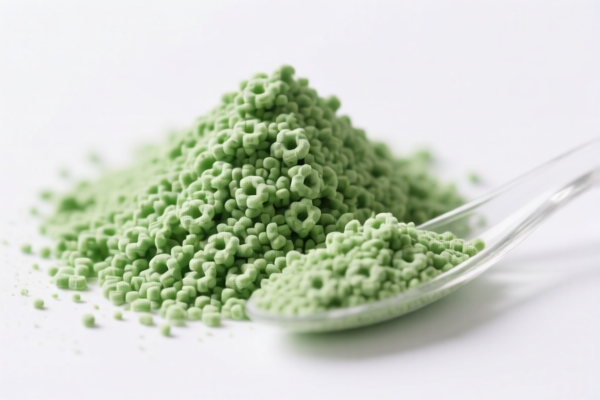
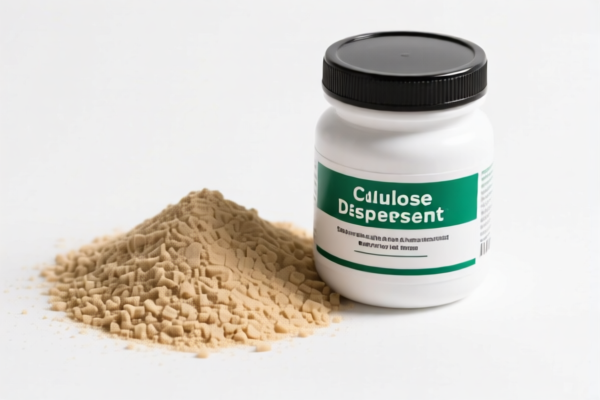
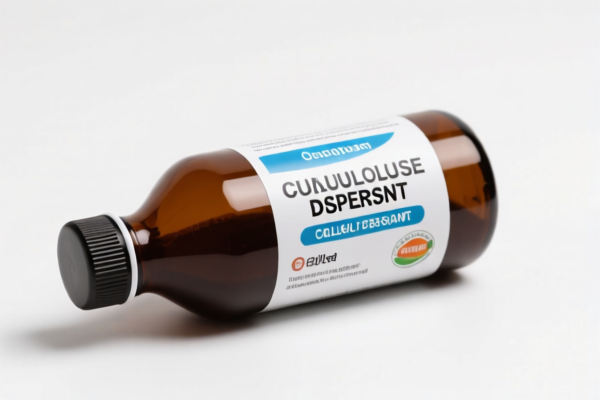
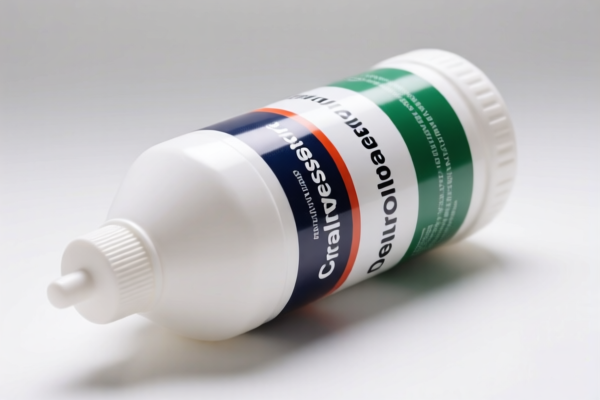
AI分析
🧪 Dispersant for Sterilizer (乳化分散剂)
🌐 HS Code Reference & Customs Clearance Guide | 2024/2025 Latest Tariff Analysis | Professional Classification Strategy
📌 I. Product Definition & Classification: Do You Really Understand "Dispersant"?
A Dispersant for Sterilizer (often referred to in trade as Emulsifying Dispersant) is a specialized chemical additive used to stabilize mixtures of immiscible liquids (like oil and water) within sterilization solutions or industrial cleaning agents. In international trade, it falls under the broad umbrella of Surface Active Agents or Chemical Preparations.
Key Distinction: * Surface Active Agents (Surfactants): Primary function is wetting, emulsifying, or dispersing. Often classified under Chapter 34. * Miscellaneous Chemical Preparations: If the product is a specific formulation where the surfactant role is secondary to a general chemical preparation function, it may fall under Chapter 38.
⚠️ Critical Classification Point:
- If the product is primarily a non-ionic surfactant used for emulsification/dispersion → Likely 3402.
- If the product is a general chemical additive without specific surfactant designation or is a complex mixture → Likely 3824.
- No Material Conflict: The summaries indicate that all proposed codes assume an organic chemical nature, with no physical form conflicts (e.g., liquid vs. solid) affecting the base classification logic.
📦 II. HS Code Classification Details (Based on Provided Data)
| HS Code | Product Description | Basis for Classification | Total Tax Rate |
|---|---|---|---|
3402.42.20.50 |
Surface-active preparations and preparations made on the basis of surface-active substances (Non-ionic) | Matches "Emulsifying Dispersant" as a non-ionic surfactant. No material/functional conflict. | 39.0% |
3402.90.50.10 |
Other surface-active preparations | Matches chemical nature of "emulsifying/dispersing." Assumed organic surfactant by common sense. | 38.7% |
3824.99.75.10 |
Other chemical products/preparations (Miscellaneous) | Fits "chemical additive/dispersant." Used as a "catch-all" due to lack of specific chemical structure info. | 38.7% |
3824.99.93.97 |
Other chemical products/preparations (Other) | Matches "chemical industry preparations." Assumed to be a chemical agent for sterilization support. | 40.0% |
🔍 Key Insight:
- Chapter 34 (3402) is generally preferred for pure surfactants (emulsifiers/dispersants).
- Chapter 38 (3824) is used when the product is a complex formulation or if it doesn't strictly fit the surfactant definition.
- The tax rates vary slightly (38.7% – 40.0%) due to different base tariffs and the application of additional duties.
💰 III. 2024/2025 Latest Tariff Rate Breakdown (Including Surtaxes)
✅ Applicable Country: United States (US)
✅ Country of Origin: China (CN)
✅ Effective Date: Post-2025 (Reflecting Section 301 and IEEPA surcharges)
🎯 1. 3402.42.20.50 —— Non-ionic Surface Active Preparations
| Item | Detail |
|---|---|
| Base Tariff | 4.0% |
| Section 301 Surtax | +25.0% |
| IEEPA Surtax (Section 122) | +10.0% |
| Total Effective Rate | 39.0% |
| Calculation | CIF Value × 39.0% |
| De Minimis Exemption | ❌ Not Applicable |
📌 Explanation:
- This code carries the highest total tax (39.0%) among the surfactant options.
- It is subject to both the 25% Section 301 duty and the 10% IEEPA duty.
- Legal Path:USITC:3402.42.20.50→Footnote: 9903.88.01(Section 301) →IEEPA:9903.01.25(10% surcharge).
🎯 2. 3402.90.50.10 —— Other Surface Active Preparations
| Item | Detail |
|---|---|
| Base Tariff | 3.7% |
| Section 301 Surtax | +25.0% |
| IEEPA Surtax (Section 122) | +10.0% |
| Total Effective Rate | 38.7% |
| Calculation | CIF Value × 38.7% |
| De Minimis Exemption | ❌ Not Applicable |
📌 Explanation:
- Slightly cheaper (38.7%) than the non-ionic specific code.
- Still fully subject to all surcharges.
- Legal Path:USITC:3402.90.50.10→Footnote: 9903.88.01→IEEPA:9903.01.24.
🎯 3. 3824.99.75.10 —— Miscellaneous Chemical Preparations
| Item | Detail |
|---|---|
| Base Tariff | 3.7% |
| Section 301 Surtax | +25.0% |
| IEEPA Surtax (Section 122) | +10.0% |
| Total Effective Rate | 38.7% |
| Calculation | CIF Value × 38.7% |
| De Minimis Exemption | ❌ Not Applicable |
📌 Explanation:
- Same effective rate as3402.90.50.10.
- Used as a fallback if the product is not strictly a "surface-active" agent but a general chemical additive.
- Legal Path:USITC:3824.99.75.10→Footnote: 9903.88.01→IEEPA:9903.01.24.
🎯 4. 3824.99.93.97 —— Other Chemical Preparations (Other)
| Item | Detail |
|---|---|
| Base Tariff | 5.0% |
| Section 301 Surtax | +25.0% |
| IEEPA Surtax (Section 122) | +10.0% |
| Total Effective Rate | 40.0% |
| Calculation | CIF Value × 40.0% |
| De Minimis Exemption | ❌ Not Applicable |
📌 Explanation:
- Highest tax rate (40.0%) due to a higher base tariff (5.0%).
- Only use if other chemical codes are definitively excluded.
- Legal Path:USITC:3824.99.93.97→Footnote: 9903.88.01→IEEPA:9903.01.25.
🛠️ IV. Customs Clearance Practical Advice (Risk Mitigation Guide)
✅ 1. Essential Documentation Checklist
| Document | Required | Notes |
|---|---|---|
| ✅ Product Specification Sheet | ✔️ | Must detail chemical composition, function (emulsifying/dispersing), and concentration. |
| ✅ Formula/Composition List | ✔️ | Critical for determining if it’s a surfactant (Ch 34) or general chemical (Ch 38). |
| ✅ Product Photos (Label & Container) | ✔️ | Clear view of HS Code claims, warning labels, and usage instructions. |
| ✅ Certificate of Analysis (COA) | ✔️ | Third-party lab results confirming chemical properties. |
| ✅ Commercial Invoice | ✔️ | Must clearly state "Dispersant for Sterilizer" and NOT just "Chemical." |
| ✅ Country of Origin Certificate | ✔️ | Required for applying surcharges accurately. |
| ✅ Packing List | ✔️ | Detailing net/gross weights and packaging type. |
✅ 2. Declaration Strategy (Key Tips)
🔥 "Clarify Function, Specify Composition, Avoid Vague Terms!"
| Scenario | Correct Declaration | Incorrect Declaration |
|---|---|---|
| Pure Surfactant | Non-ionic Emulsifying Dispersant, Chemical Name: XX |
Chemical Mixture or Additive |
| Complex Formulation | Sterilizer Dispersant Preparation, containing surfactants and stabilizers |
Surface Active Agent (if not primary function) |
| Generic Chemical | Miscellaneous Chemical Preparation for Industrial Use |
Dispersant (if function is unclear) |
📌 Warning:
- Misclassifying a Surfactant as a General Chemical (or vice versa) can lead to rejection, audits, or penalties.
- Always provide the primary function in the description.
✅ 3. Special Considerations
| Situation | Recommendation |
|---|---|
| OEM/White Label Products | Provide client agreements and original formulas to prove function. |
| High Concentration Agents | Declare as "Concentrate" if applicable, but note that dilution doesn’t change HS code. |
| Hazardous Chemicals | If the dispersant is flammable or toxic, declare as Dangerous Goods (DG) and provide MSDS. |
| Sterilizer Components | If sold with a sterilizer machine, ensure they are packaged and declared appropriately to avoid being classified as part of the machine. |
🌍 V. Global Market Comparison (2024/2025)
| Country/Region | Recommended HS Code | Tariff (China Origin) | Certification | Notes |
|---|---|---|---|---|
| 🇺🇸 USA | 3402.42.20.50 / 3402.90.50.10 |
38.7% – 39.0% | None specific | High surcharges apply. |
| 🇨🇳 China | 3402.42.20.50 |
~10-14% (Import) | None | Lower base tariffs. |
| 🇪🇺 EU | 3402.42.90 |
6.5% | REACH | No surcharges. REACH registration required. |
| 🇯🇵 Japan | 3402.42.00.00 |
6.0% | None | Standard duties. |
| 🇦🇺 Australia | 3402.42.00.00 |
5.0% | AICIS | Low base duty. |
📌 Conclusion:
- USA has the highest barrier due to 301/IEEPA surcharges.
- EU requires REACH registration, which can be costly and time-consuming.
- Asia (China, Japan, Australia) offers lower tariffs but may have stricter purity/formulation requirements.
📌 VI. Common Mistakes & Pitfalls (Lessons Learned)
❌ Mistake 1: Declaring as "Surfactant" when it is a complex chemical mixture
👉 Result: Customs may reclassify to 3824, leading to additional duties or delays.
❌ Mistake 2: Using vague terms like "Chemical Additive" without function
👉 Result: Customs requests additional information, causing shipment delays.
❌ Mistake 3: Ignoring Hazardous Chemical status
👉 Result: If the dispersant is flammable/toxic, failure to declare as DG leads to fines and cargo seizure.
❌ Mistake 4: Assuming De Minimis applies
👉 Result: Shipment seized! Section 301/IEEPA surcharges do not apply to de minimis exemptions.
✅ Correct Practice:
"Non-ionic Emulsifying Dispersant, Primary Function: Emulsification in Sterilization Solutions, Chemical Composition: [Detail], CAS No: [List], Model: XYZ"
🎯 VII. Conclusion: Precision in Classification Saves Costs!
🎯 Remember:
🔹 "Surfactant vs. Chemical Preparation: Choose Wisely!"
🔹 "39% Tax is High: Optimize Classification & Documentation!"
🔹 "Vague Descriptions Lead to Delays: Be Specific!"
📌 Pro Tip:
If your product is originating from Vietnam, Mexico, Thailand, or Malaysia, you may avoid IEEPA/Section 301 surcharges by proving substantial transformation.
Consider applying for an Advance Ruling from US Customs (CBP) to confirm the correct HS Code and avoid post-clearance audits.
📣 Immediate Action:
📞 Consult with a licensed customs broker + Provide full formula + Apply for HS Code Advance Ruling
🚀 Ensure smooth customs clearance, minimize costs, and accelerate time-to-market!
✨ Professional classification starts with accurate data!
💼 Every percentage point of duty affects your bottom line!
用户评价
关于 HS 编码归类
协调制度(HS)是由世界海关组织(WCO)制定的国际贸易商品分类标准。全球 200 多个国家采用 HS 系统作为海关关税、贸易统计和进出口监管的基础。
每个 HS 编码遵循以下层级结构:
- 章(2 位)——商品大类(例如:第 84 章:机器和机械设备)
- 品目(4 位)——章内的更具体分类
- 子目(6 位)——国际通用细分,所有 WCO 成员国统一使用
- 本国细分(8-10 位)——各国自行扩展的细分编码,如美国 HTSUS 10 位编码
正确的 HS 编码归类对于顺利通关、准确缴纳关税和遵守贸易法规至关重要。错误归类可能导致海关延误、多缴关税或罚款。
从CN进口到US时,适用的关税税率可能包括:
- 最惠国(MFN)税率——适用于 WTO 成员国的标准关税税率
- 普通税率——适用于无贸易协定国家
- 贸易救济关税——附加关税,如 301 条款(反倾销)、232 条款(国家安全)或反补贴税
本页内容仅供参考。如需正式归类,请咨询当地海关或持牌报关代理。