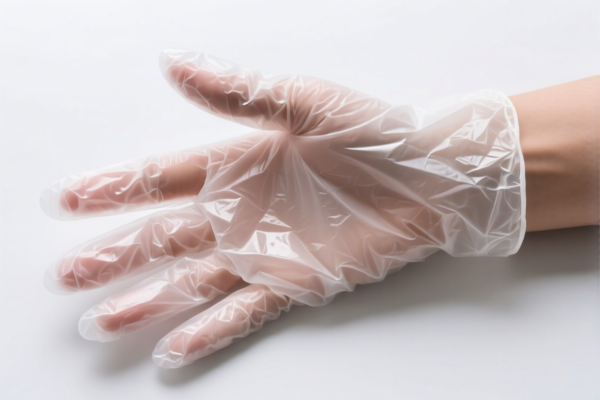
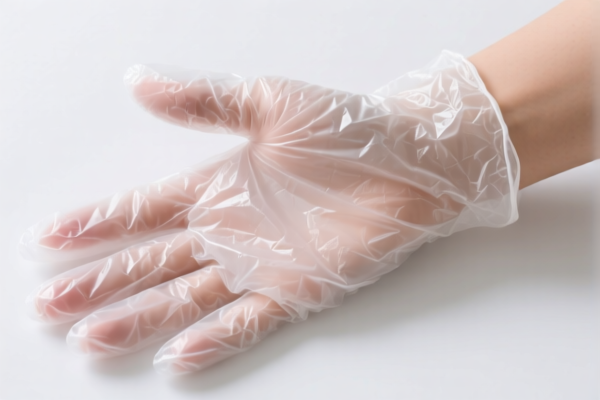
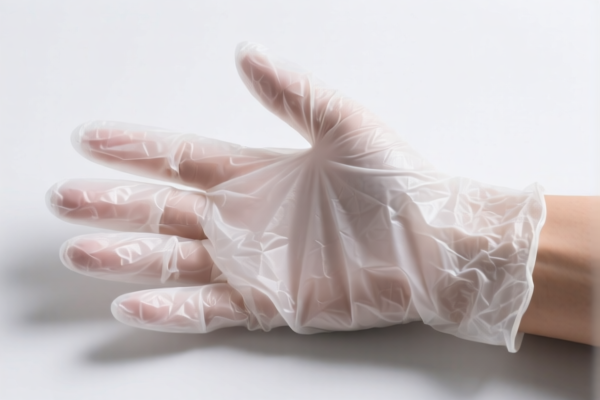
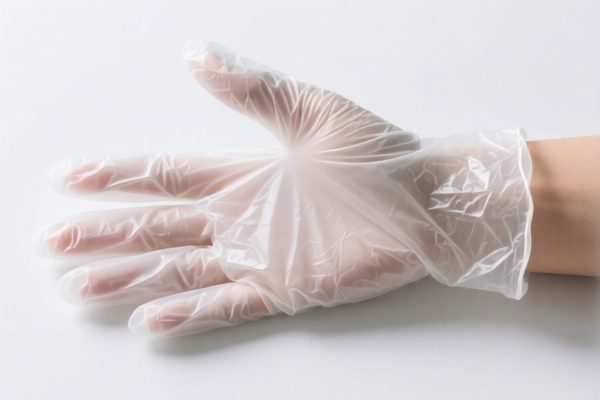
Disposable Short Plastic Gloves
CN → US| HS编码 | 关税税率 | 原产国 | 目的国 | 文档 |
|---|---|---|---|---|
| 3926201020 | 10.0% | CN | US | 官方文档 |
| 3926204010 | 16.5% | CN | US | 官方文档 |
| 3926201020 | 10.0% | CN | US | 官方文档 |
| 3926204010 | 16.5% | CN | US | 官方文档 |
| 3926201020 | 10.0% | CN | US | 官方文档 |
商品图片
AI分析
🧤 Disposable Short Plastic Gloves (一次性塑料手套)
🌐 HS Code Reference & Customs Clearance Guide | 2026 Latest Tariff Analysis | Professional Clearance Strategy
📌 I. Product Definition & Classification: Do You Really Understand "Plastic Gloves"?
Disposable Short Plastic Gloves are single-use protective garments made from plastic materials (typically Polyethylene PE, Vinyl PVC, or Nitrile), characterized by their short cuff length and non-sterile, general-purpose nature. In international trade, the classification depends heavily on the material composition and specific usage scenario, which directly impacts the tariff rate under US Section 301 and IEEPA regulations.
Key Distinction Points: - Material Assumption: Unless specified as natural rubber (latex) or other fibers, "plastic gloves" are classified under Chapter 39 (Plastics and Articles Thereof). - Type: "Short" refers to the cuff length; "Disposable" indicates they are not durable/reusable. - Usage: Distinguish between general industrial/commercial use (e.g., food handling, cleaning) and household/domestic use.
⚠️ Critical Classification Note:
- If the gloves are general purpose (industrial, medical non-sterile, food service) → Often classified under 3926.20.10 series. - If explicitly for household use (kitchen cleaning, domestic chores) → Often classified under 3926.20.40 series. - Note: The provided data assumes plastic material. If latex/natural rubber, HS codes would differ entirely (e.g., 4015.11).
📦 II. HS Code Classification Details (Based on Provided Data | 2026 Latest Tariff)
| HS Code | Product Description | Applicable Scenario | Total Tax Rate | Tax Breakdown |
|---|---|---|---|---|
3926.20.10.20 |
Disposable plastic gloves, matching plastic material and single-use glove characteristics | General purpose, industrial, food service, non-household | 10.0% | Base: 0.0%, Add'l: 0.0%, Section 122: 10% |
3926.20.40.10 |
Disposable household plastic gloves, matching material, form, and single-use core features | Kitchen cleaning, domestic chores, household maintenance | 16.5% | Base: 6.5%, Add'l: 0.0%, Section 122: 10% |
3926.20.10.20 |
Disposable gloves, inferred plastic material based on common sense, fits plastic product category | General disposable gloves, unspecified use but plastic | 10.0% | Base: 0.0%, Add'l: 0.0%, Section 122: 10% |
3926.20.40.10 |
Disposable gloves, name includes "disposable" and "glove", material inferred as plastic | Household-oriented disposable gloves | 16.5% | Base: 6.5%, Add'l: 0.0%, Section 122: 10% |
3926.20.10.20 |
Disposable powdered plastic gloves, matching plastic material, single-use form, and glove purpose | Powdered variety for easier donning, general/industrial use | 10.0% | Base: 0.0%, Add'l: 0.0%, Section 122: 10% |
🔍 Key Insight:
-3926.20.10.20is the low-cost option (10%) for general/industrial/commercial disposable plastic gloves.
-3926.20.40.10is the higher-cost option (16.5%) specifically for household disposable plastic gloves, due to a 6.5% base tariff.
- Section 122 Tariff (10%) applies to both categories, likely referring to specific US trade measures (e.g., related to China or specific product lines).
💰 III. 2026 Latest Tariff Rate Details (Including Surtaxes & Policy Additions)
✅ Applicable Country: United States (US)
✅ Origin: China (CN) [Assumed based on "Section 122" and typical trade context]
✅ Effective Time: Current as of 2026
🎯 1. 3926.20.10.20 —— General Disposable Plastic Gloves (Industrial/Commercial)
| Item | Content |
|---|---|
| Base Tariff | 0.0% (Ad Valorem) |
| Additional Tariff (Section 122) | +10.0% |
| Total Tax Rate | 10.0% |
| Tax Calculation | CIF Value × 10.0% |
| De Minimis Eligibility | ❌ Not Eligible (Typical for plastic goods from China under current policies) |
| Legal Basis Path | HTSUS:3926.20.10.20 → Section 122: 10% |
📌 Explanation:
- The base duty is 0%, which is favorable for general plastic goods.
- The 10% surcharge is the primary cost driver, likely under Section 122 or similar trade action.
- Total cost impact: 10% of CIF value.
🎯 2. 3926.20.40.10 —— Household Disposable Plastic Gloves
| Item | Content |
|---|---|
| Base Tariff | 6.5% (Ad Valorem) |
| Additional Tariff (Section 122) | +10.0% |
| Total Tax Rate | 16.5% |
| Tax Calculation | CIF Value × 16.5% |
| De Minimis Eligibility | ❌ Not Eligible |
| Legal Basis Path | HTSUS:3926.20.40.10 → Section 122: 10% |
📌 Explanation:
- The base duty is 6.5%, making household gloves more expensive to import.
- Adding the 10% Section 122 tariff results in a total of 16.5%.
- Total cost impact: 16.5% of CIF value, significantly higher than general-purpose gloves.
🛠️ IV. Customs Clearance Practical Advice (Real-World Pitfall Avoidance)
✅ 1. Documentation Checklist (Essential)
| Document | Required? | Description |
|---|---|---|
| ✅ Product Specification Sheet | ✔️ | Must specify material (PE, PVC, Nitrile), thickness, presence of powder, cuff length ("short"). |
| ✅ Product Photos (Clear Label) | ✔️ | Show "Disposable", "Plastic", and usage context (e.g., "for food handling" vs. "for household cleaning"). |
| ✅ Commercial Invoice | ✔️ | Clearly state "Disposable Plastic Gloves" and specify usage (General vs. Household). |
| ✅ Packing List | ✔️ | Detail packaging, quantity, weight. |
| ✅ Origin Certificate | ✔️ | If applicable for any preferential treatment (unlikely for China under current tariffs). |
✅ 2. Declaration Strategy (Key Mnemonic)
🔥 "Clarify Usage: Industrial 10%, Household 16.5%! Wrong Declaration = High Risk!"
| Scenario | Correct Declaration | Incorrect Declaration | Consequence |
|---|---|---|---|
| Gloves for factory/food service | 3926.20.10.20 (10%) |
3926.20.40.10 |
Overpay 6.5% + potential audit |
| Gloves for home kitchen use | 3926.20.40.10 (16.5%) |
3926.20.10.20 |
Underpay → Back taxes + Penalties |
| Mixed Use (Unclear) | Provide usage statement + photos | Ambiguous description | Customs may classify as higher rate (16.5%) or hold shipment |
| Powdered vs. Non-Powdered | Specify in specs | Not specified | May affect classification if powder is a key feature, but tax rate likely same for 3926.20.10.20 |
📌 Critical Tip:
- If your gloves are multipurpose, declare based on primary intended use.
- If sold as "general purpose," use3926.20.10.20to save 6.5%.
- If marketed specifically for "household cleaning," you must use3926.20.40.10.
✅ 3. Special Circumstances
| Scenario | Handling Advice |
|---|---|
| OEM Private Label | Ensure specs match declared HS. Provide label mockups. |
| Powdered Gloves | Clearly state "with powder" or "powder-free". Powder may have additional regulatory scrutiny (though tax rate remains 10% for 3926.20.10.20). |
| Mixed Shipments (Household + General) | Do not mix in one line item. Separate declarations to optimize tax. |
| Origin: Non-China | If from Vietnam/Malaysia, Section 122 may not apply → Check for 0% base tariff. |
🌍 V. Global Market Comparison (2026 Latest)
| Country/Region | Recommended HS Code | Tariff (China Origin) | Certification | Notes |
|---|---|---|---|---|
| 🇺🇸 USA | 3926.20.10.20 |
10.0% | None | Low tax for general gloves |
| 🇺🇸 USA | 3926.20.40.10 |
16.5% | None | Higher tax for household gloves |
| 🇨🇳 China | 3926.20.10.20 |
0% (Import) | None | Domestic trade |
| 🇪🇺 EU | 3926.20.90 |
4.5% | CE (if medical) | No Section 122 equivalent |
| 🇬🇧 UK | 3926.20.00 |
4.5% | UKCA | Post-Brexit standard |
📌 Conclusion:
- USA is the most complex market due to Section 122 surcharges.
- Correct classification saves 6.5% (from 16.5% to 10%).
- EU/UK have simpler, lower tariffs (~4.5%) without additional surcharges.
📌 VI. Common Errors & Pitfall Avoidance (Lessons Learned)
❌ Mistake 1: Declaring "Household Gloves" as "General Purpose" to save 6.5%
👉 Result: Customs audits find mismatch in marketing materials → Back taxes + 20% penalty.
❌ Mistake 2: Using "Plastic Gloves" without specifying material or use
👉 Result: Customs defaults to higher rate (16.5%) or holds shipment for classification review.
❌ Mistake 3: Assuming all disposable gloves are the same
👉 Result: Latex/Nitrile gloves have different HS codes. Only Plastic (PE/PVC) applies here.
✅ Correct Practice:
"Disposable PE Plastic Gloves, Short Cuff, Non-Powdered, for Industrial Food Handling, Model XYZ, 100 pcs/box"
🎯 VII. Conclusion: Precision Classification Saves Money!
🎯 Remember the Mnemonic:
🔹 "General Use 10%, Household 16.5%! Section 122 adds 10% to both!"
🔹 "Clarify 'Household' vs 'General' to save 6.5% per unit!"
🔹 "HS Code determines profit margin: 10% vs 16.5% is a big difference!"
📌 Pro Tip:
- If your product is multipurpose, consider marketing and labeling it for general/industrial use to qualify for the 10% rate.
- Always declare clearly: Specify "Plastic Material," "Disposable," and "Intended Use."
- Pre-ruling: Consider applying for a Binding Tariff Information (BTI) or Customs Ruling if you have high volume.
📣 Immediate Action:
📞 Consult a licensed customs broker + Provide product specs + Declare intended use accurately
🚀 Ensure compliance, avoid penalties, and maximize profit margins!
✨ Professional Clearance Starts with Accurate Classification!
💼 Every 6.5% Saved is Pure Profit!
用户评价
关于 HS 编码归类
协调制度(HS)是由世界海关组织(WCO)制定的国际贸易商品分类标准。全球 200 多个国家采用 HS 系统作为海关关税、贸易统计和进出口监管的基础。
每个 HS 编码遵循以下层级结构:
- 章(2 位)——商品大类(例如:第 84 章:机器和机械设备)
- 品目(4 位)——章内的更具体分类
- 子目(6 位)——国际通用细分,所有 WCO 成员国统一使用
- 本国细分(8-10 位)——各国自行扩展的细分编码,如美国 HTSUS 10 位编码
正确的 HS 编码归类对于顺利通关、准确缴纳关税和遵守贸易法规至关重要。错误归类可能导致海关延误、多缴关税或罚款。
从CN进口到US时,适用的关税税率可能包括:
- 最惠国(MFN)税率——适用于 WTO 成员国的标准关税税率
- 普通税率——适用于无贸易协定国家
- 贸易救济关税——附加关税,如 301 条款(反倾销)、232 条款(国家安全)或反补贴税
本页内容仅供参考。如需正式归类,请咨询当地海关或持牌报关代理。