Disposable Thin Plastic Gloves
CN → US| HS编码 | 关税税率 | 原产国 | 目的国 | 文档 |
|---|---|---|---|---|
| 3926201020 | 10.0% | CN | US | 官方文档 |
| 3926204010 | 16.5% | CN | US | 官方文档 |
| 3926201020 | 10.0% | CN | US | 官方文档 |
| 3926204010 | 16.5% | CN | US | 官方文档 |
| 3926201020 | 10.0% | CN | US | 官方文档 |
商品图片
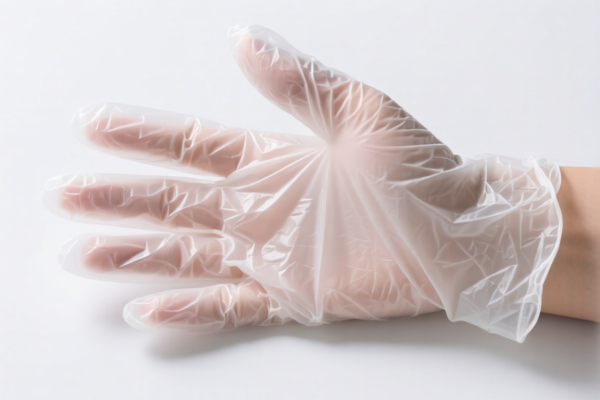



AI分析
🧤 Disposable Thin Plastic Gloves (Polymer Products)
🌐 HS Code Reference & Customs Clearance Guide | 2026 Latest Tariff Breakdown | Professional Compliance Strategy
📌 I. Product Definition & Classification: What Are "Disposable Plastic Gloves"?
Disposable thin plastic gloves are single-use protective devices made from polymer materials (such as Polyethylene, PVC, or Latex). In international trade, their classification depends heavily on the material composition and manufacturing process. While often confused with medical gloves, "plastic gloves" typically refer to non-sterile, general-purpose, or light-duty industrial/consumer gloves.
⚠️ Key Distinction:
- If the gloves are Latex or Nitrile (rubber-based) and sterile/medical → They often fall under Chapter 40 (Rubber).
- If the gloves are PE/PVC/Plastic (polymer sheets/films) and non-medical → They fall under Chapter 39 (Plastics).Note: The Data provided specifically cites HS Codes under Chapter 39 (Plastics), indicating these are polymer-based gloves, likely Polyethylene (PE) or similar synthetic polymers, not natural rubber.
📦 II. HS Code Classification Details (Based on Provided Data)
The data provided lists two primary HS Codes for "Disposable Plastic Gloves." Despite having similar summaries, they carry significantly different tax liabilities due to specific subheading distinctions and potential origin-based tariffs.
| HS Code | Product Description | Material | Total Tax Rate (2026) | Key Distinction |
|---|---|---|---|---|
3926.20.10.20 |
Disposable plastic gloves, material: plastic, use: disposable gloves | Plastic (Likely PE/PP) | 10.0% | Lower base tariff; subject to 122 Section tariff |
3926.20.40.10 |
Disposable plastic gloves, material: plastic, use: disposable gloves | Plastic (Likely PVC/Other) | 16.5% | Higher base tariff; subject to 122 Section tariff |
🔍 Critical Insight:
- Both codes fall under 3926.20 ("Other articles of plastics... gloves and mittens").
- The difference lies in the 8-digit/10-digit subheadings, which may distinguish between thin-film gloves (often cheaper, lower duty) vs. stiffer/thermoplastic gloves or specific manufacturing processes.
- Both are subject to the "Section 122" tariff, which is a critical cost driver.
💰 III. 2026 Latest Tariff Rate Breakdown (Detailed Tax Clauses)
✅ Applicable Country: United States (US)
✅ Origin: Likely China (Based on "Section 122" reference, which is a US-China specific trade measure)
✅ Effective Date: Current policy applies.
🎯 1. 3926.20.10.20 — Thin Plastic Gloves (Lower Base Duty)
| Item | Content |
|---|---|
| Base Tariff Rate | 0.0% (Most Favored Nation / MFN rate is zero for this specific subheading) |
| Section 122 Tariff (Additional) | +10.0% |
| Section 301 / Reciprocal Tariff | 0.0% (Not listed in the provided data for this code, implying it might be excluded or merged) |
| Total Effective Tax Rate | 10.0% |
| Tax Calculation | CIF Value × 10% |
| Legal Basis | Section 122 of the Trade Act of 1974 (or equivalent US-China trade provision cited as "122条款关税") |
📌 Explanation:
- This code benefits from a 0% base MFN duty.
- The 10% additional tariff is the key cost factor, attributed to the "Section 122" clause. This is often a safeguard or retaliation tariff applied to specific Chinese goods.
- Cost Advantage: This is the more cost-effective classification if your product qualifies.
🎯 2. 3926.20.40.10 — Plastic Gloves (Higher Base Duty)
| Item | Content |
|---|---|
| Base Tariff Rate | 6.5% |
| Section 122 Tariff (Additional) | +10.0% |
| Section 301 / Reciprocal Tariff | 0.0% (Not listed in the provided data) |
| Total Effective Tax Rate | 16.5% |
| Tax Calculation | CIF Value × 16.5% |
| Legal Basis | Base duty under HTSUS 3926.20.40.10 + Section 122 Additional Duty |
📌 Explanation:
- This code has a 6.5% base duty, which is already significant.
- The 10% Section 122 tariff is added on top, resulting in a 16.5% total burden.
- Risk Factor: This classification is nearly 65% more expensive than3926.20.10.20. Misclassification here can lead to severe financial loss.
🛠️ IV. Customs Clearance Practical Advice (Avoid Pitfalls)
✅ 1. Documentation Checklist (Non-Negotiable)
| Document | Required? | Purpose |
|---|---|---|
| Product Specification Sheet | ✔️ | Must state: "Polyethylene (PE) / PVC Gloves," "Thin Film," "Non-sterile," "Single Use." |
| Material Safety Data Sheet (MSDS) | ✔️ | Confirms plastic polymer composition (not rubber/latex). |
| Commercial Invoice | ✔️ | Must clearly describe items as "Disposable Plastic Gloves," NOT "Latex Gloves" or "Medical Gloves." |
| Packing List | ✔️ | Shows quantity, weight, and packaging type (e.g., "100 gloves per bag, 10 bags per carton"). |
| Country of Origin Certificate | ✔️ | Crucial for verifying if the 10% Section 122 tariff applies (usually applies to CN origin). |
✅ 2. Classification Strategy: How to Avoid Errors
🔥 Golden Rule: "Material Matters, Not Just Function!"
| Scenario | Correct HS Code | Why? |
|---|---|---|
| PE Gloves (Shopping/Disposable) | 3926.20.10.20 |
Typically classified as thin plastic film products with 0% base duty. |
| PVC Gloves (Thicker/Industrial) | 3926.20.40.10 |
May be classified under a higher duty subheading due to material thickness or formulation. |
| Latex/Nitrile Medical Gloves | NOT Chapter 39 | These are Chapter 40 (Rubber). If you declare them as Plastic, you face fraud penalties and reclassification. |
| Reusable Heavy-Duty Rubber Gloves | NOT Chapter 39 | Falls under 4015.11 (Latex) or 4015.19 (Other rubber). |
✅ 3. Special Considerations for "Section 122" Tariff
| Issue | Action Item |
|---|---|
| What is Section 122? | It is a US trade law provision allowing the President to impose duties (usually 10-50%) on goods imported at excessive rates or to protect domestic industry. In this context, it appears to be a 10% surcharge on plastic gloves. |
| Can it be waived? | Generally NO. Section 122 tariffs are broad-based. However, check if your product is excluded under specific HTSUS notes. |
| Origin Verification | Ensure the goods are genuinely imported from China. If transshipped through Vietnam/Thailand without substantial transformation, US Customs may still apply the tariff under anti-circumvention rules. |
🌍 V. Global Market Comparison (Contextual Insight)
| Country | HS Code | Base Duty | Notes |
|---|---|---|---|
| 🇺🇸 USA | 3926.20.10.20 |
10.0% | Includes 10% Section 122 tariff. |
| 🇺🇸 USA | 3926.20.40.10 |
16.5% | Includes 6.5% base + 10% Section 122 tariff. |
| 🇨🇳 China (Export) | 3926.20 |
0% | China typically does not tax exports of these goods. |
| 🇪🇺 EU | 3926.20.90 |
4.2% | No equivalent to US "Section 122." Standard MFN rate applies. |
| 🇬🇧 UK | 3926.20.00 |
4.2% | Post-Brexit UK Global Tariff. |
| 🇨🇦 Canada | 3926.20.10 |
6.0% | MFN rate. |
📌 Conclusion:
- The US market is significantly more expensive due to the Section 122 tariff.
- For competitive pricing in the US, aim for the3926.20.10.20classification if your product fits the criteria.
📌 VI. Common Errors & Pitfalls (Blood Lessons)
❌ Error 1: Calling them "Latex Gloves" when they are "Plastic (PE)"
👉 Consequence: Customs will reclassify to Chapter 40, potentially adding Section 301 tariffs (if from China) which could be 25% on top, plus penalties for misdeclaration.
❌ Error 2: Ignoring the "Section 122" clause
👉 Consequence: Underpaying duties. CBP (Customs and Border Protection) audits will recover the 10% shortfall plus interest and possible fines.
❌ Error 3: Using vague descriptions like "Gloves" on the Invoice
👉 Consequence: Customs will assign a default higher duty rate or request extensive clarification, causing shipment delays and demurrage charges.
✅ Correct Declaration Example:
"DISPOSABLE POLYETHYLENE (PE) GLOVES, THIN FILM, NON-STEROILE, SINGLE USE, FOR GENERAL HAND PROTECTION. MATERIAL: 100% POLYETHYLENE. ORIGIN: CHINA."
🎯 VII. Conclusion: Professional Clearance, Cost Optimization
🎯 Key Takeaways:
🔹 Check Material: Is it Plastic (Ch. 39) or Rubber (Ch. 40)?
🔹 Check Subheading:10.20(0% base) vs40.10(6.5% base).
🔹 Factor in Section 122: Add 10% to your cost model for US imports.
🔹 Total Cost Calculation:
- Code3926.20.10.20: CIF × 10%
- Code3926.20.40.10: CIF × 16.5%
📌 Pro Tip:
If you are importing large volumes, consider Advance Rulings with CBP to confirm the correct 8-digit HS code for your specific glove thickness and material. This prevents future audits and ensures you are paying the lowest legal duty rate.
📣 Immediate Action:
📞 Verify Material Composition: Confirm with your supplier if gloves are PE (Polyethylene) or PVC.
📄 Update Invoice: Ensure description matches the HS Code exactly.
💰 Cost Analysis: Compare the 10% vs 16.5% tax impact on your margin.
✨ Accurate Classification Saves Money!
💼 Don't let a 6.5% base duty difference eat your profit!
用户评价
关于 HS 编码归类
协调制度(HS)是由世界海关组织(WCO)制定的国际贸易商品分类标准。全球 200 多个国家采用 HS 系统作为海关关税、贸易统计和进出口监管的基础。
每个 HS 编码遵循以下层级结构:
- 章(2 位)——商品大类(例如:第 84 章:机器和机械设备)
- 品目(4 位)——章内的更具体分类
- 子目(6 位)——国际通用细分,所有 WCO 成员国统一使用
- 本国细分(8-10 位)——各国自行扩展的细分编码,如美国 HTSUS 10 位编码
正确的 HS 编码归类对于顺利通关、准确缴纳关税和遵守贸易法规至关重要。错误归类可能导致海关延误、多缴关税或罚款。
从CN进口到US时,适用的关税税率可能包括:
- 最惠国(MFN)税率——适用于 WTO 成员国的标准关税税率
- 普通税率——适用于无贸易协定国家
- 贸易救济关税——附加关税,如 301 条款(反倾销)、232 条款(国家安全)或反补贴税
本页内容仅供参考。如需正式归类,请咨询当地海关或持牌报关代理。