Divider Pages
CN → US| HS编码 | 关税税率 | 原产国 | 目的国 | 文档 |
|---|---|---|---|---|
| 4820300020 | 35.0% | CN | US | 官方文档 |
| 4820300040 | 35.0% | CN | US | 官方文档 |
商品图片
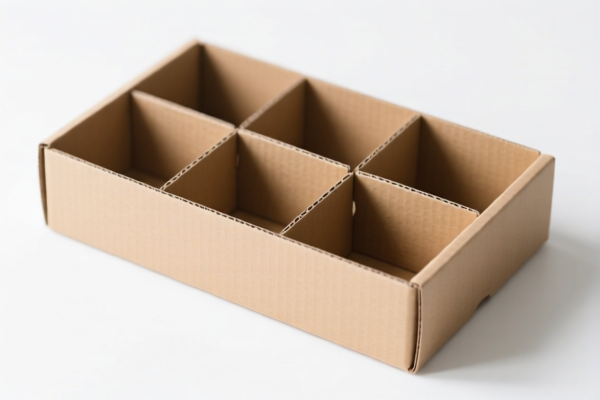
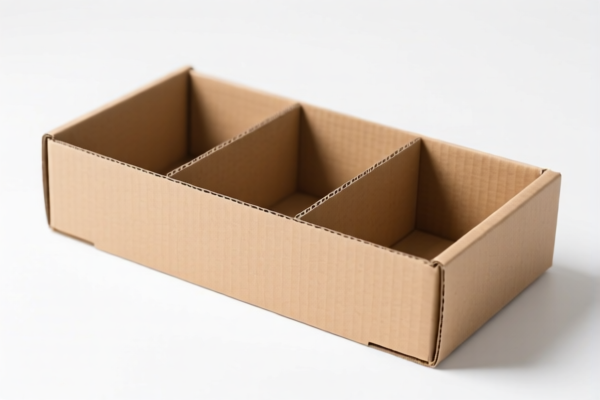
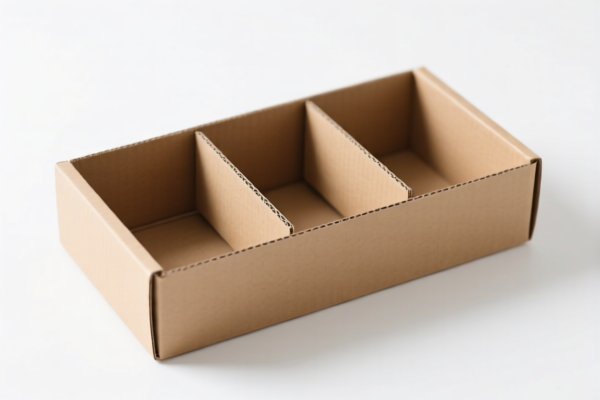
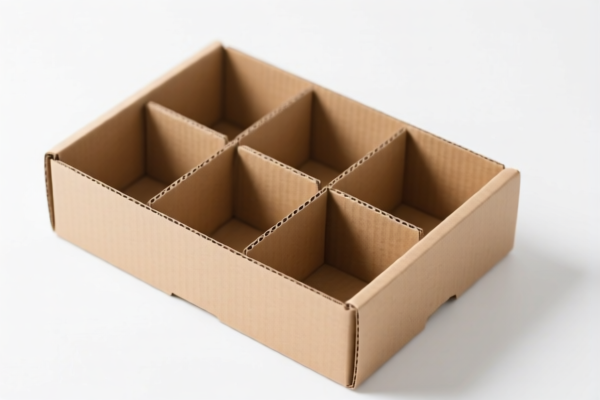
AI分析
📂 Divider Pages (Paper Stationery Items)
🌐 HS Code Reference & Customs Clearance Guide | 2026 Latest Tariff Analysis | Professional Clearance Strategy 📌 I. Product Definition & Classification: What Are "Divider Pages"?
Divider Pages, often referred to as Separators, Section Dividers, or Index Tabs, are essential stationery items made of paper or paperboard. They are used to organize, separate, and label sections within binders, account books, notebooks, or file folders.
In international trade, these items are strictly classified under HS Code 4820.30 ("Binders, folders, file covers"). However, the specific sub-heading depends on the design and functionality:
- Looseleaf Binders with Dividers: If the dividers are integral parts of a looseleaf binder system (often with prongs or pre-punched holes for rings), they fall under "Looseleaf binders".
- Standalone Divider Sheets/Notebooks: If they are standalone sheets, notebooks, or pads used for separation without being part of a mechanical binding mechanism, they fall under "Other".
⚠️ Critical Distinction Point: * If the item is a mechanical binder (even if primarily composed of divider sheets with binding mechanisms) → 4820.30.00.20 * If the item is a standalone sheet, pad, or non-mechanical folder used for separation → 4820.30.00.40
📦 II. HS Code Classification Details (2026 Official Tariff Schedule)
Based on the provided data, Divider Pages fall into two specific sub-headings under 4820.30 (Binders, folders, file covers).
| HS Code | Product Description | Applicable Scenario | Binding Mechanism |
|---|---|---|---|
4820.30.00.20 |
Looseleaf binders | Dividers integrated into a looseleaf binder system; often include prongs, rings, or pre-punched holes for ring binders. | ✅ Yes (Mechanical/Looseleaf) |
4820.30.00.40 |
Other | Standalone divider sheets, tabs, pads, or non-looseleaf separators; does not include the mechanical binding component. | ❌ No (Simple Paper/Paperboard) |
🔍 Key Reminder: * Both categories belong to HS 4820.30.00. * The distinction lies in whether the product is marketed as a "Looseleaf Binder" (with binding hardware/function) or just a "Binder/Folder/Divider" (without mechanical binding). * If your divider pages include plastic/metal rings or prongs for looseleaf use, use
4820.30.00.20. * If they are just paper tabs or folded separators, use4820.30.00.40.
💰 III. 2026 Latest Tariff Rate Details (Including Additional Duties)
✅ Applicable Country: United States (US) ✅ Origin: China (CN) ✅ Effective Time: 2025 November 10 onwards (for subsequent imports)
🎯 1. 4820.30.00.20 —— Looseleaf Binders (with Dividers)
| Item | Details |
|---|---|
| Base Tariff Rate | 0.0% (Ad Valorem) |
| Additional Tariff (Section 301) | +25.0% |
| Total Tax Rate | 25.0% |
| Tax Calculation | CIF Value × 25% |
| De Minimis Exemption | ❌ Not Eligible (Subject to high tariff) |
| Legal Basis Path | USITC:4820.30.00.20 → Section 301 Tariff List |
📌 Explanation: * Although the base tariff for paper stationery is often low or zero, additional tariffs of 25% apply to many paper products from China under US trade actions. * Total effective duty: 25%. This is a significant cost factor.
🎯 2. 4820.30.00.40 —— Other (Standalone Dividers/Folders)
| Item | Details |
|---|---|
| Base Tariff Rate | 0.0% (Ad Valorem) |
| Additional Tariff (Section 301) | +25.0% |
| Total Tax Rate | 25.0% |
| Tax Calculation | CIF Value × 25% |
| De Minimis Exemption | ❌ Not Eligible |
| Legal Basis Path | USITC:4820.30.00.40 → Section 301 Tariff List |
📌 Note: * Same Rate as Above: Both sub-headings carry the 25% total tax. * Whether it is a "Looseleaf Binder" or "Other Binder," the 25% additional tariff applies uniformly to these paper stationery items from China. * Do not assume "Other" means lower tax; in this case, it is identical.
🛠️ IV. Customs Clearance Practical Advice (Real-World Pitfall Guide)
✅ 1. Preparation Checklist (Non-negotiable)
| Document | Required | Notes |
|---|---|---|
| ✅ Product Specification | ✔️ | Clearly state material (e.g., 80gsm paper), type (looseleaf vs. standalone), and quantity. |
| ✅ Product Photos | ✔️ | Show tabs, prongs, rings, or packaging. If it has rings/prongs, it may be 4820.30.00.20. |
| ✅ Commercial Invoice | ✔️ | Describe as "Paper Divider Pages for Office Use" or "Looseleaf Binder with Dividers." Avoid vague terms like "Stationery." |
| ✅ Packing List | ✔️ | Detail contents clearly. If mixed (binders + dividers), separate line items. |
| ✅ HTS Code Declaration | ✔️ | Specify 4820.30.00.20 or 4820.30.00.40 to avoid customs review delays. |
✅ 2. Declaration Tips (Key Mantra)
🔥 "Describe Material, Specify Binding, Avoid Vague Labels!"
| Scenario | Correct Declaration | Incorrect Practice |
|---|---|---|
| Divider Sheets with Rings/Prongs | "Looseleaf Binder with Divider Pages, Paper" | "Stationery Dividers" → May be miscategorized |
| Standalone Paper Tabs/Dividers | "Paper Divider Pages, No Binding Mechanism" | "Binder" → If no binding, incorrect |
| Pre-printed Dividers | "Pre-printed Paper Dividers, for Office Filing" | "Notebooks" → Wrong category (4820.20 vs 4820.30) |
| Cardboard Dividers | "Paperboard Divider Pages, for Binders" | "Plastic Dividers" → Wrong material, wrong HS |
✅ 3. Special Situations
| Situation | Handling Advice |
|---|---|
| Mixed Shipments | Separate "Looseleaf Binders" (4820.30.00.20) from "Other Dividers" (4820.30.00.40) if possible. Rates are same, but correct classification avoids disputes. |
| OEM Custom Dividers | Provide samples showing tab design, thickness, and whether they include binding elements. |
| Dividers with Plastic Parts | If >50% by value or function, customs may reclassify as plastic products (Chapter 39). Ensure primary material is paper/paperboard. |
| De Minimis (Section 321) | ❌ Not Eligible for these items from China due to 25% tariff. Ensure B2B shipment clearance, not B2C small package. |
🌍 V. Global Market Comparison (2026 Latest)
| Country/Region | Recommended HS Code | Tariff Rate (China Origin) | Notes |
|---|---|---|---|
| 🇺🇸 USA | 4820.30.00.20 / 4820.30.00.40 |
25% | High tariff due to Section 301. No exemption. |
| 🇨🇳 China | 4820.30.00 |
0% | Import tariff is 0%. No additional duties. |
| 🇪🇺 EU | 4820.30 |
6.5% | Standard EU duty. No additional trade tariffs. |
| 🇬🇧 UK | 4820.30 |
6.5% | Post-Brexit standard duty. |
| 🇨🇦 Canada | 4820.30 |
5% | Standard MFN rate. No additional duties. |
📌 Conclusion: * USA is the most expensive market due to the 25% additional tariff. * EU, UK, and Canada have moderate duties (~5-6.5%) with no political additional tariffs. * If exporting to the US, consider supply chain optimization (e.g., third-country assembly) if volume is high, though complex for simple paper goods.
📌 VI. Common Mistakes & Pitfalls (Lessons Learned)
❌ Mistake 1: Calling "Divider Pages" as "Notebooks"
👉 Consequence: May be classified under 4820.20 (Notebooks) which might have different tariff implications. Incorrect classification leads to delays.
❌ Mistake 2: Omitting "Paper" or "Paperboard" in Description 👉 Consequence: Customs may assume plastic/metal components, leading to reclassification to Chapter 39 (Plastics) or 83 (Base Metal), with higher duties.
❌ Mistake 3: Assuming "De Minimis" Applies 👉 Consequence: US customs will seize or tax small shipments from China if the item is subject to Section 301 tariffs (like this 25% duty item). Do not use Section 321 for these items.
❌ Mistake 4: Confusing "Looseleaf Binders" with "Folders"
👉 Consequence: 4820.30.00.20 is for looseleaf binders. If you ship rigid folders, they might be 4820.30.00.40. Both are 25%, but correct description prevents audits.
✅ Correct Approach:
"Divider Pages, Paper, 80gsm, Pre-punched, for Looseleaf Binders, Model XYZ, Made in China"
🎯 VII. Conclusion: Professional Declaration, Cost Control!
🎯 Remember the Mantra:
🔹 "Looseleaf = 4820.30.00.20" 🔹 "Other Dividers = 4820.30.00.40" 🔹 "US Tariff = 25% Total (0% Base + 25% Additional)" 🔹 "No De Minimis Exemption for China-Origin Items!"
📌 Pro Tip: * If your divider pages are packaged with looseleaf binders, declare them together under the higher tariff code (which is the same here, 25%). * For large volumes to the US, consider Pre-Customs Clearance or Bonded Warehousing to manage cash flow. * Always verify the latest Section 301 Exclusion List (if any specific paper products are excluded), but generally, stationery items remain taxed.
📣 Immediate Action:
📞 Confirm material composition (Paper vs. Plastic-coated). 📋 Choose correct HS Code (
4820.30.00.20or4820.30.00.40). 📦 Prepare accurate commercial invoices with detailed descriptions. 🚀 Ensure smooth clearance and avoid unexpected 25% tax shocks!
✨ Professional Customs Clearance Starts with Accurate Classification! 💼 Your Cost Efficiency Depends on Precise HS Code Selection!
用户评价
关于 HS 编码归类
协调制度(HS)是由世界海关组织(WCO)制定的国际贸易商品分类标准。全球 200 多个国家采用 HS 系统作为海关关税、贸易统计和进出口监管的基础。
每个 HS 编码遵循以下层级结构:
- 章(2 位)——商品大类(例如:第 84 章:机器和机械设备)
- 品目(4 位)——章内的更具体分类
- 子目(6 位)——国际通用细分,所有 WCO 成员国统一使用
- 本国细分(8-10 位)——各国自行扩展的细分编码,如美国 HTSUS 10 位编码
正确的 HS 编码归类对于顺利通关、准确缴纳关税和遵守贸易法规至关重要。错误归类可能导致海关延误、多缴关税或罚款。
从CN进口到US时,适用的关税税率可能包括:
- 最惠国(MFN)税率——适用于 WTO 成员国的标准关税税率
- 普通税率——适用于无贸易协定国家
- 贸易救济关税——附加关税,如 301 条款(反倾销)、232 条款(国家安全)或反补贴税
本页内容仅供参考。如需正式归类,请咨询当地海关或持牌报关代理。