Dog Collar Black (M)
CN → US| HS编码 | 关税税率 | 原产国 | 目的国 | 文档 |
|---|---|---|---|---|
| 4201003000 | 37.4% | CN | US | 官方文档 |
| 4201006000 | 37.8% | CN | US | 官方文档 |
| 7326908688 | 87.9% | CN | US | 官方文档 |
| 7326908676 | 87.9% | CN | US | 官方文档 |
| 3926909000 | 0.0% | CN | US | 官方文档 |
| 3926906520 | 14.2% | CN | US | 官方文档 |
商品图片
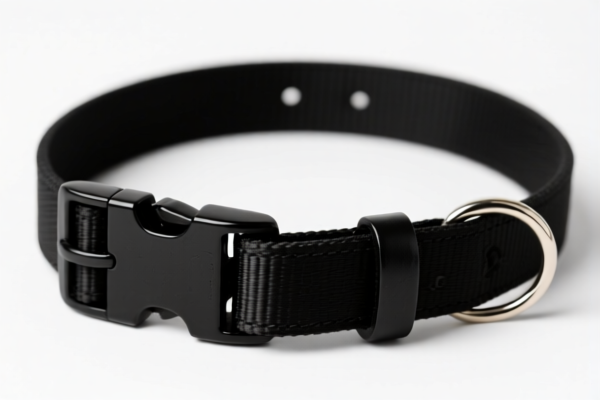
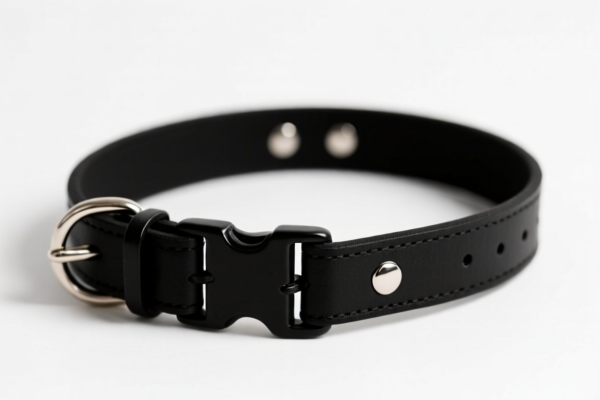
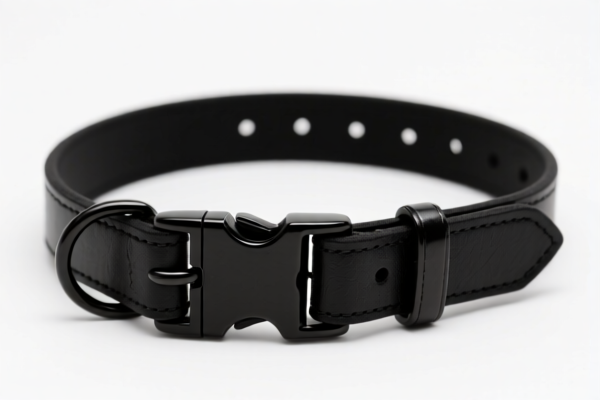
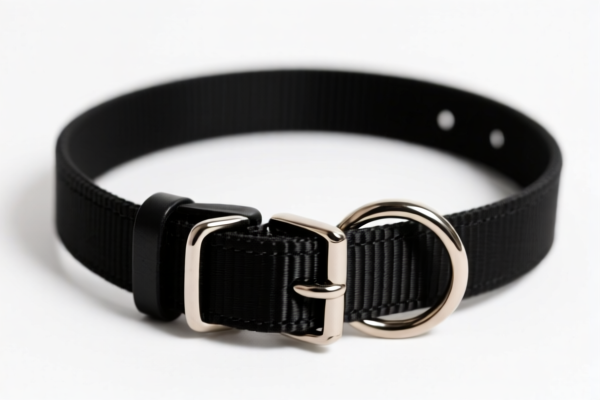
AI分析
🐕 Dog Collar Black (M) | Professional Classification & US Customs Clearance Guide
🌐 HS Code Reference & Clearance Strategy | 2026 Latest Tariff Analysis | Critical Compliance Guide
📌 I. Product Definition & Classification: What Exactly is a "Dog Collar"?
A dog collar is an essential accessory for pet control and identification, typically made of fabric, leather, nylon, or synthetic materials. In international trade, specifically under US Customs regulations, it falls under the broader category of "Harnesses, Collars, and Leashes of All Kinds".
However, classification depends heavily on the material composition and specific subheading interpretation. For a standard black Medium (M) dog collar, the most likely HS Codes are 4201.00.30.00 or 4201.00.60.00, both carrying significant tariffs due to recent US trade policies.
⚠️ Key Distinction:
- Is it a simple fabric/nylon collar? → Likely 4201.00.30.00
- Is it classified strictly as animal harnessing/tack (leather/heavy duty)? → Likely 4201.00.60.00
- Note: Both categories are subject to high additional duties under Section 301 and IEEPA.
📦 II. HS Code Classification Details (2026 Latest Tariff Reference)
| HS Code | Product Description | Material Inference | Applicable Scenario |
|---|---|---|---|
4201.00.30.00 |
Harnesses, collars, and leashes | Fabric, Leather, Nylon, Polyester | Standard pet collars, lightweight materials, general use |
4201.00.60.00 |
Harnesses, collars, and leashes | Leather, Heavy-duty Fabric, Tack | Animal riding/tack categories, durable/heavy-duty collars |
🔍 Important Note:
- The difference between.30.00and.60.00often lies in the duty rate structure and legal interpretation of "tack" vs. "accessory".
- For a standard black nylon or fabric collar, 4201.00.30.00 is the most common and defensible classification.
- If the collar is made of genuine leather and marketed as "premium" or "tack," customs may lean toward 4201.00.60.00.
💰 III. 2026 US Tariff Rate Breakdown (Including Additional Duties)
✅ Applicable Country: United States (US)
✅ Country of Origin: China (CN)
✅ Effective Date: November 10, 2025 (and subsequent imports)
🎯 1. HS Code 4201.00.30.00 – Collars (Fabric/Leather/Nylon)
| Item | Detail |
|---|---|
| Base Duty Rate | 2.4% (ad valorem) |
| Section 301 Additional Duty | +25.0% (USITC Footnote) |
| IEEPA Additional Duty | +10.0% (Against Chinese Products) |
| Total Tariff Rate | 37.4% |
| Tax Calculation | CIF Value × 37.4% |
| De Minimis Exemption | ❌ Not Eligible (DENY_DE_MINIMIS) |
| Legal Pathway | IEEPA:9903.01.25 → IEEPA:9903.01.24 → USITC:4201.00.30.00 → FOOTNOTE:9903.88.01 |
📌 Explanation:
- The 25% Section 301 duty is imposed under the US Trade Act to counter unfair Chinese trade practices.
- The 10% IEEPA duty is an additional levy under the International Emergency Economic Powers Act targeting specific Chinese goods.
- Total burden: 37.4%. This is a high-cost item for importers.
- No de minimis exemption: Even small shipments (e.g., under $800) are not exempt from these duties.
🎯 2. HS Code 4201.00.60.00 – Collars (Leather/Tack Category)
| Item | Detail |
|---|---|
| Base Duty Rate | 2.8% (ad valorem) |
| Section 301 Additional Duty | +25.0% (USITC Footnote) |
| IEEPA Additional Duty | +10.0% (Against Chinese Products) |
| Total Tariff Rate | 37.8% |
| Tax Calculation | CIF Value × 37.8% |
| De Minimis Exemption | ❌ Not Eligible (DENY_DE_MINIMIS) |
| Legal Pathway | IEEPA:9903.01.25 → IEEPA:9903.01.24 → USITC:4201.00.60.00 → FOOTNOTE:9903.88.01 |
📌 Note:
- This category incurs a 0.4% higher total tariff than.30.00due to a higher base rate (2.8% vs. 2.4%).
- Use this only if the product is clearly classified as animal tack or leather harnesses per USITC guidelines.
🛠️ IV. Practical Clearance Advice (Avoid Pitfalls)
✅ 1. Required Documentation Checklist
| Document | Mandatory? | Description |
|---|---|---|
| ✅ Commercial Invoice | ✔️ | Must clearly state: "Dog Collar, Material: Nylon/Fabric, Origin: China" |
| ✅ Packing List | ✔️ | Include dimensions, weight, and quantity (e.g., "Size M, Black") |
| ✅ Product Photos | ✔️ | Show the collar, material texture, and any labels/tags |
| ✅ Material Declaration | ✔️ | Explicitly state if the collar is made of nylon, polyester, fabric, or leather |
| ✅ Country of Origin Certificate | ✔️ | Required for duty calculation |
| ✅ HS Code Pre-Ruling | ✔️ | Highly Recommended to confirm whether .30.00 or .60.00 applies |
✅ 2. Classification Strategy
🔥 Rule of Thumb:
"Fabric/Nylon → 4201.00.30.00 | Leather/Tack → 4201.00.60.00"
| Scenario | Recommended HS Code | Reason |
|---|---|---|
| Standard nylon/fabric collar | 4201.00.30.00 |
Most common, lower base rate (2.4%) |
| Leather collar or heavy-duty tack | 4201.00.60.00 |
Classified as animal harness/tack |
| Mixed material (e.g., nylon with leather trim) | 4201.00.30.00 |
Usually classified by principal material (nylon) |
| Collar with electronic components (e.g., GPS) | ⚠️ Re-evaluate | May fall under Chapter 85 (Electrical) |
✅ 3. Special Considerations
| Situation | Advice |
|---|---|
| OEM/White Label | Provide client agreement and design specs to avoid misclassification |
| Small Quantity Imports | Remember: No de minimis exemption. All shipments are subject to 37.4%~37.8% |
| Material Change | If switching from nylon to leather, re-evaluate HS Code to avoid penalties |
| Labeling | Ensure "Made in China" is clearly marked on the product or packaging |
🌍 V. Global Market Comparison (2026)
| Country/Region | Recommended HS Code | Total Tariff (China Origin) | Notes |
|---|---|---|---|
| 🇺🇸 United States | 4201.00.30.00 |
37.4% | High due to Section 301 + IEEPA |
| 🇨🇳 China | 4201.00.30.00 |
~10% | No additional US duties |
| 🇪🇺 EU | 4201.00.00 |
4.7% | No additional duties |
| 🇬🇧 UK | 4201.00.00 |
4.7% | Post-Brexit standard rate |
| 🇦🇺 Australia | 4201.00.00 |
5% | No additional duties |
📌 Conclusion:
- The US is the only major market imposing steep additional tariffs on pet collars from China.
- Importers must factor in ~37.4% in duties alone, significantly impacting profit margins.
- Consider supply chain diversification (e.g., sourcing from Vietnam or Thailand) to mitigate tariff risks.
📌 VI. Common Mistakes & How to Avoid Them
❌ Mistake 1: Assuming de minimis exemption applies
👉 Consequence: Seizure or back-taxes. No de minimis exemption for these HS codes.
❌ Mistake 2: Misclassifying as "Pet Accessories" (Chapter 42 vs. 63)
👉 Consequence: Incorrect HS Code, delays, or penalties. Must use 4201 for harnesses/collars.
❌ Mistake 3: Not specifying material
👉 Consequence: Customs may assign a higher rate or request additional documentation.
✅ Correct Declaration Example:
"Dog Collar, Size M, Black, Material: Nylon, Origin: China, HS Code: 4201.00.30.00"
🎯 VII. Final Recommendations
🎯 Key Takeaways:
🔹 "37.4% Tariff is Inevitable for China-Origin Collars in the US"
🔹 "No De Minimis Exemption – Plan for Full Duty Payment"
🔹 "Document Material Composition Clearly – Nylon vs. Leather Matters"
📌 Pro Tip:
If your volume is high, consider applying for a USITC Exclusion or seeking Alternative Duty-Free Sources (e.g., sourcing from non-China countries).
Also, pre-classification rulings with US Customs can provide legal certainty and prevent costly errors.
📣 Action Required:
📞 Contact a Licensed Customs Broker to confirm HS Code based on your specific product sample.
🚀 Include Full Material Details in your commercial invoice to avoid delays.
💼 Factor 37.4% into Your Pricing Model – Do not underestimate this cost.
✨ Smart Classification Saves Money!
💼 Every percentage point matters in international trade!
用户评价
关于 HS 编码归类
协调制度(HS)是由世界海关组织(WCO)制定的国际贸易商品分类标准。全球 200 多个国家采用 HS 系统作为海关关税、贸易统计和进出口监管的基础。
每个 HS 编码遵循以下层级结构:
- 章(2 位)——商品大类(例如:第 84 章:机器和机械设备)
- 品目(4 位)——章内的更具体分类
- 子目(6 位)——国际通用细分,所有 WCO 成员国统一使用
- 本国细分(8-10 位)——各国自行扩展的细分编码,如美国 HTSUS 10 位编码
正确的 HS 编码归类对于顺利通关、准确缴纳关税和遵守贸易法规至关重要。错误归类可能导致海关延误、多缴关税或罚款。
从CN进口到US时,适用的关税税率可能包括:
- 最惠国(MFN)税率——适用于 WTO 成员国的标准关税税率
- 普通税率——适用于无贸易协定国家
- 贸易救济关税——附加关税,如 301 条款(反倾销)、232 条款(国家安全)或反补贴税
本页内容仅供参考。如需正式归类,请咨询当地海关或持牌报关代理。