Door and Window Alarm
CN → US| HS编码 | 关税税率 | 原产国 | 目的国 | 文档 |
|---|---|---|---|---|
| 8543709860 | 37.6% | CN | US | 官方文档 |
| 8531100045 | 11.3% | CN | US | 官方文档 |
| 8531100035 | 36.3% | CN | US | 官方文档 |
| 8543706000 | 35.0% | CN | US | 官方文档 |
商品图片
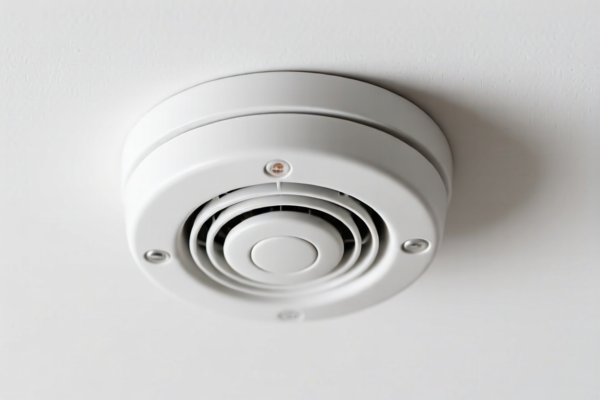
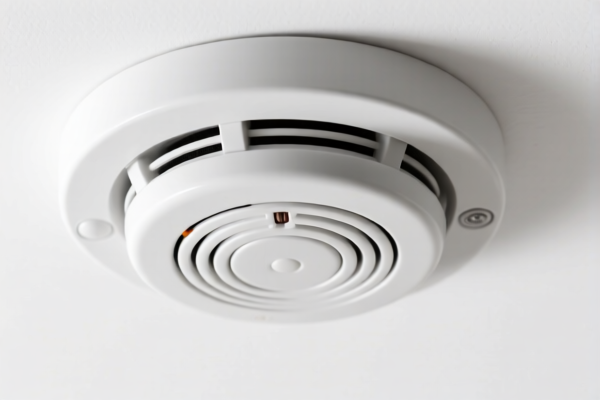
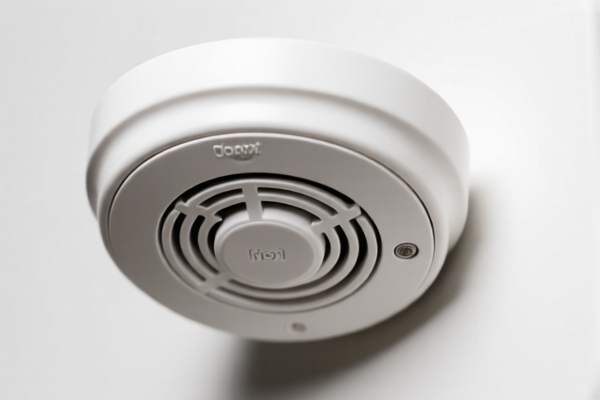
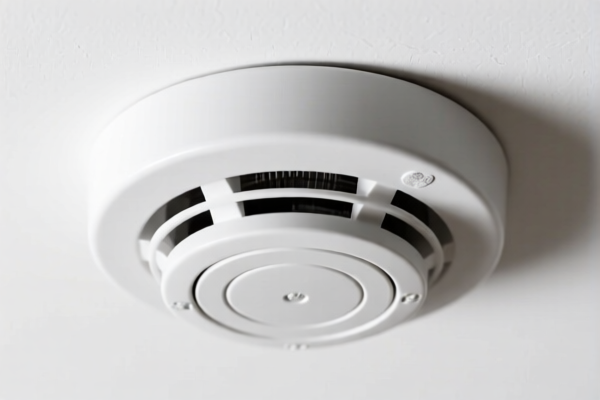
AI分析
🔔 Door and Window Alarms (Security Alert Systems)
🌐 HS Code Reference & Clearance Guide | 2026 Latest Tariff Analysis | Professional Customs Strategy
📌 I. Product Definition & Classification: Do You Really Know "Door and Window Alarms"?
Door and window alarms are critical components of modern home and commercial security systems. In international trade, they are typically classified based on their function (security/alarm) and technical nature (electronic vs. electro-acoustic/visual signal devices).
Key Distinction:
- Security Alarm Systems: Devices specifically designed to detect unauthorized entry (burglary/fire) and trigger alerts. These often fall under Chapter 85 (Electrical machinery), specifically heading 8531 (Sound or visual signaling apparatus) or 8543 (Other electric apparatus).
- Smart Sensors vs. Standalone Units: If the device is a standalone unit with its own power source and alert mechanism (siren/light), it is more likely classified under 8531. If it is part of a larger networked system or has unique independent functions not covered elsewhere, it may fall under 8543.
⚠️ Critical Classification Point:
- If the device functions primarily as a burglary or fire alarm (visual/audible signal), it aligns with 8531.10.
- If the device is an independent electrical apparatus with specific network capabilities or unique electronic functions not covered by standard signaling devices, it may be classified under 8543.70.
📦 II. HS Code Classification Details (2026 Latest Tariff Authority Comparison)
Based on the provided data, here are the precise classifications for "Door and Window Alarms":
| HS Code | Product Description & Rationale | Key Features |
|---|---|---|
| 8543.70.98.60 | Independent Electrical Apparatus Classified as "Other machines and apparatus" because it has independent functions that fit the "catch-all" definition. |
✅ Independent function ✅ Electrical apparatus ✅ Not strictly a standard signaling device |
| 8531.10.00.45 | Security Alarms (Burglary/Fire) Matches the description of "theft or fire alarms and similar devices" in the tariff schedule. |
✅ Theft/Fire alarm function ✅ Visual/Audible signal ✅ "Other" subcategory |
| 8531.10.00.35 | Electro-Acoustic/Visual Signal Apparatus Inferred as such due to complete matching with theft alarm device purposes. |
✅ Alarm purpose ✅ Electro-acoustic/visual output ✅ Standard signaling classification |
| 8543.70.60.00 | Network-Connected Electronic Device Designed to connect to specific networks or instruments. |
✅ Network-enabled ✅ Electronic device ✅ Specific instrumental use |
🔍 Key Reminder:
- 8531 Series: Best for traditional alarms that sound a siren or flash a light upon breach.
- 8543 Series: Best for smart alarms, IoT-enabled sensors, or devices with complex independent electronic functions that don't fit neatly into standard signaling categories.
- US Duties: All these codes attract significant Section 301 and IEEPA tariffs due to the origin (China).
💰 III. 2026 Latest Tariff Rate Breakdown (Including Additional Taxes & Policy Surcharges)
✅ Applicable Country: United States (US)
✅ Origin: China (CN)
✅ Effective Date: From November 10, 2025 (and subsequent imports)
🎯 1. 8543.70.98.60 —— Independent Electrical Apparatus
| Item | Content |
|---|---|
| Base Tariff | 2.6% (ad valorem) |
| Section 301 Surcharge | +25.0% (From USITC Footnote 9903.88.01) |
| IEEPA Surcharge | +10.0% (For China/HK products, effective Nov 10, 2025) |
| Total Effective Rate | 37.6% |
| Calculation | CIF Value × 37.6% |
| De Minimis Eligibility | ❌ Not Eligible (deny_de_minimis) |
| Legal Basis Path | IEEPA:9903.01.25 → IEEPA:9903.01.24 → USITC:8543.70.98.60 |
📌 Explanation:
- This classification carries the highest base rate among the options due to its "independent apparatus" status.
- Total 37.6% is a significant cost driver. Ensure your product description emphasizes "independent functionality" if this is the chosen path.
🎯 2. 8531.10.00.45 —— Security Alarms (Burglary/Fire)
| Item | Content |
|---|---|
| Base Tariff | 1.3% (ad valorem) |
| Section 301 Surcharge | +0.0% (Exempt from Section 301 list for this specific subheading) |
| IEEPA Surcharge | +10.0% (For China/HK products) |
| Total Effective Rate | 11.3% |
| Calculation | CIF Value × 11.3% |
| De Minimis Eligibility | ❌ Not Eligible (deny_de_minimis) |
| Legal Basis Path | IEEPA:9903.01.24 → USITC:8531.10.00.45 |
📌 Note:
- This is the most cost-effective option for traditional alarms.
- The 0% Section 301 surcharge makes it significantly cheaper than other categories.
- Critical: Must prove the device is specifically for "theft or fire alarm" purposes.
🎯 3. 8531.10.00.35 —— Electro-Acoustic/Visual Signal Apparatus
| Item | Content |
|---|---|
| Base Tariff | 1.3% (ad valorem) |
| Section 301 Surcharge | +25.0% (Subject to Section 301) |
| IEEPA Surcharge | +10.0% (For China/HK products) |
| Total Effective Rate | 36.3% |
| Calculation | CIF Value × 36.3% |
| De Minimis Eligibility | ❌ Not Eligible (deny_de_minimis) |
| Legal Basis Path | IEEPA:9903.01.25 → IEEPA:9903.01.24 → USITC:8531.10.00.35 |
📌 Warning:
- Although it falls under 8531, this specific subheading attracts the 25% Section 301 tariff.
- Total 36.3% is high. Only use this if8531.10.00.45is not applicable (e.g., if the device doesn't strictly qualify as a "burglary/fire" alarm but is a general signal device).
🎯 4. 8543.70.60.00 —— Network-Connected Electronic Device
| Item | Content |
|---|---|
| Base Tariff | 0.0% (ad valorem) |
| Section 301 Surcharge | +25.0% (Subject to Section 301) |
| IEEPA Surcharge | +10.0% (For China/HK products) |
| Total Effective Rate | 35.0% |
| Calculation | CIF Value × 35.0% |
| De Minimis Eligibility | ❌ Not Eligible (deny_de_minimis) |
| Legal Basis Path | IEEPA:9903.01.25 → IEEPA:9903.01.24 → USITC:8543.70.60.00 |
📌 Caution:
- Even with a 0% base tariff, the 25% Section 301 surcharge makes it expensive.
- Only suitable for devices explicitly designed to connect to specific networks or instruments.
🛠️ IV. Customs Clearance Practical Advice (Battle-Tested Pitfall Avoidance Guide)
✅ 1. Required Documentation Checklist (All Mandatory)
| Document | Mandatory | Notes |
|---|---|---|
| ✅ Product Specifications | ✔️ | Must detail detection mechanism, power source, output (sound/light) |
| ✅ Function Description | ✔️ | Clearly state if it is for "burglary," "fire," or "general signal" |
| ✅ Product Photos | ✔️ | Include label, model number, and any network ports (Ethernet/Wi-Fi) |
| ✅ Third-Party Certifications | ✔️ | FCC ID, UL, CE, RoHS (if applicable) |
| ✅ Commercial Invoice | ✔️ | Must explicitly mention "Security Alarm" or "Electrical Apparatus" |
| ✅ Packing List | ✔️ | Show relationship between main unit, sensors, and sirens |
✅ 2. Declaration Strategy (Key Mnemonic)
🔥 "Alarm for Theft = 11.3%, Signal for Fire = 36.3%, Smart Device = 35%+!"
| Scenario | Correct Declaration | Wrong Practice |
|---|---|---|
| Traditional door/window sensor that triggers a siren | 8531.10.00.45 (11.3%) |
Misdeclare as "Smart Device" → 35%+ |
| Alarm with specific network protocol (IoT) | 8543.70.60.00 (35.0%) |
Misdeclare as "General Alarm" → 11.3% (Risk of Penalty) |
| Independent alarm unit with no standard function | 8543.70.98.60 (37.6%) |
Misdeclare as "Signal Device" → 36.3% |
| General electro-acoustic alarm | 8531.10.00.35 (36.3%) |
Misdeclare as "Burglary Alarm" → 11.3% (High Audit Risk) |
✅ 3. Special Cases Handling
| Scenario | Handling Advice |
|---|---|
| Smart Home Alarms (IoT) | If connected to Wi-Fi/App, lean towards 8543.70 but be prepared for higher duties. Justify with "network connection" functionality. |
| Simple Magnetic Contact Switches | If only a sensor without a siren, consider if it's a "part" or "apparatus". Often still 8531 if it signals. |
| Fire Alarm Sensors | Must declare as "Fire Alarm" to qualify for 8531.10.00.45 (11.3%) if possible. |
| Combined Security/Fire Units | Best to declare as "Burglary/Fire Alarm" under 8531.10.00.45 for the lowest rate. |
🌍 V. Global Market Clearance Comparison (2026 Latest)
| Country/Region | Recommended HS Code | Tariff Rate (China Origin) | Certification Requirements | Notes |
|---|---|---|---|---|
| 🇺🇸 USA | 8531.10.00.45 |
11.3% (Lowest) | FCC + RoHS | 8543 and some 8531 codes face 35-37.6% |
| 🇨🇳 China | 8531.10.00.45 |
5% | CCC (if applicable) | No extra surcharges |
| 🇪🇺 EU | 8531.10.00.45 |
0% (Most FTA) | CE + RoHS | No Section 301 equivalent |
| 🇬🇧 UK | 8531.10.00.45 |
0% (If UKCA) | UKCA + RoHS | Post-Brexit rules apply |
| 🇨🇦 Canada | 8531.10.00.45 |
0% (FTA) | ICES/RTC | No 301 equivalent |
📌 Conclusion:
- The US is the only market with heavy Section 301/IEEPA surcharges.
- Choosing8531.10.00.45saves ~25-26% in duties compared to other options.
- Ensure your product description supports "Burglary/Fire Alarm" to qualify for the lowest rate.
📌 VI. Common Errors & Pitfall Guide (Lessons Learned)
❌ Error 1: Declaring a "Smart IoT Alarm" as a "Traditional Burglary Alarm"
👉 Consequence: Customs may reclassify to 8543.70.60.00 (35.0%) → Back taxes + Penalties!
❌ Error 2: Using "Signal Device" for a device clearly meant for theft prevention
👉 Consequence: Misclassification to 8531.10.00.35 (36.3%) → Unnecessary cost increase!
❌ Error 3: Ignoring IEEPA 10% Surcharge
👉 Consequence: All these codes incur 10% IEEPA. Failing to include this in cost calculations leads to margin erosion.
❌ Error 4: Declaring as "Accessories" to avoid duties
👉 Consequence: If sold as a standalone unit, this is fraud. If sold as a kit, parts may still be classified individually.
✅ Correct Declaration Example:
"Door/Window Security Alarm System, Burglary Detection, Electro-Acoustic Signal, Model XYZ, FCC ID: ABC123, Designed for Theft Prevention"
🎯 VII. Conclusion: Professional Declaration, Cost Optimization, Risk Mitigation!
🎯 Key Takeaways:
🔹 "For Burglary Alarms, choose
8531.10.00.45to save 25% in Section 301 tariffs."
🔹 "IoT/Networked devices will likely fall under8543and face 35-37% duties."
🔹 "Always include IEEPA 10% in your cost calculations for China-origin goods."
📌 Pro Tip:
- If your alarm is smart/IoT-enabled, consult a customs broker early to decide between 8531 (if signal-focused) and 8543 (if network-focused).
- Pre-Ruling Application: Consider applying for a Binding Ruling with US Customs to confirm the correct HS Code and avoid post-import audits.
📣 Immediate Action:
📞 Contact a licensed customs broker + Provide product specs + Apply for Pre-Import Classification
🚀 Ensure your Door and Window Alarms clear US Customs smoothly, minimizing duties and delays!
✨ Professional Clearance Starts with Precise Classification!
💼 Your Profit Margin Deserves Accurate Tariff Planning!
用户评价
关于 HS 编码归类
协调制度(HS)是由世界海关组织(WCO)制定的国际贸易商品分类标准。全球 200 多个国家采用 HS 系统作为海关关税、贸易统计和进出口监管的基础。
每个 HS 编码遵循以下层级结构:
- 章(2 位)——商品大类(例如:第 84 章:机器和机械设备)
- 品目(4 位)——章内的更具体分类
- 子目(6 位)——国际通用细分,所有 WCO 成员国统一使用
- 本国细分(8-10 位)——各国自行扩展的细分编码,如美国 HTSUS 10 位编码
正确的 HS 编码归类对于顺利通关、准确缴纳关税和遵守贸易法规至关重要。错误归类可能导致海关延误、多缴关税或罚款。
从CN进口到US时,适用的关税税率可能包括:
- 最惠国(MFN)税率——适用于 WTO 成员国的标准关税税率
- 普通税率——适用于无贸易协定国家
- 贸易救济关税——附加关税,如 301 条款(反倾销)、232 条款(国家安全)或反补贴税
本页内容仅供参考。如需正式归类,请咨询当地海关或持牌报关代理。