Doped Silicon Wafer Indium Doped
CN → US| HS编码 | 关税税率 | 原产国 | 目的国 | 文档 |
|---|---|---|---|---|
| 8541590040 | 60.0% | CN | US | 官方文档 |
| 2804691000 | 15.3% | CN | US | 官方文档 |
| 2804695000 | 15.5% | CN | US | 官方文档 |
| 8541100040 | 60.0% | CN | US | 官方文档 |
商品图片
AI分析
🔬 Doped Silicon Wafer (Indium Doped) | Semiconductor Materials
🌐 HS Code Reference & Customs Clearance Guide | 2026 Latest Tariff Analysis | Professional Level Clearance Strategy
📌 I. Product Definition & Classification: Do You Truly Understand "Indium-Doped Silicon"?
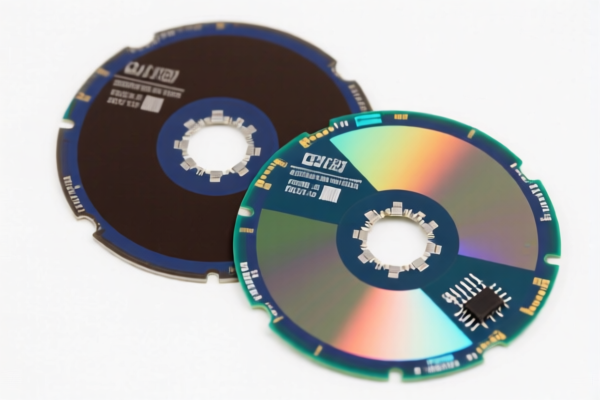
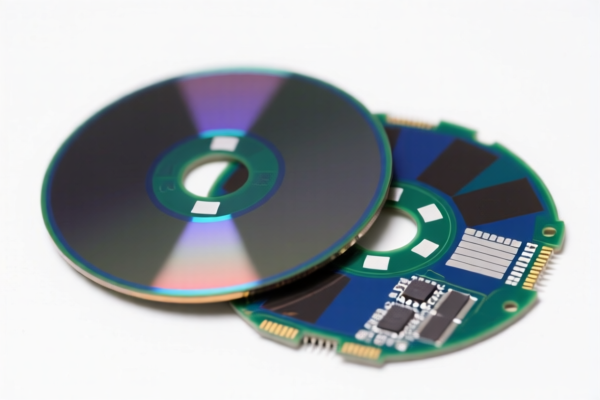
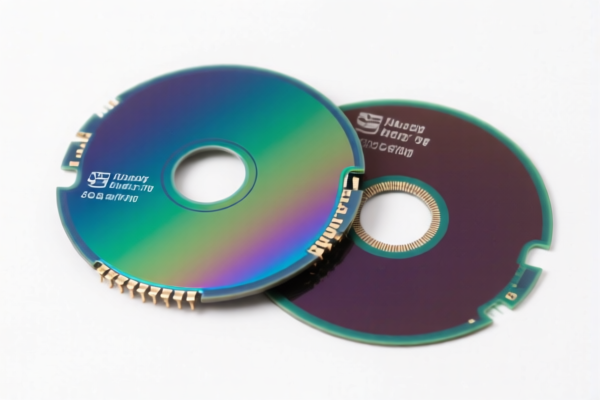
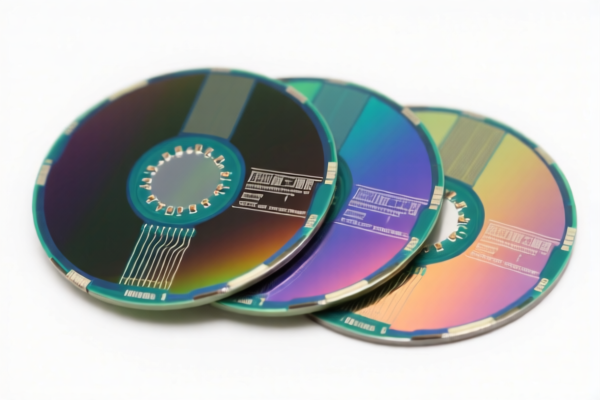
Indium-doped silicon wafers are critical raw materials in the semiconductor industry, used primarily in the fabrication of p-type semiconductors for diodes, transistors, and solar cells. In international trade, their classification depends heavily on their physical state, purity level, and intended use (whether as a raw material or a finished semiconductor component).
Key Distinctions: - As a Semiconductor Material (Unassembled): If the wafer is in the form of a crystal slice, unmounted, and intended as a base for semiconductor devices, it falls under Chapter 85 (Electrical machinery/equipment). - As a Chemical Element (Silicon): If viewed primarily as a processed form of the element silicon itself (regardless of doping), it may fall under Chapter 28 (Inorganic chemicals).
⚠️ Critical Classification Point:
- If the product is explicitly described as a "semiconductor wafer" or "unassembled semiconductor" → Classify under 8541.59.00.40 or 8541.10.00.40.
- If the product is described merely as "silicon pieces" or "chemical silicon" without emphasis on semiconductor device application → Classify under 2804.69.10.00 or 2804.69.50.00.
📦 II. HS Code Classification Details (2026 Latest Tariff Authority Comparison)
Based on the provided data, here are the four possible classifications and their rationales:
| HS Code | Product Description | Classification Logic | Total Tax Rate |
|---|---|---|---|
8541.59.00.40 |
Doped Silicon Wafer (Arsenic/Indium Doped) | Classified as semiconductor material, shape is wafer, fits unassembled wafer category. | 60.0% |
2804.69.10.00 |
Doped Silicon Wafer (Arsenic/Indium Doped) | Material is silicon, shape is sheet-like semi-finished product, fits other silicon category. | 15.3% |
2804.69.50.00 |
Doped Silicon Wafer (Arsenic/Indium Doped) | Core material is silicon, shape is sheet-like, fits other silicon category. | 15.5% |
8541.10.00.40 |
Doped Silicon Wafer (Arsenic/Indium Doped) | Material is silicon, shape is sheet/wafer, use is basic raw material for semiconductor devices. | 60.0% |
🔍 Key Insight:
- High Tax Route (60%): Classifying as a semiconductor component/material (8541). This is often chosen for high-tech components where the "semiconductor" nature is dominant.
- Low Tax Route (15.3%-15.5%): Classifying as chemical silicon (2804). This is technically possible if the doping level is low or if the wafer is treated as a bulk silicon product rather than a finished semiconductor piece.
- ⚠️ Warning: Misclassification can lead to severe penalties. If customs determines the product is clearly a semiconductor wafer, they may force reclassification to 8541, resulting in a ~45% tax increase.
💰 III. 2026 Latest Tariff Rate Details (Including Surtaxes & Policy Add-ons)
✅ Applicable Country: United States (US)
✅ Origin: China (CN)
✅ Effective Date: November 10, 2025 (and subsequent imports)
🎯 1. HS Code 8541.59.00.40 & 8541.10.00.40 (Semiconductor Classification)
| Item | Detail |
|---|---|
| Base Tariff | 0.0% (ad valorem) |
| Section 301 Surtax | +50.0% (Additional Tariff) |
| Section 122 Tariff | +10.0% (Specific to this category) |
| Total Tax Rate | 60.0% |
| Tax Calculation | CIF Value × 60.0% |
| De Minimis Eligibility | ❌ Not Applicable (High-value semiconductor material) |
| Legal Basis Path | Section 301: 8541.59.00.40 → Section 122: 10% |
📌 Explanation:
- The 0% base rate reflects the general treatment for electronic components.
- The 50% Section 301 tariff is the key driver, applied to Chinese-origin semiconductors to restrict high-tech imports.
- The 10% Section 122 tariff is an additional levy specific to this subheading.
- Combined 60% is extremely high. This category is subject to strict scrutiny and potential export/import controls under US semiconductor policies.
🎯 2. HS Code 2804.69.10.00 (Chemical Silicon Classification)
| Item | Detail |
|---|---|
| Base Tariff | 5.3% (ad valorem) |
| Section 301 Surtax | 0.0% |
| Section 122 Tariff | +10.0% |
| Total Tax Rate | 15.3% |
| Tax Calculation | CIF Value × 15.3% |
| De Minimis Eligibility | ❌ Not Applicable (Bulk chemical) |
| Legal Basis Path | Section 122: 2804.69.10.00 |
📌 Explanation:
- The 5.3% base rate applies to inorganic chemicals (silicon).
- No Section 301 tax is applied here, assuming it is not deemed a "semiconductor device."
- The 10% Section 122 tariff still applies.
- Total 15.3% is significantly lower than the semiconductor classification.
- ⚠️ Risk: Customs may challenge this if the product is clearly a "wafer" intended for semiconductor manufacturing.
🎯 3. HS Code 2804.69.50.00 (Alternative Chemical Silicon Classification)
| Item | Detail |
|---|---|
| Base Tariff | 5.5% (ad valorem) |
| Section 301 Surtax | 0.0% |
| Section 122 Tariff | +10.0% |
| Total Tax Rate | 15.5% |
| Tax Calculation | CIF Value × 15.5% |
| De Minimis Eligibility | ❌ Not Applicable |
| Legal Basis Path | Section 122: 2804.69.50.00 |
📌 Explanation:
- Similar to2804.69.10.00, but with a slightly higher base tariff (5.5% vs 5.3%).
- Also benefits from no Section 301 surtax.
- Total 15.5% is the most competitive rate among the provided options.
🛠️ IV. Customs Clearance Practical Advice (Real-World Pitfall Avoidance)
✅ 1. Required Documentation Checklist
| Document | Mandatory | Description |
|---|---|---|
| ✅ Product Specification Sheet | ✔️ | Must clearly state: Doping type (Indium/Arsenic), resistivity, diameter, thickness, and orientation. |
| ✅ Material Safety Data Sheet (MSDS) | ✔️ | Required for chemical classification (2804) to prove it is treated as a chemical substance. |
| ✅ Commercial Invoice | ✔️ | Must accurately describe the product. Avoid ambiguous terms like "generic silicon." |
| ✅ Certificate of Origin (CO) | ✔️ | To prove Chinese origin (which triggers Section 122/301). |
| ✅ Packaging List | ✔️ | Detail the number of wafers and packaging material (e.g., vacuum-sealed, anti-static). |
| ✅ Letter of Explanation | ✔️ | If using 2804, provide a letter explaining why the product is classified as "silicon" rather than "semiconductor device" (e.g., low doping, bulk form). |
✅ 2. Declaration Strategy (Key Mantras)
🔥 “Define Purpose, Choose Chapter, Watch the 60% Trap!”
| Scenario | Recommended HS Code | Reason |
|---|---|---|
| High-Tech Semiconductor Wafer (Used for ICs, transistors) | 8541.59.00.40 or 8541.10.00.40 |
Clearly a semiconductor material. High tax (60%) but legally accurate for high-end components. |
| Industrial/Basic Silicon (Low doping, bulk form, not for ICs) | 2804.69.10.00 or 2804.69.50.00 |
Classified as chemical silicon. Lower tax (15.3%-15.5%). |
| R&D Sample / Non-Commercial | Check for exemptions | May qualify for different treatment, but still subject to Section 122. |
📌 Critical Tip:
- Do not mix declarations. If you send a wafer clearly labeled "Semiconductor Device," declaring it as "Silicon Powder/Sheet" (2804) is considered misdeclaration.
- If the indium doping level is very low, emphasize the chemical nature of the material to justify2804.
✅ 3. Special Circumstances Handling
| Situation | Handling Advice |
|---|---|
| Indium vs. Arsenic Doping | The provided data mentions "Arsenic-doped" in the summary, but your query is "Indium-doped." Ensure the MSDS and Invoice explicitly state "Indium." The HS codes provided are generic for "doped silicon," so the classification logic remains the same. |
| Wafer Thickness | If the wafer is extremely thin (e.g., <100µm), it is more likely to be considered a "semiconductor device" (8541). Thicker wafers may be argued as "raw silicon" (2804). |
| End-Use Declaration | If the buyer is a semiconductor manufacturer, customs may automatically assume 8541. Provide proof if the end-use is non-semiconductor (e.g., solar cells might have different interpretations). |
🌍 V. Global Market Clearance Comparison (2026 Latest)
| Country/Region | Recommended HS Code | Estimated Tariff | Certification Requirements | Notes |
|---|---|---|---|---|
| 🇺🇸 USA | 2804.69.10.00 |
15.3% | N/A | Best option for cost-saving if legally justifiable. |
| 🇨🇳 China | 2804.69.10.00 |
~5-10% | N/A | Lower base rates. |
| 🇪🇺 EU | 2804.69.10.00 |
~5.5% | REACH + RoHS | No Section 301/122 equivalents. |
| 🇯🇵 Japan | 2804.69.10.00 |
~0-5% | PSE (if applicable) | Favorable for silicon products. |
📌 Conclusion:
- The US market is the most challenging due to the 60% vs. 15.3% dichotomy.
- Recommendation: If the product is not a high-end semiconductor component, strive to classify under2804.69.10.00to save ~45% in tariffs.
- Ensure all documentation supports the chemical nature of the product, not the electronic function.
📌 VI. Common Mistakes & Pitfall Guide (Lessons Learned)
❌ Mistake 1: Declaring "Indium-Doped Silicon Wafer" as 8541.59.00.40 without justification for high-tech use.
👉 Consequence: Paying 60% tax when 15.3% was available.
❌ Mistake 2: Declaring "Silicon Wafer" as 2804.69.10.00 when it is clearly a semiconductor device for ICs.
👉 Consequence: Customs reclassification to 8541, leading to back taxes + penalties.
❌ Mistake 3: Ignoring Section 122 Tariff.
👉 Consequence: Even under 2804, the 10% Section 122 tariff applies. Failing to declare this may cause delays.
❌ Mistake 4: Confusing Indium with Arsenic.
👉 Consequence: Mismatch in MSDS and Invoice description leads to customs hold.
✅ Correct Approach:
“Silicon Wafer, Indium-Doped, P-Type, 4-inch, 525µm thickness, for Solar Cell Application” (if non-IC use) →
2804.69.10.00
“Semiconductor Wafer, Indium-Doped, for IC Fabrication” →8541.59.00.40
🎯 VII. Conclusion: Precision in Classification Saves Millions
🎯 Remember the Mantra:
🔹 “Semiconductor = 60%, Chemical Silicon = 15.3%”
🔹 “Document the Doping, Define the Use, Avoid the Trap!”
🔹 “Section 122 + 301 = 60%, Only 122 = 15.3%”
📌 Pro Tip:
If you are exporting to the US, consider applying for a HS Code Ruling from CBP (Customs and Border Protection) before shipment. This provides legal certainty and prevents costly audits.
For Indium-doped wafers, emphasize the chemical composition in your MSDS to support the2804classification if applicable.
📣 Immediate Action:
📞 Consult a Customs Broker
📄 Prepare Detailed MSDS & Specification Sheet
🚀 Optimize Your Tariff Rate, Protect Your Margin!
✨ Professional Clearance Starts with Accurate Classification!
💼 Every Percent Counts in the Semiconductor Trade!
用户评价
关于 HS 编码归类
协调制度(HS)是由世界海关组织(WCO)制定的国际贸易商品分类标准。全球 200 多个国家采用 HS 系统作为海关关税、贸易统计和进出口监管的基础。
每个 HS 编码遵循以下层级结构:
- 章(2 位)——商品大类(例如:第 84 章:机器和机械设备)
- 品目(4 位)——章内的更具体分类
- 子目(6 位)——国际通用细分,所有 WCO 成员国统一使用
- 本国细分(8-10 位)——各国自行扩展的细分编码,如美国 HTSUS 10 位编码
正确的 HS 编码归类对于顺利通关、准确缴纳关税和遵守贸易法规至关重要。错误归类可能导致海关延误、多缴关税或罚款。
从CN进口到US时,适用的关税税率可能包括:
- 最惠国(MFN)税率——适用于 WTO 成员国的标准关税税率
- 普通税率——适用于无贸易协定国家
- 贸易救济关税——附加关税,如 301 条款(反倾销)、232 条款(国家安全)或反补贴税
本页内容仅供参考。如需正式归类,请咨询当地海关或持牌报关代理。