Doped Silicon Wafers for Power Devices
CN → US| HS编码 | 关税税率 | 原产国 | 目的国 | 文档 |
|---|---|---|---|---|
| 3818000020 | 60.0% | CN | US | 官方文档 |
| 8541100040 | 60.0% | CN | US | 官方文档 |
| 3818000095 | 60.0% | CN | US | 官方文档 |
| 8541590040 | 60.0% | CN | US | 官方文档 |
| 2804610000 | 60.0% | CN | US | 官方文档 |
商品图片
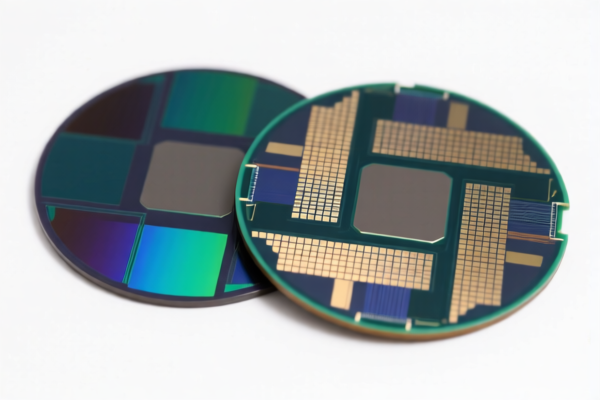
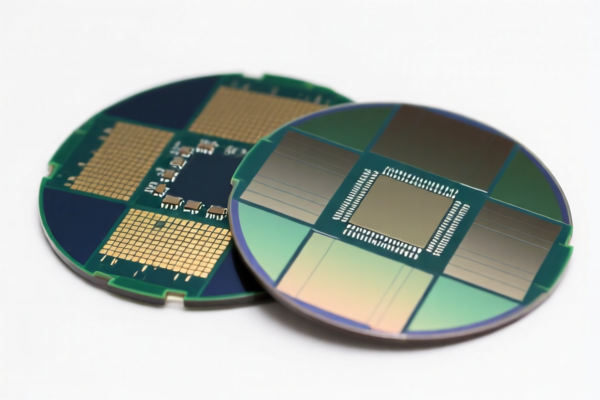
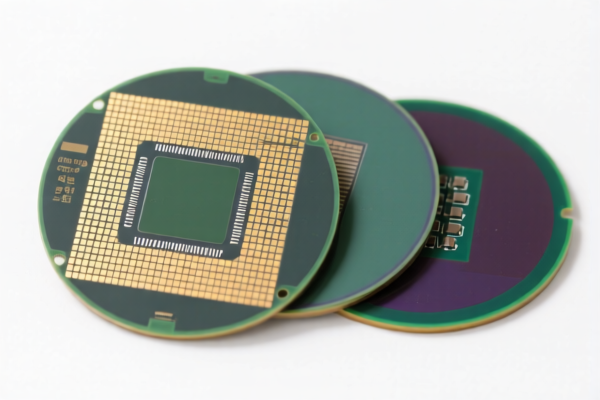
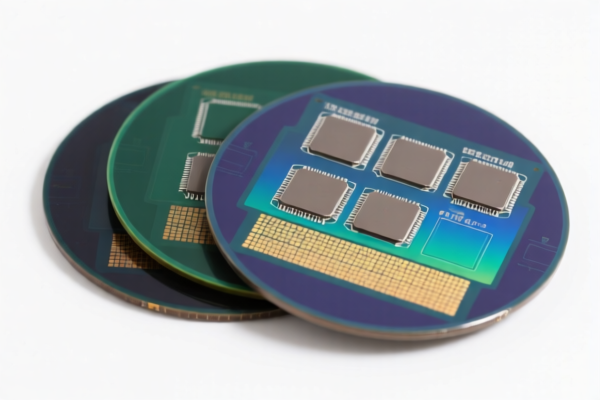
AI分析
🧪 Doped Silicon Wafers for Power Devices (Power Semiconductor Wafers)
🌐 HS Code Reference & Customs Clearance Guide | 2026 Latest Tariff Analysis | Professional Entry Strategy
📌 I. Product Definition & Classification: Do You Understand "Power Wafers"?
Doped silicon wafers are the foundational raw materials for the semiconductor industry, specifically designed for power electronics (such as IGBTs, MOSFETs, and diodes). In international trade, they are distinct from consumer electronics wafers (like memory chips) due to their thickness, doping concentration, and specific electrical properties.
Key Characteristics: * Material: Polycrystalline or Single-crystal Silicon. * Process: Doped (N-type or P-type) to modify conductivity. * Form: Wafers (flat, polished slices). * Status: Unmounted chips/dies; they are the substrate upon which circuits are built.
⚠️ Critical Distinction Point:
- If the wafer is doped and intended for electronic devices → It falls under Chapter 38 (Chemical Products) or Chapter 85 (Electrical Machinery) depending on specific tariff interpretations and doped status.
- If it is undoped pure silicon → It falls under Chapter 28 (Inorganic Chemicals).
- Note: The provided data indicates these are Doped wafers, triggering higher scrutiny and specific HTS codes in Chapter 38/85.
📦 II. HS Code Classification Details (2026 Latest Authorized Codes)
Based on the provided data, here are the precise HS Codes for Doped Silicon Wafers for Power Devices. All listed codes carry a Total Tax Rate of 60% due to current trade policies.
| HS Code | Product Description & Matching Principle | Application Scenario | Doping Status |
|---|---|---|---|
3818.00.00.20 |
Electronic Device Doped Silicon Wafers Material: Polycrystalline/Doped. Use: Electronic Industry. |
Specific electronic components; pre-processed wafers ready for fabrication. | ✅ Doped (Poly/Single) |
8541.10.00.40 |
Silicon Wafers for Power Devices Form: Wafer. Feature: Complies with "Unmounted Chip/Die/Wafer" characteristics. |
Power semiconductors (IGBT/MOSFET substrates). | ✅ Doped |
3818.00.00.95 |
Doped Compound Silicon Wafers Category: Electronic Industrial Use. Principle: Material-based inference match. |
General electronic doped silicon; broad category for doped compounds. | ✅ Doped (Compound) |
8541.59.00.40 |
Doped Silicon Wafers (Wafer Category) Attribute: Semiconductor Device Characteristic. Classification: Unassembled Chips. |
Broad classification for doped wafers treated as semiconductor devices. | ✅ Doped |
2804.61.00.00 |
Silicon Wafers for Power Devices Material: Silicon. Form: Wafer range. Principle: Material + Form match. |
Note: Often used for less processed silicon, but listed here with 60% tax, implying strict regulatory treatment. | ⚠️ Check Doping Level |
🔍 Key Insight:
- Despite differences in HS Code prefixes (38vs85vs28), all listed codes carry a 60% total tax rate.
- The choice of HS Code depends on how your product is defined in commercial invoices: as a "Chemical Product" (Ch 38/28) or an "Electrical Component" (Ch 85).
- Common Error: Declaring as pure silicon (Ch 28) when heavily doped, leading to customs audits. Always align documentation with the specific code used.
💰 III. 2026 Latest Tariff Rate Breakdown (Including Surcharges)
✅ Applicable Country: United States (US)
✅ Country of Origin: China (CN)
✅ Effective Date: From November 10, 2025 (including subsequent imports)
🎯 1. General Tariff Structure for All Listed HS Codes
All the HS codes provided in the data share the same tariff structure:
| Item | Rate | Details |
|---|---|---|
| Base Duty Rate | 0.0% | Standard MFN rate for silicon products. |
| Section 301 Surcharge (Added Duty) | 50.0% | High-tariff items under US Trade Act Section 301. |
| Section 122 Tariff | 10.0% | Additional penalty tariff applied to specific semiconductor materials. |
| Total Tax Rate | 60.0% | 0% + 50% + 10% = 60% |
| Tax Calculation | CIF Value × 60% |
Calculated on Cost, Insurance, and Freight. |
| De Minimis Exemption | ❌ NOT Eligible | deny_de_minimis: Shipments under $800 are NOT exempt. Full taxes apply. |
| Legal Authority Path | Section 301 → Section 122 → HS Code Specific Footnotes |
Verify via USITC Tariff Database for latest footnotes. |
📌 Explanation:
- "50% Added Duty": This is the primary Section 301 tariff for high-tech Chinese imports.
- "10% Section 122 Tariff": Specifically targets critical semiconductor materials to protect domestic production.
- Combined 60%: This is a very high cost. Importers must calculate landed costs accurately.
- No De Minimis: Unlike consumer goods, these industrial semiconductors do not qualify for the $800 de minimis exemption. Every shipment is subject to full inspection and taxation.
🛠️ IV. Customs Clearance Practical Advice (Avoiding Pitfalls)
✅ 1. Required Documentation Checklist (Mandatory)
| Document | Must Provide | Purpose |
|---|---|---|
| ✅ Product Specification Sheet | ✔️ | Must detail: Doping type (N/P), resistivity, wafer diameter (e.g., 150mm/200mm), orientation. |
| ✅ Certificate of Analysis (CoA) | ✔️ | Proves doping levels and purity. Crucial for distinguishing from raw silicon. |
| ✅ Commercial Invoice | ✔️ | Must clearly state: "Doped Silicon Wafers for Power Devices," HS Code, and Country of Origin. |
| ✅ Packing List | ✔️ | Detail number of wafers, packaging type (FOUP/Spoke), and weight. |
| ✅ Bill of Lading/Air Waybill | ✔️ | Standard shipping docs. |
| ✅ Importer Security Filing (ISF) | ✔️ | File 24 hours before loading if sea freight. |
✅ 2. Declaration Tips (Key Mantra)
🔥 "Declare Doping, Not Just Silicon; Match Code, Avoid 60% Surprise!"
| Scenario | Correct Declaration | Incorrect Practice | Consequence |
|---|---|---|---|
| Doped Wafers | 3818.00.00.20 or 8541.10.00.40 |
Declaring as 2804.61.00.00 (Pure Silicon) |
Customs may reclassify + penalty + 60% tax |
| Undoped Wafers | 2804.61.00.00 |
Declaring as 3818 (Doped) |
Over-declaration risk, but tax is same (60%) |
| Partial Sets | Declare as Complete Set | Splitting into "silicon" + "packaging" | Higher total tax if components taxed separately |
📌 Warning:
- Do NOT use vague terms like "Silicon Pieces" or "Raw Material."
- Use precise technical terms: "Doped Silicon Wafer, Polished, N-Type, 200mm, for IGBT Fabrication."
✅ 3. Special Cases
| Situation | Handling Advice |
|---|---|
| OEM Custom Wafers | Provide customer PO + technical specs to prove intent. |
| Samples for R&D | Still subject to 60% tax. No exemption for "samples" in this category. |
| Transshipment | If routed through Vietnam/Malaysia, DO NOT falsify origin. US CBP checks for circumvention. High risk of seizure. |
| Wafer Scrap/Waste | May qualify for different HS Code (Chapter 38 waste), but requires strict proof. |
🌍 V. Global Market Comparison (2026)
| Country/Region | Recommended HS Code | Tariff Rate (China Origin) | Notes |
|---|---|---|---|
| 🇺🇸 USA | 3818.00.00.20 / 8541.10.00.40 |
60% (0% Base + 50% Sec 301 + 10% Sec 122) | High Risk. Strict enforcement on semiconductor materials. |
| 🇨🇳 China | 3818.00.00.20 |
~5-10% | No additional surcharges. Low cost for domestic processing. |
| 🇪🇺 EU | 3818.00.00 |
0-5% (if origin certified) | No US-style surcharges. Standard MFN applies. |
| 🇯🇵 Japan | 3818.00.00 |
0-3% | Preferential rates if under CPTPP/JSEPA. |
| 🇰🇷 Korea | 3818.00.00 |
0% (under KORUS) | If originating in US or under trade agreements. |
📌 Conclusion:
- The US is the most expensive market for Chinese-doped silicon wafers due to the 60% combined tax.
- EU/Japan/Korea offer significantly lower duties, making them preferable for re-export or local consumption.
- Supply Chain Strategy: Many companies now source wafers from Taiwan, South Korea, or Malaysia to avoid Section 301/122 tariffs.
📌 VI. Common Errors & Pitfalls (Lessons Learned)
❌ Error 1: Declaring "Silicon" without specifying "Doped"
👉 Consequence: Customs may reject the description, demand additional testing, and delay clearance. If found to be doped later, fines apply.
❌ Error 2: Assuming "Samples" are tax-free
👉 Consequence: De Minimis does not apply. You will pay 60% tax on every sample shipment.
❌ Error 3: Misclassifying as "Ordinary Glass" or "Quartz"
👉 Consequence: Severe penalty for misdeclaration. HS Code 7007 (Glass) is vastly different from 3818 (Semiconductor Material).
❌ Error 4: Ignoring Section 122 Tariff
👉 Consequence: Even if Section 301 is waived, Section 122 still applies to certain semiconductor inputs. Always check both.
✅ Correct Practice:
"Doped Silicon Wafer, Polished, N-Type, 200mm Diameter, 3818.00.00.20, Made in China"
🎯 VII. Conclusion: Professional Clearance, Cost Control, Efficiency!
🎯 Key Takeaways:
🔹 "Doped Silicon = 60% Tax in the US." No exceptions for small shipments.
🔹 "Specify Everything." Doping type, orientation, and application must be clear on the invoice.
🔹 "Avoid US Origin if Possible." Consider sourcing from non-China origins to mitigate trade war risks.
📌 Pro Tip:
If you are importing large volumes, consider applying for a Tariff Exclusion (if still available) or working with a licensed customs broker to explore Foreign Trade Zones (FTZ) to defer duties.
📣 Immediate Action:
📞 Contact a Customs Broker with expertise in semiconductors.
📄 Prepare Technical Datasheets for your specific wafer batches.
💡 Evaluate Supply Chain: Can you shift sourcing to Southeast Asia or Taiwan to avoid the 60% hit?
✨ Professional Customs Clearance Starts with Accurate Classification!
💼 Every Percent of Tariff is a Percent of Profit Lost!
用户评价
关于 HS 编码归类
协调制度(HS)是由世界海关组织(WCO)制定的国际贸易商品分类标准。全球 200 多个国家采用 HS 系统作为海关关税、贸易统计和进出口监管的基础。
每个 HS 编码遵循以下层级结构:
- 章(2 位)——商品大类(例如:第 84 章:机器和机械设备)
- 品目(4 位)——章内的更具体分类
- 子目(6 位)——国际通用细分,所有 WCO 成员国统一使用
- 本国细分(8-10 位)——各国自行扩展的细分编码,如美国 HTSUS 10 位编码
正确的 HS 编码归类对于顺利通关、准确缴纳关税和遵守贸易法规至关重要。错误归类可能导致海关延误、多缴关税或罚款。
从CN进口到US时,适用的关税税率可能包括:
- 最惠国(MFN)税率——适用于 WTO 成员国的标准关税税率
- 普通税率——适用于无贸易协定国家
- 贸易救济关税——附加关税,如 301 条款(反倾销)、232 条款(国家安全)或反补贴税
本页内容仅供参考。如需正式归类,请咨询当地海关或持牌报关代理。