Drain Mat
CN → US| HS编码 | 关税税率 | 原产国 | 目的国 | 文档 |
|---|---|---|---|---|
| 4016910000 | 37.7% | CN | US | 官方文档 |
| 4016990500 | 20.9% | CN | US | 官方文档 |
| 3924901050 | 13.3% | CN | US | 官方文档 |
| 3924104000 | 13.4% | CN | US | 官方文档 |
| 7323999080 | 88.4% | CN | US | 官方文档 |
商品图片
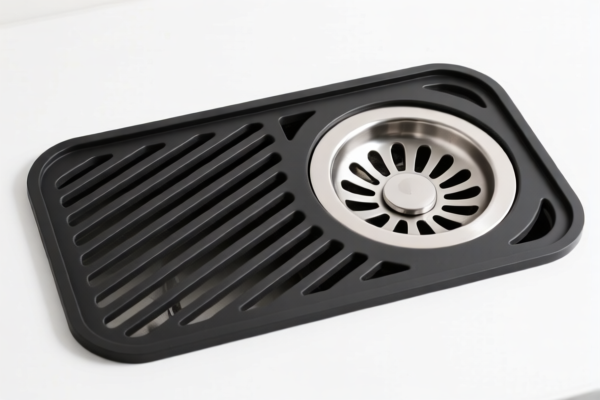
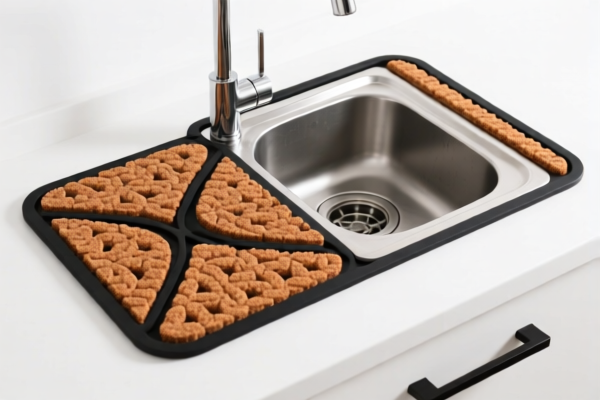
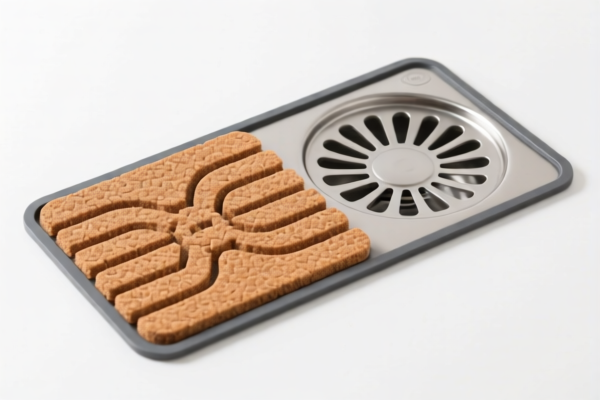
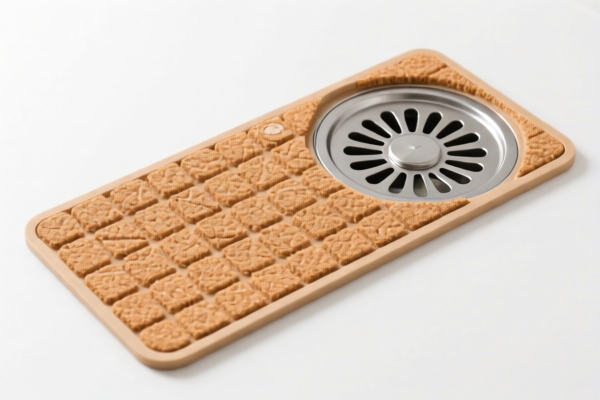
AI分析
🧼 Drain Mat (Silicone/Kitchen Sink Drying Mat)
🌐 HS Code Reference & Customs Clearance Guide | 2026 Latest Tariff Analysis | Strategic Customs Strategy
📌 I. Product Definition & Classification: What Exactly is a "Drain Mat"?
A Drain Mat is a versatile household item designed to absorb water, protect surfaces, and aid in drying dishes or utensils. In international trade, its classification is highly sensitive to material composition and specific use case. It is generally categorized into three main material groups: Vulcanized Rubber/Elastomer (often marketed as Silicone), Plastic/Synthetic Resin, and Metal (rare for pure mats, but possible for rack/mats).
⚠️ Key Classification Point:
- If made of Silicone/Rubber: Falls under Chapter 40 (Rubber Articles).
- If made of Plastic/PVC/TPU: Falls under Chapter 39 (Plastics).
- If made of Steel/Iron: Falls under Chapter 73 (Iron/Steel Articles).
- Note: "Silicone" products are often legally classified as Rubber/Elastomer (Ch 40) or Plastic (Ch 39) depending on the specific polymer structure and manufacturing process.
📦 II. HS Code Classification Details (Based on Provided Data)
Below are the five potential HS Codes for Drain Mats derived from the provided dataset, with detailed tax implications.
| HS Code | Product Description | Material Category | Estimated Total Tax | Tax Breakdown |
|---|---|---|---|---|
4016.91.00.00 |
Rubber Mats | Vulcanized Rubber / Elastomer | 37.7% | Base: 2.7% Add'l: 25.0% (Sec 301) Sec 122: 10% |
4016.99.05.00 |
Other Rubber Articles | Vulcanized Rubber / Elastomer (Household) | 20.9% | Base: 3.4% Add'l: 7.5% (Sec 301) Sec 122: 10% |
3924.90.10.50 |
Plastic Household Mats | Plastic / Synthetic Resin | 13.3% | Base: 3.3% Add'l: 0.0% Sec 122: 10% |
3924.10.40.00 |
Plastic Tableware/Utensils | Plastic / Synthetic Material | 13.4% | Base: 3.4% Add'l: 0.0% Sec 122: 10% |
7323.99.90.80 |
Steel Kitchen Ware | Iron/Steel (Mat Form) | 88.4% | Base: 3.4% Add'l: 25.0% (Sec 301) Sec 122: 10% Metal Add'l: 50% |
💰 III. Detailed Tax Rate Analysis (2026 Context)
✅ Applicable Country: United States (US)
✅ Origin: China (CN)
✅ Effective Date: Post-2025 tariffs apply
🎯 1. 4016.91.00.00 – Rubber Mats (High Risk)
| Item | Detail |
|---|---|
| Base Duty | 2.7% |
| Section 301 Duty | +25.0% (Standard USITC Footnote for Ch 40) |
| Section 122 Duty | +10.0% (Presidential Proclamation 10480, effective Jan 2025) |
| Total Effective Rate | 37.7% |
| Calculation | CIF Value × 37.7% |
| De Minimis Exemption | ❌ Not Eligible (Section 301 goods are explicitly excluded from Section 321) |
📌 Explanation:
- This code assumes the mat is strictly defined as a "mat" made of vulcanized rubber.
- The 25% Section 301 tariff is the primary cost driver here.
- Section 122 adds an additional 10% on top, bringing the total to nearly 38%.
🎯 2. 4016.99.05.00 – Other Rubber Articles (Moderate Risk)
| Item | Detail |
|---|---|
| Base Duty | 3.4% |
| Section 301 Duty | +7.5% (Lower bracket for certain rubber goods) |
| Section 122 Duty | +10.0% |
| Total Effective Rate | 20.9% |
| Calculation | CIF Value × 20.9% |
| De Minimis Exemption | ❌ Not Eligible |
📌 Explanation:
- If the mat does not fit the specific definition of "mats" in 4016.91 but is still rubber, it falls here.
- Significant savings compared to4016.91, but still high due to Section 301.
🎯 3. 3924.90.10.50 – Plastic Household Mats (Optimal Low Tax)
| Item | Detail |
|---|---|
| Base Duty | 3.3% |
| Section 301 Duty | +0.0% (Many plastic household items are exempt or have low Section 301 rates) |
| Section 122 Duty | +10.0% |
| Total Effective Rate | 13.3% |
| Calculation | CIF Value × 13.3% |
| De Minimis Exemption | ❌ Not Eligible (Section 122 applies to de minimis) |
📌 Explanation:
- Best Case Scenario: If your silicone mat is chemically classified as a plastic/synthetic resin rather than rubber, this is the most tax-efficient code.
- Key Advantage: 0% Section 301 duty. Only Base + Section 122 apply.
- Risk: Requires proving the material is plastic (e.g., PVC, TPU, or non-vulcanized silicone resin).
🎯 4. 3924.10.40.00 – Plastic Tableware (Alternative Low Tax)
| Item | Detail |
|---|---|
| Base Duty | 3.4% |
| Section 301 Duty | +0.0% |
| Section 122 Duty | +10.0% |
| Total Effective Rate | 13.4% |
| Calculation | CIF Value × 13.4% |
| De Minimis Exemption | ❌ Not Eligible |
📌 Explanation:
- If the drain mat is used primarily for placing dishes (tableware accessory), it might be classified under plastic tableware.
- Very similar tax profile to3924.90.10.50.
🎯 5. 7323.99.90.80 – Steel Kitchen Ware (Highest Risk - AVOID)
| Item | Detail |
|---|---|
| Base Duty | 3.4% |
| Section 301 Duty | +25.0% |
| Section 122 Duty | +10.0% |
| Metal Add'l Duty | +50.0% (Specific to Steel/Aluminum/Copper from China) |
| Total Effective Rate | 88.4% |
| Calculation | CIF Value × 88.4% |
| De Minimis Exemption | ❌ Not Eligible |
📌 Explanation:
- DO NOT USE unless the mat is literally made of steel mesh.
- The 50% additional metal tariff makes this code prohibitively expensive.
- Standard silicone/rubber mats should never be classified here.
🛠️ IV. Customs Clearance Practical Advice
✅ 1. Documentation Checklist (Critical for Silicone/Plastic)
| Document | Required | Notes |
|---|---|---|
| ✅ Product Specification Sheet | ✔️ | Must specify material: "100% Silicone," "TPU," "PVC," or "Rubber." |
| ✅ Material Safety Data Sheet (MSDS) | ✔️ | Helps customs differentiate between Rubber (Ch 40) and Plastic (Ch 39). |
| ✅ Commercial Invoice | ✔️ | Describe as "Silicone Kitchen Sink Mat" or "Plastic Drain Pad." Avoid vague terms like "Gadget." |
| ✅ Photos of Product & Label | ✔️ | Show texture, flexibility, and any "Made in China" labels. |
| ✅ Supply Chain Evidence | ✔️ | Proof of raw material origin (e.g., silicone resin vs. vulcanized rubber sheets). |
✅ 2. Classification Strategy (How to Lower Taxes)
| Scenario | Recommended HS Code | Reasoning |
|---|---|---|
| Soft, flexible, non-vulcanized silicone | 3924.90.10.50 or 3924.10.40.00 |
Classify as Plastic/Synthetic. Avoids 25% Sec 301. Total ~13.3%. |
| Vulcanized rubber, hard or semi-rigid | 4016.91.00.00 |
Classified as Rubber Mat. High tax (37.7%) due to Sec 301. |
| Rubber, non-specific household item | 4016.99.05.00 |
Slightly lower Sec 301 (7.5%). Total ~20.9%. |
| Metal Mesh Mat | 7323.99.90.80 |
Avoid. Tax is 88.4%. Use only if absolutely necessary. |
🔥 Golden Rule:
"If it's silicone, argue it's plastic!"
Many modern "silicone" mats are thermoplastic elastomers (TPE) or non-vulcanized silicone resins. If you can prove it is not vulcanized rubber, you can classify under Chapter 39 (Plastics) and save ~24-75% in duties.
✅ 3. Common Mistakes & Pitfalls
❌ Mistake 1: Using "Silicone" on the invoice without specifying material type.
👉 Consequence: Customs may default to Chapter 40 (Rubber) and apply 25% Sec 301.
👉 Fix: Specify "Thermoplastic Silicone" or "Plastic-Based Drain Mat."
❌ Mistake 2: Classifying a rubber mat as 3924... without proof.
👉 Consequence: Audit risk, penalties, and retroactive taxes.
👉 Fix: Provide MSDS showing non-vulcanized status.
❌ Mistake 3: Ignoring Section 122.
👉 Consequence: Underpayment by 10%.
👉 Fix: All Chinese-origin goods imported by US importers are subject to the 10% Section 122 tariff, regardless of HS Code.
🌍 V. Global Market Comparison (2026)
| Country/Region | Recommended HS Code | Est. Total Tax (China Origin) | Key Requirement |
|---|---|---|---|
| 🇺🇸 USA | 3924.90.10.50 (Plastic) |
13.3% | MSDS, Sec 122 applies |
| 🇪🇺 EU | 3924.00 |
Low (0-3%) | No Sec 301/122. CE marking needed. |
| 🇨🇦 Canada | 3924.00 |
Low (5-10%) | No Section 122. NAFTA/CUSMA may apply. |
| 🇬🇧 UK | 3924.00 |
Low (0-5%) | Post-Brexit tariffs apply. |
📌 Conclusion:
- The US is the most expensive market due to Section 301 and Section 122.
- European/Canadian markets are significantly cheaper for similar products.
📌 VI. Final Recommendations for Importers
- Prioritize Plastic Classification: If your product allows, classify as
3924.90.10.50or3924.10.40.00. The 13.3% rate is far more competitive than the 20.9% or 37.7% rubber rates. - Prepare MSDS: Have a Material Safety Data Sheet ready to prove the material is not vulcanized rubber.
- Budget for Section 122: Factor in an additional 10% on top of all other duties. This is non-negotiable for Chinese imports to the US.
- Avoid Steel Classification: Never classify a drain mat as
7323.99.90.80unless it is actually steel. The 88.4% tax will destroy margins.
🎯 VII. Pro Tip: Save Money with Advanced Ruling
🚀 Action Item:
Apply for a US Customs Binding Ruling (Pre-Ruling) before shipping.
- Submit your product samples, MSDS, and photos to CBP.
- Request classification under3924.90.10.50(Plastic) rather than4016.91.00.00(Rubber).
- Result: Legally binding confirmation of the 13.3% rate, avoiding future disputes and penalties.
📣 Disclaimer:
This guide is based on the provided dataset and current US tariff laws (2025-2026). Tariff rates are subject to change. Always consult with a licensed customs broker or trade attorney for final classification.
✨ Customs Clearance: Precision is Profit.
💼 Don't let HS Code errors eat your margin!
用户评价
关于 HS 编码归类
协调制度(HS)是由世界海关组织(WCO)制定的国际贸易商品分类标准。全球 200 多个国家采用 HS 系统作为海关关税、贸易统计和进出口监管的基础。
每个 HS 编码遵循以下层级结构:
- 章(2 位)——商品大类(例如:第 84 章:机器和机械设备)
- 品目(4 位)——章内的更具体分类
- 子目(6 位)——国际通用细分,所有 WCO 成员国统一使用
- 本国细分(8-10 位)——各国自行扩展的细分编码,如美国 HTSUS 10 位编码
正确的 HS 编码归类对于顺利通关、准确缴纳关税和遵守贸易法规至关重要。错误归类可能导致海关延误、多缴关税或罚款。
从CN进口到US时,适用的关税税率可能包括:
- 最惠国(MFN)税率——适用于 WTO 成员国的标准关税税率
- 普通税率——适用于无贸易协定国家
- 贸易救济关税——附加关税,如 301 条款(反倾销)、232 条款(国家安全)或反补贴税
本页内容仅供参考。如需正式归类,请咨询当地海关或持牌报关代理。