Dried Cowhide (for Footwear)
CN → US| HS编码 | 关税税率 | 原产国 | 目的国 | 文档 |
|---|---|---|---|---|
| 4107111020 | 35.0% | CN | US | 官方文档 |
| 4107116060 | 13.3% | CN | US | 官方文档 |
商品图片
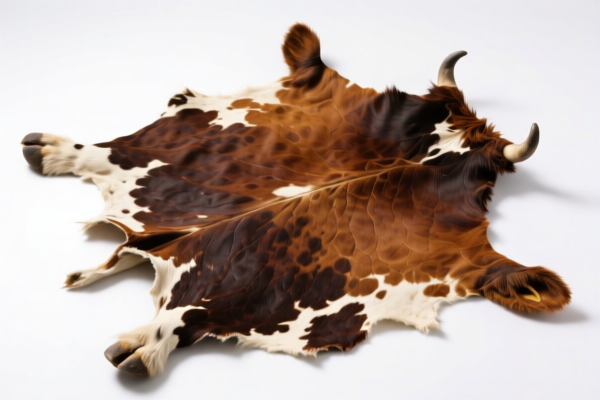
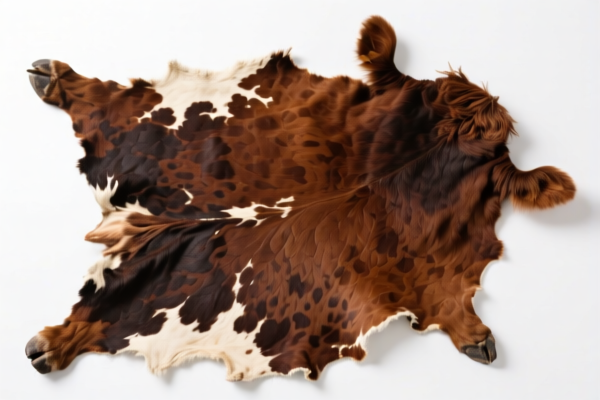
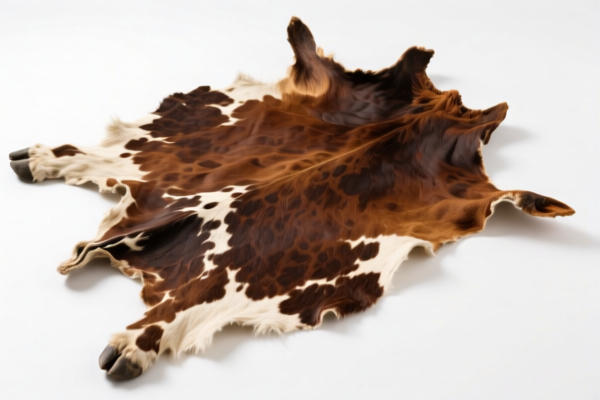
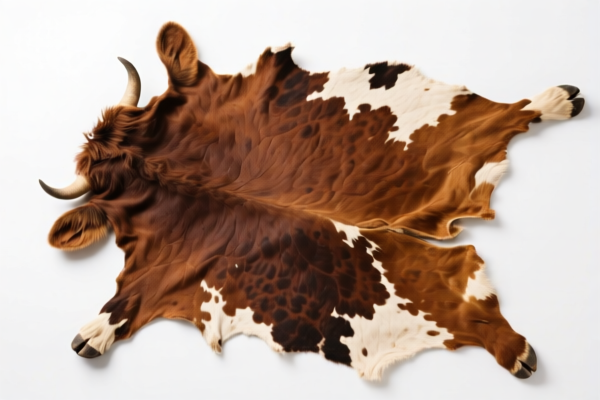
AI分析
🥾 Dried Cowhide (for Footwear)
🌐 HS Code Reference & Customs Clearance Guide | 2026 Latest Tariff Analysis | Professional-Level Clearance Strategy
📌 I. Product Definition & Classification: What Exactly is "Dried Cowhide"?
Dried Cowhide, in the context of international trade and specifically for footwear manufacturing, refers to raw hides of bovine animals that have undergone initial preservation (salting, drying, or curing) but have not yet undergone full tanning or crust processing suitable for final use.
However, the description provided in the section refers to "Leather further prepared after tanning or crusting". This implies the input "Dried Cowhide" might be a colloquial or simplified term for Tanned Cowhide Leather used in the footwear industry. We must distinguish between: 1. Raw/Dried Hides (Chapter 41, Heading 4101/4102): Not in . 2. Tanned & Crust Leather (Chapter 41, Heading 4107): THIS IS THE CATEGORY IN .
The content specifically covers Heading 4107: “Leather further prepared after tanning or crusting... of bovine... without hair on...”
Therefore, for customs purposes, if the material is tanned leather (not raw dried skin), it falls under 4107. The classification depends on whether it is Full Grain (Unsplit) or other types, and its specific end-use designation in the tariff lines.
⚠️ Critical Distinction:
- If it is RAW, UNSPLIT, DRIED SALTED HIDE (no tanning): It belongs to 4101 or 4102 (NOT in ).
- If it is TANNED LEATHER (processed, ready for shoe uppers/soles): It belongs to 4107 (IN ).
Assumption: Based on the provided , we proceed with the classification for Tanned Cowhide Leather intended for footwear.
📦 II. HS Code Classification Details (2026 Latest Tariff Authority Match)
Based strictly on the provided , there are two specific HS Codes for Full Grain, Unsplit Bovine Leather (Heading 4107.11). The distinction lies in the sub-category of use (Upper vs. Sole) and the specific national tariff line extensions.
| HS Code | Product Description (from DATA) | Key Characteristics | Intended Use in Footwear |
|---|---|---|---|
4107.11.10.20 |
Full grains, unsplit; Upper leather; Lining leather | - Bovine/Equine - No hair on - Upper leather specification |
Used for the upper part of shoes/boots (the visible outer layer). |
4107.11.60.60 |
Full grains, unsplit; Other: Sole leather | - Bovine/Equine - No hair on - Sole leather specification |
Used for the sole of shoes (wear-resistant bottom layer). |
🔍 Key Clarification from DATA:
Both codes specify "Full grains, unsplit" with a unit surface area not exceeding 28 sq ft (2.6 m²).
- If the leather is labeled/supplied for uppers, use4107.11.10.20.
- If the leather is labeled/supplied for soles, use4107.11.60.60.
💰 III. 2026 Tariff Rate Breakdown (Detailed Tax Analysis)
✅ Applicable Country: United States (US)
✅ Origin: Likely China (based on typical trade context, though not explicitly stated, the tax structure implies US-China trade rules)
✅ Effective Time: Current 2026 Trade Policy
🎯 1. 4107.11.10.20 —— Full Grain Bovine Leather (Upper Leather)
| Item | Content |
|---|---|
| Description | Leather, full grain, unsplit, bovine, for upper use |
| Base Tariff Rate | 0.0% (Basic import duty) |
| Additional Tariff (Section 301 / China Specific) | +25.0% |
| Total Tax Rate | 25.0% |
| Tax Calculation | CIF Value × 25% |
| Legal Basis | Section 301 Tariff Act (China-origin goods) |
| De Minimis Exemption | ❌ Not Applicable for B2B bulk leather imports |
📌 Explanation:
- The base tariff for many leather goods is 0%, but Section 301 imposes an additional 25% on specific Chinese-origin leather products.
- Total cost impact: You pay 25% of the landed value in duties alone.
- This is a high-cost item for importers.
🎯 2. 4107.11.60.60 —— Full Grain Bovine Leather (Sole Leather)
| Item | Content |
|---|---|
| Description | Leather, full grain, unsplit, bovine, for sole use |
| Base Tariff Rate | 0.0% (Basic import duty) |
| Additional Tariff (Section 301 / China Specific) | 0.0% |
| Total Tax Rate | 0.0% |
| Tax Calculation | $0 (Duty-free) |
| Legal Basis | Excluded from Section 301 additional duties |
📌 Explanation:
- Surprise! Sole leather is DUTY-FREE.
- This is a significant cost advantage if your product is classified as "Sole Leather" rather than "Upper Leather".
- Caution: Misclassifying sole leather as upper leather results in an unexpected 25% tax bill.
🛠️ IV. Customs Clearance Practical Advice (Actionable Strategies)
✅ 1. Documentation Checklist (Critical for Leather)
| Document | Required? | Why? |
|---|---|---|
| ✅ Commercial Invoice | ✔️ | Must clearly state: "Full Grain Bovine Leather, Unsplit", and specify "Upper" or "Sole" usage. |
| ✅ Packing List | ✔️ | Show weight, dimensions, and number of hides/pieces. |
| ✅ Certificate of Origin (CO) | ✔️ | Prove origin to determine if Section 301 (25%) applies. If from Vietnam/Mexico, 0% may apply. |
| ✅ Product Specification Sheet | ✔️ | Crucial: Include tanning process (chrome-tanned vs. vegetable-tanned), thickness, and intended use (Upper vs. Sole). |
| ✅ Tanning Process Description | ✔️ | Confirm it is "further prepared after tanning" to justify Heading 4107, not 4101 (raw). |
| ✅ Split/Unsplit Declaration | ✔️ | Explicitly state "Unsplit" to match 4107.11.xxxx. If split, it falls under different codes (not in DATA). |
✅ 2. Classification Strategy (How to Save Money)
🔥 "Use Matters, Not Just Material: Upper = 25%, Sole = 0%!"
| Scenario | Recommended HS Code | Tax Rate | Strategy |
|---|---|---|---|
| Leather for Shoe Uppers | 4107.11.10.20 |
25% | Accept cost; ensure "Upper" is clearly declared. |
| Leather for Shoe Soles | 4107.11.60.60 |
0% | Optimize: Ensure leather meets sole criteria (thickness, durability). |
| Mixed Batch (Uppers + Soles) | Separate Entries | 25% / 0% | Never mix in one shipment line. Declare separately to claim 0% on soles. |
| Raw Dried Hides (Not Tanned) | Wrong Category | N/A | Do NOT use 4107. Use 4101/4102. Misdeclaration risks penalties. |
✅ 3. Special Clearance Tips for Leather
- Physical Inspection Risk: Leather is a high-risk category for CBP inspection. Ensure no animal disease symptoms (e.g., anthrax indicators) and proper salting/drying to prevent odor or pest issues.
- Origin Verification: If the hide is sourced from China, the 25% tax on upper leather is unavoidable unless:
- You use Section 321 (de minimis) for small packages? ❌ No, leather is generally excluded from de minimis for duty-free entry.
- You shift sourcing to Vietnam, Brazil, or USA? ✅ Yes, origin change can eliminate the 25% tax.
- "Split" Leather Warning: If the leather is split (sawn horizontally), it does NOT fit
4107.11(Unsplit). It would fall under4107.21or4107.29, which have different tax rates (not provided in DATA). Ensure your supplier certifies "Unsplit".
🌍 V. Global Market Comparison (2026)
| Country | Recommended HS Code | Tax Rate (China Origin) | Key Certification | Note |
|---|---|---|---|---|
| 🇺🇸 USA | 4107.11.10.20 (Upper) |
25% | None specific for leather, but CBP strict on origin | Sole leather (4107.11.60.60) is 0% |
| 🇪🇺 EU | 4107 10 91 | Varies (typically 4-6%) | REACH (Chemical compliance) | No Section 301 equivalent |
| 🇨🇳 China | 4107 10 91 | Varies (typically 5-10%) | None | Import duty for tanned leather |
| 🇯🇵 Japan | 4107 10 90 | 5-12% | Phytosanitary (if raw) | Tanned leather generally low risk |
📌 Conclusion for US Imports:
- Upper Leather: High tax burden (25%). Budget accordingly.
- Sole Leather: Duty-free. Maximize sole usage classification where legally permissible.
- Origin is Key: Non-China origins (e.g., Brazil, Italy) may enjoy 0% base tariff and no Section 301 tax.
📌 VI. Common Mistakes & Pitfalls (Lessons Learned)
❌ Mistake 1: Calling it "Dried Cowhide" without specifying Tanned vs. Raw.
👉 Consequence: CBP may reject 4107 classification and reassess under 4101 (raw), leading to different duty rates and potential biosecurity holds.
👉 Fix: Clearly state "Tanned, Crust, Full Grain Bovine Leather" in invoice.
❌ Mistake 2: Mixing Upper and Sole leather in one HS Code line.
👉 Consequence: CBP will likely apply the highest tax rate (25%) to the entire shipment or launch an audit.
👉 Fix: Separate invoices or separate line items for Upper and Sole leather.
❌ Mistake 3: Ignoring the "Unsplit" requirement.
👉 Consequence: If leather is split, 4107.11 is incorrect. It should be 4107.21 or 4107.29. Misclassification leads to back duties and penalties.
👉 Fix: Obtain a supplier certificate confirming "Unsplit, Full Grain".
✅ Correct Declaration Example:
"Tanned Bovine Leather, Full Grain, Unsplit, Chrome-Tanned, for Upper Footwear Use, Origin: China, Quantity: 500 Hides"
HS Code:4107.11.10.20
Tax: 25%
🎯 VII. Conclusion: Precision in Classification Saves 25%
🎯 Key Takeaway:
🔹 "Upper = 25%, Sole = 0%: Know Your Product's End-Use!"
🔹 "Raw vs. Tanned: Don't Confuse Chapter 41 Headings!"
🔹 "Split vs. Unsplit: One Word Changes Everything!"
📌 Pro Tip:
If you are importing large volumes of Upper Leather from China, consider:
1. Sourcing from Non-China Origins (e.g., Brazil, India) to avoid the 25% Section 301 tax.
2. Applying for a Pre-Ruling from CBP if you are unsure whether your product qualifies as "Sole Leather" (0% tax) or "Upper Leather" (25% tax).
📣 Immediate Action:
📞 Contact your freight forwarder with the Supplier's Certificate of Origin and Technical Data Sheet.
🚀 Confirm "Upper" or "Sole" intent before shipment to ensure correct HS Code (4107.11.10.20vs4107.11.60.60).
✨ Accurate Classification, Lower Costs, Faster Clearance!
💼 Every hide tells a story—make sure it's the right one for the right tax!
用户评价
关于 HS 编码归类
协调制度(HS)是由世界海关组织(WCO)制定的国际贸易商品分类标准。全球 200 多个国家采用 HS 系统作为海关关税、贸易统计和进出口监管的基础。
每个 HS 编码遵循以下层级结构:
- 章(2 位)——商品大类(例如:第 84 章:机器和机械设备)
- 品目(4 位)——章内的更具体分类
- 子目(6 位)——国际通用细分,所有 WCO 成员国统一使用
- 本国细分(8-10 位)——各国自行扩展的细分编码,如美国 HTSUS 10 位编码
正确的 HS 编码归类对于顺利通关、准确缴纳关税和遵守贸易法规至关重要。错误归类可能导致海关延误、多缴关税或罚款。
从CN进口到US时,适用的关税税率可能包括:
- 最惠国(MFN)税率——适用于 WTO 成员国的标准关税税率
- 普通税率——适用于无贸易协定国家
- 贸易救济关税——附加关税,如 301 条款(反倾销)、232 条款(国家安全)或反补贴税
本页内容仅供参考。如需正式归类,请咨询当地海关或持牌报关代理。