Dried Wood Shavings
CN → US| HS编码 | 关税税率 | 原产国 | 目的国 | 文档 |
|---|---|---|---|---|
| 4504105000 | 35.0% | CN | US | 官方文档 |
| 4501904000 | 35.0% | CN | US | 官方文档 |
| 4501902000 | 35.0% | CN | US | 官方文档 |
| 4504900000 | 35.0% | CN | US | 官方文档 |
商品图片
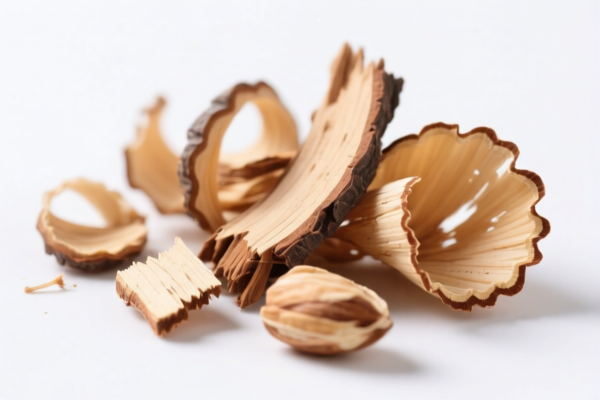
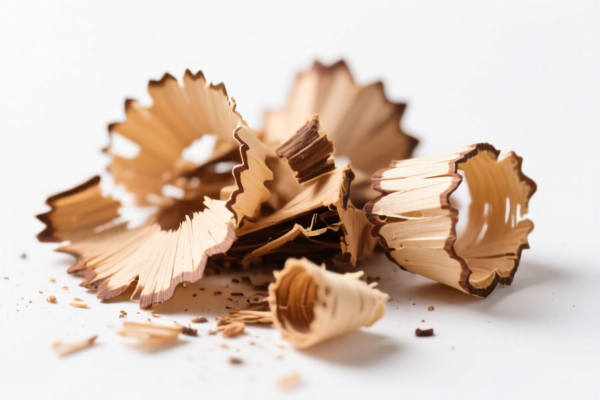
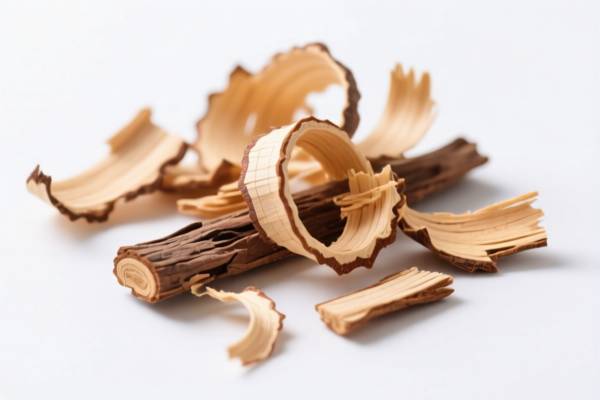
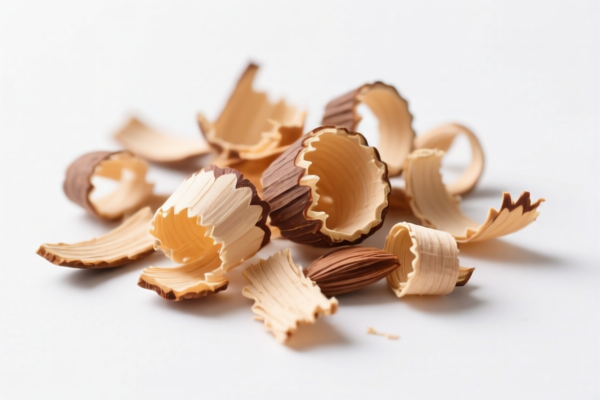
AI分析
🪵 Dried Wood Shavings (Wood Chips & Shavings for Desiccant/Industrial Use)
🌐 HS Code Reference & Customs Clearance Guide | 2024-2025 Tariff Structure | Professional Compliance Strategy
📌 I. Product Definition & Classification: What Exactly Are "Dried Wood Shavings"?
Dried wood shavings, particularly those used as desiccants (drying agents) or industrial fillers, are processed forms of natural cork or wood. In international trade, the classification depends heavily on the degree of processing and the specific botanical source (usually Cork Oak for desiccants, or general wood for industrial use).
Natural Cork Shavings (Cork Waste/Scrap):
Processed natural cork in the form of granules, powder, or shavings, often used for insulation, sealing, or as a natural desiccant. Classified under Heading 4501 (Cork, Unworked, Processed, and Articles of Cork) or 4504 (Articles of Cork).
General Wood Shavings/Chips:
Simple mechanical processing of wood into shavings or particles. Classified under Heading 4401 (Wood in Chips or Shavings).
⚠️ Critical Distinction:
- If the material is Natural Cork (from Quercus suber) processed into shavings/granules for use as a desiccant or insulator → It falls under Chapter 45.
- If it is General Wood (pine, oak, etc.) simply chipped or shredded → It might fall under Chapter 44, but often "Cork Shavings" for desiccants are specifically classified under 4504 or 4501 depending on whether they are considered "waste" or "processed articles."
- Note on Desiccants: Many customs authorities classify Cork-based desiccants under 4504.10 (Cork shavings, granules, powder) or 4501.90 (Other worked cork).
📦 II. HS Code Classification Details (Based on Provided Data)
| HS Code | Product Description | Key Characteristics | Processing Level |
|---|---|---|---|
4504.10.50.00 |
Natural Cork Shavings, Dried | Material: Natural Cork; Form: Shavings; Use: Desiccant/Insulation | ✅ Processed Article: Classified as "Other Articles of Cork" (Chapter 45) |
4501.90.40.00 |
Natural Cork Shavings, Granular/Crushed | Material: Natural Cork; Form: Broken/Granular; Use: Simple Processing | ✅ Simple Processing: Classified as "Other Worked Cork" (Heading 4501) |
4501.90.20.00 |
Natural Cork Shavings/Waste | Material: Natural Cork; Form: Shavings; Use: Classified as Waste/Scrap | ✅ Waste/Scrap: Classified as "Cork Waste" under Heading 4501 |
4504.90.00.00 |
Other Articles of Cork (Shavings) | Material: Cork; Form: Shavings; Use: General Cork Articles | ✅ Generic Article: Classified as "Other" under Chapter 45 |
🔍 Key Takeaway:
- All codes fall under Chapter 45 (Cork and Articles of Cork).
- The distinction lies in whether the shavings are considered "Worked Cork" (4501) or "Articles of Cork" (4504).
- Desiccant use often pushes classification toward 4504.10 (if formed into specific shapes/packets) or 4501.90 (if loose shavings).
💰 III. 2024-2025 Tariff Rate Breakdown (USA Import from China)
✅ Applicable Country: United States (US)
✅ Origin: China (CN)
✅ Effective Date: Ongoing (Section 301 + IEEPA provisions)
🎯 1. All Listed HS Codes (4504.10.50.00, 4501.90.40.00, 4501.90.20.00, 4504.90.00.00)
| Tariff Component | Rate | Legal Basis |
|---|---|---|
| Base Duty Rate | 0.0% | Standard MFN (Most Favored Nation) rate for Chapter 45 cork products |
| Section 301 Additional Duty | +25.0% | USITC Footnote 9903.88.01 (List 3/4A items) |
| IEEPA Section 1221 Duty | +10.0% | International Emergency Economic Powers Act (China-specific surcharge) |
| Total Effective Duty Rate | 35.0% | 0% + 25% + 10% |
| Calculation Basis | Ad Valorem | Based on CIF (Cost, Insurance, Freight) value |
| De Minimis Exemption | ❌ Not Eligible | Section 301 and IEEPA duties apply to ALL shipments, including de minimis (Section 321) |
| Legal Path | USITC:4504.10.50.00 → FOOTNOTE:9903.88.01 → IEEPA:9903.01.25 |
📌 Explanation:
- 0% Base Duty: Natural cork and cork articles enjoy low base tariffs globally.
- +25% Section 301: Applied to most Chinese-manufactured goods in Chapters 45 and 44 as part of the US-China trade war.
- +10% IEEPA (Section 1221): A separate surcharge specifically targeting Chinese imports under emergency economic powers.
- Total 35%: This is a high effective duty rate. Importers must budget for this cost regardless of shipment size.
🛠️ IV. Customs Clearance Operational Advice
✅ 1. Documentation Checklist (Mandatory)
| Document | Required | Purpose |
|---|---|---|
| Commercial Invoice | ✔️ | Must explicitly state "Natural Cork Shavings" or "Cork Desiccant," not just "Wood Chips" |
| Material Declaration | ✔️ | Confirm material is Natural Cork (not synthetic or general wood) to justify Chapter 45 |
| Product Specifications | ✔️ | Include particle size, moisture content (<10%), and intended use (desiccant/insulation) |
| Origin Certificate (CO) | ✔️ | Essential for proving Chinese origin (though it doesn't reduce duty here, it's required for compliance) |
| Fumigation Certificate | ❗ | If wood-based: Required for ISPM 15 compliance. If natural cork: Usually exempt, but check with forwarder |
| Packaging Declaration | ✔️ | Specify if packed in bags, boxes, or pallets |
✅ 2. Classification Strategy (Avoid Pitfalls)
| Scenario | Recommended HS Code | Risk if Misclassified |
|---|---|---|
| Loose Cork Shavings for Desiccant | 4501.90.40.00 or 4504.10.50.00 |
Misclassifying as "Wood" (Chapter 44) may lead to different duty rates and inspection delays |
| Cork Waste/Scrap | 4501.90.20.00 |
If declared as "Article," may be rejected; must prove it's waste/scrap |
| Cork in Packets/Forms | 4504.90.00.00 |
If formed into specific shapes (e.g., tiles, seals), use this code |
| General Wood Shavings | ❌ Not in List | If your product is NOT cork, it falls under Chapter 44 (e.g., 4401.21.00.00), which has different tariffs (likely still 25%+10%, but code differs) |
🔥 Golden Rule:
"Cork is Not Wood" – While both are plant-based, Cork (Chapter 45) and Wood (Chapter 44) are strictly separated in the Harmonized System. Misdeclaring cork as wood can lead to seizure or penalties.
✅ 3. Special Handling Notes
- Moisture Content: Ensure documentation states dried (moisture < 10%). Wet wood/cork may be classified differently or subject to phytosanitary restrictions.
- Pesticide Residue: Natural cork may require a non-wood packaging declaration if packaged in wood, to avoid ISPM 15 issues.
- Labeling: Clearly label packages as "Natural Cork Shavings – Desiccant" to avoid confusion with general wood chips.
🌍 V. Global Market Comparison (2024-2025)
| Country/Region | Recommended HS Code | Base Duty | Additional Duties (China) | Total Duty | Notes |
|---|---|---|---|---|---|
| 🇺🇸 USA | 4504.10.50.00 etc. |
0% | +25% (Sec 301) +10% (IEEPA) | 35% | High duty; no de minimis exemption |
| 🇨🇳 China | 4504.10.50.00 |
5-7% | None | ~7% | Import duty for foreign cork |
| 🇪🇺 EU | 4504.10.00 |
0% | None (GSP/FTA may apply) | 0% | Favorable for cork products; no China-specific tariffs |
| 🇬🇧 UK | 4504.10.00 |
0% | None | 0% | Post-Brexit tariffs similar to EU for cork |
| 🇨🇦 Canada | 4504.10.00 |
0% | None | 0% | No Section 301 equivalent; low duty |
📌 Conclusion:
- USA is the most expensive market for Chinese cork shavings due to 35% total duty.
- EU, UK, Canada offer 0% duty, making them more competitive for pricing.
- Consider supply chain diversification if targeting the US market to mitigate duty costs.
📌 VI. Common Errors & Pitfalls (Lessons Learned)
❌ Error 1: Declaring "Cork Shavings" as "Wood Chips" (Chapter 44)
👉 Consequence: Incorrect HS code, potential fine or delay for misdeclaration.
✅ Fix: Always use Chapter 45 for natural cork.
❌ Error 2: Assuming "De Minimis" exemption applies
👉 Consequence: Packages under $800 still incur 35% duty in the US.
✅ Fix: Budget for full duty on all shipments.
❌ Error 3: Not specifying "Dried" in documentation
👉 Consequence: Risk of phytosanitary inspection if moisture content is unclear.
✅ Fix: State "Moisture Content <10%" on invoice.
❌ Error 4: Using generic "Wood Shavings" on label
👉 Consequence: CBP may classify as general wood (Chapter 44), leading to different duty calculation and phytosanitary requirements.
✅ Fix: Label as "Natural Cork Shavings".
🎯 VII. Conclusion: Professional Clearance, Cost Optimization
🎯 Remember the Key Points:
🔹 "Cork is Chapter 45, Not Chapter 44!"
🔹 "USA = 35% Duty (0% + 25% + 10%)"
🔹 "No De Minimis Exemption for Sec 301/IEEPA!"
🔹 "Always Specify 'Natural Cork' and 'Dried' in Documentation!"
📌 Pro Tip:
If you are importing large volumes to the US, consider:
1. Pre-Ruling: Apply for an Advance Ruling from CBP to confirm HS code.
2. Supply Chain Shift: Source cork from non-China origins (e.g., Portugal, Spain) to avoid Section 301/IEEPA duties.
3. Bonded Warehouses: Use Foreign Trade Zones (FTZ) to defer duty payment until sale in the US.
📣 Immediate Action:
📞 Contact a licensed customs broker to verify HS code for your specific product form.
📄 Prepare detailed specs: Moisture content, particle size, origin certificate.
💰 Budget for 35% duty if shipping to the USA from China.
✨ Professional customs clearance starts with accurate classification!
💼 Your cost efficiency depends on precise HS code selection!
用户评价
关于 HS 编码归类
协调制度(HS)是由世界海关组织(WCO)制定的国际贸易商品分类标准。全球 200 多个国家采用 HS 系统作为海关关税、贸易统计和进出口监管的基础。
每个 HS 编码遵循以下层级结构:
- 章(2 位)——商品大类(例如:第 84 章:机器和机械设备)
- 品目(4 位)——章内的更具体分类
- 子目(6 位)——国际通用细分,所有 WCO 成员国统一使用
- 本国细分(8-10 位)——各国自行扩展的细分编码,如美国 HTSUS 10 位编码
正确的 HS 编码归类对于顺利通关、准确缴纳关税和遵守贸易法规至关重要。错误归类可能导致海关延误、多缴关税或罚款。
从CN进口到US时,适用的关税税率可能包括:
- 最惠国(MFN)税率——适用于 WTO 成员国的标准关税税率
- 普通税率——适用于无贸易协定国家
- 贸易救济关税——附加关税,如 301 条款(反倾销)、232 条款(国家安全)或反补贴税
本页内容仅供参考。如需正式归类,请咨询当地海关或持牌报关代理。