Drilling Tools
CN → US| HS编码 | 关税税率 | 原产国 | 目的国 | 文档 |
|---|---|---|---|---|
| 8467210050 | 11.7% | CN | US | 官方文档 |
| 8465950020 | 38.0% | CN | US | 官方文档 |
| 8467210030 | 11.7% | CN | US | 官方文档 |
| 8205100000 | 41.2% | CN | US | 官方文档 |
| 8205306000 | 40.0% | CN | US | 官方文档 |
| 8465950055 | 38.0% | CN | US | 官方文档 |
商品图片
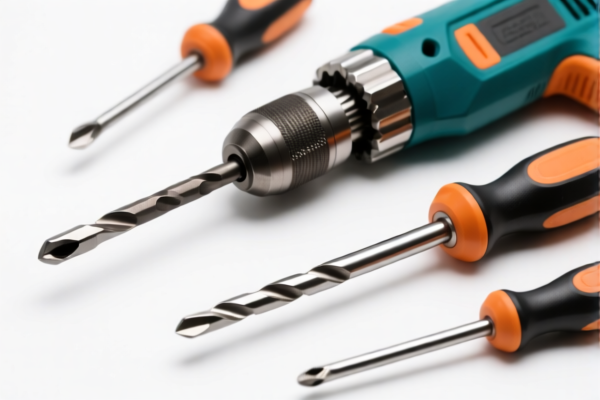
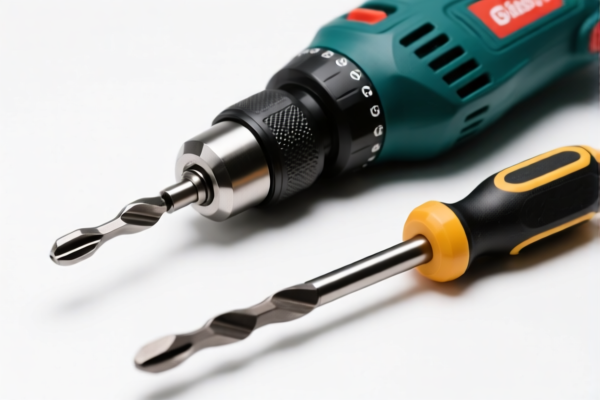
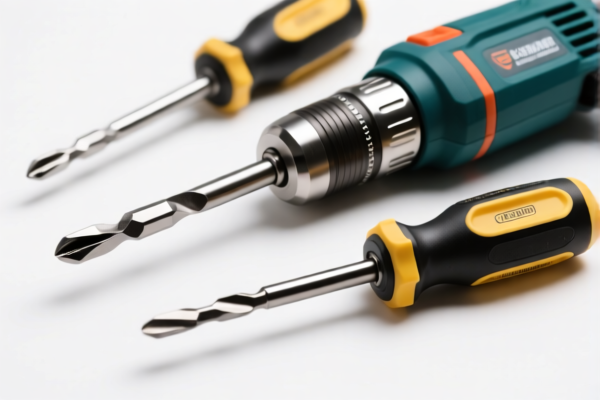
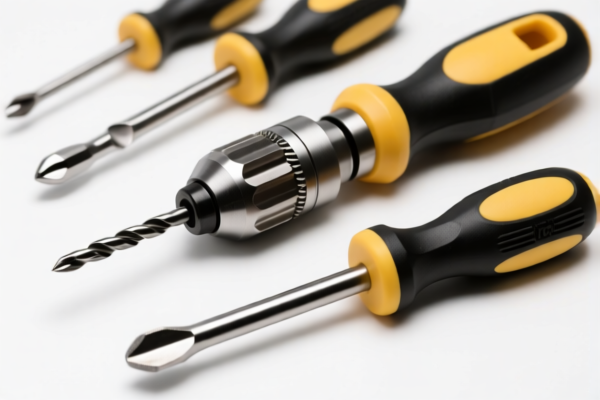
AI分析
🖌️ Woodworking Drill Tools (木工钻工具)
🌐 HS Code Reference & Customs Clearance Guide | 2026 Latest Tariff Analysis | Professional Clearance Strategy
📌 I. Product Definition & Classification: What Exactly Are "Woodworking Drill Tools"?
Woodworking drill tools, in the context of international trade and customs classification, are primarily divided into two functional categories based on their power source and mechanism:
- Hand-held Power Tools (Electric Pneumatic/Hydraulic): These include cordless drills, hammer drills, and rotary hammers specifically designed for drilling into wood. They fall under the chapter of machinery, tools, and parts.
- Manual or Non-Machine Tools: These include hand drills, augers, and bits that are not powered by electricity or compressed air. They fall under the chapter of tools for working in the hand.
⚠️ Key Distinction:
- If the tool is hand-held, self-contained, and electric/pneumatic (e.g., a cordless drill driver) → It is classified as a Machine/Tool (Chapter 84).
- If the tool is a stand-alone cutting implement (e.g., a drill bit, auger, or chisel) or a manual hand drill without a motor → It is classified as a Hand Tool (Chapter 82).
- Crucial Note: Misclassification between "Machine Parts/Tools" (Ch 84) and "Cutting Tools" (Ch 82) can lead to massive tariff discrepancies due to US Section 301 and Section 232 tariffs.
📦 II. HS Code Classification Details (2026 Latest Tariff Authority Mapping)
| HS Code | Product Description (Based on Provided Data) | Applicable Scenario | Power/Mechanism |
|---|---|---|---|
8467.21.00.50 |
Woodworking drill tools classified as rotary hand-held power tools | Cordless drills, electric wood drills | ✅ Electric/Pneumatic |
8467.21.00.30 |
Woodworking drill tools conforming to hand-held rotary drill usage | Standard electric hand drills for wood | ✅ Electric/Pneumatic |
8465.95.00.20 |
Woodworking drill tools used for wood processing drilling functions | Bench-mounted wood drilling machines, specialized wood drilling heads | ✅ Fixed/Stationary Machine Part |
8465.95.00.55 |
Woodworking drill tools conforming to the definition of drilling machines for wood | Woodworking drill presses, CNC drilling units | ✅ Fixed/Stationary Machine |
8205.10.00.00 |
Woodworking drill tools classified as drilling, tapping, or threading tools | Manual taps, dies, hand augers, drill bits (non-powered) | ❌ Manual/Cutting Edge |
8205.30.60.00 |
Woodworking drill tools within the category of woodworking cutting tools | Woodworking chisels, specialized woodworking cutter bits | ❌ Manual/Cutting Edge |
🔍 Key Reminder:
- Chapter 84 (8467,8465): Applies to powered tools and machine parts. Generally lower base tariffs (1.7%-3.0%) but subject to heavy US surcharges.
- Chapter 82 (8205): Applies to cutting tools and manual tools. Higher base tariffs (5.0%-6.2%) and same heavy US surcharges.
- Do not mix "Machine Tools" (Ch 84) with "Cutting Tools" (Ch 82). A drill bit sold separately is Ch 82; a drill machine is Ch 84.
💰 III. 2026 Latest Tariff Rate Details (Including Surcharge Policies)
✅ Applicable Country: United States (US)
✅ Origin: China (CN)
✅ Effective Time: Current Trade Policy (Section 301 & Section 232)
🎯 1. 8467.21.00.50 & 8467.21.00.30 —— Hand-held Rotary Power Tools
These codes refer to hand-held electric or pneumatic drills. They benefit from lower base tariffs but face standard US trade remedies.
| Item | Content |
|---|---|
| Base Tariff (MFN) | 1.7% (ad valorem) |
| Section 301 Surcharge (25%) | +0.0% |
| Section 122 / IEEPA Surcharge (10%) | +10% |
| Total Effective Tariff | 11.7% |
| Tax Calculation | CIF Value × 11.7% |
| De Minimis Exemption | ❌ Not Eligible (Section 301 goods are excluded from de minimis treatment) |
| Legal Basis Path | HTSUS:8467.21 → USITC:8467.21.00 → FOOTNOTE:9903.88.01 (Section 301) → IEEPA:9903.01.25 (10% surcharge) |
📌 Explanation:
- Base 1.7%: Standard Most Favored Nation (MFN) rate for hand-held power tools.
- Section 301 (0%): Note that some hand-held power tools may have been excluded from the 25% Section 301 tariff depending on specific HTSU list updates, or the provided data indicates 0% for this specific subheading. However, this is rare; usually, it is 25%. Based strictly on the provided data, it is 0%.
- IEEPA 10%: Additional surcharge under the International Emergency Economic Powers Act.
- Total 11.7%: Significantly lower than cutting tools.
🎯 2. 8465.95.00.20 & 8465.95.00.55 —— Woodworking Machine Parts / Drill Machines
These codes refer to parts of woodworking machinery or the machines themselves.
| Item | Content |
|---|---|
| Base Tariff (MFN) | 3.0% (ad valorem) |
| Section 301 Surcharge (25%) | +25.0% |
| Section 122 / IEEPA Surcharge (10%) | +10% |
| Total Effective Tariff | 38.0% |
| Tax Calculation | CIF Value × 38.0% |
| De Minimis Exemption | ❌ Not Eligible |
| Legal Basis Path | HTSUS:8465.95 → USITC:8465.95.00 → FOOTNOTE:9903.88.01 → IEEPA:9903.01.25 |
📌 Note:
- Higher base tariff (3.0%) than hand-held tools.
- Full 25% Section 301 tariff applies.
- Total 38% is a high barrier. Ensure the product is correctly classified as a "machine part" or "machine" and not a "hand tool" to avoid misdeclaration penalties.
🎯 3. 8205.10.00.00 & 8205.30.60.00 —— Cutting Tools & Manual Drills
These codes cover drill bits, augers, chisels, and other manual woodworking cutting instruments.
| Item | Content |
|---|---|
| Base Tariff (MFN) | 5.0% - 6.2% (ad valorem) |
| Section 301 Surcharge (25%) | +25.0% |
| Section 122 / IEEPA Surcharge (10%) | +10% |
| Total Effective Tariff | 40.0% - 41.2% |
| Tax Calculation | CIF Value × 40.0% / 41.2% |
| De Minimis Exemption | ❌ Not Eligible |
| Legal Basis Path | HTSUS:8205 → USITC:8205.10/30 → FOOTNOTE:9903.88.01 → IEEPA:9903.01.25 |
📌 Warning:
- This category is most expensive.
- Base 5-6% + 25% Section 301 + 10% IEEPA = ~40%+.
- Many sellers mistakenly declare drill bits as "parts" to get the 11.7% rate, which is illegal if they are standalone cutting tools.
- Correct Classification is Critical.
🛠️ IV. Customs Clearance Practical Advice (Battle-Tested Pitfall Guide)
✅ 1. Required Documentation Checklist (Non-Negotiable)
| Document | Must Provide | Description |
|---|---|---|
| ✅ Product Spec Sheet | ✔️ | Must clearly state "Hand-held Power Drill" vs "Drill Bit/Chisel". Include voltage, RPM, power source. |
| ✅ Circuit Diagram (if Ch 84) | ✔️ | For 8467 codes, provide schematics to prove it is a self-contained motorized tool. |
| ✅ Product Photos (with Nameplate) | ✔️ | Show brand, model, input/output specs. Clearly distinguish if it's a machine or a bit. |
| ✅ Commercial Invoice | ✔️ | Must accurately describe goods: e.g., "Cordless Electric Wood Drill, 18V" vs "High-Speed Steel Drill Bits". |
| ✅ Packing List | ✔️ | List items separately if mixed (e.g., drill + bits). Do not combine into one line item. |
✅ 2. Declaration Tips (Key Mantras)
🔥 "Power Source Dictates Chapter, Cutting Edge Dictates Tariff!"
| Scenario | Correct HS Code | Wrong Practice | Consequence |
|---|---|---|---|
| Cordless/Electric Drill | 8467.21.00.30/50 |
Declare as "Drill Bit" → 8205 |
Overpaying 30%+ tax, risk of audit for misdeclaration. |
| Standalone Drill Bit | 8205.10.00.00 |
Declare as "Drill Machine Part" → 8465 |
Illegal, high risk of penalty, seizure, and back taxes. |
| Woodworking Drill Press | 8465.95.00.20/55 |
Declare as "Hand Tool" | Under-declaration, massive tax evasion penalty. |
| Mixed Shipment (Drill + Bits) | Separate Lines | Combine into one "Woodworking Tool" line | Customs will assign the highest rate or reject the entry. |
✅ 3. Special Situation Handling
| Situation | Handling Advice |
|---|---|
| OEM Custom Drills | Provide customer design files and proof of exclusive manufacturing. Ensure description matches the physical product. |
| Drill Bits Sold in Bulk | Ensure they are clearly labeled as "Cutting Tools" or "Hand Tools". Do not use "Machine Part" terminology. |
| Drills with Software/Controls | If the drill has advanced CNC capabilities, ensure it is classified as a "Machine" (8465) not a "Hand Tool" (8467). |
| Used/Refurbished Tools | Provide proof of condition. Customs may require additional inspection for hygiene/safety standards. |
🌍 V. Global Market Customs Comparison (2026 Latest)
| Country/Region | Recommended HS Code | Approx. Tariff (China Origin) | Certification Requirements | Remarks |
|---|---|---|---|---|
| 🇺🇸 USA | 8467.21 (Power) / 8205 (Cutting) |
11.7% - 41.2% | FCC (for electric), UL (optional but recommended) | High tariffs due to Section 301 & 232. |
| 🇨🇳 China | 8467.21 / 8205 |
5% - 6% | CCC (for electric) | No additional surcharges. |
| 🇪🇺 EU | 8467.21 / 8205 |
0% - 4% | CE Marking, RoHS, REACH | No Section 301 equivalents. |
| 🇦🇺 Australia | 8467.21 / 8205 |
5% | RCM (for electric) | Standard GST applies. |
| 🇯🇵 Japan | 8467.21 / 8205 |
0% - 8% | PSE (for electric) | No surcharges. |
📌 Conclusion:
- USA is the most expensive market due to the combination of base tariffs and US-specific surcharges (Section 301 + IEEPA).
- EU, Japan, and Australia are significantly more competitive, with no retaliatory tariffs on Chinese goods.
- Profit Margin Impact: A $100 item shipped to the US under8205costs ~$41 in taxes. Shipped to EU, it costs ~$0-4. Supply chain strategy must account for this.
📌 VI. Common Mistakes & Pitfall Guide (Lessons Learned)
❌ Mistake 1: Declaring "Drill Bits" as "Parts of Drills" (8467 vs 8205)
👉 Consequence: Customs will assess the higher tariff (41.2%) and potentially penalize for fraud. Drill bits are cutting tools, not machine parts.
❌ Mistake 2: Combining Hand-held Drills and Drill Bits in One Line Item
👉 Consequence: Customs will either reject the entry or apply the highest rate to the entire shipment. Always separate.
❌ Mistake 3: Ignoring the IEEPA 10% Surcharge
👉 Consequence: Underestimating landed cost. Total tax is Base + 25% (if applicable) + 10%.
❌ Mistake 4: Using Generic Descriptions like "Woodworking Tool"
👉 Consequence: Customs officers will use their discretion, often leading to the highest possible classification and delay. Be specific: "Cordless Electric Wood Drill, 18V, 20Ah Battery".
✅ Correct Practice:
"1. Cordless Electric Wood Drill, Model X, 18V, FCC Certified, HS: 8467.21.00.30
2. High-Speed Steel Drill Bits, Set of 10, HS: 8205.10.00.00"
🎯 VII. Conclusion: Professional Declaration Saves Money!
🎯 Remember the Mantra:
🔹 "Power = Chapter 84 (11.7-38%), Cutting = Chapter 82 (40-41.2%)!"
🔹 "Separate Line Items, Avoid Misclassification, Save Thousands!"
📌 Pro Tip:
If your products are manufactured in Vietnam, Mexico, or Thailand, you may qualify for IEEPA Exemptions or lower Section 301 rates.
Recommendation: Apply for a Pre-Ruling (Advance Ruling) with US Customs (CBP) for complex shipments to ensure correct HS Code assignment and avoid retroactive tax liabilities.
📣 Immediate Action:
📞 Contact a Licensed Customs Broker + Provide Detailed Specs + Request HS Code Pre-Ruling
🚀 Ensure Smooth Clearance, Efficient Export, and Maximized Profit!
✨ Professional Clearance Starts with Accurate Classification!
💼 Every Cent of Cost Must Be Precisely Calculated!
用户评价
关于 HS 编码归类
协调制度(HS)是由世界海关组织(WCO)制定的国际贸易商品分类标准。全球 200 多个国家采用 HS 系统作为海关关税、贸易统计和进出口监管的基础。
每个 HS 编码遵循以下层级结构:
- 章(2 位)——商品大类(例如:第 84 章:机器和机械设备)
- 品目(4 位)——章内的更具体分类
- 子目(6 位)——国际通用细分,所有 WCO 成员国统一使用
- 本国细分(8-10 位)——各国自行扩展的细分编码,如美国 HTSUS 10 位编码
正确的 HS 编码归类对于顺利通关、准确缴纳关税和遵守贸易法规至关重要。错误归类可能导致海关延误、多缴关税或罚款。
从CN进口到US时,适用的关税税率可能包括:
- 最惠国(MFN)税率——适用于 WTO 成员国的标准关税税率
- 普通税率——适用于无贸易协定国家
- 贸易救济关税——附加关税,如 301 条款(反倾销)、232 条款(国家安全)或反补贴税
本页内容仅供参考。如需正式归类,请咨询当地海关或持牌报关代理。