Dry Buffalo Leather for Luggage
CN → US商品图片
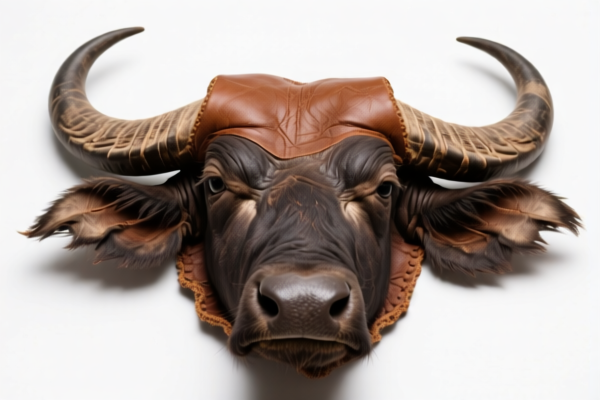
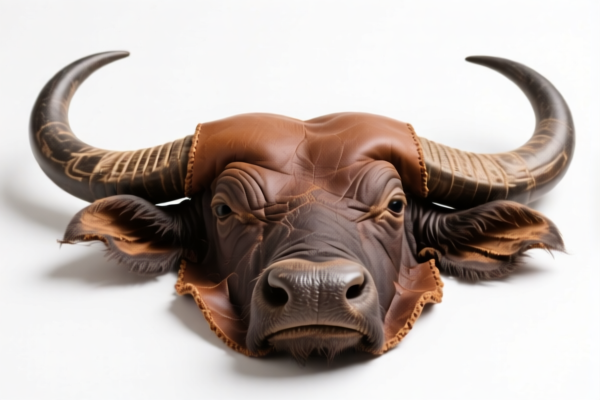
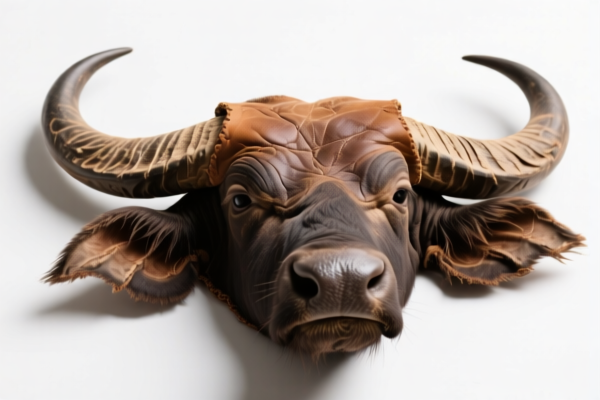

AI分析
🐃 Dry Buffalo Leather for Luggage
🌐 HS Code Reference & Customs Clearance Guide | 2026 Latest Tariff Full Analysis | Professional Transit Strategy
📌 I. Product Definition & Classification: Do You Really Understand “Buffalo Leather” for Luggage?
Dry Buffalo Leather is a raw material derived from bovine animals, specifically buffalo. In international trade, it is classified based on its state of processing and intended use. For luggage manufacturing, it falls under the category of leather of bovine animals, not further worked than dry (excluding leather for footwear or saddlery).
⚠️ Key Distinction Point:
- If the leather is dry, uncrust, and not tanned further than specified in Chapter 41 (excluding footwear/saddlery) → Classify under 4104.20.
- If the leather is finished, dyed, or processed specifically for luggage articles and does not fit other specific leather categories → Classify under 4114.90.
📦 II. HS Code Classification Details (2026 Latest Tariff Authoritative Comparison)
| HS Code | Product Description | Applicable Scenario | Processing State |
|---|---|---|---|
4104.20 |
Dry buffalo leather, suitable for use in luggage, classified under leather of bovine animals, not further worked than dry, excluding leather for footwear or saddlery. | Raw material for luggage, bags, cases; not further worked than dry. | ✅ Dry, Not Further Worked |
4114.90 |
Other leather (including dry buffalo leather) not specified elsewhere, intended for use in luggage or similar articles, falling under the category of leather for manufacturing goods like bags and cases. | Leather for manufacturing goods like bags and cases; other leather not specified elsewhere. | ✅ Other/Unspecified |
🔍 Important Reminder:
-4104.20is for raw/dry buffalo leather that is not further worked than dry and excluded from footwear/saddlery use.
-4114.90is a catch-all category for other leather (including dry buffalo leather) not specified elsewhere, particularly for luggage or similar articles.
- Do not mix up with leather for footwear (Chapter 64) or saddlery (Chapter 42 specific sections).
💰 III. 2026 Latest Tariff Rate Details (Including Surcharges & Policy Add-ons)
✅ Applicable Country: United States (US)
✅ Origin: China (CN)
✅ Effective Date: From November 10, 2025 (including subsequent imports)
🎯 1. 4104.20 —— Dry Buffalo Leather (Not Further Worked Than Dry)
| Item | Content |
|---|---|
| Base Tax Rate | Error (Failed to retrieve tax information) |
| Total Tax | Error |
| Tax Detail | Failed to retrieve tax information |
| Applicable Legal Path | N/A (Data Error) |
📌 Explanation:
- Note: Tax information for4104.20could not be retrieved from the current database.
- Risk: Due to missing tax data, importers must verify with local customs or use official tariff databases (e.g., USITC HTS) before shipping.
- General Trend: Raw leather often has lower base tariffs, but Section 301 tariffs may apply depending on exact processing.
🎯 2. 4114.90 —— Other Leather for Luggage (Not Specified Elsewhere)
| Item | Content |
|---|---|
| Base Tax Rate | Error (Failed to retrieve tax information) |
| Total Tax | Error |
| Tax Detail | Failed to retrieve tax information |
| Applicable Legal Path | N/A (Data Error) |
📌 Explanation:
- Note: Tax information for4114.90could not be retrieved from the current database.
- Risk: This is a residual category. Tariffs may vary significantly. Verification is critical.
- General Trend: Finished leather for luggage may attract higher tariffs than raw leather.
🛠️ IV. Customs Clearance Practical Advice (Practical Pitfall Avoidance Guide)
✅ 1. Preparation Checklist (All Documents Required)
| Document | Must Provide | Description |
|---|---|---|
| ✅ Product Specification Sheet | ✔️ | Includes type of leather, thickness, finish, country of origin |
| ✅ Processing Description | ✔️ | Clearly state "Dry, not further worked than dry" or "Other leather for luggage" |
| ✅ Commercial Invoice | ✔️ | Accurate HS Code (4104.20 or 4114.90), CIF value, product description |
| ✅ Packing List | ✔️ | Weight, dimensions, quantity, packaging type |
| ✅ Certificate of Origin | ✔️ | If applicable for preferential tariffs |
| ✅ Lab Test Report | ✔️ | Optional: Confirm leather type (bovine/buffalo) if disputed |
✅ 2. Declaration Tips (Key Mnemonics)
🔥 “Raw Dry Go to 4104, Other Luggage Go to 4114, Don’t Mix Footwear!”
| Situation | Correct Declaration | Wrong Practice |
|---|---|---|
| Dry buffalo leather, not tanned further, for luggage | 4104.20 |
Misdeclare as 4104.10 (Tanned) → Higher tariff/penalty |
| Other leather for luggage, not specified elsewhere | 4114.90 |
Misdeclare as 4104.20 if further worked → Classification error |
| Leather for footwear | Not Eligible for 4104.20 |
Misdeclare luggage leather as footwear leather → Customs hold |
| Leather for saddlery | Not Eligible for 4104.20 |
Misdeclare → Classification error |
✅ 3. Special Cases Handling
| Situation | Handling Advice |
|---|---|
| Mixed Shipments | Separate 4104.20 and 4114.90 in invoice; do not combine |
| Ambiguous Processing | Provide detailed processing description; if "not further worked than dry," use 4104.20 |
| Customs Inquiry | Be ready to provide samples or photos proving leather type and processing state |
| Origin Verification | Ensure Certificate of Origin matches; non-China origins may have different tariffs |
🌍 V. Global Major Market Clearance Comparison (2026 Latest)
| Country/Region | Recommended HS Code | Tariff | Certification Requirements | Remarks |
|---|---|---|---|---|
| 🇺🇸 USA | 4104.20 / 4114.90 |
Error (Data Missing) | None Specific | Verify with USITC |
| 🇨🇳 China | 4104.20 / 4114.90 |
~5-10% | None | Standard import tariff |
| 🇪🇺 EU | 4104.20 / 4114.90 |
~5-7% | REACH Compliance | No additional surcharges |
| 🇦🇺 Australia | 4104.20 / 4114.90 |
~5% | None | Standard FTA if applicable |
| 🇯🇵 Japan | 4104.20 / 4114.90 |
~0-3% | None | Low tariff region |
📌 Conclusion:
- Tax data for US imports is currently unavailable in the database.
- China, EU, and Australia have relatively standard, predictable tariffs for leather goods.
- US Market Requires Verification due to missing data; potential for high Section 301 tariffs.
📌 VI. Common Mistakes & Pitfall Avoidance (Blood Lessons)
❌ Mistake 1: Declaring tanned leather as dry buffalo leather (4104.20)
👉 Consequence: Customs reclassifies to 4104.10 or higher → Penalty + Back Taxes!
❌ Mistake 2: Using 4114.90 for raw dry leather that fits 4104.20
👉 Consequence: May trigger unnecessary scrutiny; if 4104.20 is correct, misclassification may lead to rate discrepancies.
❌ Mistake 3: Ignoring leather for footwear/saddlery exclusions
👉 Consequence: If leather is intended for footwear, it cannot be declared under 4104.20 → Seizure/Rejection.
❌ Mistake 4: Assuming zero tax without verification
👉 Consequence: Error in tax data → Unexpected High Tariffs → Cash Flow Crisis.
✅ Correct Practice:
"Dry Buffalo Leather, Bovine, Not Further Worked Than Dry, For Luggage Manufacturing, HS Code 4104.20, CIF Value $X, Origin China"
🎯 VII. Conclusion: Professional Declaration, Save Time, Reduce Costs!
🎯 Remember the Mantra:
🔹 “Raw Dry: 4104.20, Other Luggage: 4114.90, Exclude Footwear & Saddlery!”
🔹 “Tax Data Error? Verify Before Ship! Don’t Guess, Just Check!”
📌 Pro Tip:
- Since tax information is currently unavailable (Error) for both HS codes, contact your customs broker or check the USITC HTS Online Database for the most current 2026 rates.
- Request an Advance Ruling from US Customs if unsure about classification to avoid delays.
- Keep detailed records of leather processing to prove "not further worked than dry" status.
📣 Immediate Action:
📞 Contact Professional Customs Broker + Verify HS Code & Tax + Prepare Complete Documentation
🚀 Ensure Smooth Customs Clearance, Avoid Delays, Protect Your Profit Margin!
✨ Professional Clearance Starts with Accurate Classification!
💼 Every Cent Saved is a Cent Earned!
用户评价
关于 HS 编码归类
协调制度(HS)是由世界海关组织(WCO)制定的国际贸易商品分类标准。全球 200 多个国家采用 HS 系统作为海关关税、贸易统计和进出口监管的基础。
每个 HS 编码遵循以下层级结构:
- 章(2 位)——商品大类(例如:第 84 章:机器和机械设备)
- 品目(4 位)——章内的更具体分类
- 子目(6 位)——国际通用细分,所有 WCO 成员国统一使用
- 本国细分(8-10 位)——各国自行扩展的细分编码,如美国 HTSUS 10 位编码
正确的 HS 编码归类对于顺利通关、准确缴纳关税和遵守贸易法规至关重要。错误归类可能导致海关延误、多缴关税或罚款。
从CN进口到US时,适用的关税税率可能包括:
- 最惠国(MFN)税率——适用于 WTO 成员国的标准关税税率
- 普通税率——适用于无贸易协定国家
- 贸易救济关税——附加关税,如 301 条款(反倾销)、232 条款(国家安全)或反补贴税
本页内容仅供参考。如需正式归类,请咨询当地海关或持牌报关代理。