Dry Cowhide for Footwear
CN → US| HS编码 | 关税税率 | 原产国 | 目的国 | 文档 |
|---|---|---|---|---|
| 4107111020 | 35.0% | CN | US | 官方文档 |
| 4107121020 | 35.0% | CN | US | 官方文档 |
商品图片
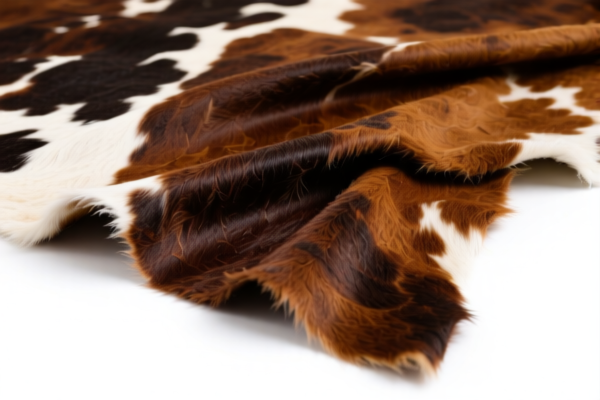
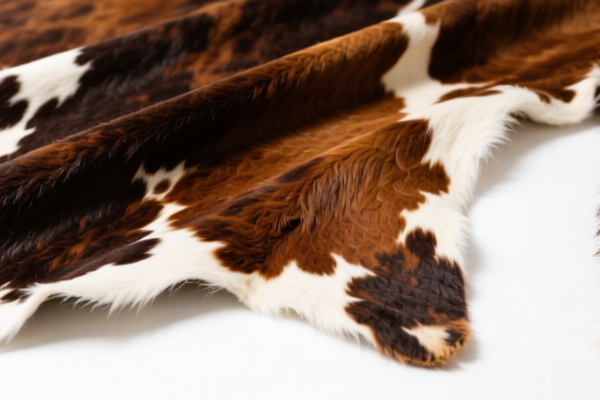
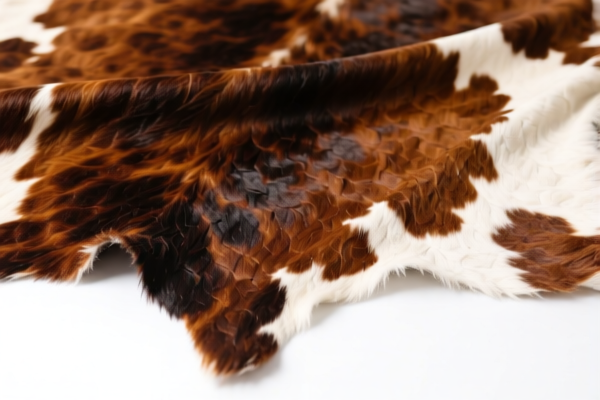
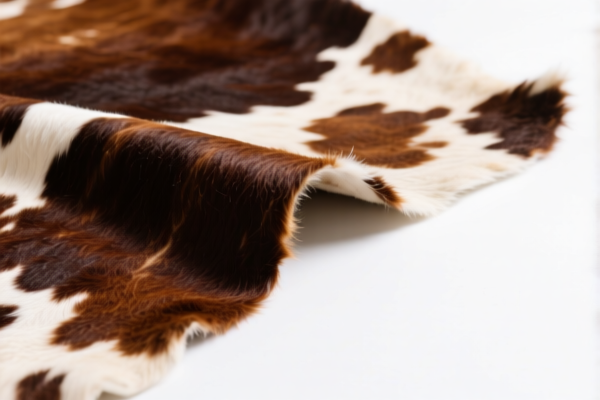
AI分析
🥿 Dry Cowhide for Footwear (Bovine Leather)
🌐 HS Code Reference & Customs Clearance Guide | 2026 Latest Tariff Analysis | Professional Clearance Strategy
📌 I. Product Definition & Classification: Do You Really Understand "Dry Cowhide"?
Dry cowhide for footwear refers to leather obtained from bovine animals (including buffalo) that has been tanned or crust-processed but is not further prepared (e.g., no finished surface coating for specific end-use like upholstery). In international trade, it is primarily classified under Chapter 41.
The critical distinction lies in whether the leather is "Whole Hide/Skin" (full grain, unsplit) or "Split Leather" (grain splits). Additionally, the unit surface area (≤ 28 sq. ft. / 2.6 m²) triggers specific sub-headings.
⚠️ Key Distinction Point:
- If it is full-grain, unsplit leather (upper leather) → Classify under 4107.11
- If it is split leather (grain splits, lining leather) → Classify under 4107.12
- Note: Heading 4114 (coated leather) is excluded here as the input is "dry/crust" leather.
📦 II. HS Code Classification Details (2026 Latest Tariff Authority Cross-Reference)
| HS Code | Product Description | Application Scenario | Split or Unsplit? |
|---|---|---|---|
4107.11.10.20 |
Leather, bovine, without hair, whole hides/skins, full grain, unsplit, ≤28 sq. ft.: Upper leather | High-quality upper leather for shoes, boots, sandals | ✅ Unsplit (Full Grain) |
4107.12.10.20 |
Leather, bovine, without hair, whole hides/skins, grain splits, ≤28 sq. ft.: Lining leather | Lower-cost lining materials, inner layers of footwear | ✅ Split (Grain Split) |
🔍 Important Reminder:
- "Upper Leather" (4107.11.10.20) is typically thicker, stronger, and used for the visible outer part of footwear.
- "Lining Leather" (4107.12.10.20) is split from the lower layers of the hide, softer, and used for interior lining.
- Both codes apply to hides/skins ≤ 28 square feet (2.6 m²). Larger hides may fall under different sub-headings (not included in current data).
💰 III. 2026 Latest Tariff Rate Details (Including Additional Duties & Policy Surcharges)
✅ Applicable Country: USA (US)
✅ Country of Origin: China (CN) [Assumed based on context of additional tariffs]
✅ Effective Time: Current US Trade Policy (Section 301)
🎯 1. 4107.11.10.20 — Bovine Leather, Full Grain, Unsplit, ≤28 sq. ft.
| Item | Content |
|---|---|
| Base Tariff Rate | 0.0% (ad valorem) |
| Additional Tariff (Section 301) | +25.0% |
| Total Tariff Rate | 25.0% |
| Tax Calculation | CIF Value × 25% |
| De Minimis Eligibility | ❌ Not Eligible (Deny de minimis for Section 301 goods) |
| Legal Basis Path | USITC:4107.11.10.20 → FOOTNOTE:301 |
📌 Explanation:
- Although the Base Tariff is 0%, the 25% Section 301 Additional Duty applies to Chinese-origin bovine leather.
- This is a high-cost item for importers into the US market.
- No preferential treatment under current trade wars.
🎯 2. 4107.12.10.20 — Bovine Leather, Grain Split, ≤28 sq. ft.
| Item | Content |
|---|---|
| Base Tariff Rate | 0.0% (ad valorem) |
| Additional Tariff (Section 301) | +25.0% |
| Total Tariff Rate | 25.0% |
| Tax Calculation | CIF Value × 25% |
| De Minimis Eligibility | ❌ Not Eligible (Deny de minimis for Section 301 goods) |
| Legal Basis Path | USITC:4107.12.10.20 → FOOTNOTE:301 |
📌 Note:
- Same tariff rate as full-grain leather.
- Even though "split leather" is lower quality, the Section 301 duty applies uniformly to bovine leather imports from China.
- Do not assume lower quality means lower duty; the 25% surcharge is mandatory.
🛠️ IV. Customs Clearance Practical Advice (Real-World Pitfall Avoidance)
✅ 1. Required Documentation Checklist (None Can Be Missing)
| Document | Mandatory? | Explanation |
|---|---|---|
| ✅ Commercial Invoice | ✔️ | Must clearly state: "Bovine Leather, Dry/Crust, Unsplit/Split, ≤28 sq. ft." |
| ✅ Packing List | ✔️ | Detail weight, volume, and number of hides/skins |
| ✅ Bill of Lading/Air Waybill | ✔️ | Standard shipping document |
| ✅ Certificate of Origin (CO) | ✔️ | Prove origin as China (subject to 25% duty) |
| ✅ Product Specification Sheet | ✔️ | Include tanning process, surface area, split status |
| ✅ Photos of Goods | ✔️ | Show texture, grain, and labeling to prove "dry/crust" state |
✅ 2. Declaration Tips (Key Mnemonics)
🔥 "Split or Unsplit? Surface Area Matters! Declare 25% Duty!"
| Scenario | Correct Declaration | Incorrect Action |
|---|---|---|
| Full-grain upper leather | 4107.11.10.20 |
Misdeclare as split → Risk of penalty |
| Split lining leather | 4107.12.10.20 |
Misdeclare as finished leather (4114) → Wrong duty |
| Hides > 28 sq. ft. | Different HS Code | Use 4107.11/12 → Audit Risk |
| Wet Blue Crust (Untanned) | Chapter 41 Exclusion | Misdeclare as 4107 → Customs rejection |
✅ 3. Special Case Handling
| Situation | Handling Advice |
|---|---|
| Mixed Hides (Different Sizes) | Declare largest size used for classification if uniformity is not guaranteed; otherwise, split shipments. |
| Pre-Finished Leather | If already dyed/coated for footwear, may fall under 4114 (not included in current data, but often higher duty). |
| Buffalo vs. Cow | Both are "Bovine"; treat identically under 4107.11/12. |
| Re-export from Third Country | Rule of Origin applies: If processed significantly in Vietnam/Mexico, may avoid 25% duty (verify with CBP). |
🌍 V. Global Market Comparison (2026 Latest)
| Country/Region | Recommended HS Code | Tariff (China Origin) | Certification Requirement | Remarks |
|---|---|---|---|---|
| 🇺🇸 USA | 4107.11.10.20 / 4107.12.10.20 |
25% | None specific for leather | High duty due to Section 301 |
| 🇨🇳 China | 4107.11.10.20 / 4107.12.10.20 |
0%~8%* | N/A | Export duty may apply |
| 🇪🇺 EU | 4107.11 / 4107.12 |
4.7% | REACH Compliance | No Section 301 equivalent |
| 🇬🇧 UK | 4107.11 / 4107.12 |
4.7% | REACH | Post-Brexit alignment |
| 🇦🇺 Australia | 4107.11 / 4107.12 |
5% | None | Low duty market |
📌 Conclusion:
- The US is the most expensive market for Chinese cowhide due to the 25% additional tariff.
- EU and Australia offer more competitive rates (~4.7%–5%).
- Consider supply chain relocation (e.g., Vietnam, India) to avoid US Section 301 duties if exporting to the US.
📌 VI. Common Errors & Pitfall Guide (Lessons Learned)
❌ Error 1: Declaring "Finished Leather" when it is "Dry/Crust"
👉 Consequence: Misclassification under 4114 → Penalty + Back Taxes
❌ Error 2: Ignoring Surface Area (>28 sq. ft.)
👉 Consequence: Wrong HS Code (e.g., 4107.11 vs. 4107.19) → Customs Hold
❌ Error 3: Not distinguishing "Split" vs. "Unsplit"
👉 Consequence: Incorrect duty assessment → Audits & Fines
❌ Error 4: Assuming "Buffalo" is different from "Cow"
👉 Consequence: No legal distinction; both are Bovine → Wasted Time
✅ Correct Practice:
"Dry Cowhide, Full Grain, Unsplit, 25 Sq. Ft., Tanned, No Hair, For Footwear Upper, Chinese Origin"
🎯 VII. Conclusion: Professional Declaration Saves Money!
🎯 Remember This Mnemonic:
🔹 "Unsplit Upper = 4107.11 | Split Lining = 4107.12 | Area ≤28 Sq. Ft. | US Duty 25%!"
🔹 "HS Code Determines Duty, 25% Difference is Huge, Declare Accurately!"
📌 Pro Tip:
If you are importing into the US, consider pre-ruling with CBP to confirm classification.
For non-US markets, EU and Australia offer lower tariffs (~5%).
Diversify sourcing to avoid Section 301 impact.
📣 Immediate Action:
📞 Contact a licensed customs broker + Provide product specs + Apply for Advance Ruling
🚀 Ensure your leather shipments clear customs smoothly, reduce costs, and boost profits!
✨ Professional clearance starts with accurate classification!
💼 Every dollar saved in duty is pure profit!
用户评价
关于 HS 编码归类
协调制度(HS)是由世界海关组织(WCO)制定的国际贸易商品分类标准。全球 200 多个国家采用 HS 系统作为海关关税、贸易统计和进出口监管的基础。
每个 HS 编码遵循以下层级结构:
- 章(2 位)——商品大类(例如:第 84 章:机器和机械设备)
- 品目(4 位)——章内的更具体分类
- 子目(6 位)——国际通用细分,所有 WCO 成员国统一使用
- 本国细分(8-10 位)——各国自行扩展的细分编码,如美国 HTSUS 10 位编码
正确的 HS 编码归类对于顺利通关、准确缴纳关税和遵守贸易法规至关重要。错误归类可能导致海关延误、多缴关税或罚款。
从CN进口到US时,适用的关税税率可能包括:
- 最惠国(MFN)税率——适用于 WTO 成员国的标准关税税率
- 普通税率——适用于无贸易协定国家
- 贸易救济关税——附加关税,如 301 条款(反倾销)、232 条款(国家安全)或反补贴税
本页内容仅供参考。如需正式归类,请咨询当地海关或持牌报关代理。