Dust Mask
CN → US| HS编码 | 关税税率 | 原产国 | 目的国 | 文档 |
|---|---|---|---|---|
| 4016990500 | 20.9% | CN | US | 官方文档 |
| 5603110070 | 35.0% | CN | US | 官方文档 |
| 4016996050 | 37.5% | CN | US | 官方文档 |
| 5603120070 | 35.0% | CN | US | 官方文档 |
商品图片

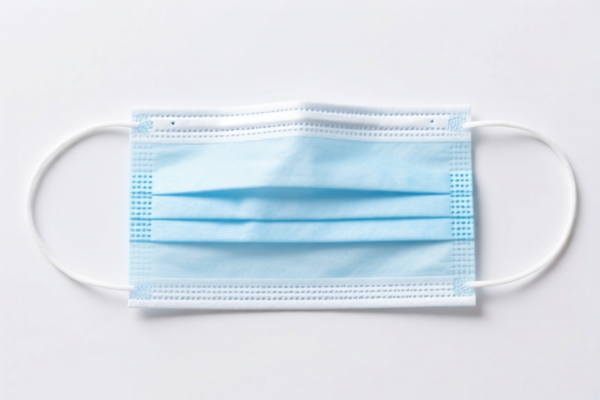


AI分析
😷 Dust Mask / Respiratory Covers (Protective Coverings)
🌐 HS Code Reference & Customs Clearance Guide | 2026 Latest Tariff Analysis | Professional Entry Strategies
📌 Part 1: Product Definition & Classification Logic: What Exactly is a "Dust Mask"?
A "dust mask" is a broad term in international trade. It generally refers to protective equipment designed to prevent the inhalation of dust, particulates, or other airborne contaminants. However, the material composition and form factor determine the HS Code, leading to drastically different tax liabilities.
In customs declarations, these items are typically categorized into two main groups: 1. Rubber/Plastic Elastomeric Masks: Made from silicone, rubber, or hard plastics (often reusable or disposable molded types). 2. Non-Woven Fabric Masks: Made from melt-blown fabric, polypropylene, or textile layers (often disposable folding types or industrial protective covers).
⚠️ Key Distinction Point:
- If the item is made of rubber, latex, or thermoplastic elastomers → It falls under Chapter 40 (Rubber & Articles Thereof).
- If the item is made of non-woven fabrics, textiles, or fused fibers → It falls under Chapter 56 (Wadding, Felt & Nonwovens; Special Yarns; Twine & Cordage & Articles Thereof).
📦 Part 2: HS Code Classification Details (Based on Provided Data)
The following table reflects the four specific classifications derived from the provided data for "Dust Masks," along with their summary logic and total tax rates.
| HS Code | Product Description & Logic Summary | Material/Form Factor | Total Tax Rate* |
|---|---|---|---|
| 4016.99.05.00 | Rubber/Plastic Household/Other Items: Classified as other vulcanized rubber/plastic articles, typically fitting household or general protective use cases. | Rubber or Plastic (Vulcanized Elastomer) | 20.9% |
| 5603.11.00.70 | Non-Woven Protective Covering: Classified as a non-woven product application, serving as a protective covering/component for parts or general protection. | Non-Woven Fabric / Fibers | 35.0% |
| 4016.99.60.50 | Protective Article (Fallback Category): Classified as a protective article made of rubber/plastic, falling under general "other items" in the rubber chapter. | Rubber or Plastic (General Protective) | 37.5% |
| 5603.12.00.70 | Non-Woven Industrial/Retail Covering: Classified as industrial or retail protective covering made from non-woven or textile-like materials. | Non-Woven Fabric / Textile-like Material | 35.0% |
* Note on Tax Rates: These totals include Base Tariff, Section 301 Additional Tariffs, and Section 122 Tariffs (as per provided data).
💰 Part 3: Detailed Tariff Rate Analysis (Including Surcharges)
✅ Context: Based on provided data, the tax structure includes Base Tariffs, Additional Surcharges (likely Section 301), and Section 122 Tariffs (likely targeting specific Chinese origins or sectors).
✅ Applicable Country: United States (US)
✅ Origin: China (CN) (Implied by the specific 122条款/Section 122 mention in data)
🎯 1. 4016.99.05.00 — Rubber/Plastic Dust Mask (Household/General)
| Item | Content |
|---|---|
| Base Tariff | 3.4% |
| Additional Surcharge | +7.5% (Section 301 or similar) |
| Section 122 Tariff | +10% (Specific import duty) |
| Total Tax Rate | 20.9% |
| Tax Calculation | CIF Value × 20.9% |
| Legal Basis | Rubber Chapter (40) → Other Vulcanized Rubber Articles |
📌 Explanation:
- This is the most cost-effective classification among the rubber/plastic options.
- Suitable for silicone respirators, rubber face shields, or molded plastic dust masks.
- Critical: Must be clearly identified as "Vulcanized Rubber" or "Thermoplastic" in the description.
🎯 2. 5603.11.00.70 — Non-Woven Protective Cover (Light Weight)
| Item | Content |
|---|---|
| Base Tariff | 0.0% |
| Additional Surcharge | +25.0% |
| Section 122 Tariff | +10% |
| Total Tax Rate | 35.0% |
| Tax Calculation | CIF Value × 35.0% |
| Legal Basis | Non-Wovens Chapter (56) → Gsm < 70g/m² (Typical for light masks) |
📌 Explanation:
- Despite a 0% base tariff, the high additional surcharge (25%) makes the total rate significantly higher than rubber masks.
- Suitable for disposable surgical-style dust masks, lightweight polypropylene masks, or non-woven face coverings.
- Risk: High sensitivity to origin verification; strict "de minimis" exclusions may apply.
🎯 3. 5603.12.00.70 — Non-Woven Industrial/Protective Cover
| Item | Content |
|---|---|
| Base Tariff | 0.0% |
| Additional Surcharge | +25.0% |
| Section 122 Tariff | +10% |
| Total Tax Rate | 35.0% |
| Tax Calculation | CIF Value × 35.0% |
| Legal Basis | Non-Wovens Chapter (56) → Gsm 70-150g/m² (Typical for industrial masks) |
📌 Explanation:
- Identical tax structure to5603.11.00.70.
- Suitable for industrial dust masks, heavier-duty non-woven face shields, or multi-layer protective covers.
- Distinction: The difference between5603.11and5603.12often lies in the weight (GSM) of the non-woven fabric.
🎯 4. 4016.99.60.50 — Rubber/Plastic Protective Article (General Fallback)
| Item | Content |
|---|---|
| Base Tariff | 2.5% |
| Additional Surcharge | +25.0% |
| Section 122 Tariff | +10% |
| Total Tax Rate | 37.5% |
| Tax Calculation | CIF Value × 37.5% |
| Legal Basis | Rubber Chapter (40) → Other Rubber Articles (Catch-all) |
📌 Explanation:
- This is the highest tax rate in the provided data.
- Use this code only if the specific rubber/plastic item does not fit into4016.99.05.00.
- Risk: Customs may view this as a "catch-all" and scrutinize the classification, leading to delays. Avoid if possible.
🛠️ Part 4: Customs Clearance Practical Advice
✅ 1. Documentation Checklist (Must-Have)
| Document | Requirement | Notes |
|---|---|---|
| Product Specification Sheet | ✔️ Mandatory | Must specify Material Composition (e.g., "100% Silicone" vs. "Polypropylene Non-Woven") and GSM (for non-wovens). |
| Product Photos | ✔️ Mandatory | Clear images showing the mask structure, strap type, and filter layer (if any). |
| Commercial Invoice | ✔️ Mandatory | Must clearly state: "Dust Mask made of [Material]," not just "Mask." |
| Packing List | ✔️ Mandatory | Detail units per carton; avoid mixing rubber and non-woven items in one shipment unless declared separately. |
| Certificate of Origin (CO) | ✔️ Recommended | To verify origin and apply any potential exemptions (if applicable). |
| Test Reports | ✔️ Recommended | ASTM F2100 (for medical/disposable) or NIOSH standards (for respirators) to prove intended use. |
✅ 2. Classification Strategy & Pitfalls (Crucial!)
🔥 Rule of Thumb:
"Material Determines Code, Not Just Name!"
Don't just declare "Dust Mask." Declare "Silicone Respirator Mask" or "Non-Woven Protective Face Cover."
| Scenario | Recommended HS Code | Why? | Pitfall to Avoid |
|---|---|---|---|
| Silicone/Latex Reusable Mask | 4016.99.05.00 |
Rubber/Plastic Chapter; lower total tax (20.9%). | Don't use 4016.99.60.50 (37.5%) unless necessary. |
| Disposable PP Non-Woven Mask | 5603.11.00.70 or 5603.12.00.70 |
Non-Woven Chapter; base 0% but high surcharge. | Ensure GSM matches the subheading (11 vs 12). |
| Hybrid Mask (e.g., Plastic Frame + Non-Woven Filter) | Consult Expert | Complex classification; may lean towards rubber or textile depending on essential character. | Do NOT split components unless they are shipped separately. |
| Industrial Full-Face Shield | 4016.99.05.00 |
Likely considered rubber/plastic protective gear. | Misclassifying as "Part of Machinery" is a high-risk error. |
✅ 3. Special Considerations for "Section 122" Tariffs
⚠️ Warning: The data indicates a 10% Section 122 Tariff for all listed codes. This suggests the products are likely subject to specific targeted tariffs (possibly related to China-origin protective equipment or specific trade remedies).
- Verify Eligibility: Check if your product qualifies for any Exclusions under Section 122 or Section 301.
- Country of Origin: If the mask is manufactured in Vietnam, Mexico, or Thailand, these additional tariffs may not apply, significantly reducing costs.
- De Minimis: Note that many of these codes do not qualify for de minimis (Section 321) exemptions due to the high tariff rates and origin rules.
🌍 Part 5: Global Market Comparison (2026 Outlook)
| Market | Typical HS Code | Estimated Tax (China Origin) | Notes |
|---|---|---|---|
| 🇺🇸 USA | 4016.99.05.00 / 5603.11.00.70 |
20.9% – 37.5% | High additional tariffs; strict material verification. |
| 🇨🇳 China | 6307.90.00.00 |
~5-9% | Lower base tariffs for general protective textiles. |
| 🇪🇺 EU | 3926.90.97 / 6307.90 |
0-4% | Often lower taxes for non-wovens; CE marking required. |
| 🇬🇧 UK | 3926.90.97 |
0-4% | Post-Brexit rules apply; check UK Global Tariff. |
| 🇦🇺 Australia | 3926.90.97 |
5% | Moderate tariffs; no major additional surcharges like US. |
📌 Strategic Insight:
- The US market is significantly more expensive for dust masks due to additional tariffs.
- Consider supply chain diversification (e.g., sourcing from SE Asia) if exporting to the US to mitigate tariff impacts.
📌 Part 6: Common Errors & How to Avoid Them
❌ Error 1: Declaring "Dust Mask" without specifying material.
👉 Result: Customs will assign the highest default rate or request clarification, causing delays.
✅ Fix: Always specify "Silicone," "Polypropylene Non-Woven," or "PVC."
❌ Error 2: Using 4016.99.60.50 (37.5%) for a standard silicone mask.
👉 Result: Overpaying 16.6% in taxes.
✅ Fix: Use 4016.99.05.00 (20.9%) for standard vulcanized rubber/plastic masks.
❌ Error 3: Ignoring Section 122 Tariffs.
👉 Result: Unexpected duty charges at customs.
✅ Fix: Check if your product is exempt from Section 122 based on specific HTS subheadings or origin rules.
🎯 Part 7: Conclusion & Action Plan
🎯 Key Takeaway:
"Material is King, Origin is Queen!"
- Rubber/Plastic Masks: Aim for4016.99.05.00(20.9%).
- Non-Woven Masks: Expect 35.0% due to surcharges, but base is 0%.
- Avoid4016.99.60.50unless absolutely necessary.
📣 Immediate Actions:
1. Identify Material: Is it rubber, plastic, or non-woven?
2. Check Origin: Is it made in China? If so, prepare for 10% Section 122 + 301 surcharges.
3. Document Everything: Ensure your invoice and spec sheets match the HS Code exactly.
4. Consult a Broker: For hybrid products, seek a pre-classification ruling.
✨ Professional Clearance Starts with Accurate Classification!
💼 Every Percent Matters: Optimize Your Supply Chain, Minimize Your Tax!
用户评价
关于 HS 编码归类
协调制度(HS)是由世界海关组织(WCO)制定的国际贸易商品分类标准。全球 200 多个国家采用 HS 系统作为海关关税、贸易统计和进出口监管的基础。
每个 HS 编码遵循以下层级结构:
- 章(2 位)——商品大类(例如:第 84 章:机器和机械设备)
- 品目(4 位)——章内的更具体分类
- 子目(6 位)——国际通用细分,所有 WCO 成员国统一使用
- 本国细分(8-10 位)——各国自行扩展的细分编码,如美国 HTSUS 10 位编码
正确的 HS 编码归类对于顺利通关、准确缴纳关税和遵守贸易法规至关重要。错误归类可能导致海关延误、多缴关税或罚款。
从CN进口到US时,适用的关税税率可能包括:
- 最惠国(MFN)税率——适用于 WTO 成员国的标准关税税率
- 普通税率——适用于无贸易协定国家
- 贸易救济关税——附加关税,如 301 条款(反倾销)、232 条款(国家安全)或反补贴税
本页内容仅供参考。如需正式归类,请咨询当地海关或持牌报关代理。