Dyed Base Fabric
CN → US| HS编码 | 关税税率 | 原产国 | 目的国 | 文档 |
|---|---|---|---|---|
| 5208398090 | 47.5% | CN | US | 官方文档 |
| 5407820090 | 49.9% | CN | US | 官方文档 |
| 5407922090 | 49.9% | CN | US | 官方文档 |
| 5208394090 | 42.0% | CN | US | 官方文档 |
| 5208398090 | 47.5% | CN | US | 官方文档 |
商品图片
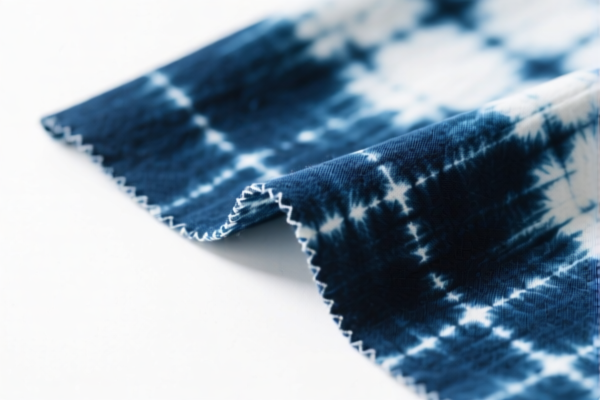
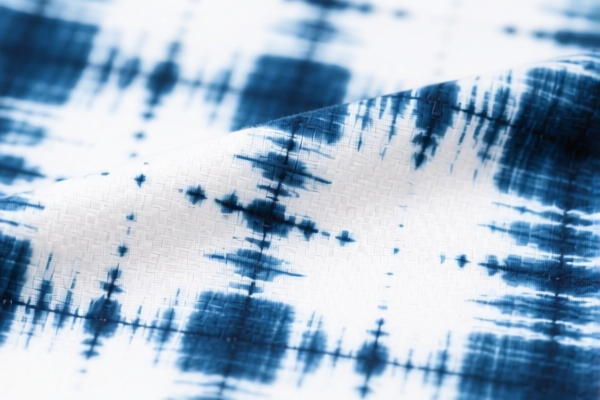
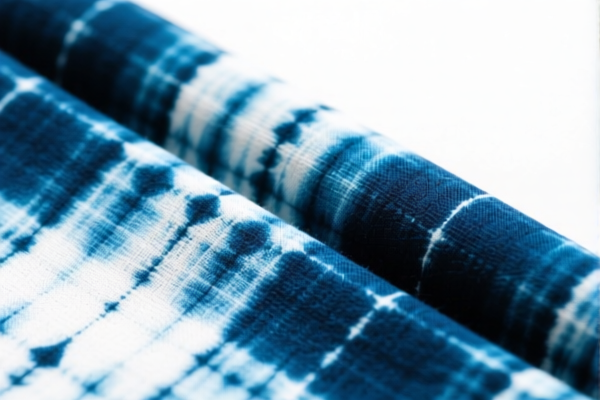
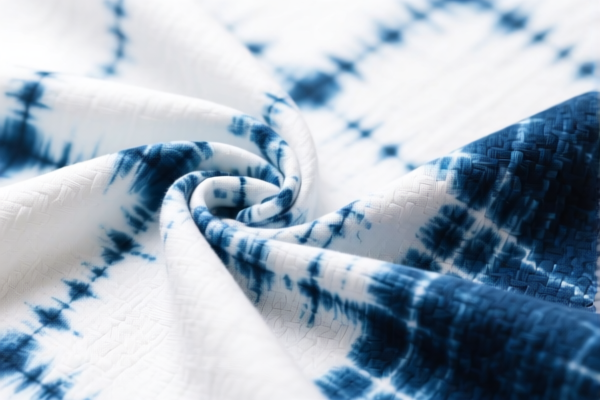
AI分析
🧵 Dyed Base Fabric: HS Code Classification & US Customs Strategy (2026)
🌐 HS Code Reference & Clearance Guide | 2026 Latest Tariff Analysis | Professional Customs Strategy
📌 I. Product Definition & Classification: What Exactly is "Dyed Base Fabric"?
"Dyed Base Fabric" is a generic trade term often used in apparel and textile manufacturing. It refers to knitted or woven fabrics that have undergone the dyeing process but have not yet been printed, embroidered, or constructed into finished garments.
In international trade, the critical distinction lies in the material composition and the weaving/knitting structure. Customs authorities do not care about the final product (e.g., a T-shirt); they care about the raw material state at the time of import.
⚠️ Key Distinction: - If the fabric is 100% Cotton: It falls under Chapter 52. - If the fabric is Synthetic (Polyester, Nylon, etc.): It falls under Chapter 54. - If it is a Blend: It depends on which fiber constitutes the major weight percentage.
📦 II. HS Code Classification Details (Based on Provided Data)
According to the provided dataset, the "Dyed Base Fabric" is analyzed across four specific HS Codes. Each code reflects a different material hypothesis. Below is the detailed breakdown.
| HS Code | Product Description | Material Composition | Classification Logic |
|---|---|---|---|
5208.39.80.90 |
Dyed Woven Fabric of Cotton | 100% Cotton | Categorized as Woven Cotton Fabric, Dyed. Fits the "dyed characteristic" of cotton-based woven goods. |
5407.82.00.90 |
Dyed Woven Fabric of Synthetic Fiber & Cotton Blend | Synthetic Fiber + Cotton Blend | Categorized as Woven Fabric of Synthetic Filament Yarn, mixed with cotton. Fits the "dyed characteristic" of blended woven goods. |
5407.92.20.90 |
Dyed Woven Fabric of Synthetic Filament Yarn | 100% Synthetic (Long Filament) | Categorized as Woven Fabric of Other Synthetic Filament Yarn. Fits the "dyed attribute" of pure synthetic woven goods. |
5208.39.40.90 |
Dyed Woven Fabric of Cotton (Other) | Cotton (Specific Sub-category) | Categorized as Woven Cotton Fabric, Dyed, under "Other" subheadings. Fits the "other fabric category" for specific cotton weights or weaves. |
🔍 Important Note: The actual HS Code depends entirely on the fiber content listed on your commercial invoice and Bill of Lading. - Cotton? → Look at
5208series. - Synthetic/Polyester? → Look at5407series.
💰 III. 2026 Latest Tariff Rate Breakdown (Including Surcharge Policies)
✅ Applicable Country: United States (US)
✅ Origin: China (CN)
✅ Effective Time: Current regulations apply (Section 301 & IEEPA provisions)
🎯 1. HS Code: 5208.39.80.90 (Cotton Woven Fabric)
| Item | Detail |
|---|---|
| Base Tariff | 12.5% |
| Section 301 Surcharge | 25.0% |
| Section 122 Tariff | 10.0% |
| Total Tax Rate | 47.5% |
| Calculation Base | CIF Value × 47.5% |
| De Minimis Exemption? | ❌ No (High tariff goods generally excluded or heavily scrutinized) |
| Legal Basis | Section 301 Tariff Act + IEEPA Authorities |
📌 Explanation:
- Base 12.5%: Standard Most Favored Nation (MFN) rate for cotton woven fabrics.
- Section 301 (25%): Additional tariff imposed on Chinese goods under Trade Act Section 301.
- Section 122 (10%): Specific tariff provision (likely referring to recent executive actions or specific textile quotas).
- Total: 47.5% is a very high cost factor. Profit margins must account for this.
🎯 2. HS Code: 5407.82.00.90 (Synthetic/Cotton Blend)
| Item | Detail |
|---|---|
| Base Tariff | 14.9% |
| Section 301 Surcharge | 25.0% |
| Section 122 Tariff | 10.0% |
| Total Tax Rate | 49.9% |
| Calculation Base | CIF Value × 49.9% |
| De Minimis Exemption? | ❌ No |
| Legal Basis | Section 301 Tariff Act + IEEPA Authorities |
📌 Explanation:
- Blended fabrics often have slightly higher base rates (14.9% vs 12.5%) due to complexity in classification.
- The surcharges remain the same.
- Total: 49.9% is the highest rate in the dataset. This is the most expensive option.
🎯 3. HS Code: 5407.92.20.90 (Synthetic Filament Fabric)
| Item | Detail |
|---|---|
| Base Tariff | 14.9% |
| Section 301 Surcharge | 25.0% |
| Section 122 Tariff | 10.0% |
| Total Tax Rate | 49.9% |
| Calculation Base | CIF Value × 49.9% |
| De Minimis Exemption? | ❌ No |
| Legal Basis | Section 301 Tariff Act + IEEPA Authorities |
📌 Explanation:
- Pure synthetic woven fabrics (like polyester or nylon) are classified here.
- The rate is identical to the blend due to the high base tariff for synthetic yarns.
- Total: 49.9%.
🎯 4. HS Code: 5208.39.40.90 (Other Cotton Woven Fabric)
| Item | Detail |
|---|---|
| Base Tariff | 7.0% |
| Section 301 Surcharge | 25.0% |
| Section 122 Tariff | 10.0% |
| Total Tax Rate | 42.0% |
| Calculation Base | CIF Value × 42.0% |
| De Minimis Exemption? | ❌ No |
| Legal Basis | Section 301 Tariff Act + IEEPA Authorities |
📌 Explanation:
- This is the lowest total tariff rate in the provided data.
- The base tariff is significantly lower (7.0%) compared to other cotton codes (12.5%).
- Total: 42.0%. This is the most cost-effective classification if the fabric qualifies for this specific subheading.
🛠️ IV. Customs Clearance Practical Advice (Real-World Pitfall Guide)
✅ 1. Required Documentation Checklist (Non-Negotiable)
| Document | Mandatory? | Purpose |
|---|---|---|
| ✅ Commercial Invoice | ✔️ | Must explicitly state "Dyed Woven Fabric" and exact fiber content (e.g., "65% Polyester / 35% Cotton"). |
| ✅ Packing List | ✔️ | Details weight, volume, and package count. |
| ✅ Bill of Lading (B/L) | ✔️ | Proof of shipment and ownership. |
| ✅ Fiber Content Test Report | ✔️ | Crucial! A lab report (e.g., from SGS, Intertek) verifying the % of cotton vs. synthetic. Without this, CBP will guess and may assign the highest rate. |
| ✅ Product Photos | ✔️ | Show the fabric roll, selvage, and dye uniformity. |
| ✅ Origin Certificate | ✔️ | To prove Chinese origin (triggering the 35% surcharge). |
✅ 2. Declaration Tips (Key Mantra)
🔥 "Fiber Content is King, Dyeing Status is Secondary!"
| Scenario | Correct Declaration | Wrong Action |
|---|---|---|
| 100% Cotton | Declare as Cotton Woven Fabric (Chapter 52). | Declare as "Textile" → Ambiguity leads to delays. |
| Polyester Blend | Declare as Synthetic/Cotton Blend (Chapter 54). | Declare as "Cotton" → Misdeclaration → Penalties. |
| Dyed vs. Greige | Must clearly state "Dyed". | Omitting "Dyed" may lead to re-inspection for unfinished goods. |
| Weight per Square Meter | Include GSM (Grams per Square Meter) in specs. | High GSM vs. Low GSM can change sub-codes. |
✅ 3. Special Circumstances Handling
| Situation | Advice |
|---|---|
| Sample Shipment | Even small samples are subject to the same tariffs (42%-49.9%). Do not use "sample" to evade taxes unless truly de minimis (< $800). |
| OEM for US Brand | Provide a letter of authorization. Still subject to full tariffs. |
| Transshipment | Do not ship via Vietnam/Malaysia with Chinese origin. CBP checks for "circumvention." Direct origin proof is required. |
| Hydrophobic/Treated Fabric | If the dye includes chemical finishes, ensure the invoice describes the finish. Some finishes may affect classification, but usually remain under the same HS if dyed. |
🌍 V. Global Market Comparison (2026)
| Country/Region | Recommended HS Code | Tariff (Approx.) | Certification | Note |
|---|---|---|---|---|
| 🇺🇸 USA | 5208.39.80.90 etc. |
42.0% - 49.9% | None specific for fabric | Highest Cost. Section 301 + 122 apply. |
| 🇨🇳 China | 5208.39.80.90 etc. |
0% - 5% | None | Import into China is cheap, but this guide assumes US export. |
| 🇪🇺 EU | 5208.39.80.90 etc. |
~12% | REACH Compliance | No Section 301. Significantly cheaper than US. |
| 🇬🇧 UK | 5208.39.80.90 etc. |
~12% | UK REACH | Post-Brexit, follows UK tariff schedule. |
| 🇦🇺 Australia | 5208.39.80.90 etc. |
~5% | None | Low tariff, free trade agreement considerations. |
📌 Conclusion:
- The US market is the most expensive due to Section 301 and Section 122 tariffs.
- If you are exporting globally, consider shifting production to Vietnam, India, or Bangladesh to avoid Chinese origin surcharges.
- Domestic US production or FTAA (CAFTA-DR) countries may qualify for 0% duty.
📌 VI. Common Errors & Pitfalls (Lessons Learned)
❌ Error 1: Declaring "Garment Fabric" without specifying fiber.
👉 Consequence: CBP assesses the highest possible rate (49.9%) or holds the shipment for 30+ days for classification ruling.
❌ Error 2: Using "Grey Fabric" (Undyed) on the invoice while shipping "Dyed Fabric".
👉 Consequence: Fraud Penalty. Grey fabric has lower duties. Attempting to evade Section 301 by misdeclaring dye status can lead to civil fines or criminal charges.
❌ Error 3: Ignoring the Section 122 Tariff.
👉 Consequence: If you only budget for Section 301 (25%), you will be underpaying by 10%. This leads to post-entry audits and back-taxes with interest.
❌ Error 4: Not providing a Fiber Test Report.
👉 Consequence: CBP uses "Adverse Facts Available" (AFA) and assigns the highest punitive tariff.
✅ Correct Practice:
"100% Cotton, Dyed, Woven, 150 GSM, Plain Weave, Roll Packed, Origin: China, Model: DF-100"
🎯 VII. Conclusion: Precision Saves Money!
🎯 Remember the Mantra:
🔹 "Fiber First, Dye Second, Section 301 Always Applies."
🔹 "HS Code 5208 vs 5407 determines the 7.5% Base Difference."
🔹 "42% to 50% is the reality for China-bound US Textiles."
📌 Pro Tip:
If you are exporting to the US, calculate the landed cost including the 42%-50% tariff.
- Option A: Absorb cost → Reduced profit.
- Option B: Pass to consumer → Higher price, lower volume.
- Option C (Best): Source from non-China countries (Vietnam, India) to eliminate the 35% surcharge (Section 301 + 122).
📣 Immediate Action:
📞 Verify your Fiber Content % with your mill.
📞 Confirm the exact HS Code with a licensed US Customs Broker.
🚀 Plan your supply chain to mitigate the 40%+ tariff barrier!
✨ Professional Customs Clearance Starts with Accurate Classification!
💼 Your Profit Margin Depends on Your HS Code!
用户评价
关于 HS 编码归类
协调制度(HS)是由世界海关组织(WCO)制定的国际贸易商品分类标准。全球 200 多个国家采用 HS 系统作为海关关税、贸易统计和进出口监管的基础。
每个 HS 编码遵循以下层级结构:
- 章(2 位)——商品大类(例如:第 84 章:机器和机械设备)
- 品目(4 位)——章内的更具体分类
- 子目(6 位)——国际通用细分,所有 WCO 成员国统一使用
- 本国细分(8-10 位)——各国自行扩展的细分编码,如美国 HTSUS 10 位编码
正确的 HS 编码归类对于顺利通关、准确缴纳关税和遵守贸易法规至关重要。错误归类可能导致海关延误、多缴关税或罚款。
从CN进口到US时,适用的关税税率可能包括:
- 最惠国(MFN)税率——适用于 WTO 成员国的标准关税税率
- 普通税率——适用于无贸易协定国家
- 贸易救济关税——附加关税,如 301 条款(反倾销)、232 条款(国家安全)或反补贴税
本页内容仅供参考。如需正式归类,请咨询当地海关或持牌报关代理。