Dyed Fur Scraps Unassembled
CN → US| HS编码 | 关税税率 | 原产国 | 目的国 | 文档 |
|---|---|---|---|---|
| 4303900000 | 35.0% | CN | US | 官方文档 |
| 4301100010 | 17.5% | CN | US | 官方文档 |
| 4302110020 | 37.1% | CN | US | 官方文档 |
| 4302209000 | 36.7% | CN | US | 官方文档 |
| 4303100030 | 39.0% | CN | US | 官方文档 |
| 4301100020 | 17.5% | CN | US | 官方文档 |
商品图片
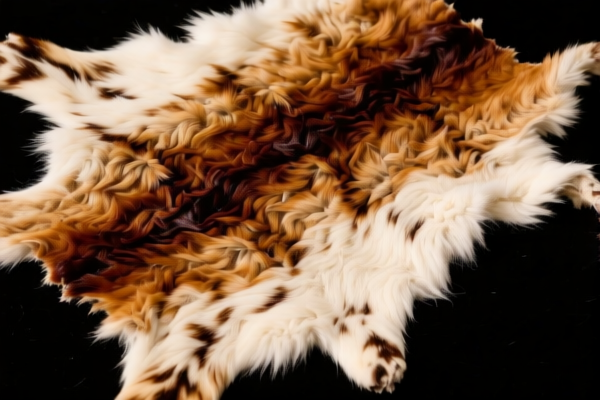
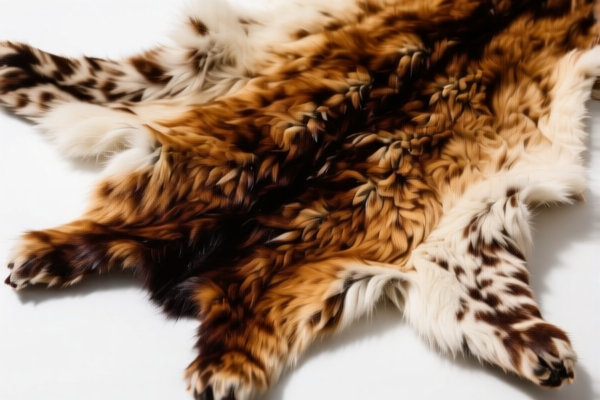
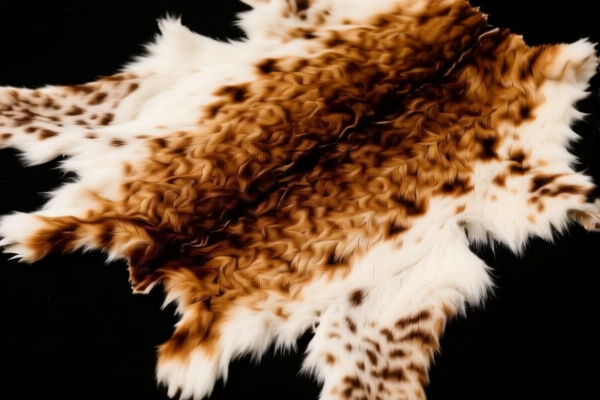
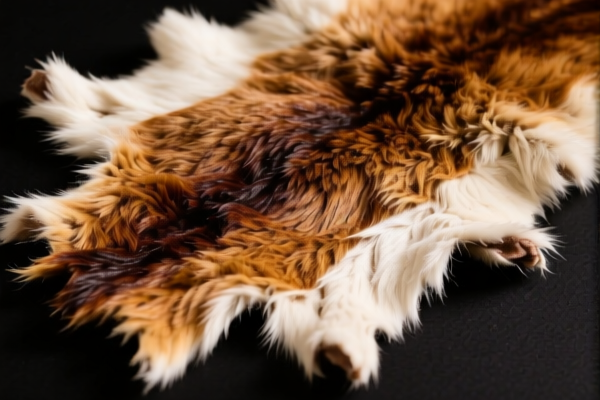
AI分析
🧥 Dyed Fur Scraps Unassembled (Mink Fur Offcuts)
🌐 HS Code Reference & Customs Clearance Guide | 2026 Latest Tariff Analysis | Professional Classification Strategy
📌 I. Product Definition & Classification: What Exactly Are "Dyed Fur Scraps Unassembled"?
"Dyed Fur Scraps Unassembled" refer to cut pieces, offcuts, or fragments of mink fur that have already undergone the dyeing process but have not yet been assembled into garments, accessories, or finished leather goods. In international trade, these are considered semi-finished products or intermediate materials in the fur manufacturing supply chain.
Key Distinction:
- If they are large, whole pelts that have only been dyed but not cut into scraps → They are classified as Dyed Furs (e.g., 4302.11).
- If they are small pieces, shards, or cut-offs from the manufacturing process, regardless of whether they are dyed → They fall under Fur Scraps/Fragments (e.g., 4301.10).
⚠️ Critical Classification Point:
- "Unassembled" means they are not sewn, bonded, or attached to a backing.
- "Dyed" means the color has been applied.
- "Scraps/Offcuts" implies irregular shapes and small sizes, typically resulting from cutting larger pelts for garments.
📦 II. HS Code Classification Details (Based on Provided Data)
| HS Code | Product Description | Summary | Applicable Scenario |
|---|---|---|---|
4301.10.00.10 |
Dyed Mink Fur Scraps/Offcuts (Unassembled) | Material: Mink; Form: Unassembled; Category: Raw Skins/Scraps | Small cut-offs, irregular pieces from cutting lines |
4301.10.00.20 |
Mink Fur Slices/Flakes (Unassembled) | Material: Mink; Form: Unassembled; Category: Sliced/Fragmented | Shaved mink, fur flakes, or very small fragmented pieces |
4302.11.00.20 |
Dyed Other Mink Fur (Unassembled, Non-Koliniski) | Material: Other Mink; Form: Unassembled; Process: Dyed | Full but dyed pelts (not yet assembled), non-Koliniski mink |
4302.20.90.00 |
Dyed Mink Fur/Pelt (Unassembled) | Material: Mink/Pelt; Form: Unassembled; Process: Dyed; Fully Matches | Standard dyed mink pelts or larger pieces not yet cut into scraps |
4303.90.00.00 |
Unassembled Dyed Mink Fur | Material: Mink; Form: Unassembled; Category: Other Fur Products | Intermediate form, generic "other" fur products |
4303.10.00.30 |
Unassembled Dyed Mink Fur (Garment Intermediate) | Material: Mink; Form: Unassembled; Category: Garment Accessory Intermediate | Pieces intended specifically for garment assembly |
🔍 Key Insight:
-4302.20.90.00is marked as "Fully Matches" in the provided data for general dyed mink fur.
-4301.10.00.10and4301.10.00.20are for scraps/fragments, which may have lower base tariffs but still attract high additional duties.
-4303.90.00.00and4303.10.00.30are for intermediate goods, typically used in garment manufacturing.
💰 III. 2026 Latest Tariff Rate Breakdown (Including Surcharges & Policy Add-ons)
✅ Applicable Country: USA (US)
✅ Origin: China (CN)
✅ Effective Date: From November 10, 2025 (including subsequent imports)
🎯 1. 4301.10.00.10 & 4301.10.00.20 —— Mink Fur Scraps/Slices (Unassembled)
| Item | Content |
|---|---|
| Base Tariff | 0.0% (ad valorem) |
| Section 301 Surcharge | +7.5% (USITC Footnote) |
| IEEPA Surcharge | +10% (China-specific, from Nov 10, 2025) |
| Total Rate | 17.5% |
| Calculation | CIF Value × 17.5% |
| De Minimis Exemption | ❌ Not Applicable (deny_de_minimis) |
| Legal Basis Path | IEEPA:9903.01.25 → IEEPA:9903.01.24 → USITC:4301.10.00.10 → FOOTNOTE:9903.88.01 |
📌 Explanation:
- The 7.5% is a Section 301 additional tariff for certain fur products.
- The 10% is the IEEPA tariff on Chinese-origin goods.
- Total: 17.5%, which is moderate compared to other fur classifications.
🎯 2. 4302.11.00.20 —— Dyed Other Mink Fur (Unassembled)
| Item | Content |
|---|---|
| Base Tariff | 2.1% |
| Section 301 Surcharge | +25.0% |
| IEEPA Surcharge | +10.0% |
| Total Rate | 37.1% |
| Calculation | CIF Value × 37.1% |
| De Minimis Exemption | ❌ Not Applicable |
| Legal Basis Path | IEEPA:9903.01.25 → IEEPA:9903.01.24 → USITC:4302.11.00.20 → FOOTNOTE:9903.88.01 |
📌 Explanation:
- Full pelts or larger unassembled pieces attract a 25% Section 301 surcharge.
- Total: 37.1%, which is high.
🎯 3. 4302.20.90.00 —— Dyed Mink Fur/Pelt (Unassembled, Fully Matches)
| Item | Content |
|---|---|
| Base Tariff | 1.7% |
| Section 301 Surcharge | +25.0% |
| IEEPA Surcharge | +10.0% |
| Total Rate | 36.7% |
| Calculation | CIF Value × 36.7% |
| De Minimis Exemption | ❌ Not Applicable |
| Legal Basis Path | IEEPA:9903.01.25 → IEEPA:9903.01.24 → USITC:4302.20.90.00 → FOOTNOTE:9903.88.01 |
📌 Note:
- This is the most likely classification for general dyed mink fur that is not yet assembled.
- Total: 36.7%, still high, but slightly lower than4302.11.00.20.
🎯 4. 4303.90.00.00 & 4303.10.00.30 —— Intermediate Fur Products
| Item | Content |
|---|---|
| Base Tariff | 0.0% (4303.90) / 4.0% (4303.10) |
| Section 301 Surcharge | +25.0% |
| IEEPA Surcharge | +10.0% |
| Total Rate | 35.0% (4303.90) / 39.0% (4303.10) |
| Calculation | CIF Value × 35.0% / 39.0% |
| De Minimis Exemption | ❌ Not Applicable |
| Legal Basis Path | IEEPA:9903.01.25 → IEEPA:9903.01.24 → USITC:4303.90.00.00 / 4303.10.00.30 → FOOTNOTE:9903.88.01 |
📌 Caution:
- These are classified as intermediate goods or other fur products.
- Total: 35.0% - 39.0%, which is very high.
🛠️ IV. Customs Clearance Practical Advice (Avoiding Pitfalls)
✅ 1. Required Documentation Checklist (All Mandatory)
| Document | Must Provide | Notes |
|---|---|---|
| ✅ Product Specification Sheet | ✔️ | Include size, shape, dye type, origin |
| ✅ Photos (Clear & Labeled) | ✔️ | Show "scraps," "unassembled," and dye color |
| ✅ Commercial Invoice | ✔️ | Clearly state "Dyed Mink Fur Scraps, Unassembled" |
| ✅ Packing List | ✔️ | Detail weight, quantity, and packaging method |
| ✅ Certificate of Origin (CO) | ✔️ | If not China-origin, may qualify for lower rates |
| ✅ Third-Party Test Report | ✔️ | CITES permit if applicable (mink is not CITES, but check local laws) |
✅ 2. Declaration Tips (Key Mnemonic)
🔥 "Scraps Low, Pelts High, Assemble Carefully, Declare Precisely!"
| Scenario | Correct Declaration | Wrong Approach |
|---|---|---|
| Small cut-offs/offcuts | 4301.10.00.10 / 4301.10.00.20 (17.5%) |
Misdeclare as "pelts" → 36.7%+ |
| Full dyed pelts | 4302.20.90.00 (36.7%) |
Misdeclare as "scraps" → 17.5% (risky, may lead to penalties) |
| Garment intermediate parts | 4303.10.00.30 (39.0%) |
Misdeclare as "raw skins" → 17.5% (incorrect classification) |
| Generic fur products | 4303.90.00.00 (35.0%) |
Misdeclare as "finished goods" → Higher rates |
📌 Warning:
- Do not misclassify "scraps" as "pelts" to save on tariffs. U.S. Customs and Border Protection (CBP) closely examines fur shipments.
- "Unassembled" must be clearly stated in the description. If the fur is sewn or bonded, it may fall under 4303 (garments/accessories), which could have different rates.
✅ 3. Special Cases Handling
| Scenario | Advice |
|---|---|
| OEM Custom Scraps | Provide customer order + design specs to prove they are "scraps" not "pelts" |
| Mixed Lots (Scraps + Pelts) | Separate declaration required. Do not mix in one line item. |
| Re-exported Scraps | If originally imported under a different HS code, provide original entry records. |
| CITES Compliance | Mink is not CITES-listed, but if any exotic fur is present, ensure proper permits. |
🌍 V. Global Customs Clearance Comparison (2026 Latest)
| Country/Region | Recommended HS Code | Tariff | Certification | Notes |
|---|---|---|---|---|
| 🇺🇸 USA | 4301.10.00.10 (Scraps) |
17.5% | No special certs | Highest risk of scrutiny |
| 🇨🇳 China | 4301.10.00.10 |
5-10% | None | Lower base rates |
| 🇪🇺 EU | 4301.10.00.10 |
0-5% | REACH | No additional surcharges |
| 🇦🇺 Australia | 4301.10.00.10 |
5% | None | No additional surcharges |
| 🇯🇵 Japan | 4301.10.00.10 |
0-3% | None | No additional surcharges |
📌 Conclusion:
- USA is the only major market with high additional tariffs (Section 301 + IEEPA).
- China, EU, Australia, Japan have much lower or zero additional tariffs.
- If possible, consider sourcing or assembling in non-China countries to avoid the 10% IEEPA tariff.
📌 VI. Common Mistakes & Pitfalls (Lessons Learned)
❌ Mistake 1: Misdeclaring "full pelts" as "scraps" to save on tariffs
👉 Consequence: CBP inspection reveals full pelts → Penalties + Back Taxes + Potential Fraud Charges
❌ Mistake 2: Not specifying "Dyed" in the description
👉 Consequence: Customs may classify as raw fur → Different rates + Delay
❌ Mistake 3: Mixing "unassembled" and "assembled" fur in one shipment
👉 Consequence: Complex clearance, potential rejection, or reclassification of entire shipment
❌ Mistake 4: Ignoring the "Section 301" and "IEEPA" surcharges
👉 Consequence: Unexpected costs at customs → Profit Margin Erosion
✅ Correct Approach:
"Dyed Mink Fur Scraps, Unassembled, Cut-offs, Irregular Shapes, Origin: China, Model: XYZ"
🎯 VII. Conclusion: Professional Declaration Saves Money!
🎯 Remember the Mantra:
🔹 "Scraps are cheaper, Pelts are dearer. Declare accurately, Avoid the fear-er!"
🔹 "HS Code decides your fate, 17.5% vs 37%, Declare right, Stay upright!"
📌 Pro Tip:
- If your scraps are re-exported or used in non-US markets, consider routing through Vietnam, Mexico, or Thailand to avoid IEEPA tariffs.
- Apply for a Binding Ruling from CBP if you are unsure about the classification of mixed lots.
📣 Immediate Action:
📞 Consult a licensed customs broker + Provide product photos + Apply for a Pre-Ruling
🚀 Ensure smooth clearance, avoid delays, and maximize profits!
✨ Professional customs clearance starts with accurate classification!
💼 Every cent counts in global trade!
用户评价
关于 HS 编码归类
协调制度(HS)是由世界海关组织(WCO)制定的国际贸易商品分类标准。全球 200 多个国家采用 HS 系统作为海关关税、贸易统计和进出口监管的基础。
每个 HS 编码遵循以下层级结构:
- 章(2 位)——商品大类(例如:第 84 章:机器和机械设备)
- 品目(4 位)——章内的更具体分类
- 子目(6 位)——国际通用细分,所有 WCO 成员国统一使用
- 本国细分(8-10 位)——各国自行扩展的细分编码,如美国 HTSUS 10 位编码
正确的 HS 编码归类对于顺利通关、准确缴纳关税和遵守贸易法规至关重要。错误归类可能导致海关延误、多缴关税或罚款。
从CN进口到US时,适用的关税税率可能包括:
- 最惠国(MFN)税率——适用于 WTO 成员国的标准关税税率
- 普通税率——适用于无贸易协定国家
- 贸易救济关税——附加关税,如 301 条款(反倾销)、232 条款(国家安全)或反补贴税
本页内容仅供参考。如需正式归类,请咨询当地海关或持牌报关代理。