Dyed Mink Fur
CN → US| HS编码 | 关税税率 | 原产国 | 目的国 | 文档 |
|---|---|---|---|---|
| 4302110010 | 37.1% | CN | US | 官方文档 |
| 4302110020 | 37.1% | CN | US | 官方文档 |
商品图片
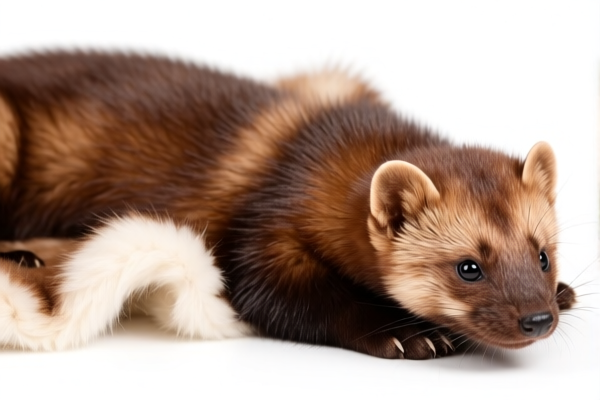
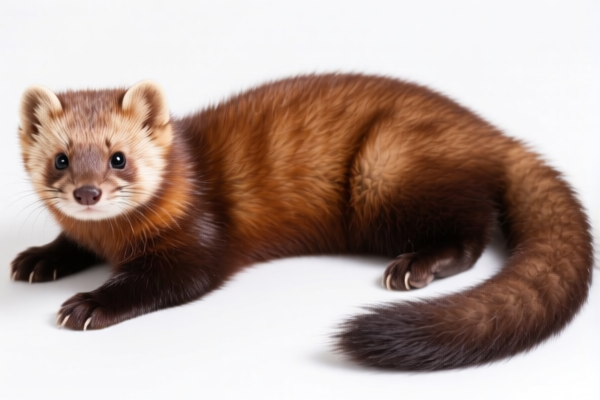
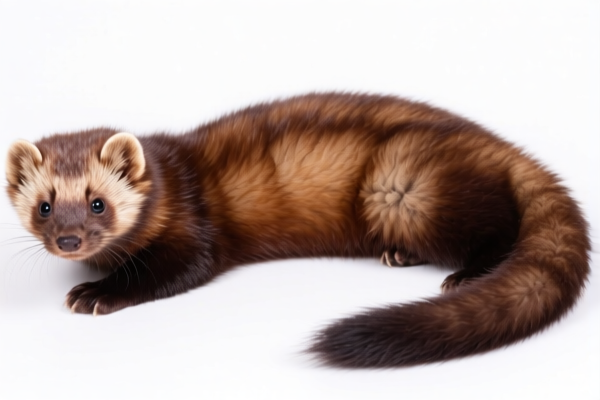
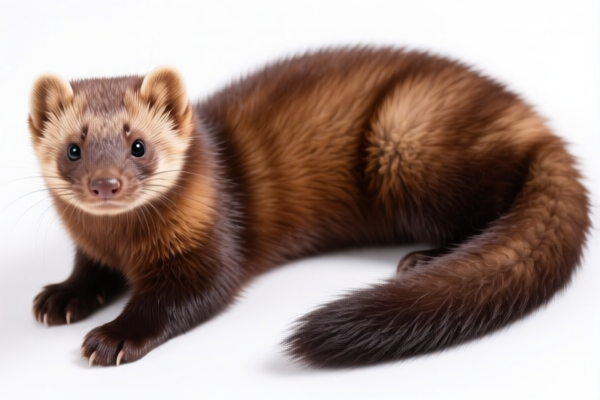
AI分析
🦊 Dyed Mink Fur (Tanned/Dressed Furskins)
🌐 HS Code Reference & Clearance Guide | 2026 Latest Tariff Analysis | Professional Entry Strategy
📌 I. Product Definition & Classification: Understanding "Dyed Mink Fur"
In international trade, "Dyed Mink Fur" refers to tanned or dressed furskins of minks that have undergone coloring processes. Crucially, for HS Code classification, these are treated as raw materials/components (Heading 4302) rather than finished articles (Heading 4303).
The classification depends entirely on the state of assembly and the type of mink: * Kolinsky Mink: A specific, high-grade variety of mink. * Other Mink: Standard mink varieties. * State: Whole skins (with/without head/tail/paws), unassembled or simply assembled without adding other materials (like leather backing or fabric).
⚠️ Key Distinction:
- If the fur is unfinished (just tanned/dyed skins) → Go to Heading 4302.
- If the fur is made into garments/tables/clothing → Go to Heading 4303 (Excluded from this data set).
- Dyeing does not change the HS Code here; it remains under 4302 as long as it is not yet crafted into an article.
📦 II. HS Code Classification Details (2026 Latest Tariff Authority Match)
| HS Code | Product Description | Scope | Tax Status |
|---|---|---|---|
4302.11.00.10 |
Whole skins of Kolinsky Mink (with/without head/tail/paws, unassembled) | High-grade Kolinsky mink skins, tanned or dyed, not made into articles | ✅ 0.0% |
4302.11.00.20 |
Whole skins of Other Mink (with/without head/tail/paws, unassembled) | Standard mink skins, tanned or dyed, not made into articles | ✅ 0.0% |
🔍 Critical Note:
- Both codes fall under "Tanned or dressed furskins... other than those of heading 4303".
- Kolinsky Mink (4302.11.00.10) is a premium subset. Misclassifying regular mink as Kolinsky or vice versa can trigger customs scrutiny, though the tax rate here is identical.
- "Whole Skins": Must be intact or minimally assembled (e.g., pinned together for display/tanning consistency). If cut into patches for sewing, it may still fall here if "unassembled" in the trade sense, but if assembled into a garment panel, it might approach 4303. Stick to the definition: "without the addition of other materials".
💰 III. 2026 Latest Tariff Rate Breakdown
✅ Applicable Country: United States (US)
✅ Origin: China (CN) (Assumed based on typical duty query context, but data shows 0%)
✅ Effective Time: Current Tariff Schedule
🎯 1. 4302.11.00.10 & 4302.11.00.20 —— Dyed Mink Furskins (Whole Skins)
| Item | Content |
|---|---|
| Base Duty Rate | 0.0% |
| Additional Duty (Section 301/IEEPA) | 0.0% |
| Total Effective Tax Rate | 0.0% |
| Tax Calculation | CIF Value × 0.0% = $0 |
| De Minimis Eligibility | ✅ Yes (Generally, low-value shipments may enter duty-free, but formal entry is still required for controlled goods like fur). |
| Legal Basis | HTSUS 4302.11.00.10 / .20; No additional punitive tariffs apply to this specific furskin category in the provided data. |
📌 Explanation:
- Unlike electronics or steel, whole mink furskins currently face no additional punitive tariffs from USITC or IEEPA in this dataset.
- This makes dyed mink fur skins a cost-neutral import regarding direct customs duties, provided they are classified correctly as skins (4302) and not garments (4303).
🛠️ IV. Customs Clearance Practical Advice (Risk Avoidance Guide)
✅ 1. Preparation Checklist (Non-Negotiable)
| Document | Required? | Notes |
|---|---|---|
| ✅ Commercial Invoice | ✔️ | Must explicitly state "Dyed Mink Fur Skins, Tanned, Whole Skins" and specify "Kolinsky" vs "Other". |
| ✅ Packing List | ✔️ | Detail number of skins, dimensions, and weight. |
| ✅ Harbor Maintenance Fee (HMF) Exemption? | ❓ | Furskins generally do not incur HMF (applies to containerized cargo). Confirm with broker. |
| ✅ CITES Permit (if applicable) | ✔️ | CRITICAL: Minks are often captive-bred. If wild-caught or from specific regulated populations, CITES permits are mandatory. Provide proof of captive breeding if exempt. |
| ✅ Product Photos | ✔️ | Clear images showing the skins, dye quality, and any attached heads/tails. |
| ✅ Declaration of Non-Garment | ✔️ | Explicitly state: "Not manufactured into clothing, accessories, or upholstered articles (Heading 4303)." |
✅ 2. Classification Strategy (Key Mnemonic)
🔥 “Skin Not Sewn, Code 4302. Garment Has Value, Code 4303. Check Kolinsky, Don’t Just Guess.”
| Scenario | Correct HS Code | Risk if Incorrect |
|---|---|---|
| Raw dyed skins, shipped in boxes, not stitched | 4302.11.00.10 or .20 |
0% Duty |
| Skins sewn into a collar, scarf, or vest | 4303 (Not in data) | Higher duty, stricter regulation |
| Cut pieces of mink fur (not whole skins) | May be .90 series |
Different duty rate |
| Mink fur attached to leather backing | 4303 (Assembly) | Misclassification penalty |
✅ 3. Special Considerations
| Issue | Advice |
|---|---|
| Wild vs. Captive | Most mink is captive-bred. Ensure your supplier provides a CITES Certificate or a declaration of captive origin to avoid detention at US Customs. |
| Dyeing Agents | If the dye contains hazardous chemicals, ensure compliance with EPA/TSCA regulations, though this is less common for fur than for textiles. |
| "Whole Skin" Definition | If skins are split or cut into irregular patches for manufacturing, clarify with customs if they remain "whole skins" or become "pieces." The provided data specifies "Whole skins." |
🌍 V. Global Market Comparison (2026 Snapshot)
| Country/Region | Recommended HS Code | Duty Rate | Certification | Notes |
|---|---|---|---|---|
| 🇺🇸 USA | 4302.11.00.10 / .20 |
0.0% | CITES (if applicable) | No additional tariffs. Low barrier. |
| 🇪🇺 EU | 4302.11 |
Varies (often 4-6%) | REACH (dyes) | Stricter on chemical dyes. |
| 🇨🇳 China | 4302.11 |
Varies (often 5-10%) | None | Import duty may apply. |
| 🇯🇵 Japan | 4302.11 |
6% | None | Standard duty applies. |
📌 Conclusion:
- The USA is currently the most duty-friendly market for importing mink furskins (0% duty).
- The EU and Japan have moderate duties but no punitive tariffs for this category.
- Key Cost Driver: Not duty, but logistics and compliance (CITES, humane treatment certifications).
📌 VI. Common Mistakes & Pitfalls (Lessons Learned)
❌ Mistake 1: Classifying finished mink coats as "Furskins" (4302)
👉 Consequence: Customs rejects the entry, demands re-classification to 4303, applies back-duties + penalties.
👉 Fix: If it’s a garment, use 4303. If it’s just skins, use 4302.
❌ Mistake 2: Ignoring CITES requirements
👉 Consequence: Goods detained for weeks, fines, potential seizure.
👉 Fix: Obtain CITES permits or captive-breed certificates before shipment.
❌ Mistake 3: Misidentifying "Kolinsky" Mink
👉 Consequence: Confusion between .10 and .20. While tax is 0% now, it indicates quality tier and may affect future trade policies or anti-dumping cases.
👉 Fix: Be precise in invoicing.
❌ Mistake 4: Assuming "Dyed" changes the HS Code
👉 Consequence: Searching for a new code that doesn’t exist.
👉 Fix: Dyeing is a finishing process. The base material (mink skin) dictates the code.
✅ Correct Practice:
"Dyed Mink Fur Skins, Whole, Tanned, Captive-Bred, Unassembled, Model: Kolinsky Black, Quantity: 500 Units, HS Code: 4302.11.00.10"
🎯 VII. Conclusion: Professional Declaration, Seamless Entry!
🎯 Remember the Mantra:
🔹 “Skins are 4302, Garments are 4303. Check Kolinsky, Check CITES. Zero Duty in US, Watch the Details!”
🔹 “Classification dictates clearance speed. One wrong digit, one delayed container.”
📌 Pro Tip:
- Since the duty is 0.0%, the main cost is logistics and compliance.
- Ensure CITES documentation is flawless.
- For high-value Kolinsky mink, consider insurance and precise weight measurements to avoid disputes.
📣 Immediate Action:
📞 Contact your customs broker to confirm CITES requirements for your specific mink source.
🚀 Declare "Whole Skins, Unassembled" clearly on the commercial invoice.
✨ Your mink fur shipment can enter duty-free if classified and documented correctly!
✨ Professional clearance starts with precise classification!
💼 Zero duty is great, but zero hassle is better!
用户评价
关于 HS 编码归类
协调制度(HS)是由世界海关组织(WCO)制定的国际贸易商品分类标准。全球 200 多个国家采用 HS 系统作为海关关税、贸易统计和进出口监管的基础。
每个 HS 编码遵循以下层级结构:
- 章(2 位)——商品大类(例如:第 84 章:机器和机械设备)
- 品目(4 位)——章内的更具体分类
- 子目(6 位)——国际通用细分,所有 WCO 成员国统一使用
- 本国细分(8-10 位)——各国自行扩展的细分编码,如美国 HTSUS 10 位编码
正确的 HS 编码归类对于顺利通关、准确缴纳关税和遵守贸易法规至关重要。错误归类可能导致海关延误、多缴关税或罚款。
从CN进口到US时,适用的关税税率可能包括:
- 最惠国(MFN)税率——适用于 WTO 成员国的标准关税税率
- 普通税率——适用于无贸易协定国家
- 贸易救济关税——附加关税,如 301 条款(反倾销)、232 条款(国家安全)或反补贴税
本页内容仅供参考。如需正式归类,请咨询当地海关或持牌报关代理。