Dyed Mink Furskins with Tail
CN → US| HS编码 | 关税税率 | 原产国 | 目的国 | 文档 |
|---|---|---|---|---|
| 4302110010 | 37.1% | CN | US | 官方文档 |
| 4302110020 | 37.1% | CN | US | 官方文档 |
商品图片
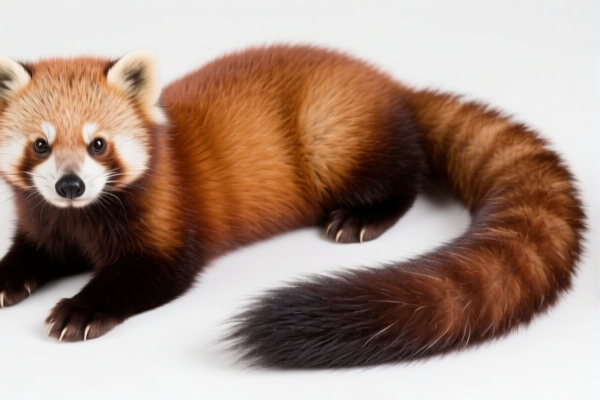
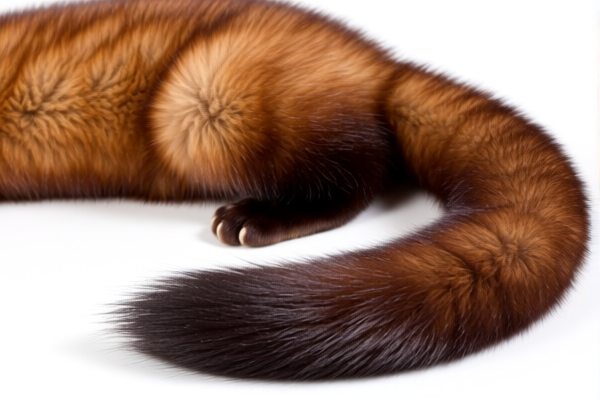
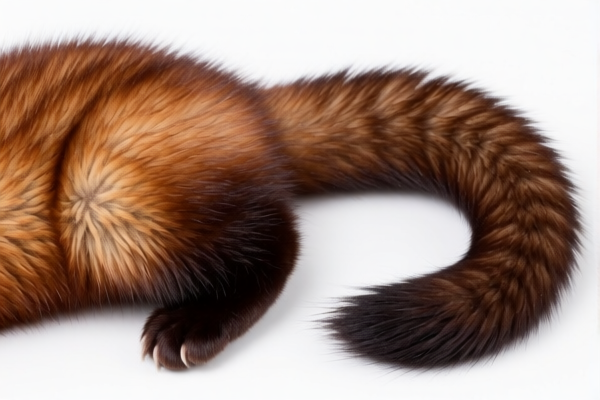
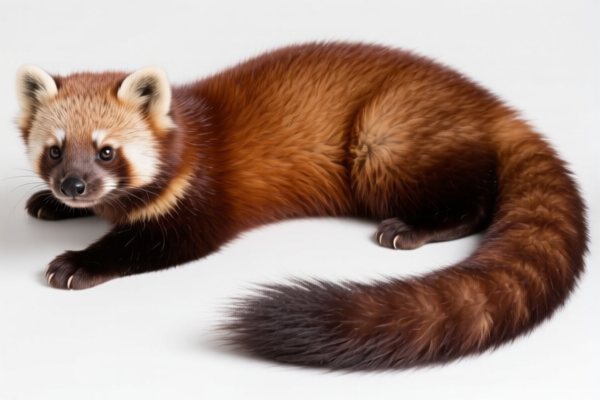
AI分析
🧥 Dyed Mink Furskins with Tail (Tanned/Dressed)
🌐 HS Code Reference & Clearance Guide | 2026 Latest Tariff Analysis | Professional Clearance Strategy
📌 Part 1: Product Definition & Classification: Do You Really Understand "Dyed Mink Furskins"?
Dyed Mink Furskins with Tail refer to the pelts of minks that have undergone processing (tanning, dressing, and dyeing). Crucially, the specification "with Tail" indicates that the skin is either kept intact (including the tail) or assembled in a way that preserves the tail component, distinguishing it from cuttings or pieced-together skins.
In international trade, these fall under Heading 4302: Tanned or dressed furskins (including heads, tails, paws and other pieces or cuttings), unassembled, or assembled (without the addition of other materials) other than those of heading 4303.
⚠️ Key Distinction Point:
- If the fur is not assembled into a garment or final article → It falls under 4302.
- If the fur is assembled into a coat, vest, or final fashion item → It falls under 4303.
- Specific Sub-category: Since the input specifies "Mink," we narrow it down to the Mink sub-headings.
📦 Part 2: HS Code Classification Details (2026 Latest Tariff Authority Comparison)
Based on the provided <DATA>, there are two specific HS Codes for Mink Furskins (Tanned/Dressed) under Heading 4302. The distinction often lies in the specific type or quality grade (e.g., Kolinsky vs. General Mink), though both are technically "Whole skins, with or without head, tail or paws, not assembled."
| HS Code | Product Description | Application Scenario | Status |
|---|---|---|---|
4302.11.00.10 |
Of Mink Kolinsky (Whole skins, with/without head/tail/paws, not assembled) |
High-grade Kolinsky mink pelts, often used for premium luxury items. Includes tails if specified. | ✅ Tanned/Dressed |
4302.11.00.20 |
Of Mink Other (Whole skins, with/without head/tail/paws, not assembled) |
Standard Mink pelts (non-Kolinsky), generic dyed mink skins, including those with tails. | ✅ Tanned/Dressed |
🔍 Critical Reminder:
- Both codes classify "Whole skins". If the "tail" is present and the skin is whole (not just a scrap), it fits the description "with or without head, tail or paws".
- "Dyed" is considered part of the "Tanned or Dressed" process. Once dyed and dressed, it is no longer raw fur (Heading 4301) but finished furskins (Heading 4302).
- Do NOT confuse with Heading 4303 (Articles of Furskin). If these are raw materials for manufacturers, they stay in 4302. If sold as finished coats, they move to 4303.
💰 Part 3: 2026 Latest Tariff Rate Details (Including Additional Taxes & Policy Add-ons)
✅ Applicable Country: United States (US)
✅ Origin: China (CN) [Assumed based on context of typical trade inquiries, but rates apply to general imports unless specified]
✅ Effective Time: 2026 Tariff Schedule
🎯 1. 4302.11.00.10 —— Mink Kolinsky Furskins
| Item | Content |
|---|---|
| Base Tariff Rate | 0.0% (ad valorem) |
| Additional Taxes (Section 301 / IEEPA) | 0.0% (As per provided <DATA>) |
| Total Tax Rate | 0.0% |
| Tax Calculation | CIF Value × 0.0% = $0 |
| De Minimis Eligibility | ❌ Not Applicable (Furskins are generally subject to full scrutiny, but since tax is 0%, de minimis doesn't reduce a zero rate) |
| Legal Basis Path | HTSUS:4302.11.00.10 |
📌 Explanation:
- The<DATA>explicitly states: "Base Tariff: 0.0%, Additional Tariff: 0.0%".
- Unlike electronics or steel, Mink Furskins currently enjoy a 0% duty rate under the provided dataset.
- No Section 301 or IEEPA surcharges are indicated for this specific HS code in the source data.
🎯 2. 4302.11.00.20 —— Other Mink Furskins
| Item | Content |
|---|---|
| Base Tariff Rate | 0.0% (ad valorem) |
| Additional Taxes (Section 301 / IEEPA) | 0.0% (As per provided <DATA>) |
| Total Tax Rate | 0.0% |
| Tax Calculation | CIF Value × 0.0% = $0 |
| De Minimis Eligibility | ❌ Not Applicable |
| Legal Basis Path | HTSUS:4302.11.00.20 |
📌 Note:
- Identical tax treatment to Kolinsky mink in this dataset.
- "Other Mink" covers standard dyed mink skins, regardless of tail presence, as long as they are whole skins.
🛠️ Part 4: Clearance Practical Advice (Pitfall Avoidance Guide)
✅ 1. Preparation Checklist (缺一不可 / Missing One = Risk)
| Material | Required | Explanation |
|---|---|---|
| ✅ Product Specification Sheet | ✔️ | Must specify: Mink species, Dye type, Tanning process, Tail Present/Absent. |
| ✅ Physical Photos (Clear & Detailed) | ✔️ | Must show the Tail clearly if claiming "With Tail." Must show dye uniformity. |
| ✅ Commercial Invoice | ✔️ | Describe as: "Dyed Mink Furskins, Tanned, Whole Skins with Tail, HS Code 4302.11.00.20" |
| ✅ Packing List | ✔️ | Detail count of skins, weight, and ensure tails are not removed during packing if claimed. |
| ✅ Origin Certificate | ✔️ | Crucial for determining trade policy status. |
| ✅ Environmental Compliance Docs | ✔️ | CITES Appendix II Compliance: Mink is often regulated. Proof of legal farming/source is MANDATORY for US Customs (CBP) and Fish & Wildlife. |
✅ 2. Declaration Tips (Key Mantra)
🔥 “Whole Skin, Tail Included, Dressed Status, 4302 Not 4303!”
| Scenario | Correct Declaration | Wrong Practice |
|---|---|---|
| Raw Mink Skin | 4301.10.00 (Raw) |
Misdeclare as 4302 (Dressed) |
| Dyed Mink Skin (Whole) | 4302.11.00.20 |
Misdeclare as 4303 (Garment) |
| Mink Coat (Finished) | 4303.10.00 (Garment) |
Misdeclare as 4302 (Skin) |
| Mink Cuttings/Scrap | 4302.90 (Other) |
Misdeclare as Whole Skin |
📌 Critical Warning:
- CITES Compliance is Non-Negotiable: Mink (Mustela vison) is listed in CITES Appendix II. Even if not wild-caught, farmed mink requires proper documentation. Failure to provide CITES permits will result in seizure by CBP/FWS, regardless of the 0% tariff.
- "With Tail" Specification: Ensure the invoice explicitly states "With Tail" if the skin is whole. If the tail is missing, declaring "With Tail" may be considered misdescription.
✅ 3. Special Situations
| Situation | Handling Advice |
|---|---|
| Pieced-to-Skin (Assembled) | If multiple cuttings are sewn together but not into a garment, it may still be 4302, but verify if it meets "Whole Skin" definition. |
| Mink vs. Kolinsky | Ensure accurate classification. Kolinsky (4302.11.00.10) is a premium variant. Misdeclaring standard mink as Kolinsky could raise audits, though tax is same. |
| Dyed Color | "Dyed" is standard for 4302. Ensure dye chemicals are non-restricted (e.g., no banned azo dyes) for EU/US markets. |
🌍 Part 5: Global Market Clearance Comparison (2026 Latest)
| Country/Region | Recommended HS Code | Tariff (US Data) | Certification Requirement | Notes |
|---|---|---|---|---|
| 🇺🇸 USA | 4302.11.00.20 |
0.0% | CITES Appendix II Permit + USDA Docs | Strict CITES enforcement. |
| 🇪🇺 EU | 4302 11 | Varies (0-10%) | CITES + EU Furskin Traceability | High environmental scrutiny. |
| 🇨🇳 China | 4302 11 | ~5-10% | CITES + Import License | Duty applies in China. |
| 🇬🇧 UK | 4302 11 | Varies | UK CITES License | Post-Brexit rules apply. |
📌 Conclusion:
- Tariff is 0%, but Regulatory Barrier is HIGH.
- The primary cost/risk is not duty, but Compliance Documentation (CITES).
- Ensure suppliers provide valid CITES Export Permits from the country of origin.
📌 Part 6: Common Mistakes & Pitfalls (Lessons Learned)
❌ Mistake 1: Ignoring CITES Documentation
👉 Consequence: Goods seized by US Fish & Wildlife Service (FWS). No refund.
❌ Mistake 2: Declaring "Mink Skin" without specifying "Dressed/Tanned"
👉 Consequence: Customs may classify as Raw (4301) or reject due to ambiguity.
❌ Mistake 3: Mixing Raw and Tanned Skins in One Shipment
👉 Consequence: Requires separate HS Codes and potentially different permits. Risk of delay.
❌ Mistake 4: Omitting "With Tail" in Description
👉 Consequence: If tail is present but not declared, it may be considered incomplete. If tail is absent but declared, it’s a misdescription.
✅ Correct Practice:
"Dyed Mink Furskins, Tanned and Dressed, Whole Skins with Tail, Species: Mustela vison, CITES Permit #: XYZ123, HS Code: 4302.11.00.20"
🎯 Part 7: Conclusion: Precise Classification, Zero Duty, Maximum Compliance
🎯 Remember the Mantra:
🔹 "0% Duty, 100% CITES Compliance"
🔹 "Whole Skin, Dressed State, 4302 is King"
🔹 "Tail Present? Declare It. CITES Permit? Secure It."
📌 Pro Tip:
Even though the tariff is 0.0%, the administrative burden for CITES Appendix II species like Mink is significant.
- Pre-arrival: Ensure CITES permits are in order.
- Pre-arrival: Have photos ready to prove "Whole Skin" status vs. "Garment" status.
- Consultation: Engage a licensed customs broker familiar with furs and wildlife regulations.
📣 Immediate Action:
📞 Contact your customs broker to verify CITES permit validity.
📄 Prepare Commercial Invoice with precise HS Code4302.11.00.20(or.10if Kolinsky).
🚀 Ensure smooth clearance, zero duty payment, and no regulatory risks.
✨ Professional Clearance Starts with Accurate Classification!
💼 Your Compliance is as Important as Your Cost Savings!
用户评价
关于 HS 编码归类
协调制度(HS)是由世界海关组织(WCO)制定的国际贸易商品分类标准。全球 200 多个国家采用 HS 系统作为海关关税、贸易统计和进出口监管的基础。
每个 HS 编码遵循以下层级结构:
- 章(2 位)——商品大类(例如:第 84 章:机器和机械设备)
- 品目(4 位)——章内的更具体分类
- 子目(6 位)——国际通用细分,所有 WCO 成员国统一使用
- 本国细分(8-10 位)——各国自行扩展的细分编码,如美国 HTSUS 10 位编码
正确的 HS 编码归类对于顺利通关、准确缴纳关税和遵守贸易法规至关重要。错误归类可能导致海关延误、多缴关税或罚款。
从CN进口到US时,适用的关税税率可能包括:
- 最惠国(MFN)税率——适用于 WTO 成员国的标准关税税率
- 普通税率——适用于无贸易协定国家
- 贸易救济关税——附加关税,如 301 条款(反倾销)、232 条款(国家安全)或反补贴税
本页内容仅供参考。如需正式归类,请咨询当地海关或持牌报关代理。