Eco friendly wood chips and waste pellets
CN → US| HS编码 | 关税税率 | 原产国 | 目的国 | 文档 |
|---|---|---|---|---|
| 4401310000 | 35.0% | CN | US | 官方文档 |
| 4405000000 | 38.2% | CN | US | 官方文档 |
| 4401394210 | 35.0% | CN | US | 官方文档 |
商品图片
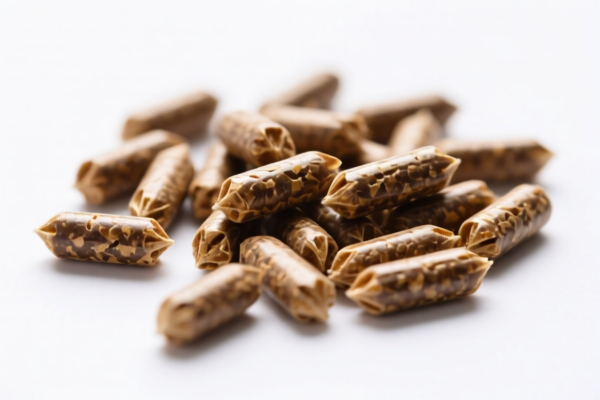
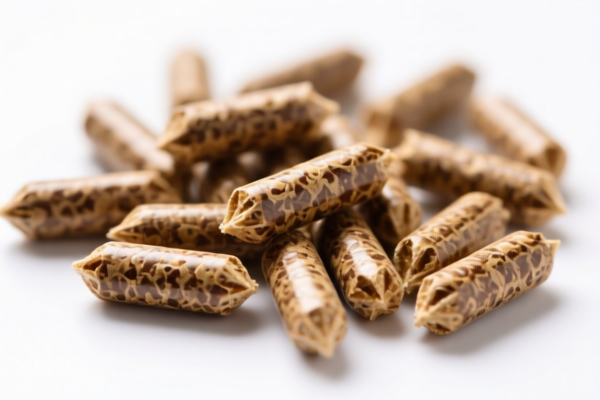
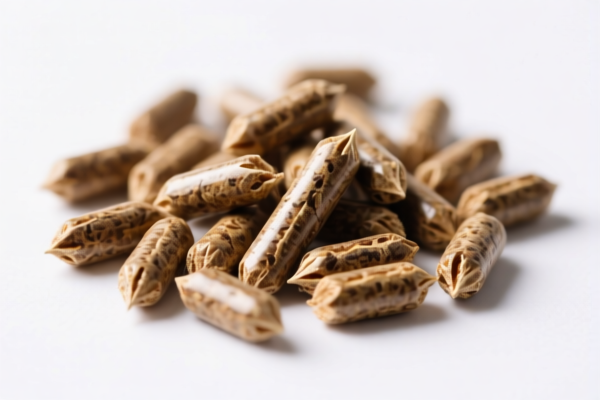
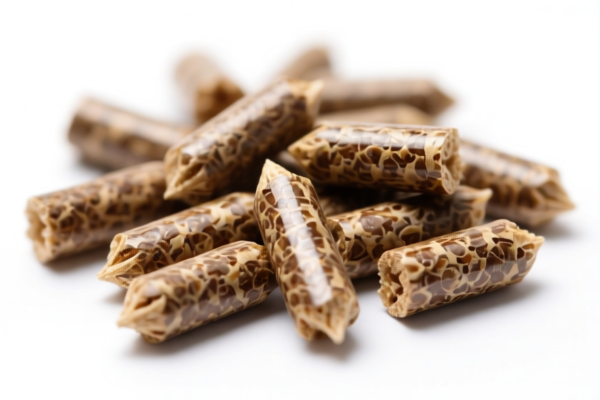
AI分析
🌲 Eco-Friendly Wood Chips & Waste Pellets (Biomass Fuel)
🌐 HS Code Classification & Customs Clearance Guide | 2026 Tariff Analysis | Professional Strategy for Bio-Fuel Imports
📌 I. Product Definition & Classification: Are You Selling "Wood" or "Waste"?
In the international trade of biomass energy, "Wood Chips and Waste Pellets" are generally classified under Chapter 44 (Wood and articles of wood). However, the critical distinction lies in the physical form and origin material:
- Wood Chips (4405.00.00.00): Typically refers to sawdust, wood shavings, or small granular wood particles. This category often captures "waste" or "scraps" from woodworking.
- Wood Pellets (4401.31.00.00 / 4401.39.42.10): Compressed cylindrical fuel. These are considered processed wood fuels.
- Note: Even if made from "waste," if they are compressed into pellets, they often fall under specific fuel codes rather than general waste codes, depending on the exact composition and density.
⚠️ Key Distinction Point:
- If the material is loose sawdust, shavings, or granular wood waste → Likely 4405.00.00.00
- If the material is compressed cylindrical pellets made from wood/wood waste → Likely 4401.31.00.00 or 4401.39.42.10
📦 II. HS Code Classification Details (2026 Latest Tariff Authority Match)
Based on the provided dataset, here are the exact matches for "Eco-friendly wood chips and waste pellets":
| HS Code | Product Description | Applicability Scenario | Tax Rate (Total) |
|---|---|---|---|
4401.31.00.00 |
Wood Pellets: Material is wood chips/pellets, form is granular/pellet. Fits classification explanation. | Standard compressed wood pellets for heating/power. | 35.0% |
4405.00.00.00 |
Wood Pellets: Material is wood, form is granular. Fits the definition of "wood flour / wood wool." | Loose wood dust, sawdust, or less densely compressed granular waste. | 38.2% |
4401.39.42.10 |
Fuel Wood: Belongs to wood waste form. Fits definition of fuel wood, wood chips, or pellets. | Specific waste-derived wood pellets classified as fuel wood. | 35.0% |
🔍 Critical Reminder:
- 4401.31.00.00 and 4401.39.42.10 both carry a 35.0% total tax rate.
- 4405.00.00.00 carries a 38.2% total tax rate due to a higher base tariff (3.2% vs. 0%).
- Do not misclassify: If it’s a pellet, avoid4405unless it’s explicitly defined as sawdust/wood wool in your technical specs. Misclassification leads to overpayment or penalties.
💰 III. 2026 Latest Tariff Rate Breakdown (Including Additional Taxes & Policy Surcharges)
✅ Applicable Country: United States (US)
✅ Country of Origin: China (CN)
✅ Effective Date: From November 10, 2025 (including subsequent imports)
🎯 1. 4401.31.00.00 & 4401.39.42.10 —— Wood Pellets / Fuel Wood (Waste Form)
| Item | Detail |
|---|---|
| Base Tariff | 0.0% (Ad Valorem) |
| USITC Section 301 Surcharge | +25.0% |
| IEEPA Section 122 Tariff | +10.0% |
| Total Tax Rate | 35.0% |
| Tax Calculation | CIF Value × 35.0% |
| De Minimis Exemption | ❌ Not Eligible (deny_de_minimis) |
| Legal Basis Path | IEEPA:9903.01.25 → USITC:4401.31.00.00 / 4401.39.42.10 |
📌 Explanation:
- The 0% base tariff makes these goods attractive in theory, but the 35% total burden is significant.
- The 25% Section 301 tax is standard for Chinese wood products.
- The 10% IEEPA 122 tax is an additional penalty layer for specific Chinese-origin goods.
- Combined Effect: You pay 35 cents in tax for every $1.00 CIF value.
🎯 2. 4405.00.00.00 —— Wood Flour / Sawdust / Granular Waste
| Item | Detail |
|---|---|
| Base Tariff | 3.2% (Ad Valorem) |
| USITC Section 301 Surcharge | +25.0% |
| IEEPA Section 122 Tariff | +10.0% |
| Total Tax Rate | 38.2% |
| Tax Calculation | CIF Value × 38.2% |
| De Minimis Exemption | ❌ Not Eligible (deny_de_minimis) |
| Legal Basis Path | IEEPA:9903.01.25 → USITC:4405.00.00.00 |
📌 Note:
- This code is 3.2% more expensive than the pellet codes due to the non-zero base tariff.
- Use this only if the product is clearly sawdust, shavings, or non-compressed granular waste.
- If you ship pellets and declare them as4405, you risk underpayment penalties if customs inspects and finds them to be dense pellets.
🛠️ IV. Customs Clearance Practical Advice (Field Pitfall Avoidance Guide)
✅ 1. Required Documentation Checklist (Non-negotiable)
| Document | Must Provide | Purpose |
|---|---|---|
| ✅ Technical Data Sheet | ✔️ | Must specify: Material (100% wood waste), Form (Pellet/Sawdust), Moisture Content, Density. |
| ✅ Product Photos | ✔️ | Clear images showing pellet shape, color, and packaging. Distinguish between "loose chips" and "compressed pellets." |
| ✅ Commercial Invoice | ✔️ | Must explicitly state: "Wood Pellets" or "Wood Waste Chips," not vague terms like "biomass." |
| ✅ Packing List | ✔️ | Show net weight vs. gross weight. Crucial for verifying density claims. |
| ✅ Certificate of Origin (CO) | ✔️ | If claiming any preferential treatment (none available here for CN→US, but required for verification). |
| ✅ Fumigation Certificate | ✔️ | ISPM 15 compliance if wooden pallets are used in packaging. |
✅ 2. Declaration Strategy (Key Mantras)
🔥 “Form Defines Code, Waste Doesn’t Mean Low Tax!”
| Scenario | Correct Declaration | Wrong Action |
|---|---|---|
| Compressed Wood Pellets | 4401.31.00.00 or 4401.39.42.10 |
Declaring as 4405 (38.2% tax) → Overpay by 3.2% |
| Loose Sawdust/Shavings | 4405.00.00.00 |
Declaring as 4401.31 (0% base) → Underpay, risk penalty |
| Mixed Packaging (Pellets + Chips) | Declare the primary component by weight | Splitting shipment → Complex customs review, delays |
| "Eco-Friendly" Label | Use as marketing, not HS Code descriptor | Do not write "Eco-Friendly" in HS Description field |
✅ 3. Special Handling Tips
| Situation | Advice |
|---|---|
| High Moisture Content | Ensure moisture <10% for pellets. High moisture may trigger reclassification or quality disputes. |
| Binders Used | If pellets contain non-wood binders (e.g., starch), ensure they don’t exceed thresholds that change chemical classification. |
| Origin Marking | Clearly mark "Made in China" on packaging. US Customs is strict on origin marking for Section 301 goods. |
| Fuel Use vs. Industrial Use | If marketed as "fuel," emphasize this. If marketed as "industrial raw material," ensure documentation aligns with 4405 if applicable. |
🌍 V. Global Market Comparison (2026 Latest)
| Country/Region | Recommended HS Code | Tariff (China Origin) | Certification | Note |
|---|---|---|---|---|
| 🇺🇸 USA | 4401.31.00.00 |
35.0% | ISPM 15, Fumigation | High barrier due to 301+122 taxes. |
| 🇨🇳 China | 4401.31.00.00 |
0% (Export) | - | No export tax on these items. |
| 🇪🇺 EU | 4401.31.00.00 |
0% | ENplus, PEFC/FSC | No additional tariffs if certified sustainable. |
| 🇬🇧 UK | 4401.31.00.00 |
0% | - | Similar to EU post-Brexit. |
| 🇦🇺 Australia | 4401.31.00.00 |
5% | - | No Section 301 equivalent, but standard duty applies. |
📌 Conclusion:
- USA is the most expensive market for Chinese wood pellets/chips due to 35% total tax.
- EU/UK offer tax-free entry for sustainable wood pellets, making them more competitive despite logistics costs.
- Strategy: If targeting the US, price your product to absorb the 35% tax burden or consider third-country assembly (risky under US rules of origin).
📌 VI. Common Mistakes & Pitfalls (Blood & Tears Lessons)
❌ Mistake 1: Declaring "Wood Pellets" as "Wood Waste" to avoid higher base tariffs
👉 Consequence: Customs may reclassify to 4405 (38.2%) or penalize for misdeclaration. Result: Higher cost + fines.
❌ Mistake 2: Ignoring the 10% IEEPA 122 Tax
👉 Consequence: Many importers only calculate the 25% Section 301 tax, forgetting the additional 10%. Result: Unexpected bill at customs.
❌ Mistake 3: Using vague descriptions like "Biomass Fuel"
👉 Consequence: Customs requests additional info, causing delays. Result: Demurrage charges.
❌ Mistake 4: Not providing a Technical Data Sheet
👉 Consequence: Inability to distinguish between 4401.31 (pellets) and 4405 (sawdust). Result: Audit risk.
✅ Correct Practice:
"Wood Pellets, 100% Softwood, Diameter 6mm, Moisture <10%, Made in China, for Heating Use"
🎯 VII. Conclusion: Professional Declaration, Cost Control, Risk Reduction
🎯 Remember the Mantra:
🔹 "Pellets = 4401.31 (35%), Sawdust = 4405 (38.2%)"
🔹 "Base 0% + 301 25% + IEEPA 10% = 35% Total"
🔹 "No De Minimis! Every shipment is taxed!"
📌 Pro Tip:
If your wood pellets are certified FSC/PEFC, highlight this in the documentation. While it does not reduce US tariffs, it may expedite customs inspection in other markets (EU/UK) where sustainability is a priority.
📣 Immediate Action:
📞 Contact your customs broker + Provide Technical Data Sheet + Apply for Advance Ruling if volume is high.
🚀 Ensure your Commercial Invoice explicitly states "Made in China" and "Wood Pellets" to avoid classification disputes.
✨ Precision in Classification Saves Money!
💼 Every 3.2% difference matters in bulk biomass trade!
用户评价
关于 HS 编码归类
协调制度(HS)是由世界海关组织(WCO)制定的国际贸易商品分类标准。全球 200 多个国家采用 HS 系统作为海关关税、贸易统计和进出口监管的基础。
每个 HS 编码遵循以下层级结构:
- 章(2 位)——商品大类(例如:第 84 章:机器和机械设备)
- 品目(4 位)——章内的更具体分类
- 子目(6 位)——国际通用细分,所有 WCO 成员国统一使用
- 本国细分(8-10 位)——各国自行扩展的细分编码,如美国 HTSUS 10 位编码
正确的 HS 编码归类对于顺利通关、准确缴纳关税和遵守贸易法规至关重要。错误归类可能导致海关延误、多缴关税或罚款。
从CN进口到US时,适用的关税税率可能包括:
- 最惠国(MFN)税率——适用于 WTO 成员国的标准关税税率
- 普通税率——适用于无贸易协定国家
- 贸易救济关税——附加关税,如 301 条款(反倾销)、232 条款(国家安全)或反补贴税
本页内容仅供参考。如需正式归类,请咨询当地海关或持牌报关代理。