Elastic Acrylic Polymer Raw Material
CN → US| HS编码 | 关税税率 | 原产国 | 目的国 | 文档 |
|---|---|---|---|---|
| 3208200000 | 38.6% | CN | US | 官方文档 |
| 3208900000 | 38.2% | CN | US | 官方文档 |
| 3906902000 | 41.3% | CN | US | 官方文档 |
| 3906901000 | 35.0% | CN | US | 官方文档 |
| 3906902000 | 41.3% | CN | US | 官方文档 |
商品图片
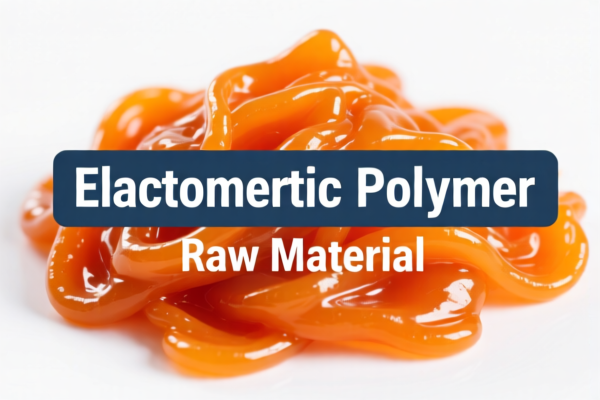
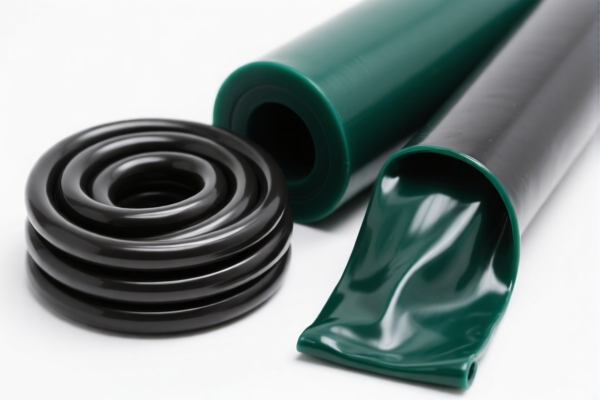
AI分析
🧪 Elastic Acrylic Polymer Raw Material (耐候型丙烯酸聚合物原料)
🌐 HS Code Classification & Customs Clearance Guide | 2026 Updated Tariff Analysis for US Imports
📌 I. Product Definition: What Exactly Is "Elastic Acrylic Polymer"?
"Elastic Acrylic Polymer Raw Material" generally refers to acrylic resin or emulsions used in high-performance coatings, sealants, or adhesives. Its key characteristics are elasticity (ability to stretch and return to shape) and weather resistance (UV stability).
In international trade, the classification depends heavily on its physical form (powder, liquid, solid) and specific chemical composition (whether it is a pure acrylic polymer, a mixture with other polymers, or a precursor for paints/varnishes).
⚠️ Critical Distinction:
- If it is a pure acrylic polymer in primary forms (liquid/emulsion/powder) → Likely Chapter 39.
- If it is specifically formulated as a base for paints/varnishes → Likely Chapter 32.
- Note: "Elastic" properties do not automatically move it to Chapter 40 (Rubber); acrylics remain plastics unless specifically classified as rubber-like elastomers under strict legal definitions, but here they fall under acrylic plastics or paint bases.
📦 II. HS Code Classification Details (Based on Provided Data)
The provided data indicates four distinct HS Codes, split between Chapter 32 (Paints/Varnishes) and Chapter 39 (Plastics/Polymers). The choice depends on the primary use and composition declared by the importer.
| HS Code | Product Description (Summary) | Key Classification Criteria | Tax Category |
|---|---|---|---|
3208.20.00.00 |
Elastic acrylic polymer weather-resistant raw material, matching acrylic polymer material characteristics | Classified as a base for paints/varnishes. Focuses on its role as a coating ingredient. | High Tariff |
3208.90.00.00 |
Elastic acrylic polymer weather-resistant raw material, matching synthetic polymer & paint varnish precursors | Classified as other paints/varnishes or precursors. Used when not strictly "acrylic-only" or for broader synthetic applications. | High Tariff |
3906.90.20.00 |
Elastic acrylic polymer weather-resistant raw material / Film-forming raw material, matching acrylic polymer & primary form | Classified as Acrylic Polymers in Primary Forms (e.g., emulsions, liquids, powders). Focuses on chemical structure over end-use. | Highest Tariff |
3906.90.10.00 |
Elastic acrylic polymer weather-resistant raw material, matching acrylic polymer & Elastomer category | Classified as Acrylic Elastomers. Used if the polymer is specifically defined as an elastomeric rubber-like plastic. | Medium Tariff |
🔍 Key Insight:
- Chapter 32 (3208) is for products intended to be mixed into coatings/paints.
- Chapter 39 (3906) is for pure polymers in their raw/primary chemical state.
- Misclassification Risk: Declaring a pure polymer (3906) as a paint base (3208) may trigger customs audits if the physical form doesn't match typical paint binders.
💰 III. 2026 Tariff Rate Breakdown (US Imports from China)
✅ Applicable Country: United States (US)
✅ Origin: China (CN)
✅ Effective Date: Current trade war tariffs remain in effect.
All listed HS Codes attract significant additional duties due to Section 301 (25%) and Section 122/IEEPA (10%) measures.
🎯 1. 3208.20.00.00 & 3208.90.00.00 (Paint/Varnish Bases)
| Item | Details |
|---|---|
| Base Duty | 3.6% (3208.20) / 3.2% (3208.90) |
| Section 301 Tariff | +25.0% (25% additional duty on Chinese synthetic polymers/paints) |
| Section 122 / IEEPA Surcharge | +10.0% (Targeted surcharge on specific Chinese goods) |
| Total Effective Tax Rate | 38.6% (3208.20) / 38.2% (3208.90) |
| De Minimis Exemption? | ❌ NO (Values under $800 are not exempt from Section 301 tariffs) |
| Legal Basis | Section 301; Section 122; HTSUS Chapter 32 Notes |
📌 Explanation:
- These codes are taxed at a lower base rate than pure polymers but still carry the full 25% + 10% penalty.
- Total cost impact: Nearly 40% of the CIF value goes to US Customs duties.
🎯 2. 3906.90.20.00 (Acrylic Polymers in Primary Form)
| Item | Details |
|---|---|
| Base Duty | 6.3% |
| Section 301 Tariff | +25.0% |
| Section 122 / IEEPA Surcharge | +10.0% |
| Total Effective Tax Rate | 41.3% |
| De Minimis Exemption? | ❌ NO |
| Legal Basis | Section 301; HTSUS Chapter 39 |
📌 Explanation:
- Highest Tax Burden: This code has the highest base duty (6.3%) combined with the same surcharges, resulting in 41.3% total tax.
- Caution: Ensure the product is truly an "acrylic polymer" and not a mixture. If it contains >50% other materials, it might shift classification.
🎯 3. 3906.90.10.00 (Acrylic Elastomers)
| Item | Details |
|---|---|
| Base Duty | 0.0% (Duty-free base rate for this specific elastomer sub-category) |
| Section 301 Tariff | +25.0% |
| Section 122 / IEEPA Surcharge | +10.0% |
| Total Effective Tax Rate | 35.0% |
| De Minimis Exemption? | ❌ NO |
| Legal Basis | Section 301; HTSUS Chapter 39 |
📌 Explanation:
- Lowest Total Rate: Despite the same penalties, the 0% base duty makes this the most cost-effective classification at 35.0%.
- Strict Condition: You must prove the material is an elastomer (rubber-like elasticity). If it's a rigid acrylic or standard emulsion, this classification may be challenged.
🛠️ IV. Customs Clearance Practical Advice
✅ 1. Documentation Checklist (Mandatory)
| Document | Requirement | Why It Matters |
|---|---|---|
| Product Specification Sheet | Must detail chemical composition (CAS numbers), physical form (liquid/powder), and elastic properties. | Proves "Elastic" nature for 3906.90.10.00 if claimed. |
| Formula/Composition List | Percentages of acrylic monomers, solvents, water, additives. | Determines if it's a "Pure Polymer" (Ch 39) or "Paint Base" (Ch 32). |
| MSDS (SDS) | Section 3: Composition, Section 9: Physical Properties. | Confirms state of matter (liquid vs. solid). |
| Commercial Invoice | Clear description: "Elastic Acrylic Polymer Emulsion, for Weather-Resistant Coatings." | Avoids vague terms like "Raw Material" which invite scrutiny. |
| Certificate of Origin | Required for origin verification. | Critical for applying the correct Section 301/122 surcharges. |
✅ 2. Classification Strategy & Cost Optimization
🔥 "Choose Wisely: Elastomer vs. Primary Form vs. Paint Base"
| Scenario | Recommended HS Code | Total Tax | Strategy |
|---|---|---|---|
| Material is rubber-like/acrylic elastomer | 3906.90.10.00 |
35.0% | ✅ Best Option: Lowest total tax. Provide lab tests proving elasticity. |
| Material is a standard acrylic emulsion for coatings | 3208.20.00.00 |
38.6% | ✅ Safe Option: Common for paint manufacturers. |
| Material is a pure acrylic polymer (liquid/powder) not for paint | 3906.90.20.00 |
41.3% | ❌ Avoid if possible: Highest tax burden. |
⚠️ Warning:
Do not misdeclare a standard acrylic emulsion as an "Elastomer" (3906.90.10.00) to save tax. US Customs (CBP) will demand physical testing (tensile strength, elongation at break). If it fails, you face penalties + back taxes.
✅ 3. Specific Clearance Tips
- Labeling: Clearly mark containers with "NOT FOR HUMAN CONSUMPTION" and "CHEMICAL RAW MATERIAL".
- Packaging: If shipped in drums, ensure UN packaging standards are met (especially for liquids).
- Pre-Arrival Review: Consider filing a Pre-Arrival Review Program (PARP) or requesting a Binding Ruling from CBP if the classification is borderline between
3906and3208. This prevents surprises at the port. - De Minimis Trap: Even if shipped via courier (UPS/FedEx) under $800, Section 301 tariffs (25% + 10%) still apply. Do not assume tax exemption.
🌍 V. Global Comparison (Quick Reference)
| Market | HS Code Focus | Est. Total Duty (China Origin) | Notes |
|---|---|---|---|
| 🇺🇸 USA | 3906.90.10.00 (Best) |
35.0% | High Section 301/122 tariffs apply to all acrylics. |
| 🇨🇳 China (Export) | Various | 0-5% | China imposes low export duties on raw polymers. |
| 🇪🇺 EU | 3906.90 or 3208 |
5-6.5% | No Section 301 equivalent, but anti-dumping may apply. |
| 🇬🇧 UK | 3906.90 |
5-6.5% | Post-Brexit tariffs similar to EU. |
📌 VI. Common Mistakes & Pitfalls
❌ Mistake 1: Declaring as "Paint" (3208) when it's a Pure Polymer (3906)
👉 Result: Incorrect duty rate, potential penalty for misdeclaration.
❌ Mistake 2: Using "Acrylic Resin" without specifying "Elastic" or "Elastomer"
👉 Result: Customs defaults to 3906.90.20.00 (41.3%), missing the 35.0% opportunity.
❌ Mistake 3: Ignoring Section 122/IEEPA Surcharge
👉 Result: Underpaying by 10%. CBP now actively audits for this 10% surcharge on Chinese goods.
✅ Correct Approach:
"Elastic Acrylic Elastomer Emulsion, Water-Based, for High-Performance Coatings, CAS Number: [Insert CAS], HS Code: 3906.90.10.00"
🎯 VII. Conclusion: Optimize Your Tariff Profile
🎯 Key Takeaway:
🔹 "Elastic" is Your Keyword: Prove the elastomeric nature to qualify for
3906.90.10.00(35.0%).
🔹 "Paint Base" is Safe: If elasticity is not the primary feature, use3208.20.00.00(38.6%).
🔹 "Pure Polymer" is Costly: Avoid3906.90.20.00(41.3%) unless no other classification fits.
🔹 No Tax Exemptions: All rates include 35-41% effective tax. Plan cash flow accordingly.
📌 Pro Tip:
Work with a licensed customs broker to perform a Pre-Classification Review. Submit your SDS and technical data sheets to them before shipping. A small fee for professional advice can save 5-6% in duties ($50,000+ on a $1M shipment).
📣 Act Now:
📞 Contact your freight forwarder today.
📄 Prepare your SDS and Technical Data Sheet.
🚀 Ship smart, clear customs smoothly, and protect your margins!
✨ Precision in Classification = Profit in Your Pocket!
💼 Don't let hidden tariffs erode your acrylic polymer business!
用户评价
关于 HS 编码归类
协调制度(HS)是由世界海关组织(WCO)制定的国际贸易商品分类标准。全球 200 多个国家采用 HS 系统作为海关关税、贸易统计和进出口监管的基础。
每个 HS 编码遵循以下层级结构:
- 章(2 位)——商品大类(例如:第 84 章:机器和机械设备)
- 品目(4 位)——章内的更具体分类
- 子目(6 位)——国际通用细分,所有 WCO 成员国统一使用
- 本国细分(8-10 位)——各国自行扩展的细分编码,如美国 HTSUS 10 位编码
正确的 HS 编码归类对于顺利通关、准确缴纳关税和遵守贸易法规至关重要。错误归类可能导致海关延误、多缴关税或罚款。
从CN进口到US时,适用的关税税率可能包括:
- 最惠国(MFN)税率——适用于 WTO 成员国的标准关税税率
- 普通税率——适用于无贸易协定国家
- 贸易救济关税——附加关税,如 301 条款(反倾销)、232 条款(国家安全)或反补贴税
本页内容仅供参考。如需正式归类,请咨询当地海关或持牌报关代理。