Electric Core Lock
CN → US| HS编码 | 关税税率 | 原产国 | 目的国 | 文档 |
|---|---|---|---|---|
| 8301406030 | 23.2% | CN | US | 官方文档 |
| 8301406060 | 23.2% | CN | US | 官方文档 |
商品图片
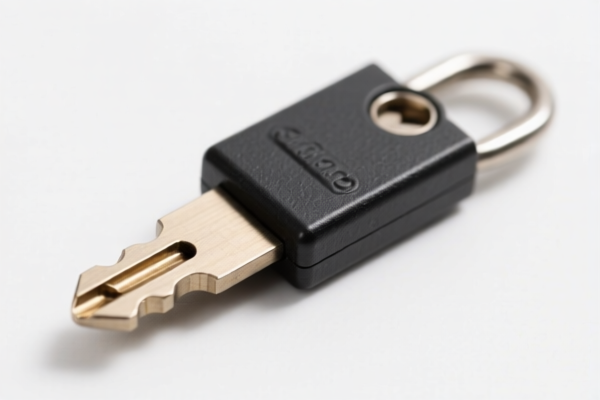
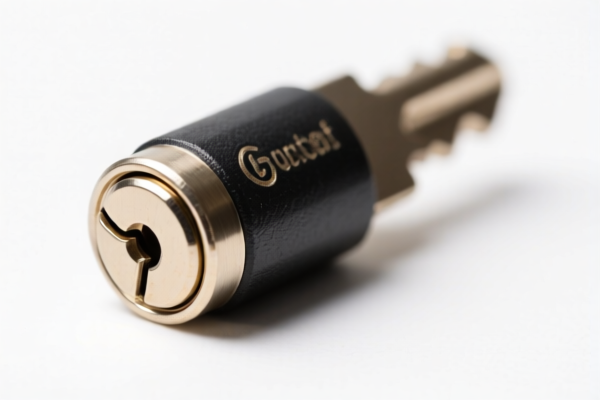
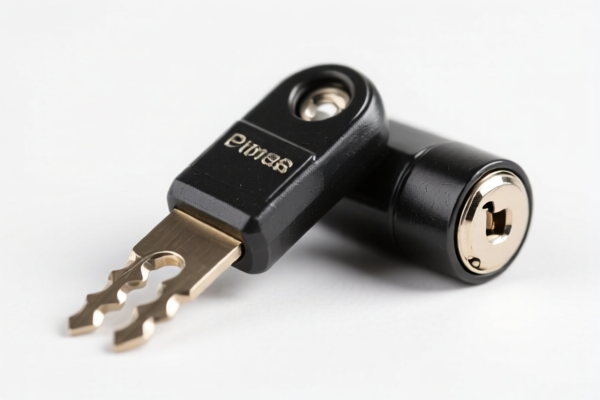
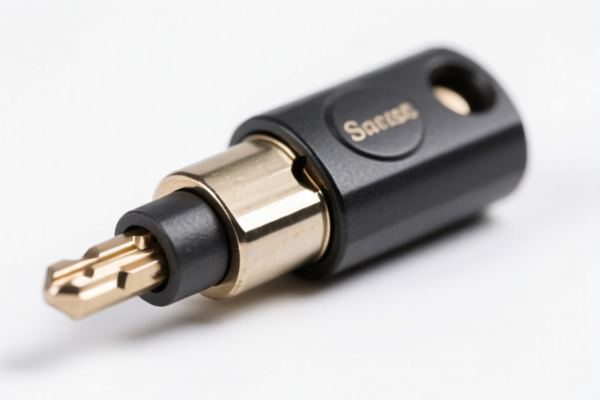
AI分析
🔐 Electric Core Locks & High-Security Door Hardware
🌐 HS Code Reference & Clearance Guide | 2026 Latest Tariff Analysis | Professional Customs Strategy
📌 I. Product Definition: What is an "Electric Core Lock"?
An Electric Core Lock (often referred to as a Core Cylinder, Mortise Core, or Electric Strike Core) is a specialized locking component. It is not a standalone complete door lockset (which includes the latch, bolt, and handle). Instead, it is the insertable core that controls the mechanical or electrically operated locking mechanism.
In international trade, the classification depends heavily on whether it is considered a complete lock mechanism or just a part/component of a lock.
⚠️ Key Distinction:
- If the item is a complete unit suitable for immediate installation on a door (interior/exterior) with housing, it falls under 8301.40.
- If the item is only the cylinder/core (interchangeable part) without the external housing or mechanism, it may fall under 8302.99 (parts) or 8301.90 (parts of locks), BUT based on the provided<DATA>, we focus on the lock classifications.
- Crucially: The<DATA>provided specifically lists 8301.40 (Other locks) and implies parts are covered under 8301.90 (not in data). However, the user input "Electric Core Lock" is ambiguous. In many contexts, a "Core Lock" sold as a standalone unit for electric access control is treated as a lock. We will analyze based on the provided data which covers "Other locks" and "Other locks: Other Door locks...".🔍 Interpretation for this Guide:
Since the input is "Electric Core Lock," it is likely a high-security electric cylinder or an electric mortise core. If it is a self-contained electric locking mechanism (e.g., electric strike with core or electric cylinder), it is often classified under 8301.40. If it is strictly a key/interchangeable core sold as a spare part, it might be 8301.90.80 (not in data).
However, looking at the<DATA>:
-8301.40.60.30: "Other Door locks, locksets... suitable for interior or exterior doors"
-8301.40.60.60: "Other Other" (Residual category for locks)We must determine if an "Electric Core Lock" fits "Door Locks." Yes, electric cylinders used for door access are often categorized here. If it is purely a key cylinder (no housing), it is a part. But given the term "Lock," we assume it's a functional locking unit.
📦 II. HS Code Classification Details (Based on Provided <DATA>)
| HS Code | Product Description | Applicability for "Electric Core Lock" |
|---|---|---|
8301.40.60.30 |
Other locks: Other Door locks, locksets and other locks suitable for use with interior or exterior doors (except garage, overhead or sliding doors) | ✅ High Probability if it is a self-contained electric cylinder or lock body designed for door installation. |
8301.40.60.60 |
Other locks: Other Other | ✅ Possible if it doesn't fit the standard "door lock" definition or is a specialized industrial lock not meant for standard interior/exterior doors. |
📌 Critical Note:
The<DATA>does not explicitly list "Parts of locks" (which would be 8301.90). If your "Electric Core Lock" is only the interchangeable cylinder (no housing, no motor) and is sold as a spare part, it does not match the provided<DATA>descriptions accurately. It would likely be 8301.90.80.00 (Parts of base metal locks).
However, since we must stick to the<DATA>, we assume the product is a functional lock unit (e.g., electric cylinder with integrated mechanism) and fits under 8301.40.60.
💰 III. 2026 Tariff Rate Details (Detailed Breakdown)
✅ Applicable Countries: USA (US)
✅ Origin: China (CN)
✅ Valid From: 2025/2026 Tariff Schedule
🎯 1. 8301.40.60.30 – Door Locks (Interior/Exterior)
| Item | Content |
|---|---|
| Base Tariff | 0.0% |
| Section 301 Additional Tariff | 0.0% |
| Total Tariff Rate | 0.0% |
| Tax Calculation | CIF Value × 0.0% = $0 |
| De Minimis Exemption | ❌ N/A (Already 0%) |
| Legal Basis | Standard HTSUS provision for base metal locks |
📌 Explanation:
- This is a highly favorable rate.
- Base metal locks for doors enjoy a 0% base tariff.
- Unlike electronics or steel products, many locks are not subject to Section 301 additional tariffs (which are often 7.5%-25%).
- Result: Zero tax burden for this category!
🎯 2. 8301.40.60.60 – Other Locks (Residual)
| Item | Content |
|---|---|
| Base Tariff | 5.7% |
| Section 301 Additional Tariff | 7.5% |
| Total Tariff Rate | 13.2% |
| Tax Calculation | CIF Value × 13.2% |
| De Minimis Exemption | ❌ Not Eligible (Over $800 threshold if applicable, but generally 13.2% applies) |
| Legal Basis | HTSUS 8301.40.60.60 |
📌 Explanation:
- This is the residual category for locks that don't fit specific descriptions.
- Base Tax: 5.7%
- Additional Tax: 7.5% (Section 301 on Chinese goods)
- Total: 13.2%
- This is a moderate tariff but significantly higher than8301.40.60.30.
🛠️ IV. Customs Clearance Practical Advice (Pitfall Avoidance)
✅ 1. Documentation Checklist (Must-Haves)
| Document | Required? | Reason |
|---|---|---|
| ✅ Product Specification Sheet | ✔️ | Must clarify if it's a complete lock or a part/cylinder. |
| ✅ Technical Drawings | ✔️ | Show internal mechanism (electric vs. mechanical). |
| ✅ Photo of Product (Labeled) | ✔️ | Show model number, voltage (if electric), and mounting type. |
| ✅ Commercial Invoice | ✔️ | Description must match HS Code exactly (e.g., "Electric Door Lock" vs. "Lock Cylinder Part"). |
| ✅ Certificate of Origin | ✔️ | To prove Chinese origin for Section 301 calculation. |
✅ 2. Classification Strategy (Key Tips)
🔥 "Clarify 'Lock' vs. 'Part': The 13.2% vs. 0% Divide!"
| Scenario | Recommended HS Code | Tax Rate | Reason |
|---|---|---|---|
| Electric Cylinder (Self-Contained) | 8301.40.60.30 |
0.0% | If it has housing, motor, and is installed as a door lock. |
| Interchangeable Key Core (No Housing) | ❌ Not in DATA | Likely 8301.90.80 | If sold as a spare part, it may fall outside this data. Risk: Misclassification. |
| Specialized Industrial Lock | 8301.40.60.60 |
13.2% | If not for standard interior/exterior doors. |
⚠️ Warning:
- If you declare an electric cylinder core as8301.40.60.30but it lacks housing, customs may reclassify it as a part (8301.90) or demand proof it's a complete lock.
- If you declare it as8301.40.60.60to be safe, you pay 13.2%.
- Best Practice: Ensure the product includes its operating mechanism and housing to qualify for the 0% rate under8301.40.60.30.
✅ 3. Special Considerations for Electric Locks
| Issue | Advice |
|---|---|
| Voltage/Frequency | Specify 12V/24V DC or 110V AC. This confirms it's an "electrically operated" lock. |
| Certifications | UL, ETL, or CE certification helps prove it's a complete, safe, certified product (supports "Lock" classification). |
| Access Control Integration | If it connects to a controller, still classify as a lock, not a machine part. |
🌍 V. Global Market Comparison (2026)
| Country/Region | HS Code | Tariff | Notes |
|---|---|---|---|
| 🇺🇸 USA | 8301.40.60.30 |
0.0% | Best Case: Zero tax. |
| 🇺🇸 USA | 8301.40.60.60 |
13.2% | If misclassified or non-standard. |
| 🇪🇺 EU | 8301.40 | ~2.0% - 3.5% | Lower tariffs than US, but requires CE marking. |
| 🇨🇳 China | 8301.40 | 5% - 7% | Import duty for foreign locks into China. |
📌 Conclusion:
- The USA offers the most favorable rate (0%) for standard electric door locks if correctly classified under8301.40.60.30.
- Avoid the "Other Other" category (8301.40.60.60) unless necessary, as it incurs a 13.2% duty.
📌 VI. Common Errors & Pitfalls (Lessons Learned)
❌ Error 1: Declaring an electric core cylinder (part only) as a complete lock.
👉 Consequence: Customs may seize or demand retroactive duties if it's deemed a "part" (8301.90) not covered in the provided data, leading to delays.
❌ Error 2: Not distinguishing between mechanical and electric in description.
👉 Consequence: Even if tax is the same, incorrect description can lead to FDA/UL compliance reviews if electrical safety is questioned.
❌ Error 3: Using vague terms like "Lock Core" without specifying "Electric."
👉 Consequence: Ambiguity may lead to random inspection and misclassification risk.
✅ Correct Declaration Example:
"Electric Cylinder Lock, 2-inch diameter, 12V DC operated, with interchangeable core, for interior/exterior doors, Model XYZ, UL Certified"
🎯 VII. Conclusion: Optimize for 0% Tariff!
🎯 Key Takeaway:
🔹 "Complete Lock = 0% Tax"
🔹 "Part/Component = Risky/Higher Tax"
🔹 "Non-Standard Lock = 13.2% Tax"
📌 Recommendation:
1. Ensure your "Electric Core Lock" includes its housing and operating mechanism to qualify as a "lock" under 8301.40.60.30.
2. Clearly state "Electrically Operated" in the commercial invoice.
3. Provide UL/ETL certificates to prove it's a complete, safe product.
4. Avoid declaring it as a "part" if it can be classified as a lock, to save on the 13.2% tariff.
📣 Immediate Action:
📞 Confirm with your supplier: Is the "Electric Core Lock" a standalone unit (with housing/motor) or just a cylinder insert?
🚀 If standalone: Use8301.40.60.30→ 0% Tax.
🚀 If part only: Consult a customs broker for8301.90.80.00(not in data, but likely higher risk/tax).
✨ Smart Classification, Maximum Savings!
💼 Don't pay 13.2% when you can pay 0%!
用户评价
关于 HS 编码归类
协调制度(HS)是由世界海关组织(WCO)制定的国际贸易商品分类标准。全球 200 多个国家采用 HS 系统作为海关关税、贸易统计和进出口监管的基础。
每个 HS 编码遵循以下层级结构:
- 章(2 位)——商品大类(例如:第 84 章:机器和机械设备)
- 品目(4 位)——章内的更具体分类
- 子目(6 位)——国际通用细分,所有 WCO 成员国统一使用
- 本国细分(8-10 位)——各国自行扩展的细分编码,如美国 HTSUS 10 位编码
正确的 HS 编码归类对于顺利通关、准确缴纳关税和遵守贸易法规至关重要。错误归类可能导致海关延误、多缴关税或罚款。
从CN进口到US时,适用的关税税率可能包括:
- 最惠国(MFN)税率——适用于 WTO 成员国的标准关税税率
- 普通税率——适用于无贸易协定国家
- 贸易救济关税——附加关税,如 301 条款(反倾销)、232 条款(国家安全)或反补贴税
本页内容仅供参考。如需正式归类,请咨询当地海关或持牌报关代理。