Electric Vehicle Adapter
CN → US| HS编码 | 关税税率 | 原产国 | 目的国 | 文档 |
|---|---|---|---|---|
| 8504407007 | 35.0% | CN | US | 官方文档 |
| 8504407018 | 35.0% | CN | US | 官方文档 |
| 8504406007 | 35.0% | CN | US | 官方文档 |
| 8536694010 | 35.0% | CN | US | 官方文档 |
商品图片
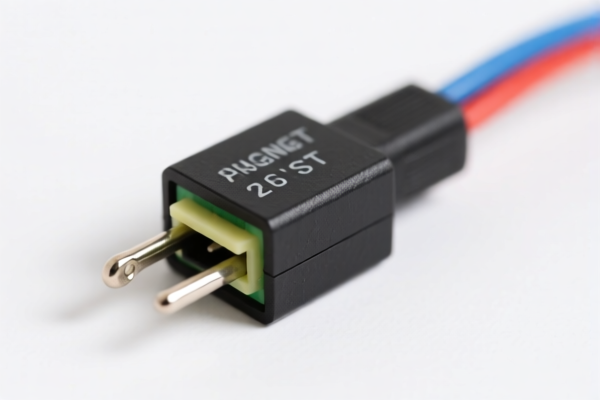
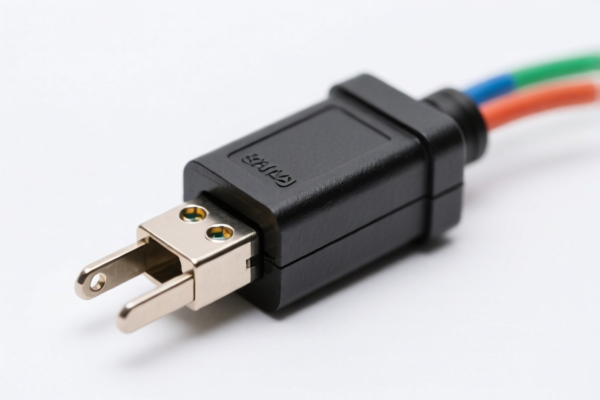
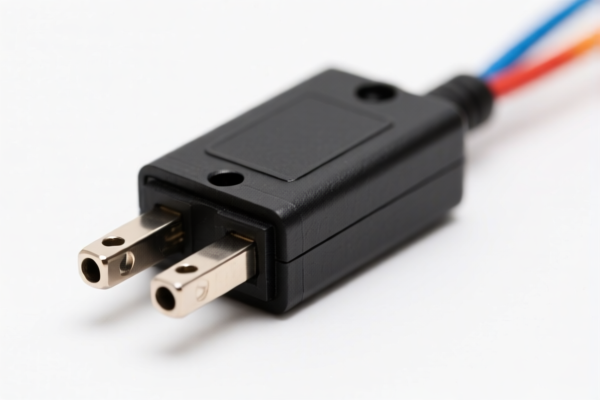
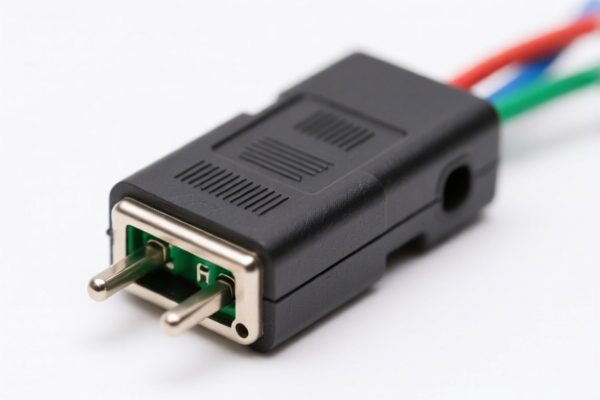
AI分析
🔌 Electric Vehicle (EV) Adapter / Power Supply Unit
🌐 HS Code Reference & Customs Clearance Guide | 2026 Latest Tariff Analysis | Professional Strategy for China-US Trade
📌 I. Product Definition & Classification: What Exactly is an "EV Adapter"?
An Electric Vehicle Adapter (often referred to as an On-Board Charger (OBC) or Portable EVSE) is a critical component in the electric mobility ecosystem. Its primary function is to convert Alternating Current (AC) from the grid into Direct Current (DC) to charge the vehicle’s battery, or to manage the communication and power flow between the vehicle and the charging station.
In international trade, the classification depends heavily on whether the device is considered a Static Converter (power supply) or a Connection Device (plug/socket interface).
⚠️ Key Distinction:
- If the device primarily converts AC to DC or manages power conversion → It is classified as a Static Converter.
- If the device is merely a mechanical/electrical connector (e.g., a simple plug adapter without complex conversion circuitry) → It may be classified as a Connection Device.
- Most modern "EV Adapters" with electronic control units (ECUs) fall under Static Converters.
📦 II. HS Code Classification Details (2026 Latest Tariff Authority)
Based on the provided data, the potential HS Codes for EV Adapters are analyzed below. All codes listed below apply to products of Chinese Origin imported into the United States.
| HS Code | Product Description | Summary of Classification Logic |
|---|---|---|
8504.40.70.07 |
Static Converters - Other - Other | Primary Classification: The EV adapter functions as a static converter (power supply) that converts AC to DC. This code captures the essence of power transformation. |
8504.40.70.18 |
Static Converters - Other - Other (Specific Power Range/Type) | Alternative Classification: Falls under "Other" static converters. No conflict with material or usage definitions for this specific power interval. |
8504.40.60.07 |
Static Converters - Other - Other | Functional Classification: Emphasizes the static converter nature of the adapter. Confirms the functional description of power conversion. |
8536.69.40.10 |
Switches, Protectors, Connectors - Coaxial Connectors / Voltage ≤ 1,000V | Secondary/Edge Case: If the device is classified primarily as an electrical connection and conversion device (like a heavy-duty connector) rather than a power converter, it might fall here. It fits the category of connection devices for voltage ≤ 1,000V. |
🔍 Critical Note:
- The vast majority of EV Adapters (Level 1/Level 2 chargers) are Static Converters. Therefore, codes8504.40.70.07,8504.40.70.18, and8504.40.60.07are the most accurate and commonly used classifications.
- Code8536.69.40.10is less common for full adapters but may apply to simpler connector-only components.
💰 III. 2026 Latest Tariff Rate Breakdown (Detailed)
✅ Applicable Country: United States (US)
✅ Country of Origin: China (CN)
✅ Effective Date: Ongoing (Current Trade War Tariffs)
✅ Total Tax Rate for ALL Listed HS Codes: 35.0%
🎯 Detailed Tax Breakdown for All HS Codes (8504.40.70.07, 8504.40.70.18, 8504.40.60.07, 8536.69.40.10)
| Tax Component | Rate | Legal Basis & Explanation |
|---|---|---|
| Base Tariff | 0.0% | Standard Most Favored Nation (MFN) rate for these electronic components under normal conditions. |
| Section 301 Tariff | 25.0% | "Additional Tariff": Imposed under Section 301 of the Trade Act of 1974. Applies to a wide range of Chinese imports, including electronic components and EV accessories. |
| Section 122 Tariff | 10.0% | "Section 122 Tariff": Additional levy applied to specific Chinese goods. Note: In some contexts, this may refer to other specific trade measures, but here it is explicitly listed as 10%. |
| TOTAL TAX RATE | 35.0% | 0% + 25% + 10% = 35% |
📌 Explanation of the 35% Burden:
- Base Rate (0%): No duty under standard MFN treatment.
- Section 301 (25%): The largest portion of the tariff, directly targeting Chinese manufacturing competitiveness.
- Section 122 (10%): An additional layer of protectionist tariff.
- Combined Effect: For every $100 CIF value of EV Adapters imported from China to the US, $35 must be paid in duties.⚠️ Dep Minimis Exemption:
- ❌ NOT ELIGIBLE. These goods are explicitly excluded from the de minimis exemption (Section 321). All shipments are subject to full duty payment.
🛠️ IV. Customs Clearance Practical Advice (Risk Avoidance Guide)
✅ 1. Required Documentation Checklist
| Document | Mandatory? | Purpose |
|---|---|---|
| ✅ Product Specification Sheet | YES | Must clearly state input/output voltage, current, power rating (W/kW), and function (AC/DC conversion). |
| ✅ Circuit Diagram / Block Diagram | YES | To prove the device is a Static Converter (HS 8504) and not just a passive connector. |
| ✅ Product Photos | YES | Clear images of the unit, including labels, ports, and any branding. |
| ✅ Third-Party Certification | YES | FCC ID (mandatory for electronic devices in the US), UL/ETL for safety. |
| ✅ Commercial Invoice | YES | Must accurately describe the goods as "Electric Vehicle Power Adapter" or "Static Converter," not just "Plug." |
| ✅ Packing List | YES | Details weight, dimensions, and packaging. |
✅ 2. Declaration Tips
🔥 Golden Rule:
"Declare as Converter, Not Connector. Specify Power Ratings. Avoid Ambiguity."
| Scenario | Correct Declaration | Incorrect Declaration | Risk |
|---|---|---|---|
| Standard EV Charger/Adapter | "Static Converter for Electric Vehicles, AC/DC, [Power] kW" | "EV Plug Adapter" | Misclassification → Potential penalties or reclassification to higher duty. |
| Connector-Only Adapter | "Electrical Connection Device, Voltage ≤ 1,000V" | "EV Charger" | If it has circuitry, misclassification as a simple connector could lead to disputes. |
| Mixed Shipment | Separate HS Codes for Converters (8504) vs. Connectors (8536) | Mixed under one code | Audit risk, delayed clearance. |
✅ 3. Special Considerations
| Situation | Advice |
|---|---|
| OEM/ODM Orders | Ensure the supplier provides the FCC ID and CPC (Children's Product Certificate) if applicable, though EV chargers usually fall under adult use. |
| Smart Chargers | If the adapter has Wi-Fi/Bluetooth, emphasize FCC Part 15 compliance. |
| High-Power Adapters | For > 1kW units, ensure safety certifications (UL/CE) are robust to avoid safety holds. |
| Origin Marking | Ensure each unit is clearly marked "Made in China" to avoid Section 301 tariff evasion claims. |
🌍 V. Global Market Comparison (2026)
| Country/Region | Recommended HS Code | Total Tariff (China Origin) | Key Certifications | Notes |
|---|---|---|---|---|
| 🇺🇸 USA | 8504.40.70.07 / 8504.40.60.07 |
35% | FCC, UL, ETL | Highest duty burden. Section 301 + 122 apply. |
| 🇨🇳 China | 8504.40.70.07 |
0% (Export) | CCC, GB Standards | Duty-free export, but subject to domestic regulations. |
| 🇪🇺 EU | 8504.40.70.00 |
0% (Generally) | CE, RoHS, E-Mark | No Section 301 equivalent. Competitive advantage. |
| 🇨🇦 Canada | 8504.40.70.00 |
0% (Mostly) | IC, CSA | Generally lower barriers than US. |
| 🇦🇺 Australia | 8504.40.70.00 |
5% | RCM, AS/NZS | Lower tariff than US, but strict safety standards. |
📌 Conclusion:
- The US market is the most expensive due to the 35% total tariff (25% Section 301 + 10% Section 122).
- EU and Canada offer more favorable tariff environments, but require strict adherence to local safety standards (CE, IEC, etc.).
- Strategy: Consider third-country assembly (e.g., Vietnam, Mexico) if targeting the US to potentially mitigate Section 301 tariffs, but ensure substantial transformation occurs.
📌 VI. Common Mistakes & Pitfalls (Lessons Learned)
❌ Mistake 1: Declaring an EV Adapter as a "Simple Plug" (HS 8536) to avoid higher duties.
👉 Consequence: Customs will reject this because the device contains conversion circuitry. Result: Reclassification, fines, and delay.
❌ Mistake 2: Ignoring the Section 122 Tariff.
👉 Consequence: Underpayment of 10%. Result: Audit, back-taxes, and penalties.
❌ Mistake 3: Missing FCC ID on the product.
👉 Consequence: Detention at US Customs. The product cannot be legally imported without FCC compliance for electronic devices.
❌ Mistake 4: Vague Description ("EV Part").
👉 Consequence: Customs examiner may assign a generic, higher-duty code. Result: Unexpected high tax bill.
✅ Correct Practice:
"Electric Vehicle Static Converter Adapter, AC/DC, 7.2kW, FCC ID: XXXXX, Made in China"
🎯 VII. Conclusion: Professional Clearance, Cost Control, Efficiency!
🎯 Key Takeaways:
🔹 EV Adapters are Static Converters (HS 8504) – Not simple connectors.
🔹 Total US Duty is 35% – Includes 25% Section 301 and 10% Section 122.
🔹 FCC Certification is Non-Negotiable – No FCC ID, no entry.
🔹 Documentation is Key – Circuit diagrams and specs prevent misclassification.
📌 Pro Tip:
If you are importing large volumes, consider applying for an HS Code Advance Ruling from US Customs and Border Protection (CBP) to confirm the classification and tariff liability before shipment. This reduces the risk of post-entry audits.
📣 Immediate Action:
📞 Contact your customs broker with the product specs and FCC ID.
📊 Calculate landed cost including the 35% duty.
🚀 Optimize your supply chain to ensure smooth and compliant clearance.
✨ Professional clearance starts with precise classification!
💼 Every dollar of duty paid should be justified and accurate!
用户评价
关于 HS 编码归类
协调制度(HS)是由世界海关组织(WCO)制定的国际贸易商品分类标准。全球 200 多个国家采用 HS 系统作为海关关税、贸易统计和进出口监管的基础。
每个 HS 编码遵循以下层级结构:
- 章(2 位)——商品大类(例如:第 84 章:机器和机械设备)
- 品目(4 位)——章内的更具体分类
- 子目(6 位)——国际通用细分,所有 WCO 成员国统一使用
- 本国细分(8-10 位)——各国自行扩展的细分编码,如美国 HTSUS 10 位编码
正确的 HS 编码归类对于顺利通关、准确缴纳关税和遵守贸易法规至关重要。错误归类可能导致海关延误、多缴关税或罚款。
从CN进口到US时,适用的关税税率可能包括:
- 最惠国(MFN)税率——适用于 WTO 成员国的标准关税税率
- 普通税率——适用于无贸易协定国家
- 贸易救济关税——附加关税,如 301 条款(反倾销)、232 条款(国家安全)或反补贴税
本页内容仅供参考。如需正式归类,请咨询当地海关或持牌报关代理。