Electrical Fuses
CN → US| HS编码 | 关税税率 | 原产国 | 目的国 | 文档 |
|---|---|---|---|---|
| 8548000000 | 35.0% | CN | US | 官方文档 |
| 8536100040 | 37.7% | CN | US | 官方文档 |
| 8535100040 | 37.7% | CN | US | 官方文档 |
| 8536200040 | 37.7% | CN | US | 官方文档 |
| 8536100040 | 37.7% | CN | US | 官方文档 |
商品图片
AI分析
⚡ Electrical Fuses (Circuit Protection Devices)
🌐 HS Code Reference & Customs Clearance Guide | 2026 Latest Tariff Analysis | Professional Clearance Strategy
📌 I. Product Definition & Classification: Do You Really Understand "Fuses"?
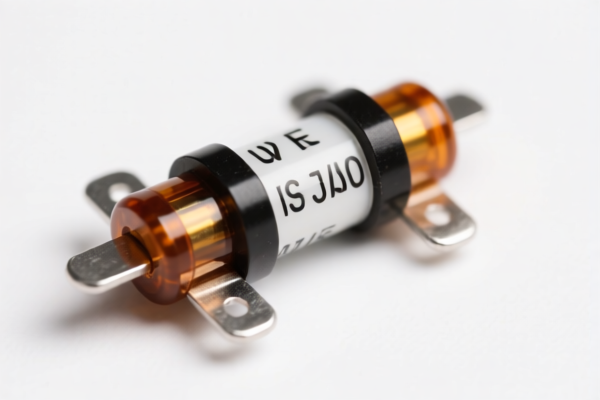
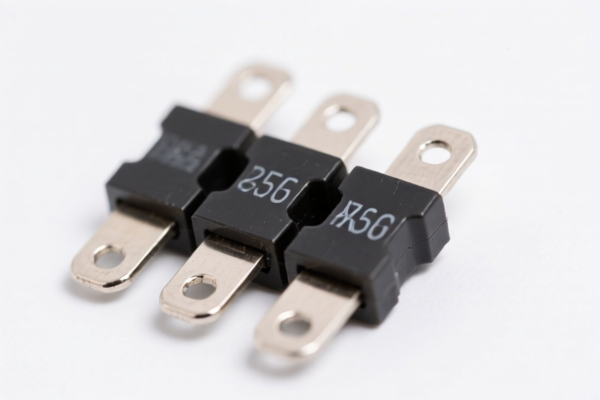
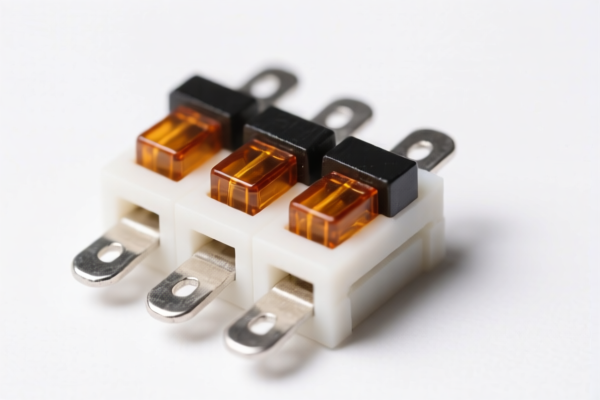
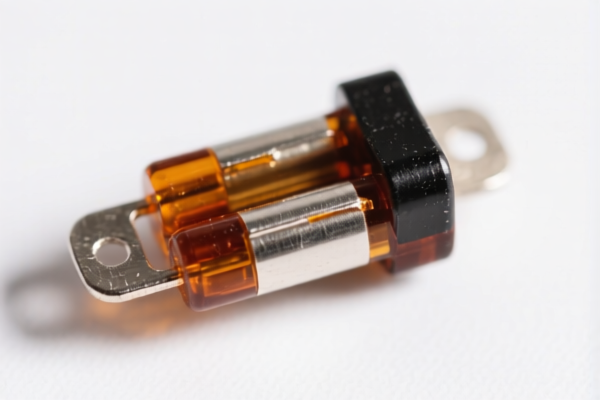
Electrical fuses are critical safety components designed to protect electrical circuits from overcurrent. In international trade, their classification depends heavily on voltage rating, physical form, and specific application. While generally falling under Chapter 85 (Electrical machinery and equipment), minor differences in specification can shift the HS Code and significantly impact duties.
⚠️ Key Distinction:
- Low Voltage Fuses (≤1000V): Typically fall under 8536 or 8535.
- High Voltage/Industrial Fuses: May fall under 8548 if considered parts of machinery.
- Material/Usage: Fuses are primarily electrical components, but classification often hinges on whether they are "switches," "protection devices," or "parts."
📦 II. HS Code Classification Details (2026 Latest Tariff Authority对照)
Based on the provided data, the following HS Codes are identified for Electrical Fuses, with distinct tax implications:
| HS Code | Product Description | Application Logic | Key Characteristic |
|---|---|---|---|
8548.00.00.00 |
Parts of electrical machinery, not specified elsewhere | Fuses treated as generic electrical components; no material conflict | 0% Base Duty |
8536.10.00.40 |
Switches for protecting electrical circuits (≤1000V) | Core usage "Fuse" matches category; fallback principle applied | 2.7% Base Duty |
8535.10.00.40 |
Other switches for voltages >100V but ≤1000V | Name "Fuse" matches category; fallback category, no material conflict | 2.7% Base Duty |
8536.20.00.40 |
Other switches for voltages ≤1000V | Electrical switch & fuse usage matches; fallback rule applied | 2.7% Base Duty |
8536.10.00.40 |
Switches for protecting electrical circuits (≤1000V) | Switch & fuse usage matches; "n.e.s." (not elsewhere specified) principle applied | 2.7% Base Duty |
🔍 Important Note:
- The code8548.00.00.00offers the lowest base duty (0%) but may require stricter justification as a "part" rather than a standalone switch/protection device. - Codes under8536and8535are more common for standard low-voltage fuses, categorized as "switches" or "protection devices." - All classifications assume the product is a standalone electrical fuse component.
💰 III. 2026 Latest Tariff Rate Details (Including Surtaxes & Policy Add-ons)
✅ Applicable Country: United States (US)
✅ Origin: China (CN)
✅ Effective Date: Post-November 2025 (Current Regulations)
🎯 1. 8548.00.00.00 —— Fuses as Electrical Components (Parts)
| Item | Content |
|---|---|
| Base Duty Rate | 0.0% |
| USITC Surtax (Section 301) | +25.0% |
| 122 Clause Tariff (IEEPA) | +10.0% |
| Total Duty Rate | 35.0% |
| Tax Calculation | CIF Value × 35% |
| De Minimis Eligibility | ❌ Not Eligible |
| Legal Basis Path | USITC:8548.00.00.00 → FOOTNOTE:301 → IEEPA:122 |
📌 Explanation:
- This code benefits from a 0% base duty, making it the most tax-efficient option for base costs. - However, it still bears the 25% Section 301 surtax and 10% 122 Clause tariff, totaling 35%. - Justification must confirm that the fuse is treated as a "part of machinery" rather than a standalone switch.
🎯 2. 8536.10.00.40 / 8536.20.00.40 / 8535.10.00.40 —— Fuses as Switches/Protection Devices
| Item | Content |
|---|---|
| Base Duty Rate | 2.7% |
| USITC Surtax (Section 301) | +25.0% |
| 122 Clause Tariff (IEEPA) | +10.0% |
| Total Duty Rate | 37.7% |
| Tax Calculation | CIF Value × 37.7% |
| De Minimis Eligibility | ❌ Not Eligible |
| Legal Basis Path | USITC:8536.10.00.40 → FOOTNOTE:301 → IEEPA:122 |
📌 Note:
- These codes are more commonly used for standard low-voltage fuses classified as "switches" or "protection devices." - The total duty rate is 37.7%, which is 2.7% higher than the8548classification due to the 2.7% base duty. - All three codes (8536.10,8536.20,8535.10) have identical tax rates in the provided data, as they fall under similar protection categories.
🛠️ IV. Customs Clearance Practical Advice (Avoiding Pitfalls)
✅ 1. Document Preparation Checklist (Mandatory)
| Document | Required | Description |
|---|---|---|
| ✅ Product Specification Sheet | ✔️ | Must include voltage rating, current rating, breaking capacity, and dimensions. |
| ✅ Circuit Diagram/Structure | ✔️ | To determine if it’s a standalone fuse or part of a larger assembly. |
| ✅ Product Photos (with Label) | ✔️ | Clear view of model number, brand, and technical specs. |
| ✅ Third-Party Test Report | ✔️ | UL, CE, RoHS, or IEC certifications (if applicable). |
| ✅ Commercial Invoice | ✔️ | Must specify "Electrical Fuse" and HS Code. Avoid vague terms like "Electric Part." |
| ✅ Certificate of Origin (CO) | ✔️ | If not from China, apply for preferential rates. |
| ✅ Packing List | ✔️ | Detail contents to avoid separation of components during inspection. |
✅ 2. Declaration Tips (Key Mantra)
🔥 "Voltage Dictates Code, Purpose Determines Rate, Accuracy Saves Money!"
| Scenario | Correct Declaration | Wrong Practice |
|---|---|---|
| Standard Low-Voltage Fuse | 8536.10.00.40 (2.7% base + surtax) |
Misdeclare as 8548 without justification → Audit risk |
| Fuse as Part of a Machine | 8548.00.00.00 (0% base + surtax) |
Declare as standalone switch → 37.7% vs 35% difference |
| High-Voltage Industrial Fuse | Verify specific subheading | Use generic "Fuse" → Delay or rejection |
| Fuse + Holder Assembly | Declare as assembly (if applicable) | Split declaration → Higher combined duty |
✅ 3. Special Handling
| Situation | Handling Advice |
|---|---|
| OEM Custom Fuses | Provide customer orders + design specs to prove specific use. |
| Fuse + Socket/Holder | If sold together, consider declaring as a set; otherwise, declare separately. |
| Industrial vs. Consumer | Industrial fuses may have different classification nuances; provide application proof. |
| High-Volume Imports | Consider Advance Ruling from CBP to lock in HS Code and duty rate. |
🌍 V. Global Market Comparison (2026 Latest)
| Country/Region | Recommended HS Code | Duty Rate | Certification | Notes |
|---|---|---|---|---|
| 🇺🇸 USA | 8548.00.00.00 or 8536.10.00.40 |
35% / 37.7% | UL, CUL, FCC (if electronic) | Highest cost due to surtaxes |
| 🇨🇳 China | 8548.00.00.00 or 8536.10.00.40 |
5%~7% | CCC (if applicable) | No surtaxes |
| 🇪🇺 EU | 8536.20.00 or 8548.00.00 |
0%~2.5% | CE, RoHS | No anti-dumping duties typically |
| 🇯🇵 Japan | 8536.20.00 or 8548.00.00 |
0%~5% | PSE | Competitive rates |
📌 Conclusion:
- USA imposes the highest total duty (35-37.7%) due to Section 301 and 122 Clause tariffs. - EU and Japan offer more favorable rates, often with no surtaxes. - For US imports, choosing8548.00.00.00can save 2.7% in base duty, but requires strong justification.
📌 VI. Common Mistakes & Pitfalls (Lessons Learned)
❌ Mistake 1: Declaring fuses as "Electric Parts" without specifying voltage or type.
👉 Consequence: Customs may reclassify to a higher-tariff code or demand detailed specs.
❌ Mistake 2: Using 8548 for standard consumer fuses without justification.
👉 Consequence: Audit risk; customs may argue it should be classified as a switch (8536).
❌ Mistake 3: Ignoring the 122 Clause Tariff.
👉 Consequence: Unexpected 10% additional cost; fines for non-compliance.
❌ Mistake 4: Splitting fuse and holder into separate shipments without coordination.
👉 Consequence: Inconsistent classification; potential duty discrepancies.
✅ Correct Approach:
"Electrical Fuse, 250V AC, 10A, Class CC, UL Listed, Model XYZ"
🎯 VII. Conclusion: Precise Classification, Smarter Clearance!
🎯 Remember the Mantra:
🔹 "Voltage Defines, Usage Classifies, Tariff Depends!"
🔹 "35% vs 37.7%: Small Difference, Big Impact!"
🔹 "HS Code is Key, Duty Saves Thousands!"
📌 Pro Tip:
If your fuses are sourced from Vietnam, Mexico, or Thailand, you may qualify for IEEPA Exemptions or lower surtax rates.
Recommend applying for an Advance Ruling before shipment to ensure correct classification and avoid clearance delays.
📣 Take Action Now:
📞 Contact a Professional Customs Broker + Provide Product Specs + Apply for HS Code Advance Ruling
🚀 Ensure Smooth Clearance, Efficient Export, and Maximum Profit!
✨ Professional Clearance Starts with Accurate Classification!
💼 Every Penny of Cost Should Be Precisely Calculated!
用户评价
关于 HS 编码归类
协调制度(HS)是由世界海关组织(WCO)制定的国际贸易商品分类标准。全球 200 多个国家采用 HS 系统作为海关关税、贸易统计和进出口监管的基础。
每个 HS 编码遵循以下层级结构:
- 章(2 位)——商品大类(例如:第 84 章:机器和机械设备)
- 品目(4 位)——章内的更具体分类
- 子目(6 位)——国际通用细分,所有 WCO 成员国统一使用
- 本国细分(8-10 位)——各国自行扩展的细分编码,如美国 HTSUS 10 位编码
正确的 HS 编码归类对于顺利通关、准确缴纳关税和遵守贸易法规至关重要。错误归类可能导致海关延误、多缴关税或罚款。
从CN进口到US时,适用的关税税率可能包括:
- 最惠国(MFN)税率——适用于 WTO 成员国的标准关税税率
- 普通税率——适用于无贸易协定国家
- 贸易救济关税——附加关税,如 301 条款(反倾销)、232 条款(国家安全)或反补贴税
本页内容仅供参考。如需正式归类,请咨询当地海关或持牌报关代理。