Electronic Door Lock
CN → US| HS编码 | 关税税率 | 原产国 | 目的国 | 文档 |
|---|---|---|---|---|
| 7326908676 | 87.9% | CN | US | 官方文档 |
| 8301406030 | 23.2% | CN | US | 官方文档 |
| 8301300090 | 23.2% | CN | US | 官方文档 |
| 8302416045 | 88.9% | CN | US | 官方文档 |
| 8302419045 | 38.5% | CN | US | 官方文档 |
| 7326908688 | 87.9% | CN | US | 官方文档 |
商品图片
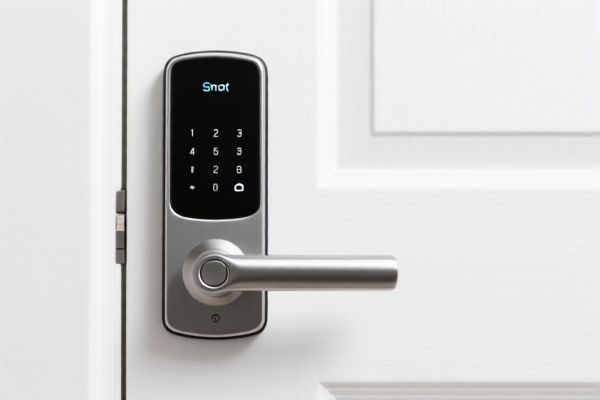
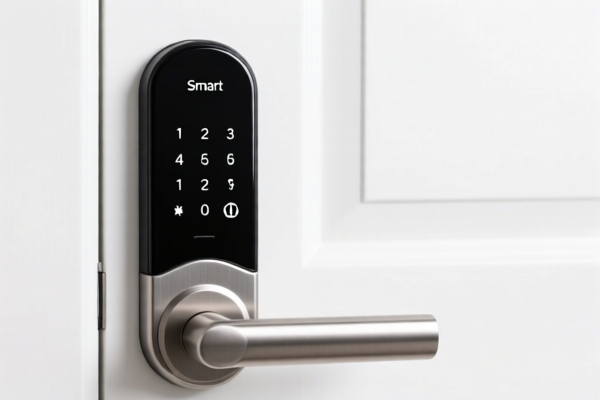
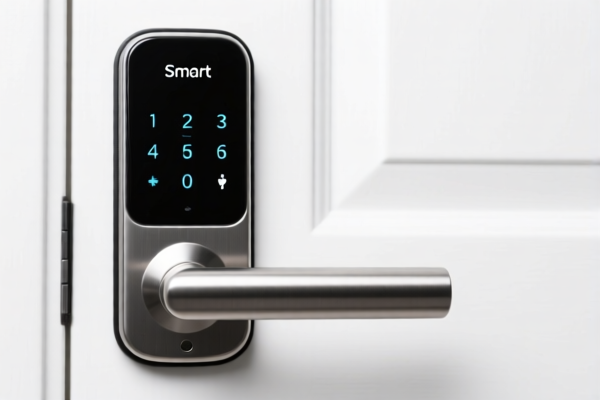
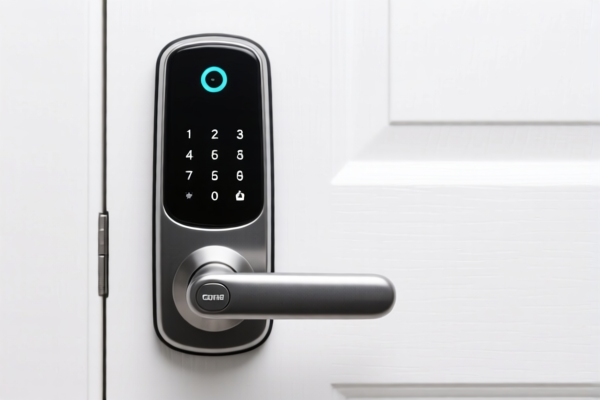
AI分析
🔐 Electronic Door Locks (Smart Locks)
🌐 HS Code Reference & Clearance Guide | 2026 Latest Tariff Analysis | Strategic Customs Clearance Strategies
📌 I. Product Definition & Classification: Do You Truly Understand "Electronic Door Locks"?
Electronic Door Locks are security devices used primarily for residential, commercial, and industrial applications. They replace or augment traditional mechanical keys with electronic components (keypads, RFID, biometrics, or smart home integration).
In international trade, the classification of door locks depends heavily on material composition and specific application context. Misclassification can lead to massive tariff discrepancies (from ~23% to nearly 90%).
⚠️ Critical Distinction Point:
- If the lock is made of Steel, Aluminum, or Copper alloys and classified broadly as a "metal product," it may fall under Chapter 73 or specific Chapter 83 headings with 122-Clause Steel/Aluminum/Copper Surcharges.
- If the lock is classified specifically as a "Lock" (Heading 8301) or "Furniture/Built-in Fitting" (Heading 8302), the tariff structure differs significantly.
- Key Risk: The inclusion of Section 232 and Section 301 duties heavily penalizes steel/aluminum components if not properly classified or if exemptions don't apply.
📦 II. HS Code Classification Details (2026 Latest Tariff Authority Cross-Reference)
Based on the provided data, there are five potential HS Codes for Electronic Door Locks. The choice determines your total tax burden.
| HS Code | Product Description | Application Context | Key Characteristics | Estimated Total Tax |
|---|---|---|---|---|
7326.90.86.76 |
Other articles of iron/steel | General Metal Articles | Made of iron/steel; classified as "other metal articles" rather than specific locks. | 87.9% |
8301.40.60.30 |
Locks for motor vehicles? (Context: Locks) | Locks Function | Specifically classified under "Locks" (Heading 8301); base material is base metal. | 23.2% |
8301.30.00.90 |
Other Locks | Furniture/Building Use | Classified as "Other Locks" under 8301; suitable for furniture or building use. | 23.2% |
8302.41.60.45 |
Base Metal Mountings & Fittings | Building Accessories | Classified as "Mountings and Fittings" (Heading 8302); applicable to indoor/outdoor doors. | 88.9% |
8302.41.90.45 |
Other Base Metal Mountings & Fittings | Building Accessories | Similar to above but broader category; base metal construction. | 38.5% |
🔍 Critical Observation:
- Codes7326.90.86.76and8302.41.60.45carry extremely high tariffs (~88-89%) due to the 122-Clause Surcharges on Steel, Aluminum, and Copper products.
- Codes8301.40.60.30and8301.30.00.90offer a significantly lower rate (23.2%) because they are classified specifically as "Locks" rather than generic metal fittings or articles.
- Strategic Advantage: Correctly classifying the product as a "Lock" (8301 series) instead of a "Metal Article" (7326) or "Fitting" (8302) can save up to 65% in duties.
💰 III. 2026 Latest Tariff Rate Breakdown (Including Surcharges & Policy Add-ons)
✅ Applicable Country: United States (US)
✅ Origin: China (CN)
✅ Effective Time: 2025/2026 (Post-Trade War Context)
🎯 1. 8301.40.60.30 & 8301.30.00.90 — The "Lock" Category (Recommended for Optimization)
| Item | Details |
|---|---|
| Base Tariff | 5.7% (Ad Valorem) |
| Section 301 Surcharges | +7.5% (Additional duties for Chinese origin) |
| 122-Clause Surcharges | None (Since classified as functional "Locks," not generic steel/aluminum articles) |
| Total Effective Rate | 23.2% |
| Tax Calculation | CIF Value × 23.2% |
| De Minimis Exemption | ❌ Not Applicable (Usually applies only to low-value shipments; high-duty goods require full entry) |
| Legal Pathway | HTSUS:8301.40.60.30 / HTSUS:8301.30.00.90 |
📌 Interpretation:
- This classification is the most cost-effective for standard electronic door locks.
- It avoids the punitive 122-Clause (Section 232) tariffs that target raw steel/aluminum products.
- Why? The Harmonized System often prioritizes function (Lock) over material (Steel) when a specific heading exists.
🎯 2. 7326.90.86.76 — "Other Articles of Base Metal" (High Risk)
| Item | Details |
|---|---|
| Base Tariff | 2.9% |
| Section 301 Surcharges | +25.0% |
| 122-Clause Surcharges | +50.0% (Specific to Steel/Aluminum/Copper Articles under Sec 232) |
| Total Effective Rate | 87.9% |
| Tax Calculation | CIF Value × 87.9% |
| De Minimis Exemption | ❌ Not Applicable |
| Legal Pathway | HTSUS:7326.90.86.76 |
📌 Warning:
- This rate is prohibitive. It applies if customs authorities decide the product is not primarily a "lock" but a generic "metal component" or "fastener."
- The 50% Surcharge is the killer here. It reflects the US government's strict stance on steel/aluminum imports under Section 232.
🎯 3. 8302.41.60.45 — "Base Metal Mountings & Fittings" (High Risk)
| Item | Details |
|---|---|
| Base Tariff | 3.9% |
| Section 301 Surcharges | +25.0% |
| 122-Clause Surcharges | +50.0% (Steel/Aluminum/Copper Surtax) |
| Total Effective Rate | 88.9% |
| Tax Calculation | CIF Value × 88.9% |
| De Minimis Exemption | ❌ Not Applicable |
| Legal Pathway | HTSUS:8302.41.60.45 |
📌 Warning:
- Even though Heading 8302 is for "Mountings and Fittings," the 122-Clause still applies if the material is steel/aluminum and the item is deemed a structural fitting rather than a functional lock unit.
- This is a common trap for "smart lock bodies" that include mounting plates.
🎯 4. 8302.41.90.45 — "Other Base Metal Mountings" (Medium Risk)
| Item | Details |
|---|---|
| Base Tariff | 3.5% |
| Section 301 Surcharges | +25.0% |
| 122-Clause Surcharges | None (Assumed excluded from specific 122 clause for this subheading) |
| Total Effective Rate | 38.5% |
| Tax Calculation | CIF Value × 38.5% |
| De Minimis Exemption | ❌ Not Applicable |
| Legal Pathway | HTSUS:8302.41.90.45 |
📌 Note:
- This sits in the middle. It avoids the 50% surcharge but is higher than the "Lock" classification.
- Use only if the product is primarily a mounting bracket or accessory, not the lock mechanism itself.
🛠️ IV. Customs Clearance Practical Advice (Real-World Pitfall Avoidance)
✅ 1. Documentation Checklist (Non-Negotiable)
| Document | Required? | Purpose |
|---|---|---|
| ✅ Product Specification Sheet | ✔️ | Must detail: Material (e.g., Zinc Alloy, Steel), Function (Lock vs. Bracket), Power Source (Battery/Wired). |
| ✅ Technical Diagram | ✔️ | Highlights the locking mechanism to prove it is a "Lock" (8301), not just a "Fitting" (8302). |
| ✅ Commercial Invoice | ✔️ | Clear description: "Electronic Deadbolt Lock, Model XYZ, Steel Body." Avoid vague terms like "Metal Hardware." |
| ✅ Bill of Lading / Packing List | ✔️ | Match quantities and weights exactly. |
| ✅ HTSUS Classification Justification | ✔️ | If possible, provide a letter explaining why it falls under 8301 (Lock) rather than 7326/8302. |
✅ 2. Declaration Strategy (Key Mnemonic)
🔥 "Function Over Material, Lock Over Fitting!"
| Scenario | Correct Declaration | Wrong Declaration | Consequence |
|---|---|---|---|
| Standard Electronic Lock | 8301.40.60.30 or 8301.30.00.90 |
7326.90.86.76 (Article of Iron/Steel) |
Save ~65% in duties |
| Lock with Mounting Plate | Declare as Lock (8301) if plate is integral | Declare as Fitting (8302) | Avoid 50% 122-Clause Surcharge |
| Lock Body Only (No Core) | Still likely 8301 |
8302.41.60.45 |
Prevents 88.9% rate |
✅ 3. Special Handling Tips
| Situation | Handling Advice |
|---|---|
| Steel/Aluminum Body | Emphasize function (Locking Mechanism) in marketing docs and invoices. Do not just say "Steel Door Hardware." |
| Integrated Smart Home Hub | If the lock contains a hub (Wi-Fi/Zigbee), ensure it doesn't get misclassified as "Electronic Equipment" (Chapter 85), which has its own complex rules. Stick to 8301 if the primary function is locking. |
| Kit Assembly | If sold as a kit (Lock + Keys + Battery), declare as Set under the primary component (Lock, 8301). |
🌍 V. Global Market Clearance Comparison (2026 Latest)
| Country/Region | Recommended HS Code | Estimated Total Tax | Certification Requirements | Remarks |
|---|---|---|---|---|
| 🇺🇸 USA | 8301.40.60.30 |
23.2% | FCC (if wireless), UL (if electrical) | CRITICAL: Avoid 7326/8302 to escape 50% surcharge. |
| 🇪🇺 EU | 8301.40 |
~0-5% (varies by member state) | CE, RoHS, GDPR (if data collecting) | Lower tariffs, but strict data privacy laws for smart locks. |
| 🇨🇳 China | 8301.40 |
~5-10% | CCC (if electrical components) | Import duties may be low, but VAT applies. |
| 🇬🇧 UK | 8301.40 |
~0% (Post-Brexit Trade Deal) | UKCA Mark | Check for specific post-Brexit rules. |
📌 Conclusion:
- USA is the highest-cost market due to Section 301 and Section 232 tariffs.
- Classification as8301is the single most important factor for US importers to reduce costs from ~88% to ~23%.
📌 VI. Common Mistakes & Pitfalls (Blood & Tears Lessons)
❌ Mistake 1: Describing the product as "Steel Door Handle" or "Metal Locking Device"
👉 Consequence: Customs may classify it under 7326 or 8302 → 88.9% Tax!
❌ Mistake 2: Ignoring the 122-Clause Steel/Aluminum Surcharges
👉 Consequence: Even if base tax is low, the 50% surcharge destroys profit margins.
❌ Mistake 3: Using vague terms like "Hardware" or "Fittings"
👉 Consequence: Leads to 8302 classification → 38.5% - 88.9% Tax.
❌ Mistake 4: Assuming "Smart" features change the chapter to Electronics (85)
👉 Consequence: Incorrect. The primary function is still locking. Keep it in Chapter 83.
✅ Correct Approach:
"Electronic Deadbolt Lock, Model ABC, Zinc Alloy/Steel Body, Keyless Entry, for Residential Doors, HS 8301"
🎯 VII. Conclusion: Precision Classification Saves Millions!
🎯 Remember the Mantra:
🔹 "Lock First, Metal Second. Avoid 122-Clause! Go for 8301!"
🔹 "8301 = 23%, 7326/8302 = ~89%. The difference is your profit!"
📌 Pro Tip:
If your electronic door lock contains wireless modules (Wi-Fi, Bluetooth), ensure you comply with FCC Part 15 in the US. While this doesn't change the HS Code, failure to comply will result in seizure at customs regardless of the tariff rate.
📣 Immediate Action:
📞 Consult a licensed customs broker to pre-classify your specific model.
📄 Provide detailed specs highlighting the locking mechanism to support8301classification.
🚀 Secure your supply chain by optimizing your HS Code today!
✨ Professional Clearance Starts with Precise Classification!
💼 Every percentage point of tariff matters!
用户评价
关于 HS 编码归类
协调制度(HS)是由世界海关组织(WCO)制定的国际贸易商品分类标准。全球 200 多个国家采用 HS 系统作为海关关税、贸易统计和进出口监管的基础。
每个 HS 编码遵循以下层级结构:
- 章(2 位)——商品大类(例如:第 84 章:机器和机械设备)
- 品目(4 位)——章内的更具体分类
- 子目(6 位)——国际通用细分,所有 WCO 成员国统一使用
- 本国细分(8-10 位)——各国自行扩展的细分编码,如美国 HTSUS 10 位编码
正确的 HS 编码归类对于顺利通关、准确缴纳关税和遵守贸易法规至关重要。错误归类可能导致海关延误、多缴关税或罚款。
从CN进口到US时,适用的关税税率可能包括:
- 最惠国(MFN)税率——适用于 WTO 成员国的标准关税税率
- 普通税率——适用于无贸易协定国家
- 贸易救济关税——附加关税,如 301 条款(反倾销)、232 条款(国家安全)或反补贴税
本页内容仅供参考。如需正式归类,请咨询当地海关或持牌报关代理。