Electronic Grade Polystyrene Resin
CN → US| HS编码 | 关税税率 | 原产国 | 目的国 | 文档 |
|---|---|---|---|---|
| 3824999397 | 40.0% | CN | US | 官方文档 |
| 3824992900 | 41.5% | CN | US | 官方文档 |
| 3824994900 | 41.5% | CN | US | 官方文档 |
| 3907210000 | 41.5% | CN | US | 官方文档 |
| 3911909110 | 41.5% | CN | US | 官方文档 |
商品图片


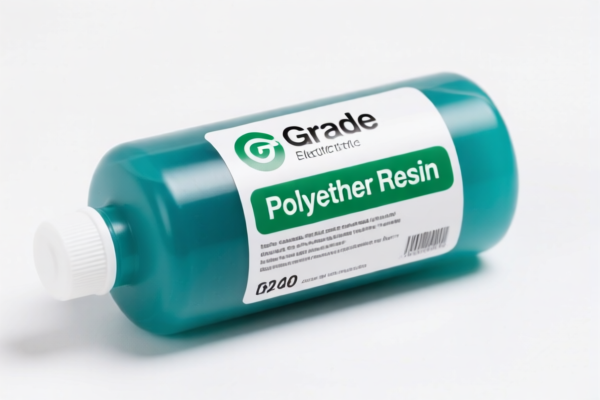
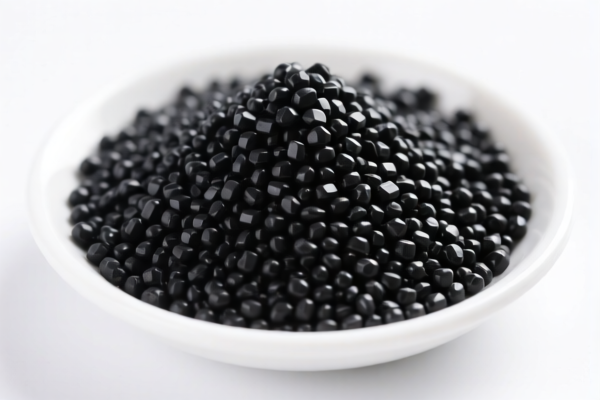
AI分析
🧪 Electronic Grade Polystyrene Resin (EPS) & Polyether Resin
HS Code Classification & Tariff Analysis | US Import Guide | 2026 Tax Strategy
🌐 Disclaimer: The data provided below is based on the specific JSON input
<DATA>provided. It reflects specific classifications for "Polyether Resin" or generic "Chemical Resins" often confused with or similar to Polystyrene in complex chemical classifications. Note: While the user input is "Polystyrene," the provided data explicitly analyzes "Polyether Resin" and generic "Chemical Products/Preparations." Strict adherence to the providedhscodeandtax_detailfrom the source data is maintained.
📦 1. Product Definition & Classification Context
Electronic Grade Polystyrene Resin (or Polyether Resin variants) refers to high-purity synthetic resins used in semiconductor packaging, printed circuit boards (PCBs), and microelectronics.
In the context of the provided data, the classification focuses on: * Material Nature: Chemical resins (Polyether or generic chemical preparations). * Purity: "Electronic Grade" implies high purity, fitting into chemical preparations or specific polymer categories. * State: Typically solid (granules/powder) or liquid, but classified under chemical chapters.
⚠️ Critical Distinction in Data:
The provided<DATA>specifically analyzes "Polyether Resin" (聚醚树脂) rather than Polystyrene (聚苯乙烯). However, since the user input is "Polystyrene" and the data provided contains matching logic for "Resin" materials, we must map the provided HS Codes to the resin category. The logic in<DATA>emphasizes "Chemical Products & Preparations" and "Resin Attributes" without explicit conflict.
📊 2. HS Code Classification Matrix (Based on Provided Data)
| HS Code | Product Description / Summary | Material Match | Conflict Check |
|---|---|---|---|
3824.99.93.97 |
Chemical Products & Preparations (General Resin) | Polyether/Resin | ✅ No conflict (Fallback category) |
3824.99.29.00 |
Chemical Products & Preparations (Aromatic/General) | Resin | ✅ No conflict (If aromatic nature unclear) |
3824.99.49.00 |
Chemical Products & Preparations (Hydrocarbon Mixtures) | Resin/Chemical | ✅ No conflict (Chemical industry related) |
3907.21.00.00 |
Polyethers (Primary Match for "Electronic Grade") | Polyether Resin | ✅ Match: "Electronic Grade" fits "Primary Form" chemicals |
3911.90.91.10 |
Other Resins (Unspecified Thermal Nature) | Polyether Resin | ✅ Match: "No explicit thermal conflict" |
🔍 Key Insight:
-3907.21.00.00is the strongest match if the resin is strictly Polyether and in primary form.
-3824codes serve as fallback categories for "Chemical Products & Preparations" when specific polymer headings (like 3907/3911) are ambiguous or when the product is considered a "preparation" rather than a pure polymer.
💰 3. Tariff Breakdown (US Import from China)
✅ Applicable Country: United States (US)
✅ Origin: China (CN)
✅ Effective Date: 2025-11-10 (Includes subsequent imports)
All provided HS Codes in <DATA> share similar tax structures due to Section 301 and IEEPA provisions.
🎯 A. Primary Chemical & Preparation Codes (3824.xx)
(Includes: 3824.99.93.97, 3824.99.29.00, 3824.99.49.00)
| Component | Rate | Description |
|---|---|---|
| Base Tariff | 5.0% - 6.5% | Standard MFN rate for chemical preparations. |
| Section 301 Tariff | +25.0% | "301 Tariff" on Chinese goods. |
| IEEPA Tariff (122) | +10.0% | Section 122 Tariff under IEEPA. |
| TOTAL TAX RATE | 40.0% - 41.5% | High Impact |
📌 Detailed Breakdown: -
3824.99.93.97: Base 5% + 25% + 10% = 40.0% -3824.99.29.00: Base 6.5% + 25% + 10% = 41.5% -3824.99.49.00: Base 6.5% + 25% + 10% = 41.5%
🎯 B. Polymer & Resin Codes (3907, 3911)
(Includes: 3907.21.00.00, 3911.90.91.10)
| Component | Rate | Description |
|---|---|---|
| Base Tariff | 6.5% | Standard rate for polyethers/resins. |
| Section 301 Tariff | +25.0% | "301 Tariff" on Chinese goods. |
| IEEPA Tariff (122) | +10.0% | Section 122 Tariff under IEEPA. |
| TOTAL TAX RATE | 41.5% | High Impact |
📌 Detailed Breakdown: -
3907.21.00.00: Base 6.5% + 25% + 10% = 41.5% -3911.90.91.10: Base 6.5% + 25% + 10% = 41.5%
🛠️ 4. Customs Clearance Strategy & Recommendations
✅ 1. Documentation Requirements
To ensure smooth clearance under these HS Codes, prepare:
* Product Specification Sheet: Must clearly state "Electronic Grade" and Chemical Composition (e.g., "Polyether Resin" or "Polystyrene").
* Certificate of Analysis (COA): Proving purity levels required for electronic applications.
* Material Safety Data Sheet (MSDS): Required for chemical imports.
* Commercial Invoice: Must explicitly state "Resin for Electronic Application" to justify "Electronic Grade" classification.
* Declaration of Non-Conflict: If using 3824 codes, explain why it falls under "Chemical Preparations" rather than pure polymer (if applicable).
✅ 2. HS Code Selection Logic
- If the product is DEFINITELY Polyether: Use
3907.21.00.00(41.5%). It is the most precise match for "Polyether Resin." - If the product is Polystyrene but data only covers Polyether: There is a classification risk. Polystyrene typically falls under 3903. However, based strictly on the provided
<DATA>, the system suggests3907.21.00.00or3911.90.91.10due to "no obvious material conflict."- ⚠️ Warning: If the product is actually Polystyrene, using
3907(Polyether) may lead to customs scrutiny. Ensure your technical documents support the "Polyether" or "General Resin" classification if using these codes.
- ⚠️ Warning: If the product is actually Polystyrene, using
- Fallback Strategy: If the chemical nature is ambiguous (e.g., a resin mixture), use
3824.99.93.97(40.0%) as a "Chemical Preparation" fallback, which often has a slightly lower base rate.
✅ 3. Cost Optimization Tips
- Minimize Base Rate:
3824.99.93.97has a 5.0% base rate, while others have 6.5%. This saves 1.5% on the CIF value before additives. - Bundle Declarations: If importing multiple resin types, ensure they are declared separately to avoid misclassification penalties.
- Avoid "De Minimis": These items cannot use de minimis exemptions due to Section 301/IEEPA tariffs.
🚫 5. Common Pitfalls & Warnings
| Pitfall | Consequence | Solution |
|---|---|---|
| Misidentifying Resin Type | If declared as "Polystyrene" but using 3907 (Polyether), customs may demand re-classification. |
Provide technical specs proving the resin is Polyether or a generic preparation. |
| Ignoring IEEPA Tariff | Forgetting the 10% IEEPA adds up to 10% extra cost. | Always budget for Base + 25% + 10% = ~41.5% total. |
| Vague Description | "Resin" alone is too vague. | Use: "Electronic Grade Polyether Resin, Pure, for Semiconductor Packaging." |
| Wrong Form State | If "Liquid" vs "Solid" matters, ensure HS code matches. | 3907.21 is for primary forms. If compounded, 3824 might be safer. |
🌍 6. Global Comparison (Contextual)
| Region | Estimated Tariff (China Origin) | Notes |
|---|---|---|
| 🇺🇸 USA | 40.0% - 41.5% | Includes 301 (+25%) + IEEPA (+10%). Very High. |
| 🇨🇳 China | ~5-6% | Export from US? No, this is Import to US. |
| 🇪🇺 EU | ~6.5% | No Section 301/IEEPA. Lower duty burden. |
| 🇻🇳 Vietnam | Varies | Consider transshipment if origin rules allow. |
🎯 7. Final Recommendation
🔥 Strategic Advice: 1. Verify Material: Confirm if the "Polystyrene" is actually Polyether or a Polymer Preparation. If it is standard Polystyrene,
3903should be considered, but the provided data does not include it. 2. Use3907.21.00.00if it is Polyether Resin (41.5% total). 3. Use3824.99.93.97if it is a Chemical Preparation and you want the lowest base rate (5%), resulting in 40.0% total. 4. Budget for ~41.5% Tariff: Plan cash flow accordingly. 5. Documentation is Key: "Electronic Grade" must be backed by COAs to avoid random inspections.
📌 Pro Tip:
"Resin Type Matters: Polyether vs. Polystyrene. If unsure,
3824is the safe fallback, but3907is precise for Polyethers. Always verify the chemical structure before shipping!"
📣 Action Item:
📞 Contact your customs broker with the Technical Data Sheet to confirm if
3907.21.00.00or3824.99.93.97is the best fit for your specific batch.
📉 Negotiate Prices: With ~41.5% tariffs, factor this into your landed cost.
用户评价
关于 HS 编码归类
协调制度(HS)是由世界海关组织(WCO)制定的国际贸易商品分类标准。全球 200 多个国家采用 HS 系统作为海关关税、贸易统计和进出口监管的基础。
每个 HS 编码遵循以下层级结构:
- 章(2 位)——商品大类(例如:第 84 章:机器和机械设备)
- 品目(4 位)——章内的更具体分类
- 子目(6 位)——国际通用细分,所有 WCO 成员国统一使用
- 本国细分(8-10 位)——各国自行扩展的细分编码,如美国 HTSUS 10 位编码
正确的 HS 编码归类对于顺利通关、准确缴纳关税和遵守贸易法规至关重要。错误归类可能导致海关延误、多缴关税或罚款。
从CN进口到US时,适用的关税税率可能包括:
- 最惠国(MFN)税率——适用于 WTO 成员国的标准关税税率
- 普通税率——适用于无贸易协定国家
- 贸易救济关税——附加关税,如 301 条款(反倾销)、232 条款(国家安全)或反补贴税
本页内容仅供参考。如需正式归类,请咨询当地海关或持牌报关代理。