Embedded Power Socket
CN → US| HS编码 | 关税税率 | 原产国 | 目的国 | 文档 |
|---|---|---|---|---|
| 8504407007 | 35.0% | CN | US | 官方文档 |
| 8504407018 | 35.0% | CN | US | 官方文档 |
| 8536698000 | 37.7% | CN | US | 官方文档 |
| 8544429090 | 87.6% | CN | US | 官方文档 |
| 8536904000 | 35.0% | CN | US | 官方文档 |
商品图片
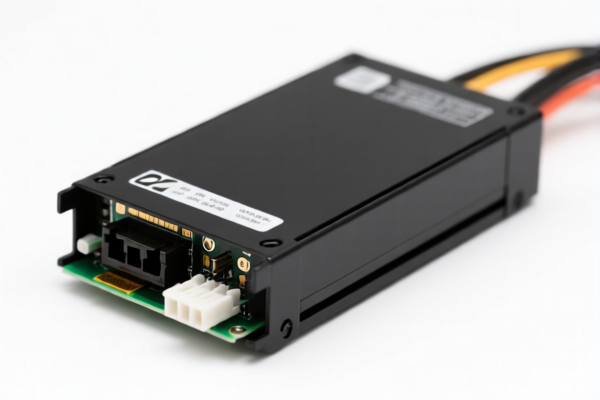
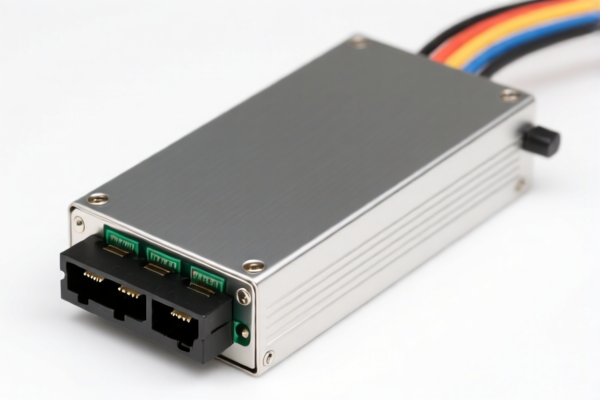
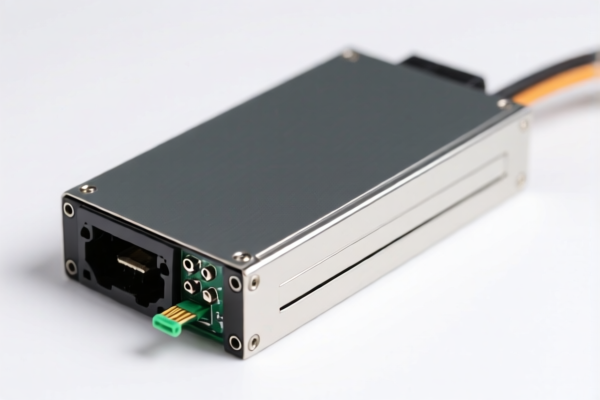
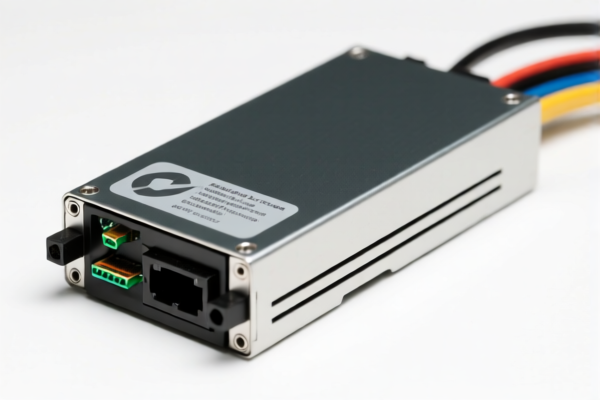
AI分析
⚡ Embedded Power Socket (Built-in Receptacle)
🌐 HS Code Reference & Customs Clearance Guide | 2026 Latest Tariff Analysis | Professional Entry Strategy
📌 I. Product Definition: Is It a Converter, a Connector, or a Cable?
An "Embedded Power Socket" usually refers to an electrical outlet built into furniture, desks, or walls. In international trade, this item is ambiguous. It is not just a "socket"; it often includes internal wiring, connectors, or even power conversion modules (DC adapters).
⚠️ Key Distinction Point:
- If it is a standalone plug/adaptor (AC to DC/AC) → It is a Static Converter (8504).
- If it is a passive connector (just the jack/outlet) → It is a Plug/Socket (8536) or Insulated Wire (8544).
- If it is wired into a device as a terminal → It is an Electrical Accessory (8536) or Insulated Conductor (8544).
📦 II. HS Code Classification Details (2026 Latest Tariff Authority对照)
Based on the provided data, here are the five possible classifications for "Embedded Power Socket" components and their corresponding tax structures.
| HS Code | Product Description | Classification Logic | Total Tax Rate (China Origin) |
|---|---|---|---|
8504.40.70.07 |
Static Converter (Power Adapter Plug) | Classified as a "Static Converter" based on power usage principles. The plug is viewed as the conversion unit. | 35.0% |
8504.40.70.18 |
Accessory/Component of Static Converter | Classified as a part/component of a static converter. No material or use conflict found. | 35.0% |
8536.69.80.00 |
Plug & Socket (Circuit Connection) | Matches the category of plugs/sockets for circuits under 1,000V. Attributes align with voltage-limited connection devices. | 37.7% |
8544.42.90.90 |
Insulated Conductor with Connectors | Classified as a connecting terminal of insulated conductors ≤1,000V. Fits the morphology of "conductors with connectors." | 87.6% |
8536.90.40.00 |
Electrical Accessory (Terminal Block) | Classified as an electrical accessory for connecting circuits. Fits the use case of terminal blocks or splices. | 35.0% |
🔍 Critical Analysis:
- The Danger Zone (8544.42.90.90): If Customs views the socket as part of an "insulated wire assembly," the tax jumps to 87.6% due to additional steel/aluminum/copper tariffs.
- The Safe Zone (8504/8536): Classifying as a converter (8504) or standard accessory (8536) yields 35.0%.
- The Middle Ground (8536.69.80.00): If declared purely as a plug/socket, the base tariff is higher (2.7%), resulting in 37.7% total.
💰 III. 2026 Latest Tariff Rate Breakdown (Including Surcharges)
✅ Applicable Country: United States (US)
✅ Origin: China (CN)
✅ Effective Time: Post-November 2025 (Including subsequent imports)
🎯 1. 8504.40.70.07 & 8504.40.70.18 —— Static Converters & Accessories
(Best for: Power adapters embedded in desks/docks)
| Item | Content |
|---|---|
| Base Tariff | 0.0% (Ad Valorem) |
| Section 301 Surtax | +25.0% (USITC Footnote 9903.88.01) |
| IEEPA Surtax | +10.0% (For Chinese/HK products, effective Nov 10, 2025) |
| Total Rate | 35.0% |
| Calculation | CIF Value × 35% |
| De Minimis Exemption | ❌ No (Deny de minimis) |
| Legal Path | IEEPA:9903.01.25 → IEEPA:9903.01.24 → USITC:8504.40.70.07/18 |
📌 Explanation:
- Base duty is 0%, but the 35% combined surtax is severe.
- This classification is often preferred if the device converts voltage (AC to DC), as it avoids the high base tariff of pure connectors.
🎯 2. 8536.69.80.00 —— Plugs and Sockets
(Best for: Passive outlets with no conversion)
| Item | Content |
|---|---|
| Base Tariff | 2.7% (Ad Valorem) |
| Section 301 Surtax | +25.0% |
| IEEPA Surtax | +10.0% |
| Total Rate | 37.7% |
| Calculation | CIF Value × 37.7% |
| De Minimis Exemption | ❌ No |
| Legal Path | IEEPA:9901.25 → IEEPA:9903.01.24 → USITC:8536.69.80.00 |
📌 Note:
- Even though the base rate is low (2.7%), the surcharges push the total to 37.7%.
- This is the most "literal" classification for a simple socket, but it is the most expensive among the "safe" options due to the non-zero base rate.
🎯 3. 8544.42.90.90 —— Insulated Conductors with Connectors
(⚠️ Highest Risk / Highest Cost)
| Item | Content |
|---|---|
| Base Tariff | 2.6% |
| Section 301 Surtax | +25.0% |
| IEEPA Surtax | +10.0% |
| Steel/Aluminum/Copper Surtax | +50.0% (Specific material surcharge) |
| Total Rate | 87.6% |
| Calculation | CIF Value × 87.6% |
| De Minimis Exemption | ❌ No |
| Legal Path | IEEPA:9903.01.25 → USITC:8544.42.90.90 → MATERIAL SURCHARGE: 50% |
📌 WARNING:
- This classification attracts an additional 50% tariff for metal (steel, aluminum, copper) products.
- Total Tax: 87.6%. This makes importing embedded power sockets classified as "wired conductors" prohibitively expensive.
- Avoid this classification unless the product is clearly defined as a pre-wired cable assembly without separate conversion or socket housing.
🎯 4. 8536.90.40.00 —— Electrical Accessories
(Alternative for Terminal/Splice configurations)
| Item | Content |
|---|---|
| Base Tariff | 0.0% |
| Section 301 Surtax | +25.0% |
| IEEPA Surtax | +10.0% |
| Total Rate | 35.0% |
| Calculation | CIF Value × 35% |
| De Minimis Exemption | ❌ No |
| Legal Path | IEEPA:9901.25 → USITC:8536.90.40.00 |
📌 Note:
- Similar to8504.40classification, the base tariff is 0%.
- Useful if the socket is considered a "terminal block" or "splice" rather than a standalone plug.
🛠️ IV. Customs Clearance Practical Advice (Battle-Tested Guide)
✅ 1. Documentation Checklist (Non-Negotiable)
| Document | Required | Explanation |
|---|---|---|
| ✅ Product Specification Sheet | ✔️ | Must detail: Input Voltage, Output Voltage (if conversion), Material (Plastic/Metal), Wattage. |
| ✅ Diagram/Structure Drawing | ✔️ | Crucial to prove it is NOT a simple insulated wire (to avoid 87.6%). Show it is a socket/converter unit. |
| ✅ Product Photos (Label/Nameplate) | ✔️ | Clear view of model number, input/output specs, and safety certifications. |
| ✅ Third-Party Test Report | ✔️ | UL, CE, FCC (for electrical safety). Required to prove compliance. |
| ✅ Commercial Invoice | ✔️ | Use precise description: "Static Power Converter with Integrated Socket" (if 8504) or "Electrical Outlet Accessory" (if 8536). |
| ✅ Packing List | ✔️ | Clearly separate the socket/converter from any cables if sold separately. |
✅ 2. Declaration Strategy (Key Mantras)
🔥 "Convert, Don't Wire! Define the Function!"
| Scenario | Correct Declaration | Wrong Approach |
|---|---|---|
| Desk with built-in DC power hub | HS 8504.40.70.07 (Static Converter) |
Declaring as "Socket" (8536) → Higher base tax |
| Simple AC wall outlet | HS 8536.69.80.00 (Plug/Socket) |
Declaring as "Converter" → Misclassification risk |
| Cable assembly with plug | Split Declaration (Wire + Plug) | Declaring as one unit under 8544 → 87.6% Tax! |
| Embedded Module in Furniture | HS 8536.90.40.00 (Accessory) |
Declaring as "Furniture Part" → Customs rejection |
✅ 3. Special Case Handling
| Situation | Advice |
|---|---|
| OEM Custom Sockets | Provide client order + design specs. Prove it is not a generic "insulated wire." |
| Mixed Materials (Plastic + Metal Contacts) | Emphasize the Plastic Housing and Electronic Function to argue against the "Steel/Aluminum Surtax" in 8544. |
| Pre-wired vs. Standalone | If sold as a standalone socket (no wire attached), use 8536 or 8504. If sold as a wired cable, you risk 8544 (87.6%). Sell them separately if possible. |
| Voltage Conversion | If the socket steps down 110V to 12V (DC), it MUST be 8504 (Converter). This is your best defense against high material tariffs. |
🌍 V. Global Market Clearance Comparison (2026 Latest)
| Country/Region | Recommended HS Code | Tariff (China Origin) | Certification | Notes |
|---|---|---|---|---|
| 🇺🇸 USA | 8504.40.70.07 |
35.0% | UL + FCC | Avoid 8544 (87.6%). 8504 is optimal for converted power. |
| 🇨🇳 China | 8504.40.70.07 |
~10-13% (Est.) | CCC | Lower base tariffs, but US exports are the main concern. |
| 🇪🇺 EU | 8536.69.80.00 |
~0-3% | CE + RoHS | No heavy surtaxes like US. Base tariff is the main cost. |
| 🇬🇧 UK | 8536.69.80.00 |
~0-4% | UKCA | Similar to EU post-Brexit. |
📌 Conclusion:
- USA is the hardest market due to Section 301 + IEEPA tariffs.
- Strategy for USA: Always classify as Static Converter (8504) or Accessory (8536) to keep tax at 35%. Avoid Insulated Conductor (8544) at all costs (87.6%).
📌 VI. Common Errors & Pitfalls (Blood & Tears Lessons)
❌ Error 1: Declaring a "Powered Socket" as "Insulated Wire Assembly" (8544.42.90.90)
👉 Consequence: 87.6% Tax! You will pay an extra 50% metal surcharge.
✅ Fix: Declare as "Power Converter" or "Electrical Accessory."
❌ Error 2: Splitting a "Plug + Cable" into two lines incorrectly
👉 Consequence: Customs may re-attach them and apply 8544 rules, or penalize for misdeclaration.
✅ Fix: If sold as a unit, declare as the component (Plug or Converter), not the wire.
❌ Error 3: Vague Description "Power Socket"
👉 Consequence: Customs examiner guesses → Likely to pick the highest tax code (8544).
✅ Fix: Be specific: "AC-DC Power Converter with Integrated USB/AC Socket, Model XYZ."
✅ Correct Declaration Example:
"Static Power Converter with Integrated Electrical Socket, 120V AC Input, 12V DC Output, Plastic Housing, Model PWR-100, UL Listed"
🎯 VII. Conclusion: Precision Saves Thousands!
🎯 Remember the Mantra:
🔹 "Convert First, Wire Last. Converter is 35%, Wire is 87.6%!"
🔹 "Don't let metal material surcharge eat your profit!"
🔹 "8504 is your friend, 8544 is your enemy!"
📌 Pro Tip:
If your embedded socket does not convert voltage (just AC to AC), you must use 8536.69.80.00 (37.7%).
If it does convert (AC to DC), use 8504.40.70.07 (35.0%).
Design your product to be a "Converter" to save 2.7% + avoid 50% surcharge.
📣 Immediate Action:
📞 Consult a customs broker with your circuit diagram.
📄 Apply for an Advance Ruling if the value is high.
🚀 Classify correctly, clear smoothly, and protect your margins!
✨ Professional Clearance Starts with Accurate Classification!
💼 Every percentage point counts in 2026!
用户评价
关于 HS 编码归类
协调制度(HS)是由世界海关组织(WCO)制定的国际贸易商品分类标准。全球 200 多个国家采用 HS 系统作为海关关税、贸易统计和进出口监管的基础。
每个 HS 编码遵循以下层级结构:
- 章(2 位)——商品大类(例如:第 84 章:机器和机械设备)
- 品目(4 位)——章内的更具体分类
- 子目(6 位)——国际通用细分,所有 WCO 成员国统一使用
- 本国细分(8-10 位)——各国自行扩展的细分编码,如美国 HTSUS 10 位编码
正确的 HS 编码归类对于顺利通关、准确缴纳关税和遵守贸易法规至关重要。错误归类可能导致海关延误、多缴关税或罚款。
从CN进口到US时,适用的关税税率可能包括:
- 最惠国(MFN)税率——适用于 WTO 成员国的标准关税税率
- 普通税率——适用于无贸易协定国家
- 贸易救济关税——附加关税,如 301 条款(反倾销)、232 条款(国家安全)或反补贴税
本页内容仅供参考。如需正式归类,请咨询当地海关或持牌报关代理。