商品图片
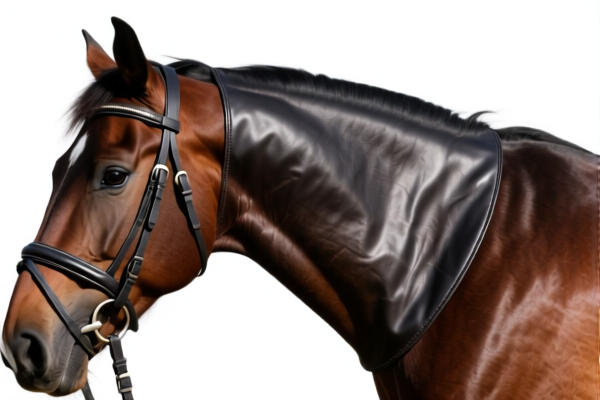
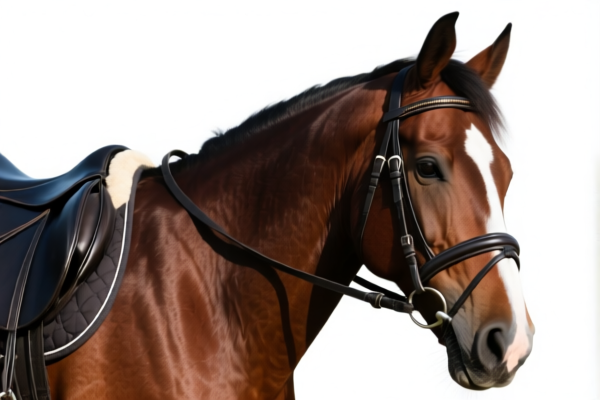
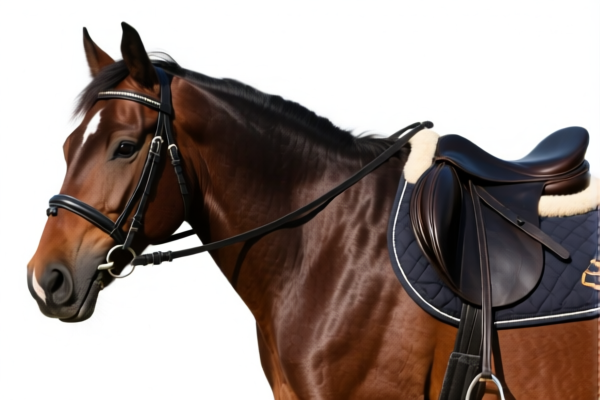
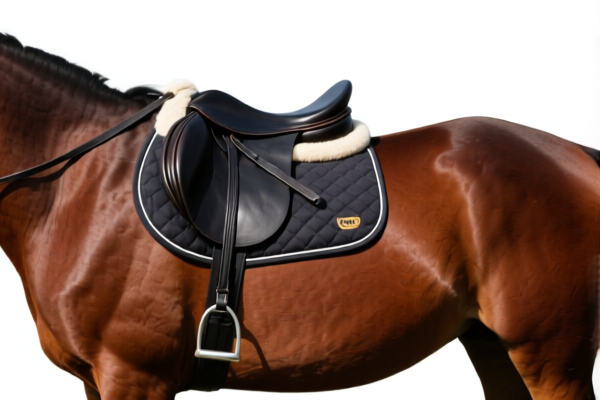
AI分析
🐎 Equine Leather Nap (Unworked/Partially Worked Horse Skin)
🌐 HS Code Reference & Customs Clearance Guide | 2026 Latest Tariff Analysis | Professional-Level Compliance Strategy
📌 I. Product Definition & Classification: Do You Really Understand "Equine Leather Nap"?
"Equine Leather Nap" refers to the raw or semi-processed skin of horses, donkeys, mules, or asses. In international trade, the key to correct classification lies in the degree of processing. It is not finished leather (like shoe leather or upholstery leather), but rather leather that has been cleaned (limed/beamhouse) or is merely in the "crust" stage (dyed but not finalized).
Two Critical Categories Based on End-Use and Processing State:
- "Other" Equine Leather (General/Unspecified): Leather of equine origin, split or unsplit, processed only by liming, beamhouse processing, or held in "crust" state, but not specifically intended for saddlery/harness manufacturing.
- Equine Leather for Saddlery/Harness: Same processing level (limed/beamhouse/crust), but specifically intended for the manufacture of saddles, bridles, harnesses, or other equestrian equipment.
⚠️ Key Distinction Point:
- If the leather is general stock, unused, or intended for general leather goods (bags, belts, generic upholstery) → It falls under "Not Elsewhere Specified" → HS 4114.90.
- If the leather is explicitly marked, sold, or manufactured for use in saddles or harnesses → It falls under "Intended for Saddlery/Harness" → HS 4115.10.
📦 II. HS Code Classification Details (2026 Latest Tariff Authoritative Comparison)
| HS Code | Product Description | Intended Use / Scenario | Processing State |
|---|---|---|---|
4114.90 |
Other leather and skin, not elsewhere specified; including equine (horse, donkey, etc.), split or unsplit, but not further worked than limed, beamhouse, or crust. | General leather goods, generic stock, non-saddlery applications. | Limed / Beamhouse / Crust |
4115.10 |
Leather and skin, of equine (horse, donkey, mule, or ass), split or unsplit, but not further worked than limed, beamhouse, or crust, intended for use in the manufacture of saddlery or harness. | Saddles, bridles, horse harnesses, equestrian gear components. | Limed / Beamhouse / Crust |
🔍 Crucial Reminder:
- Do NOT classify as Finished Leather (e.g., 4106 or 4112): These codes apply to leather that has been further processed (tanned, dyed, fatliquored, finished). "Nap" implies it is still in the raw/crust stage. - Intent Matters for 4115.10: If you declare4115.10, customs may require proof of intent (e.g., purchase order from a saddlery manufacturer, specific product descriptions). If no such proof exists, it will likely be reclassified to4114.90by customs, potentially affecting duty rates or regulatory requirements. - "Crust" Definition: Leather that has been tanned and dyed but not yet finished (polished, embossed, or coated).
💰 III. 2026 Latest Tariff Rate Details (Detailed Tax Breakdown)
✅ Applicable Country: United States (US)
✅ Origin: China (CN)
✅ Data Status: Note: The provided data source indicates "Failed to retrieve tax information" for both HS codes. Below is a strategic guide based on standard USITC practices for Chapter 41, but you must verify current rates as tariff policies change frequently.
🎯 1. 4114.90 —— Other Equine Leather (General)
| Item | Content |
|---|---|
| Base MFN Rate | Typically 0% or low single digits (check USITC Tariff Database for current year). |
| Section 301 Surcharge | Check Eligibility: Leather from China is NOT generally exempt from Section 301 tariffs, but many leather items are in Exclusion List 4A/4B. You MUST verify if 4114.90 is currently excluded. |
| IEEPA Surcharge | 10% (If applicable under current EOEIA/IEEPA rules for Chinese goods). |
| Total Estimated Rate | Variable (0% to 25%+) depending on exclusion status. |
| De Minimis Exemption | ❌ No. Leather goods under $800 are generally NOT eligible for de minimis exemption if they are subject to Section 301 or other special duties. |
| Legal Basis Path | USITC:4114.90 → Section 301 Footnote → USCBP Entry Type 86 (if eligible) |
📌 Explanation:
- If Excluded: Rate is MFN (e.g., 0-5%).
- If Not Excluded: Rate is MFN + 25% (Section 301) + 10% (IEEPA) = 35-40%+.
- Action: Check the USTR exclusion list for4114.90specifically.
🎯 2. 4115.10 —— Equine Leather for Saddlery/Harness
| Item | Content |
|---|---|
| Base MFN Rate | Typically 0% or low single digits. |
| Section 301 Surcharge | Check Eligibility: Saddlery-specific leather may have different exclusion status than general leather. Verify specifically for 4115.10. |
| IEEPA Surcharge | 10% (If applicable). |
| Total Estimated Rate | Variable (0% to 25%+). |
| De Minimis Exemption | ❌ No. Same as above. |
| Legal Basis Path | USITC:4115.10 → Section 301 Footnote → USCBP Entry Type 86 |
📌 Explanation:
- The duty rate structure is similar to4114.90, but the exclusion eligibility might differ because this is a specialized product.
- Risk: If you declare4115.10but cannot prove intent, customs may reject the classification and apply penalties or higher duty rates under4114.90.
🛠️ IV. Customs Clearance Practical Advice (Real-World Pitfall Guide)
✅ 1. Required Documentation Checklist
| Document | Mandatory? | Purpose |
|---|---|---|
| ✅ Commercial Invoice | ✔️ | Must clearly state: "Equine Leather, Crust/Limed, for [General Use OR Saddlery Use]". |
| ✅ Packing List | ✔️ | Detail weight, volume, and number of hides/pieces. |
| ✅ Certificate of Origin | ✔️ | To prove country of origin (China) and apply any potential FTA benefits (though limited for leather). |
| ✅ Product Specification Sheet | ✔️ | Describe processing stage: "Limed," "Beamhouse," or "Crust." Confirm it is not finished leather. |
| ✅ Proof of Intent (for 4115.10) | ✔️ | Purchase order from saddlery manufacturer, design specs for saddles, or statement of end-use. |
| ✅ Section 301 Exclusion Proof | ✔️ | If applicable, provide the exclusion letter/number to claim lower duty. |
✅ 2. Declaration Tips (Key Mnemonics)
🔥 "Clarify State, Declare Intent, Prove Exclusion!"
| Scenario | Correct Declaration Method | Wrong Practice |
|---|---|---|
| General Equine Leather (Crust) | 4114.90 |
Misdeclaring as "Finished Leather" (4106) → Penalty |
| Saddlery-Specific Equine Leather | 4115.10 + Proof of Intent |
Declaring 4115.10 without proof → Reclassification to 4114.90 |
| Finished Horse Leather (Shoe/Upholstery) | 4106.31 or 4112.xx |
Declaring "Crust" leather as "Finished" → Wrong duty rate |
| Small Samples (Under $800) | Not Eligible for De Minimis if Subject to 301 | Attempting Section 321 (Type 86) entry → Customs Hold |
✅ 3. Special Situations Handling
| Situation | Handling Advice |
|---|---|
| Mixed Shipments | If a shipment contains both saddlery leather (4115.10) and general leather (4114.90), separate them in the invoice and packing list. Mixing can lead to full shipment reclassification to the higher-risk code. |
| Unknown Origin | If origin is not China, check for Free Trade Agreement (FTA) benefits (e.g., USMCA, though leather rules are strict). |
| Section 301 Exclusion Expired | If your exclusion letter has expired, re-evaluate your HS Code or supplier location. Do not rely on old exclusions. |
| USDA/APHIS Requirements | Equine products may require APHIS import permits depending on the country of origin and product type. Always check USDA regulations before shipping. |
🌍 V. Global Market Clearance Comparison (2026 Latest)
| Country/Region | Recommended HS Code | Tariff (China Origin) | Certification/Permits | Notes |
|---|---|---|---|---|
| 🇺🇸 USA | 4114.90 or 4115.10 |
0% to 40%+ (Check 301 Exclusions) | USDA/APHIS Permit (if required) | Highest risk of 301 tariffs. |
| 🇨🇳 China (Export) | 4114.90 or 4115.10 |
Export Duty: 0-15% (Varies) | None specific for export | China may impose export duties on raw hides. |
| 🇪🇺 EU | 4114.90 |
0% (Most leather) | REACH, ECHA | EU has liberal leather trade policies. |
| 🇬🇧 UK | 4114.90 |
0% | UK REACH | Post-Brexit rules similar to EU. |
| 🇯🇵 Japan | 4114.90 |
0% | Fitosanitary (if raw) | Japan has low tariffs on leather inputs. |
📌 Conclusion:
- USA is the most complex market due to Section 301 and IEEPA tariffs.
- EU/UK/Japan are more straightforward with 0% duty for most crust leather.
- China Export may have export duties on raw hides. Always check the Chinese Customs Tariff for export rates.
📌 VI. Common Errors & Pitfalls (Lessons Learned)
❌ Error 1: Declaring "Crust Leather" as "Finished Leather"
👉 Consequence: Wrong HS Code → Potential audit or penalty for undervaluation/overvaluation.
❌ Error 2: Declaring 4115.10 without Proof of Intent
👉 Consequence: Customs reclassifies to 4114.90 → Delay in clearance, potential duty differences.
❌ Error 3: Assuming De Minimis ($800) applies to Leather
👉 Consequence: Shipment held at border. Leather is not eligible for Section 321 if it is subject to 301 tariffs.
❌ Error 4: Ignoring USDA/APHIS Requirements
👉 Consequence: Shipment destroyed or returned. Equine products often require health certificates or permits.
✅ Correct Practice:
"Equine Leather, Crust, Split, For General Use, Model: EQ-CRUST-01, Country of Origin: China, HTS: 4114.90.0000. [If Saddlery: HTS 4115.10.0000 with PO from Saddlery Co.]"
🎯 VII. Conclusion: Precise Classification Saves Cost!
🎯 Remember the Mantra:
🔹 "Crust vs. Finished: Check Processing Stage."
🔹 "General vs. Saddlery: Prove Intent for 4115.10."
🔹 "Section 301: Verify Exclusion Status for Both Codes."
🔹 "USDA: Check Permits for Equine Products."
📌 Pro Tip:
- Apply for an Advance Ruling from USCBP if your shipment is high-value or if you are unsure about the 301 exclusion status.
- Work with a Licensed Customs Broker who specializes in leather products to navigate USDA and USITC complexities.
📣 Take Action Now:
📞 Contact your customs broker.
📄 Provide Product Specs + Intended Use Proof.
🚀 Verify Section 301 Exclusion Status for4114.90and4115.10.
🐎 Ensure USDA/APHIS compliance for equine products.
✨ Professional Customs Clearance Starts with Accurate Classification!
💼 Every Dollar in Duty Saved is Profit Gained!
用户评价
关于 HS 编码归类
协调制度(HS)是由世界海关组织(WCO)制定的国际贸易商品分类标准。全球 200 多个国家采用 HS 系统作为海关关税、贸易统计和进出口监管的基础。
每个 HS 编码遵循以下层级结构:
- 章(2 位)——商品大类(例如:第 84 章:机器和机械设备)
- 品目(4 位)——章内的更具体分类
- 子目(6 位)——国际通用细分,所有 WCO 成员国统一使用
- 本国细分(8-10 位)——各国自行扩展的细分编码,如美国 HTSUS 10 位编码
正确的 HS 编码归类对于顺利通关、准确缴纳关税和遵守贸易法规至关重要。错误归类可能导致海关延误、多缴关税或罚款。
从CN进口到US时,适用的关税税率可能包括:
- 最惠国(MFN)税率——适用于 WTO 成员国的标准关税税率
- 普通税率——适用于无贸易协定国家
- 贸易救济关税——附加关税,如 301 条款(反倾销)、232 条款(国家安全)或反补贴税
本页内容仅供参考。如需正式归类,请咨询当地海关或持牌报关代理。