Ethylcellulose Powder
CN → US| HS编码 | 关税税率 | 原产国 | 目的国 | 文档 |
|---|---|---|---|---|
| 3912390000 | 39.2% | CN | US | 官方文档 |
| 3913902090 | 40.8% | CN | US | 官方文档 |
| 3913905000 | 41.5% | CN | US | 官方文档 |
商品图片
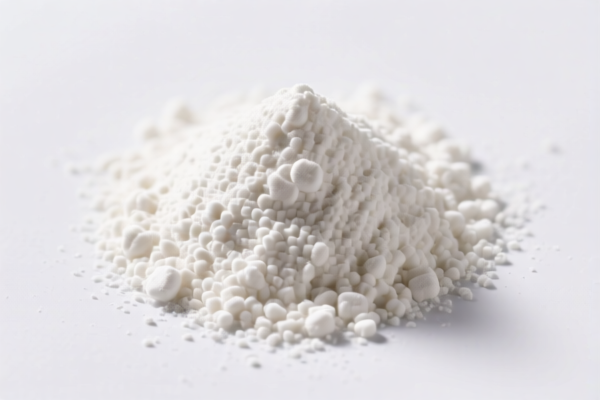
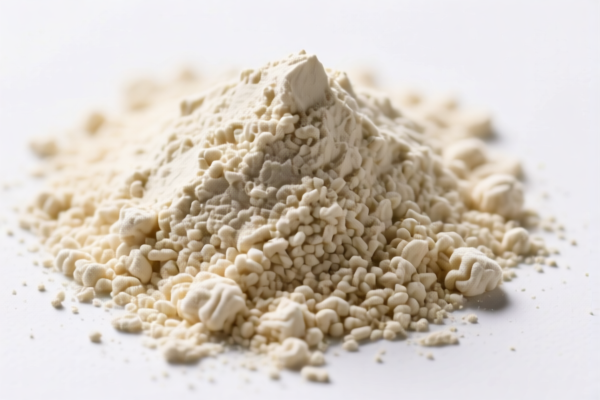
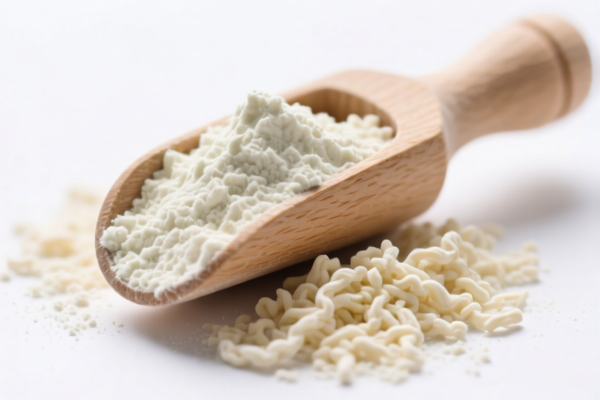
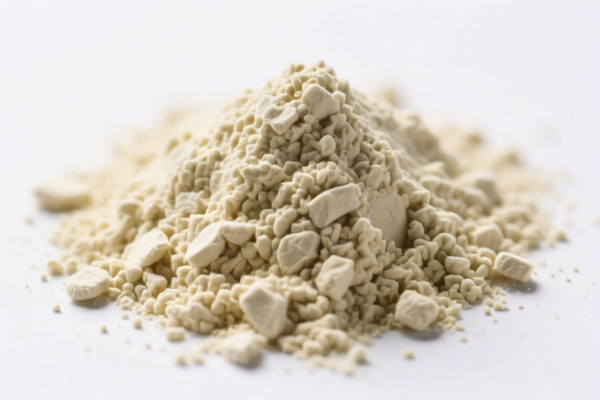
AI分析
🧪 Ethylcellulose Powder (EC Powder)
🌐 HS Code Reference & Customs Clearance Guide | 2026 Latest Tariff Analysis | Professional Clearance Strategy
📌 I. Product Definition & Classification: Do You Really Understand “Ethylcellulose”?
Ethylcellulose (EC) is a semi-synthetic polymer derived from natural cellulose through ethylation. It is widely used in pharmaceuticals (film coatings, controlled-release matrices), food additives (glazing agents), and industrial applications (coatings, adhesives).
In international trade, EC is strictly classified based on its chemical nature and physical form. Unlike natural cellulose, EC is a cellulose derivative. This distinction is critical for HS Code classification, as derivatives often fall under different headings than their natural counterparts.
⚠️ Key Distinction Point:
- Ethylcellulose = Cellulose Derivative (Chemically Modified) → Heading 3912
- Natural Cellulose Powder = Natural Polymer (Unmodified) → Heading 3913
- Misclassification Risk: Declaring Ethylcellulose as "Natural Cellulose" (3913) leads to higher tariffs and potential customs penalties.
📦 II. HS Code Classification Details (2026 Latest Tariff Authority Comparison)
Based on the provided data, Ethylcellulose Powder is classified under 3912.39.00.00. Below is the detailed comparison with similar products to highlight why this is the correct classification.
| HS Code | Product Description | Material Type | Physical Form | Total Tax Rate |
|---|---|---|---|---|
3912.39.00.00 |
Ethylcellulose Powder | Cellulose Derivative | Powder | 39.2% |
3913.90.20.90 |
Natural Cellulose Powder | Natural Polymer | Primary Shape | 40.8% |
3913.90.50.00 |
Natural Cellulose Powder | Natural Polymer | Primary Shape/Form | 41.5% |
🔍 Key Analysis:
- HS Code3912.39.00.00is the correct classification for Ethylcellulose because it is a derivative of cellulose (chemically modified by adding ethyl groups).
- HS Codes3913.90.20.90and3913.90.50.00apply to natural cellulose powders (unmodified). While they look similar physically (both are powders), their chemical origins differ, leading to different tariff structures.
- Cost Implication: Choosing the wrong code (3913) results in a 1.6%–2.3% higher total tax rate compared to the correct code (3912).
💰 III. 2026 Latest Tariff Rate Breakdown (Including Additional Duties & Policy Add-ons)
✅ Applicable Country: United States (US)
✅ Country of Origin: China (CN)
✅ Effective Date: From November 10, 2025 (including subsequent imports)
🎯 1. 3912.39.00.00 —— Ethylcellulose Powder (Cellulose Derivative)
| Item | Detail |
|---|---|
| Base Tariff | 4.2% (Ad Valorem) |
| Additional Tariff (Section 301) | +25.0% |
| 122 Provision Tariff | +10.0% |
| Total Tax Rate | 39.2% |
| Tax Calculation | CIF Value × 39.2% |
| De Minimis Exemption Eligible | ❌ No (deny_de_minimis) |
| Legal Basis Path | Base Tariff: 4.2% → Sec 301: 25.0% → 122 Provision: 10% |
📌 Explanation:
- Base Tariff (4.2%): Standard US MFN (Most Favored Nation) duty for cellulose derivatives.
- Section 301 Tariff (25%): Imposed on Chinese-origin goods under Trade Act Section 301.
- 122 Provision Tariff (10%): Additional tariff under Section 122 of the Trade Facilitation and Trade Enforcement Act of 2015.
- Total (39.2%): This is a significant cost burden. Accurate classification is essential to avoid overpaying taxes or facing penalties for misdeclaration.
⚠️ Comparison: Why NOT 3913.90.20.90 or 3913.90.50.00?
If you mistakenly classify Ethylcellulose as Natural Cellulose Powder:
| HS Code | Total Tax Rate | Difference vs. Correct Code |
|---|---|---|
3913.90.20.90 |
40.8% | +1.6% Higher |
3913.90.50.00 |
41.5% | +2.3% Higher |
📌 Warning:
- Using3913codes increases your tax liability.
- More importantly, Ethylcellulose is NOT natural cellulose. Misclassification constitutes fraudulent misdeclaration, which can lead to:
- Seizure of goods
- Heavy fines (up to 3x the duty difference)
- Loss of import privileges
🛠️ IV. Customs Clearance Practical Advice (Real-World Pitfall Guide)
✅ 1. Required Documentation Checklist (All Must Be Provided)
| Document | Mandatory? | Description |
|---|---|---|
| ✅ Product Specification Sheet | ✔️ | Must explicitly state “Ethylcellulose” and “Chemical Formula” |
| ✅ SDS (Safety Data Sheet) | ✔️ | Confirms chemical nature (derivative vs. natural) |
| ✅ Certificate of Analysis (COA) | ✔️ | Shows ethyl group substitution degree (DS) |
| ✅ Commercial Invoice | ✔️ | Must list “Ethylcellulose Powder” not just “Cellulose Powder” |
| ✅ Packing List | ✔️ | Detail net weight, gross weight, and package count |
| ✅ Origin Certificate | ✔️ | Proves Chinese origin for tariff calculation |
| ✅ FCC/REACH Compliance Docs | ✔️ | If applicable for end-use (pharma/food) |
✅ 2. Declaration Tips (Critical Mantra)
🔥 “Derivative vs. Natural: Name it right, save it right!”
| Scenario | Correct Declaration | Incorrect Declaration | Consequence |
|---|---|---|---|
| Ethylcellulose Powder | 3912.39.00.00"Ethylcellulose, powdered derivative" |
"Cellulose Powder" or "Natural Polymer" | 39.2% vs 40.8%+ tax + Risk of Penalty |
| Natural Cellulose Powder | 3913.90.20.90 |
"Ethylcellulose" | Customs Rejects → Delay/Return |
| Mixed Package (EC + Natural) | Split Declaration | Single HS Code for both | Misclassification → Audit/Fine |
✅ 3. Special Case Handling
| Case | Handling Advice |
|---|---|
| Pharmaceutical Grade EC | Ensure FDA compliance docs are attached; still classified under 3912.39.00.00 |
| Food Grade EC | Same HS code; ensure FDA/FSSC 22000 certification if required by buyer |
| Bulk vs. Retail | Bulk powder (kg tons) vs. small bags → Same HS code, but declaration quantity must match |
| Origin Shift (e.g., Vietnam) | If processed in Vietnam, may qualify for preferential tariffs under USMCA or other FTAs |
🌍 V. Global Market Comparison (2026 Latest)
| Country/Region | Recommended HS Code | Tariff (China Origin) | Certification Requirement | Notes |
|---|---|---|---|---|
| 🇺🇸 USA | 3912.39.00.00 |
39.2% | FDA/REACH | High tariff due to 301 + 122 |
| 🇨🇳 China | 3912.39.00.00 |
4.2% (Import) | CCC (if applicable) | No additional tariffs |
| 🇪🇺 EU | 3912.39.00 |
6.5% | REACH | Lower base tariff, no Section 301 |
| 🇬🇧 UK | 3912.39.00 |
6.5% | UKCA | Post-Brexit alignment with EU |
| 🇯🇵 Japan | 3912.39.00 |
0–4.5% | JIS | Free Trade Agreement benefits possible |
📌 Conclusion:
- USA has the highest effective tariff for Ethylcellulose due to additional trade measures.
- EU and Japan offer more competitive rates. Consider supply chain diversification if targeting US markets.
📌 VI. Common Mistakes & Pitfall Guide (Lessons Learned)
❌ Mistake 1: Declaring "Ethylcellulose" as "Cellulose Powder"
👉 Consequence: Customs may classify as 3913.90.50.00 → 41.5% tax + penalty for misdeclaration
❌ Mistake 2: Omitting "Derivative" in product description
👉 Consequence: Customs may question origin → Delay in clearance
❌ Mistake 3: Using vague terms like "Polymer Powder"
👉 Consequence: Customs assigns highest possible duty → Unnecessary cost
❌ Mistake 4: Ignoring 122 Provision Tariff
👉 Consequence: Underpayment → Back taxes + Interest
✅ Correct Approach:
“Ethylcellulose Powder, CAS No. 9004-57-5, Cellulose Derivative, For Pharmaceutical Use, Powder Form, Net Weight 25kg”
🎯 VII. Conclusion: Precision in Classification Saves Money!
🎯 Remember the Mantra:
🔹 “Derivative = 3912, Natural = 3913. Name it right, tax stays right!”
🔹 “39.2% vs 41.5%: 2.3% difference can wipe out your profit margin!”
📌 Pro Tip:
If your Ethylcellulose is sourced from non-China origins (e.g., EU, USA, Japan), you may qualify for 0%–4.5% tariffs.
Consider pre-ruling (Advance Ruling) from US Customs to lock in the correct HS Code and avoid post-clearance audits.
📣 Immediate Action:
📞 Contact a licensed customs broker + Provide CAS Number (9004-57-5) + Submit SDS & COA
🚀 Ensure your Ethylcellulose shipments clear smoothly, stay compliant, and maximize profit!
✨ Professional clearance starts with accurate classification!
💼 Every percentage point counts in global trade!
用户评价
关于 HS 编码归类
协调制度(HS)是由世界海关组织(WCO)制定的国际贸易商品分类标准。全球 200 多个国家采用 HS 系统作为海关关税、贸易统计和进出口监管的基础。
每个 HS 编码遵循以下层级结构:
- 章(2 位)——商品大类(例如:第 84 章:机器和机械设备)
- 品目(4 位)——章内的更具体分类
- 子目(6 位)——国际通用细分,所有 WCO 成员国统一使用
- 本国细分(8-10 位)——各国自行扩展的细分编码,如美国 HTSUS 10 位编码
正确的 HS 编码归类对于顺利通关、准确缴纳关税和遵守贸易法规至关重要。错误归类可能导致海关延误、多缴关税或罚款。
从CN进口到US时,适用的关税税率可能包括:
- 最惠国(MFN)税率——适用于 WTO 成员国的标准关税税率
- 普通税率——适用于无贸易协定国家
- 贸易救济关税——附加关税,如 301 条款(反倾销)、232 条款(国家安全)或反补贴税
本页内容仅供参考。如需正式归类,请咨询当地海关或持牌报关代理。