Ethylene Plastic Film Waste
CN → US| HS编码 | 关税税率 | 原产国 | 目的国 | 文档 |
|---|---|---|---|---|
| 3915100000 | 35.0% | CN | US | 官方文档 |
| 3915900090 | 35.0% | CN | US | 官方文档 |
| 3915100000 | 35.0% | CN | US | 官方文档 |
| 3915100000 | 35.0% | CN | US | 官方文档 |
| 3915900090 | 35.0% | CN | US | 官方文档 |
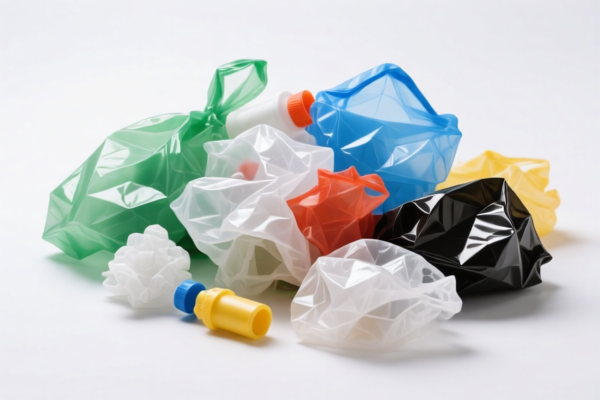
商品图片



AI分析
♻️ Ethylene Plastic Film Waste & Scrap
🌐 HS Code Reference & Customs Clearance Guide | 2026 Latest Tariff Analysis | Professional Level Strategy
📌 I. Product Definition & Classification: Do You Really Understand "Plastic Waste"?
Ethylene Plastic Film Waste, commonly referred to as plastic scrap, parings, or waste, refers to discarded or surplus materials derived from polymers of ethylene (such as Low-Density Polyethylene - LDPE, High-Density Polyethylene - HDPE). In international trade, these materials are strictly categorized under Chapter 39 (Plastics and Articles Thereof), specifically under heading 3915.
Key Characteristics: * Material Basis: Must be exclusively or predominantly polymers of ethylene. * State: The material must be in the form of waste, parings, and scrap. This includes trimmings from manufacturing, defective films, shredded bags, or industrial off-cuts. * Exclusion: If the waste contains significant impurities (metal, glass, non-ethylene plastics) that prevent recycling without complex processing, it may fall under different chapters (e.g., Chapter 38 or 15). However, clean plastic film waste is classified here.
⚠️ Critical Distinction:
- If the material is pure polyethylene waste (film, bag, shrink wrap scrap) → It falls under 3915.10.00.00.
- If the material is mixed plastic waste (e.g., PP, PS, ABS mix) → It falls under 3915.90.00.90 ("Other plastics").
- Note: Even if "Ethylene Plastic Film Waste" is the user input, if the waste is contaminated with other non-ethylene plastics, customs may reclassify it to 3915.90.
📦 II. HS Code Classification Details (2026 Latest Tariff Authority Comparison)
Based on the provided data, the classification is strictly divided by the chemical composition of the waste.
| HS Code | Product Description | Applicable Scenario | Primary Polymer | Tax Status |
|---|---|---|---|---|
3915.10.00.00 |
Waste, parings and scrap, of plastics: Of polymers of ethylene | Pure LDPE/HDPE film scrap, shrink wrap waste, PE bag off-cuts, parings from PE film extrusion | Ethylene (PE) | ⚠️ 25.0% Total Tax |
3915.90.00.90 |
Waste, parings and scrap, of plastics: Of other plastics Other | Mixed plastic waste, PP waste, PS waste, PVC waste, or contaminated PE waste not meeting purity standards | Non-Ethylene or Mixed | ⚠️ 25.0% Total Tax |
🔍 Key Reminder:
- Purity Matters: Customs will inspect the chemical composition. If the waste is claimed as3915.10but contains >5-10% non-ethylene plastic, it may be downgraded to3915.90(same tax rate, but incorrect declaration leads to penalties).
- "Other" Category: The3915.90.00.90code is a catch-all for plastics not made of ethylene polymers (e.g., Polypropylene, Polystyrene, PET).
- Tax Parity: In this specific dataset, both codes carry the exact same total tax rate of 25.0%. Therefore, the primary risk is compliance and classification accuracy, not tax optimization between these two specific codes.
💰 III. 2026 Latest Tariff Rate Breakdown (Including Surtaxes & Policy Add-ons)
✅ Applicable Country: United States (US)
✅ Origin: China (CN) (Inferred from the 25% surtax pattern typical of US-China trade)
✅ Effective Time: Current 2026 Tariff Schedule
🎯 1. 3915.10.00.00 —— Waste/Scrap of Polymers of Ethylene
| Item | Content |
|---|---|
| Base Duty Rate | 0.0% (ad valorem) |
| Section 301 Surtax | +25.0% (Under USITC Footnote for Chinese-origin plastics/scrap) |
| Total Tax Rate | 25.0% |
| Tax Calculation | CIF Value × 25.0% |
| De Minimis Exemption | ❌ Not Applicable |
| Legal Basis Path | HTSUS:3915.10.00.00 → USITC:Section301 → Total:25.0% |
📌 Explanation:
- The base tariff for plastic scrap is often 0% to encourage recycling raw materials.
- However, due to Section 301 Tariffs on Chinese goods, an additional 25% is applied.
- Total Cost Impact: For every $10,000 CIF value, you pay $2,500 in duties.
🎯 2. 3915.90.00.90 —— Waste/Scrap of Other Plastics
| Item | Content |
|---|---|
| Base Duty Rate | 0.0% (ad valorem) |
| Section 301 Surtax | +25.0% (Under USITC Footnote for Chinese-origin plastics/scrap) |
| Total Tax Rate | 25.0% |
| Tax Calculation | CIF Value × 25.0% |
| De Minimis Exemption | ❌ Not Applicable |
| Legal Basis Path | HTSUS:3915.90.00.90 → USITC:Section301 → Total:25.0% |
📌 Note:
- Despite being "Other Plastics," the tax burden is identical to Ethylene Waste.
- The distinction is purely regulatory and compositional. Misclassification as "Ethylene" when it is "PP" (Polypropylene) constitutes fraud, even if the tax is the same.
🛠️ IV. Customs Clearance Practical Advice (Real-World Pitfall Avoidance Guide)
✅ 1. Documentation Checklist (Essential)
| Document | Required | Explanation |
|---|---|---|
| ✅ Commercial Invoice | ✔️ | Must clearly state "Waste, Parings and Scrap, of Plastics" and specify the polymer type (e.g., "HDPE Film Scrap"). |
| ✅ Packing List | ✔️ | Detail weight, bale count, and any packaging materials. |
| ✅ Certificate of Composition | ✔️ | CRITICAL: A lab report or supplier declaration confirming the % of Ethylene vs. other plastics. |
| ✅ Cleanliness Declaration | ✔️ | Confirm waste is free of hazardous waste, food residue, or mixed non-plastic debris. |
| ✅ Photos of Bales | ✔️ | Show the material state (shredded, baled, loose) to prove it is "scrap" and not "used goods." |
| ✅ Bill of Lading | ✔️ | Ensure freight details match invoice. |
✅ 2. Declaration Techniques (Key Mnemonics)
🔥 “Pure PE for .10, Mixed/Other for .90, No Hidden Contaminants, 25% Tax Hits Both!”
| Scenario | Correct Declaration | Wrong Practice |
|---|---|---|
| 100% HDPE/LDPE Film Scrap | 3915.10.00.00 |
Declaring as 3915.90 (Higher scrutiny, no tax benefit) |
| Mixed Plastic Bags (PE+PP mix) | 3915.90.00.90 |
Declaring as 3915.10 → Classification Fraud |
| Dirty/Wet Scrap | Check Chapter 38 | Declaring as 3915 → Rejected/Seized for hazardous waste |
| Granulated Recyclable PE | 3915.10.00.00 |
Declaring as "Pellets" (HS 3902) → Tax Mismatch |
✅ 3. Special Cases Handling
| Situation | Handling Advice |
|---|---|
| Contaminated Waste | If waste contains >2% non-plastic material (metal, glue), it may be classified under Chapter 38 (Miscellaneous Chemical Products) or Chapter 15 (Animal/Veg fats), or even HS 3915.90 with higher scrutiny. |
| Shredded vs. Baled | State clearly: "Shredded PE Film Scrap, Baled." Shape does not change HS Code, but must match invoice. |
| Recycled vs. Virgin | HS Code 3915 applies to waste/scrap regardless of whether it will be recycled. Do not declare as "Recycled Pellets" (3902) if it is still waste. |
| EPA Regulations | Plastic waste imported into the US is subject to EPA scrutiny for recycling purposes. Ensure it is "ready for recycling" and not "solid waste" under RCRA. |
🌍 V. Global Market Customs Comparison (2026 Latest)
| Country/Region | Recommended HS Code | Tariff (CN Origin) | Certification | Remarks |
|---|---|---|---|---|
| 🇺🇸 USA | 3915.10.00.00 / 3915.90.00.90 |
25.0% | None Specific | High scrutiny on "waste" definition. |
| 🇨🇳 China | 3915.10 / 3915.90 |
~2-5% | None | China is a major importer of plastic waste. |
| 🇪🇺 EU | 3915.10 / 3915.90 |
0% (Usually) | CE/REACH | EU has strict "Single-Use Plastics" regulations. |
| 🇬🇧 UK | 3915.10 / 3915.90 |
0% | UKCA | Post-Brexit rules apply. |
| 🇯🇵 Japan | 3915.10 / 3915.90 |
0-2% | JIS | Strict contamination limits. |
📌 Conclusion:
- USA is the most expensive market due to the 25% surtax.
- EU/UK often have 0% duty for plastic waste intended for recycling, making them more attractive for scrap exporters.
- Classification Accuracy is vital in the US to avoid penalties, even if the tax rate is the same for both codes.
📌 VI. Common Errors & Pitfall Guide (Blood & Tears Lessons)
❌ Error 1: Declaring "Mixed Plastic Waste" as 3915.10 (Ethylene Only)
👉 Consequence: Customs lab test reveals PP/PS content → Reclassification + Penalty + 25% Tax on Misdeclared Value.
❌ Error 2: Importing "Dirty Plastic Waste" without EPA Compliance
👉 Consequence: Shipment Rejected/Returned by US EPA/CBP. Waste is considered illegal solid waste.
❌ Error 3: Using "Plastic Pellets" as Description for Waste
👉 Consequence: Misleading description → Audit Trigger. If it's scrap, call it scrap. If it's pellets, call it pellets.
❌ Error 4: Ignoring the "25% Total Tax" in Cost Calculations
👉 Consequence: Profit margin miscalculation. Many assume 0% base tax = free imports. Wrong! The 25% surtax is significant.
✅ Correct Practice:
"Plastic Waste: Polyethylene Film Scrap, Shredded, Baled, Pure HDPE, For Recycling Only, Origin China. HS Code: 3915.10.00.00."
🎯 VII. Conclusion: Professional Declaration, Save Costs, Avoid Risks!
🎯 Remember the Mnemonic:
🔹 "Pure PE is .10, Other is .90, Tax is 25%, Don't Mix and Hope!"
🔹 "Base 0%, Surtax 25%, Total 25% - Calculate CIF x 25% for Duty!"
🔹 "EPA Approval First, Customs Second - Waste Must Be Clean!"
📌 Pro Tip:
If you are importing large volumes of plastic waste, consider:
1. Pre-Shipment Inspection: Verify polymer composition to ensure correct HS Code.
2. EPA Notification: Ensure the shipment complies with US EPA recycling regulations.
3. Cost-Benefit Analysis: With a 25% tariff, exporting plastic waste to the US from China may be less profitable than to the EU (0% duty). Consider diversifying markets.
📣 Immediate Action:
📞 Contact a licensed customs broker.
📋 Provide Lab Reports for polymer composition.
🚀 Ensure your invoice says "Waste/Scrap" and NOT "New Plastic Products."
✨ Professional Customs Clearance Starts with Accurate Classification!
💼 Your Duty Cost is Fixed at 25% - Save Money by Avoiding Penalties!
用户评价
关于 HS 编码归类
协调制度(HS)是由世界海关组织(WCO)制定的国际贸易商品分类标准。全球 200 多个国家采用 HS 系统作为海关关税、贸易统计和进出口监管的基础。
每个 HS 编码遵循以下层级结构:
- 章(2 位)——商品大类(例如:第 84 章:机器和机械设备)
- 品目(4 位)——章内的更具体分类
- 子目(6 位)——国际通用细分,所有 WCO 成员国统一使用
- 本国细分(8-10 位)——各国自行扩展的细分编码,如美国 HTSUS 10 位编码
正确的 HS 编码归类对于顺利通关、准确缴纳关税和遵守贸易法规至关重要。错误归类可能导致海关延误、多缴关税或罚款。
从CN进口到US时,适用的关税税率可能包括:
- 最惠国(MFN)税率——适用于 WTO 成员国的标准关税税率
- 普通税率——适用于无贸易协定国家
- 贸易救济关税——附加关税,如 301 条款(反倾销)、232 条款(国家安全)或反补贴税
本页内容仅供参考。如需正式归类,请咨询当地海关或持牌报关代理。