Ethylene Vinyl Acetate Copolymer High Performance Material
CN → US| HS编码 | 关税税率 | 原产国 | 目的国 | 文档 |
|---|---|---|---|---|
| 3926904590 | 38.5% | CN | US | 官方文档 |
| 3901302000 | 35.0% | CN | US | 官方文档 |
| 3901306000 | 40.3% | CN | US | 官方文档 |
| 3920991000 | 41.0% | CN | US | 官方文档 |
商品图片

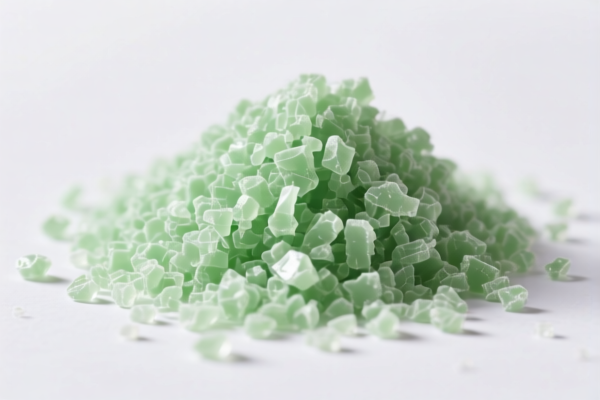
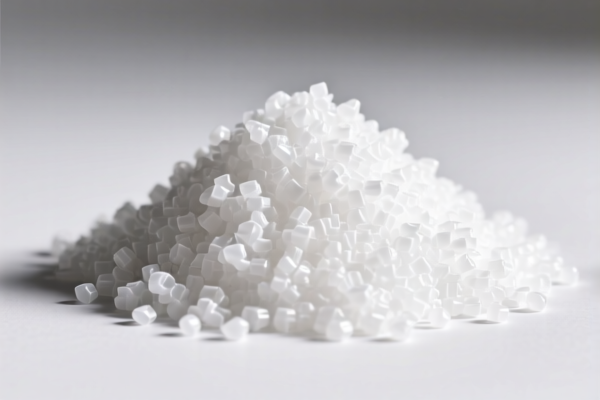
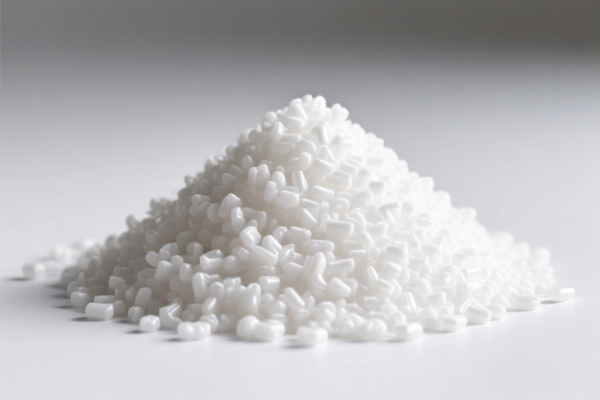
AI分析
🧪 Ethylene Vinyl Acetate (EVA) Copolymer High-Performance Material
🌐 HS Code Reference & Customs Clearance Guide | 2026 Latest Tariff Analysis | Professional Entry Strategy
📌 I. Product Definition & Classification: Do You Really Understand "EVA"?
Ethylene Vinyl Acetate (EVA) is a versatile copolymer widely used in footwear, solar panels, adhesives, and automotive parts. However, how it is shaped and its specific properties dictate its HS Code and tariff rate.
In international trade, EVA is primarily divided into three categories: 1. Primary Forms (Resins/Granules): Raw materials before processing. 2. Shaped Articles/Plastics: Finished products or semi-finished shapes (films, sheets). 3. Specialty/Functional Materials: Materials with specific attributes like UV resistance or high-performance engineering properties.
⚠️ Key Distinction Point:
- If it is raw resin/granules → It belongs to Chapter 39, Heading 3901 (Primary Forms).
- If it is films, sheets, or plates → It may belong to 3920.
- If it is other plastic articles (not elsewhere specified) → It belongs to 3926.
- UV Resistance & Performance: These attributes often trigger specific sub-headings or "Other" classifications, significantly impacting tariffs.
📦 II. HS Code Classification Details (Based on Provided Data)
The following data reflects specific interpretations for Ethylene Vinyl Acetate Copolymer under current US trade policies (Section 301 & IEEPA).
| HS Code | Product Description | Applicable Scenario | Tax Rate |
|---|---|---|---|
3901.30.20.00 |
Primary Form Polymer: EVA as a primary form of polymer material, classified as a tertiary copolymer. | Raw granules, pellets, primary resin. | 35.0% |
3901.30.60.00 |
UV-Resistant Specific Material: EVA as a specific material with UV-resistant functional attributes. | Specialty EVA with enhanced UV stability (not just standard). | 40.3% |
3920.99.10.00 |
Film/Sheet Form: EVA as a film or sheet-shaped UV-resistant plastic material. | Extruded films, packaging sheets, laminates. | 41.0% |
3926.90.45.90 |
Other Plastic Articles: EVA used as a UV-resistant material, classified as other plastic articles. | Molded parts, custom shapes, finished goods not covered by film/primary categories. | 38.5% |
3901.30.20.00 |
High-Performance Material: EVA high-performance material meeting primary polymer classification. | Premium-grade raw EVA for advanced applications (e.g., solar encapsulation). | 35.0% |
🔍 Critical Note:
- HS Code3901.30.20.00appears twice in the data with different summaries but identical tax rates. This suggests that regardless of whether it's labeled "tertiary copolymer" or "high-performance primary form," if it remains in primary form, the rate is 35.0%. - Value Addition Risk: Moving from primary form (3901) to shaped articles (3920or3926) increases the total tax burden due to higher base duties.
💰 III. 2026 Latest Tariff Rate Breakdown (Including Add-ons)
✅ Applicable Country: United States (US)
✅ Origin: China (CN) (Implied by "122 Clause" and typical Section 301 structure)
✅ Effective Date: Post-2025 adjustments (Section 301 & IEEPA)
🎯 1. 3901.30.20.00 — Primary Form EVA Resin
| Item | Content |
|---|---|
| Base Duty | 0.0% (ad valorem) |
| Section 301 Duty | +25.0% |
| 122 Clause Duty | +10.0% |
| Total Tax Rate | 35.0% |
| Calculation | CIF Value × 35% |
| De Minimis Eligibility | ❌ No (Section 301 goods are generally excluded from $800 de minimis) |
| Legal Path | USITC:3901.30.20.00 → Section301:Footnote 9903.88.01 → IEEPA/122 Clause |
📌 Explanation:
- The base duty is 0% for primary polymer forms. - The 25% Section 301 tariff applies to most Chinese-origin plastics. - The 10% "122 Clause" (likely referring to specific retaliatory or administrative clauses) adds further cost. - Total: 35%. This is the lowest rate among all EVA classifications listed.
🎯 2. 3901.30.60.00 — UV-Resistant EVA (Primary/Specific Form)
| Item | Content |
|---|---|
| Base Duty | 5.3% |
| Section 301 Duty | +25.0% |
| 122 Clause Duty | +10.0% |
| Total Tax Rate | 40.3% |
| Calculation | CIF Value × 40.3% |
| De Minimis Eligibility | ❌ No |
| Legal Path | USITC:3901.30.60.00 → Section301 + 122 Clause |
📌 Explanation:
- The base duty is 5.3%, which is significantly higher than standard primary resins. - This sub-heading likely captures specialty or modified EVA resins that don't fit the standard "tertiary copolymer" definition. - Total: 40.3%. 5.3% more expensive than standard primary EVA.
🎯 3. 3920.99.10.00 — EVA Film/Sheet
| Item | Content |
|---|---|
| Base Duty | 6.0% |
| Section 301 Duty | +25.0% |
| 122 Clause Duty | +10.0% |
| Total Tax Rate | 41.0% |
| Calculation | CIF Value × 41.0% |
| De Minimis Eligibility | ❌ No |
| Legal Path | USITC:3920.99.10.00 → Section301 + 122 Clause |
📌 Explanation:
- Films and sheets are considered semi-finished products. - Base duty is 6.0%, the highest base rate among primary/form categories. - Total: 41.0%. This is the highest rate in the dataset.
🎯 4. 3926.90.45.90 — Other Plastic Articles
| Item | Content |
|---|---|
| Base Duty | 3.5% |
| Section 301 Duty | +25.0% |
| 122 Clause Duty | +10.0% |
| Total Tax Rate | 38.5% |
| Calculation | CIF Value × 38.5% |
| De Minimis Eligibility | ❌ No |
| Legal Path | USITC:3926.90.45.90 → Section301 + 122 Clause |
📌 Explanation:
- This falls under "Other Plastic Articles", a catch-all for molded parts, profiles, or items not specified elsewhere. - Base duty is 3.5%. - Total: 38.5%. Surprisingly, it is cheaper than films but more expensive than primary resins.
🛠️ IV. Customs Clearance Practical Advice (Avoid Pitfalls)
✅ 1. Essential Documentation Checklist
| Document | Required | Explanation |
|---|---|---|
| ✅ Product Specification Sheet | ✔️ | Must specify: Ethylene/Vinyl Acetate ratio, density, melt flow index, UV additives (if any). |
| ✅ Physical Form Confirmation | ✔️ | Clearly state: Granules, Film, Sheet, or Molded Part. Critical for HS Code selection. |
| ✅ Commercial Invoice | ✔️ | Description must match HS Code summary (e.g., "EVA Resin" vs. "EVA Film"). |
| ✅ Proof of Origin | ✔️ | Required for Section 301 & 122 Clause application. |
| ✅ Third-Party Test Report | ✔️ | If claiming "UV Resistance," provide lab tests to justify HS 3901.30.60.00 or 3920.99.10.00. |
✅ 2. Classification Strategy (Key Mnemonic)
🔥 "Form Determines Duty: Primary Cheapest, Film Most Expensive!"
| Scenario | Recommended HS Code | Total Tax | Why? |
|---|---|---|---|
| Raw Resin/Granules (Standard) | 3901.30.20.00 |
35.0% | Lowest base duty (0%) + add-ons. Best for importers. |
| High-Performance/UV Resin | 3901.30.60.00 |
40.3% | Higher base duty (5.3%) due to specialty nature. |
| Molded Parts/Articles | 3926.90.45.90 |
38.5% | Moderate base duty (3.5%). Good for finished goods. |
| Films/Sheets | 3920.99.10.00 |
41.0% | Highest base duty (6.0%). Avoid if possible to save costs. |
📌 Warning:
- Do not misclassify films as resins to avoid tax. Customs will inspect physical form. - If the product is UV-resistant, ensure the documentation explicitly states it if claiming specific sub-headings, but be prepared for higher base duties.
✅ 3. Special Cases
| Situation | Advice |
|---|---|
| Mixed Shipments | If importing both resin and finished goods, separate entries are required. Do not bundle. |
| OEM Custom EVA | If custom-made for a client, ensure the contract specifies the form (e.g., "supplied as sheets"). |
| Section 301 Exemptions | Check if your specific HTSUS code was removed from the exclusion list. Most plastics are not exempt. |
| De Minimis ($800) | ❌ Not Applicable. Section 301 goods (Chinese origin) are explicitly excluded from de minimis treatment. |
🌍 V. Global Market Comparison (2026)
| Region | Recommended HS Code | Estimated Tax | Notes |
|---|---|---|---|
| 🇺🇸 USA | 3901.30.20.00 |
35.0% | Includes 25% Section 301 + 10% 122 Clause. |
| 🇨🇳 China | 3901.30.20.00 |
~5-10% | Import duty into China may vary; check FTAs. |
| 🇪🇺 EU | 3901.30.20.00 |
0%~6.5% | No Section 301. Base duty varies by country. |
| 🇬🇧 UK | 3901.30.20.00 |
~6.5% | Post-Brexit tariffs apply. |
📌 Conclusion:
- USA is the most expensive market for EVA imports from China due to Section 301 + 122 Clause. - Primary resin (3901.30.20.00) is the most cost-effective classification (35%). - Films (3920.99.10.00) are the most expensive (41%).
📌 VI. Common Mistakes & Pitfalls
❌ Mistake 1: Classifying films as resins to save tax.
👉 Consequence: Customs seizure, penalties, and retroactive taxes + interest.
❌ Mistake 2: Ignoring UV Resistance attributes.
👉 Consequence: If you claim a higher-value product but declare low-value resin, you may face audits for under-declaration.
❌ Mistake 3: Assuming De Minimis applies.
👉 Consequence: Packages under $800 will still be subject to 35% tax. No surprise savings!
❌ Mistake 4: Mixing Primary Forms and Finished Goods in one entry.
👉 Consequence: Complex clearance delays. Each form has a different HS Code.
✅ Correct Practice:
"Ethylene Vinyl Acetate Copolymer, Primary Form, Granules, for Extrusion, Model XYZ, Origin China"
🎯 VII. Conclusion: Professional Classification, Cost Efficiency
🎯 Remember the Rule:
🔹 "Resin is King: 35% Tax."
🔹 "Films are Heavy: 41% Tax."
🔹 "Articles are Middle: 38.5% Tax."
📌 Pro Tip:
If you are importing large volumes, consider Advance Rulings from CBP to confirm the correct HS Code for your specific EVA formulation. This prevents post-clearance audits and penalties.
📣 Action Plan:
- Confirm Physical Form: Resin, Film, or Article?
- Select HS Code: Use
3901.30.20.00if possible for lowest tax.- Prepare Docs: Spec sheets, Invoice, Origin Certificate.
- Budget for Tax: Include 35%-41% in your cost model.
✨ Precision in Classification Saves Thousands!
💼 Your EVA Supply Chain Starts with Accurate HS Codes!
用户评价
关于 HS 编码归类
协调制度(HS)是由世界海关组织(WCO)制定的国际贸易商品分类标准。全球 200 多个国家采用 HS 系统作为海关关税、贸易统计和进出口监管的基础。
每个 HS 编码遵循以下层级结构:
- 章(2 位)——商品大类(例如:第 84 章:机器和机械设备)
- 品目(4 位)——章内的更具体分类
- 子目(6 位)——国际通用细分,所有 WCO 成员国统一使用
- 本国细分(8-10 位)——各国自行扩展的细分编码,如美国 HTSUS 10 位编码
正确的 HS 编码归类对于顺利通关、准确缴纳关税和遵守贸易法规至关重要。错误归类可能导致海关延误、多缴关税或罚款。
从CN进口到US时,适用的关税税率可能包括:
- 最惠国(MFN)税率——适用于 WTO 成员国的标准关税税率
- 普通税率——适用于无贸易协定国家
- 贸易救济关税——附加关税,如 301 条款(反倾销)、232 条款(国家安全)或反补贴税
本页内容仅供参考。如需正式归类,请咨询当地海关或持牌报关代理。