Ethylene Vinyl Acetate Copolymer Resin Raw Material
CN → US| HS编码 | 关税税率 | 原产国 | 目的国 | 文档 |
|---|---|---|---|---|
| 3905290000 | 39.0% | CN | US | 官方文档 |
| 3901306000 | 40.3% | CN | US | 官方文档 |
| 3901302000 | 35.0% | CN | US | 官方文档 |
| 3905915000 | 40.3% | CN | US | 官方文档 |
商品图片
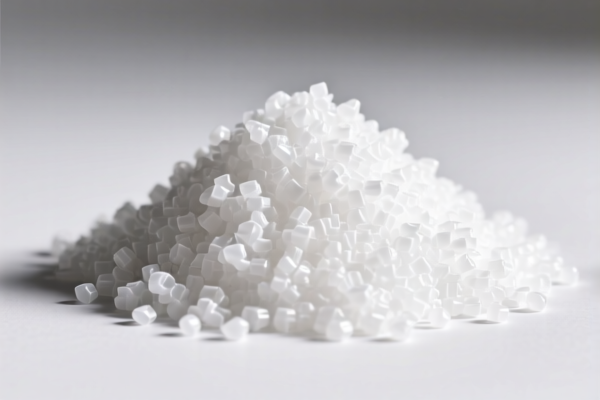
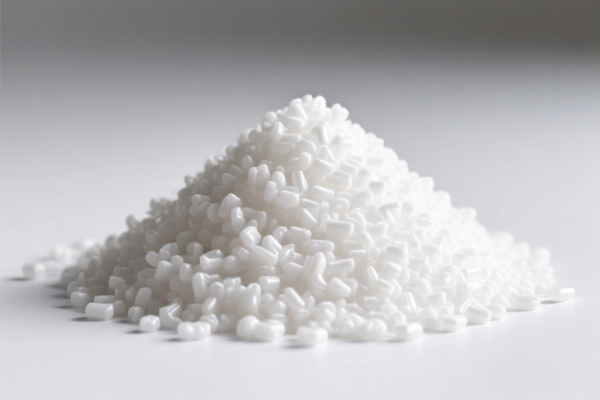


AI分析
🧪 Ethylene Vinyl Acetate (EVA) Copolymer Resin – Raw Material
🌐 HS Code Reference & Customs Clearance Guide | 2026 Latest Tariff Analysis | Professional Clearance Strategy
📌 I. Product Definition & Classification: What Exactly is "EVA Resin"?
Ethylene Vinyl Acetate (EVA) Copolymer Resin is a versatile thermoplastic polymer formed by copolymerizing ethylene and vinyl acetate. In international trade, it is classified primarily under Chapter 39 (Plastics and Articles Thereof) because it is supplied in its primary form (granules, powders, or flakes) before being processed into final goods like shoes, solar panels, or adhesives.
⚠️ Key Distinction:
- If the material is in primary form (raw granules/powder) → It falls under Heading 3901 or 3905.
- If it is already formed into films, sheets, or finished articles (e.g., EVA foam sheets, shoe soles) → It falls under different headings (e.g., 3920, 6402).
- This guide strictly covers the RAW MATERIAL form as per your input data.
📦 II. HS Code Classification Details (2026 Latest Tariff Authority Cross-Reference)
Based on the provided data, the EVA Resin is classified into four specific HS Codes, depending on the exact composition and tariff treatment rules.
| HS Code | Product Description | Applicable Scenario | Tax Rate Profile |
|---|---|---|---|
3905.29.00.00 |
Ethylene-vinyl acetate copolymer resins, primary form | General EVA resins not specified elsewhere in 3905.20 | 39.0% Total |
3901.30.60.00 |
Ethylene-vinyl acetate copolymer resins, primary form | EVA with specific Ethylene content or formulation under 3901.30 | 40.3% Total |
3901.30.20.00 |
Ethylene-vvinyl acetate copolymer resins, primary form | EVA with low base tariff rate | 35.0% Total |
3905.91.50.00 |
Ethylene-vinyl acetate copolymer resins, primary form | Other EVA copolymers under 3905.91 | 40.3% Total |
🔍 Critical Insight:
- All four codes refer to the same basic product (EVA Resin, Primary Form).
- The difference lies in the subheading structure (3901 vs. 3905) and the resulting Base Tariff (0%, 4%, or 5.3%).
- Despite the different base rates, the Total Tax Rate remains high (35%–40.3%) due to significant additional tariffs (Section 301 + Section 122/IEEPA).
💰 III. 2026 Latest Tariff Rate Breakdown (Including Surcharges & Policy Add-ons)
✅ Applicable Country: United States (US)
✅ Country of Origin: China (CN)
✅ Effective Time: Ongoing (Section 301 & Section 122 tariffs active)
🎯 1. 3905.29.00.00 – EVA Resin (General)
| Item | Detail |
|---|---|
| Base Tariff (MFN) | 4.0% |
| Section 301 Additional Tariff | +25.0% |
| Section 122 / IEEPA Tariff | +10.0% |
| Total Tax Rate | 39.0% |
| Tax Calculation | CIF Value × 39.0% |
| De Minimis Exemption | ❌ Not Eligible (Section 301 goods are excluded from de minimis treatment) |
| Legal Path | USITC:3905.29.00.00 → FOOTNOTE:301 + IEEPA:122 |
📌 Explanation:
- Base Tariff (4%): Standard Most Favored Nation (MFN) rate for this subheading.
- Section 301 (25%): Added tariff on Chinese goods under U.S. Trade Law Section 301.
- Section 122/IEEPA (10%): Additional tariff applied to certain Chinese imports under emergency economic powers.
- Total Burden: 39% is a significant cost driver. Importers must factor this into landed cost calculations.
🎯 2. 3901.30.60.00 – EVA Resin (Specific Formulation)
| Item | Detail |
|---|---|
| Base Tariff (MFN) | 5.3% |
| Section 301 Additional Tariff | +25.0% |
| Section 122 / IEEPA Tariff | +10.0% |
| Total Tax Rate | 40.3% |
| Tax Calculation | CIF Value × 40.3% |
| De Minimis Exemption | ❌ Not Eligible |
| Legal Path | USITC:3901.30.60.00 → FOOTNOTE:301 + IEEPA:122 |
📌 Note:
- Higher base tariff (5.3% vs. 4.0%) results in the highest total rate (40.3%).
- This code is often used for EVA resins with specific ethylene content levels defined under Heading 3901.
🎯 3. 3901.30.20.00 – EVA Resin (Low Base Tariff Variant)
| Item | Detail |
|---|---|
| Base Tariff (MFN) | 0.0% |
| Section 301 Additional Tariff | +25.0% |
| Section 122 / IEEPA Tariff | +10.0% |
| Total Tax Rate | 35.0% |
| Tax Calculation | CIF Value × 35.0% |
| De Minimis Exemption | ❌ Not Eligible |
| Legal Path | USITC:3901.30.20.00 → FOOTNOTE:301 + IEEPA:122 |
📌 Important:
- This is the most favorable tariff option among the four, with a total rate of 35.0%.
- Achievable if the EVA resin meets the specific criteria for Heading 3901.30.20 (e.g., specific ethylene content range).
- Action: Verify product specifications against HS Code 3901.30.20.00 to see if this lower rate applies.
🎯 4. 3905.91.50.00 – EVA Resin (Other Copolymers)
| Item | Detail |
|---|---|
| Base Tariff (MFN) | 5.3% |
| Section 301 Additional Tariff | +25.0% |
| Section 122 / IEEPA Tariff | +10.0% |
| Total Tax Rate | 40.3% |
| Tax Calculation | CIF Value × 40.3% |
| De Minimis Exemption | ❌ Not Eligible |
| Legal Path | USITC:3905.91.50.00 → FOOTNOTE:301 + IEEPA:122 |
📌 Note:
- Same total rate as3901.30.60.00.
- Typically used for EVA copolymers not specifically listed in 3905.20 or 3905.90 other subheadings.
🛠️ IV. Customs Clearance Practical Advice (Avoid Pitfalls)
✅ 1. Documentation Checklist (Mandatory)
| Document | Required | Purpose |
|---|---|---|
| ✅ Certificate of Analysis (COA) | ✔️ | Proves vinyl acetate content (critical for HS classification between 3901 and 3905). |
| ✅ Product Specification Sheet | ✔️ | Details physical form (granules/powder), density, melt flow index. |
| ✅ Commercial Invoice | ✔️ | Must clearly state “Ethylene Vinyl Acetate Copolymer Resin, Primary Form.” |
| ✅ Packing List | ✔️ | Weight, volume, and packaging details. |
| ✅ Bill of Lading / Air Waybill | ✔️ | Standard shipping documents. |
| ✅ Origin Certificate | ✔️ | Essential for proving Chinese origin (triggers Section 301/122 tariffs). |
✅ 2. Classification Strategy (Key Tip)
🔥 “Vinyl Acetate Content Defines the Code”
| Scenario | Recommended HS Code | Total Rate | Reason |
|---|---|---|---|
| EVA with >10-20% Vinyl Acetate | Check 3905 codes |
39.0% or 40.3% | Often falls under 3905 if not specific to 3901. |
| EVA with specific Ethylene Content | Verify 3901.30.20.00 |
35.0% | Lowest rate if specs match exactly. |
| Standard EVA Granules | 3905.29.00.00 |
39.0% | Default classification if unsure. |
| High VA Content (>40%) | Likely 3905.91.50.00 |
40.3% | Higher VA content may shift classification. |
⚠️ Warning:
- Do NOT guess the HS Code. The difference between 35.0% and 40.3% is 5.3% on CIF value.
- For a $100,000 shipment, this is a $5,300 difference.
- Provide the Vinyl Acetate content % and Ethylene content % to your customs broker for precise classification.
✅ 3. Special Considerations
| Issue | Solution |
|---|---|
| De Minimis (Section 321) Exemption | ❌ Not Available. Section 301 goods from China are explicitly excluded from the $800 de minimis exemption. Even small packages are subject to full tariffs. |
| Anti-Dumping/Duty (AD/CVD) | Check if specific EVA resins are subject to AD/CVD orders. Most general EVA is not, but verify with CBP. |
| Environmental Regulations | Ensure resin complies with TSCA (Toxic Substances Control Act) requirements in the US. |
| Supply Chain Diversification | If tariffs are prohibitive, consider sourcing EVA from Vietnam, Thailand, or Mexico to potentially avoid Section 301 tariffs (subject to strict rules of origin). |
🌍 V. Global Market Comparison (2026)
| Country/Region | Recommended HS Code | Tariff (China Origin) | Key Requirements |
|---|---|---|---|
| 🇺🇸 USA | 3905.29.00.00 / 3901.30.xxxx |
35.0% – 40.3% | TSCA Compliance, Section 301/122 Taxes |
| 🇨🇳 China | 3905.29.00.00 |
Low (Most Favored Nation) | CCC (if applicable), Import License |
| 🇪🇺 EU | 3901.30.90 / 3905.29.00 |
~6.5% (MFN) | REACH Registration required |
| 🇬🇧 UK | 3905.29.00.00 |
~6.5% | UK REACH Registration |
| 🇯🇵 Japan | 3901.30.90 |
~6% | FSC (Food Sanitation Law) if food contact |
📌 Conclusion:
- The US market is the most expensive for Chinese EVA resin due to combined Section 301 (25%) and Section 122 (10%) tariffs.
- EU and Japan have significantly lower tariff burdens (~6-7%).
- Strategy: If volume is high, evaluate third-country sourcing (e.g., Southeast Asia) to mitigate US tariff costs.
📌 VI. Common Mistakes & Pitfalls (Lessons Learned)
❌ Mistake 1: Using “Plastic Resin” as a generic description on the invoice.
👉 Consequence: CBP may reclassify incorrectly, leading to underpayment penalties.
✅ Fix: Use precise name: “Ethylene Vinyl Acetate Copolymer Resin, Primary Form.”
❌ Mistake 2: Assuming de minimis ($800) applies to small samples.
👉 Consequence: Goods seized, fines issued. Section 301 goods are never eligible for de minimis.
✅ Fix: Pay full tariffs even on small shipments.
❌ Mistake 3: Misclassifying based on end-use (e.g., “for shoe manufacturing”) instead of material form.
👉 Consequence: Wrong HS code, incorrect tax rate.
✅ Fix: Classify based on raw material form (granules/powder), not final product.
❌ Mistake 4: Ignoring Vinyl Acetate content percentage.
👉 Consequence: Wrong subheading (3901 vs. 3905), leading to incorrect tax liability.
✅ Fix: Provide COA with exact VA % to broker.
🎯 VII. Conclusion: Professional Clearance, Cost Optimization!
🎯 Key Takeaways:
🔹 “Base Rate Matters, But Add-ons Kill Profits!”
- Base tariffs range from 0% to 5.3%, but Section 301 (25%) + Section 122 (10%) are fixed.
- Total rate is 35%–40.3%.
🔹 “Precision in Classification Saves Money”
- Check if your product qualifies for3901.30.20.00(35.0%) to save 5.3% vs. other codes.
🔹 “No De Minimis for Chinese EVA”
- All shipments, regardless of size, are subject to full tariffs.
📌 Pro Tip:
- If you are importing large volumes, negotiate tariff engineering with your supplier (e.g., adjust VA content to fit a lower-rated subheading).
- Consider Bonded Warehouses in the US to defer tariff payment until the goods are sold.
- Pre-Import Customs Ruling: Apply for an ACE (Automated Commercial Environment) Ruling from CBP to get a binding HS code classification before shipping.
📣 Immediate Action:
📞 Contact Your Customs Broker with the Certificate of Analysis (COA)
📦 Verify HS Code against current CBP database
💰 Calculate Landed Cost including 35%–40.3% tariffs
🚀 Optimize Supply Chain to mitigate tariff impact
✨ Accurate Classification, Efficient Clearance!
💼 Every Percent of Tariff Counts in EVA Trading!
用户评价
关于 HS 编码归类
协调制度(HS)是由世界海关组织(WCO)制定的国际贸易商品分类标准。全球 200 多个国家采用 HS 系统作为海关关税、贸易统计和进出口监管的基础。
每个 HS 编码遵循以下层级结构:
- 章(2 位)——商品大类(例如:第 84 章:机器和机械设备)
- 品目(4 位)——章内的更具体分类
- 子目(6 位)——国际通用细分,所有 WCO 成员国统一使用
- 本国细分(8-10 位)——各国自行扩展的细分编码,如美国 HTSUS 10 位编码
正确的 HS 编码归类对于顺利通关、准确缴纳关税和遵守贸易法规至关重要。错误归类可能导致海关延误、多缴关税或罚款。
从CN进口到US时,适用的关税税率可能包括:
- 最惠国(MFN)税率——适用于 WTO 成员国的标准关税税率
- 普通税率——适用于无贸易协定国家
- 贸易救济关税——附加关税,如 301 条款(反倾销)、232 条款(国家安全)或反补贴税
本页内容仅供参考。如需正式归类,请咨询当地海关或持牌报关代理。